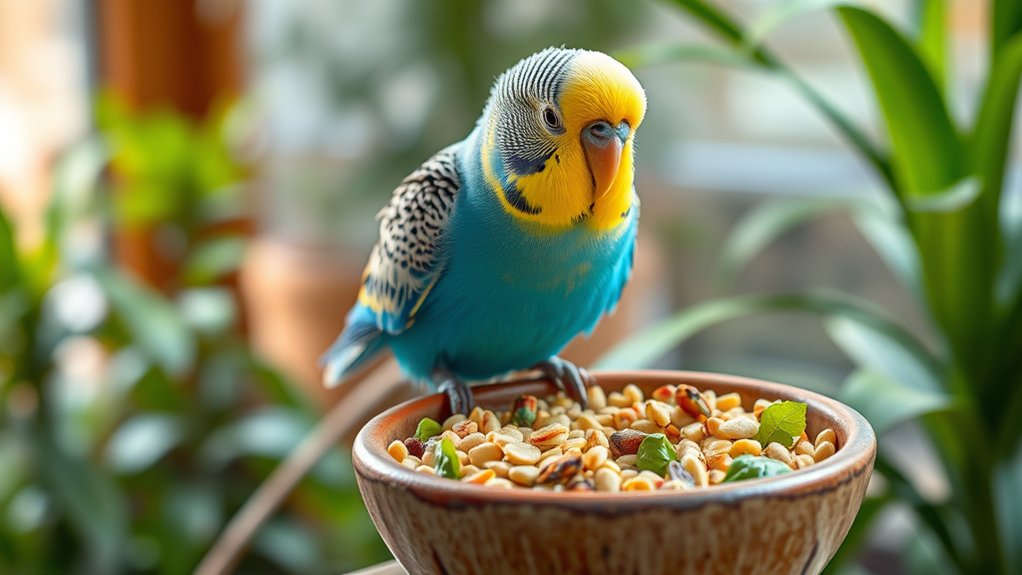
What Food Do Budgies Eat Best?
Finding the best food for your budgie can feel overwhelming. You want to give your feathered friend everything they need to stay healthy and happy, but with so many options out there, it’s easy to get confused. You’re not alone—many budgie owners struggle with choosing the right diet that keeps their pets vibrant and energetic.
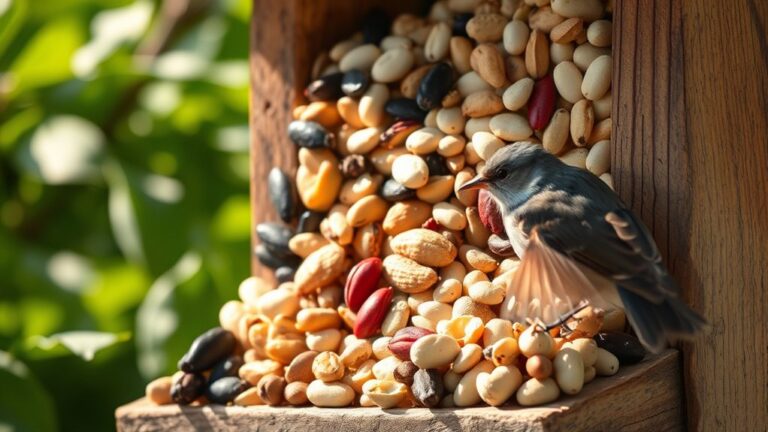
You feed your budgie best by offering a balanced mix of fresh fruits, vegetables, high-quality pellets, and limited seeds. Seeds alone don’t provide all the vitamins and proteins your budgie needs and can cause health issues if overused.
Safe fruits like apples and berries, along with veggies such as spinach and carrots, boost their liveliness. By varying their diet and using careful preparation, you’ll help your budgie thrive with vibrant feathers and energy.
There’s more to investigate for creating the perfect meal plan.
Key Takeaways
- Budgies thrive on a balanced diet of fresh fruits, vegetables, high-quality pellets, and occasional seeds. Seeds alone lack essential nutrients. Pellets and vitamin supplements ensure complete nutrition.
- Safe fruits include apples (seedless), berries, and melons. Vegetables like spinach and carrots support their health.
- Treats like millet sprays and hemp seeds should be introduced gradually and fed in moderation.
- Avoid toxic foods such as avocado, chocolate, caffeine, onions, garlic, and alcohol to protect budgie health.
Budgies’ Essential Dietary Needs
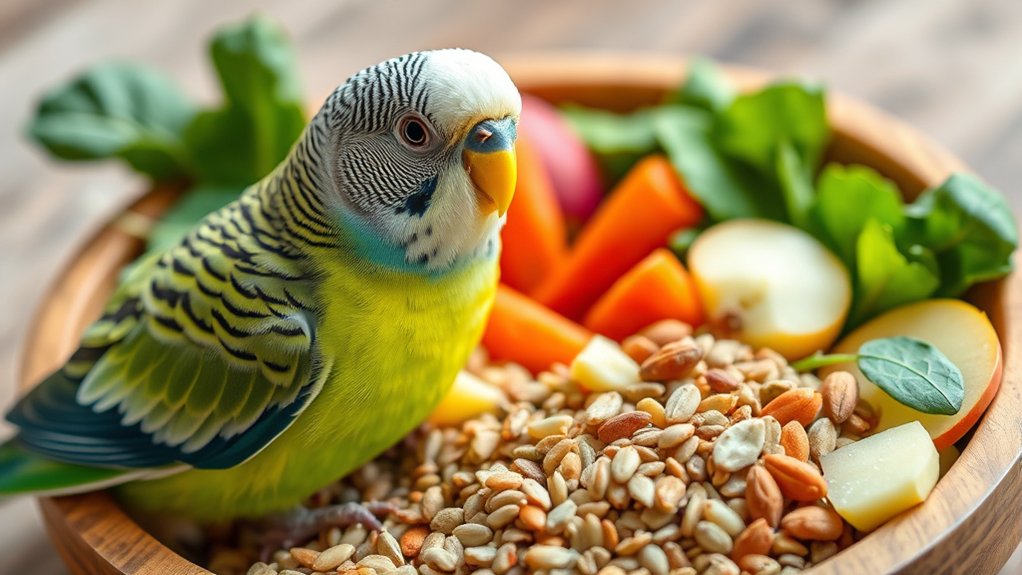
Although budgies can eat a variety of foods, you need to focus on providing a balanced diet that meets their essential nutritional needs. Your budgie’s diet should include fresh fruits, vegetables, high-quality pellets, and occasional seeds to guarantee they get the right mix of vitamins, minerals, and proteins.
Incorporate bird cage accessories like food dishes and perches to promote natural foraging behaviors, which supports their mental and physical health. When you use budgie training techniques, such as rewarding them for trying new foods, you’ll help them develop healthier eating habits.
Remember, a diverse diet boosts their energy levels and feather condition, so don’t rely on a single food type. By combining proper diet with stimulating cage accessories and positive training, you’ll create an environment where your budgie thrives both physically and mentally.
This balanced approach lays the foundation for a happy, healthy pet.
Why Seeds Don’t Meet Budgies’ Nutrition Needs
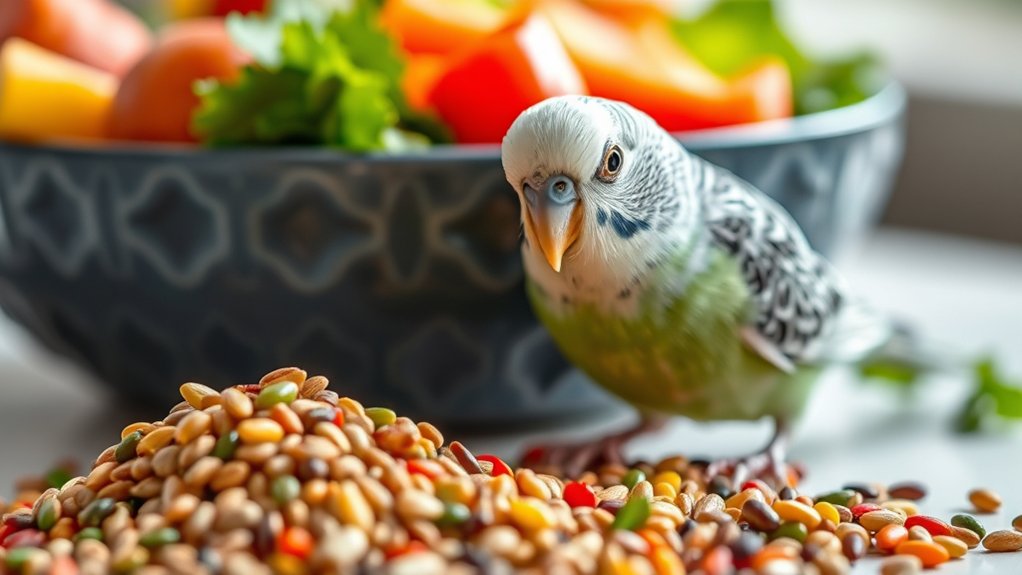
While seeds are a popular choice for feeding budgies, they don’t provide all the nutrients your bird needs to stay healthy. Seeds mainly offer fats and carbohydrates but lack essential vitamins, minerals, and proteins essential for your budgie’s overall well-being.
Seeds offer energy but miss key vitamins, minerals, and proteins vital for budgie health.
Relying solely on seeds can lead to nutritional imbalances and deficiencies, affecting your bird’s feathers, immune system, and energy levels.
To make certain your budgie gets a balanced diet, you should consider incorporating seed alternatives, such as pellets, which are specially formulated to cover a wider range of nutrients. Furthermore, vitamin supplements can help fill any nutritional gaps seeds leave behind.
These supplements support critical functions like bone development and immune health. By combining seed alternatives and vitamin supplements, you’ll give your budgie the nutrients it needs to thrive, rather than just survive.
Safe Fruits To Feed Your Budgie
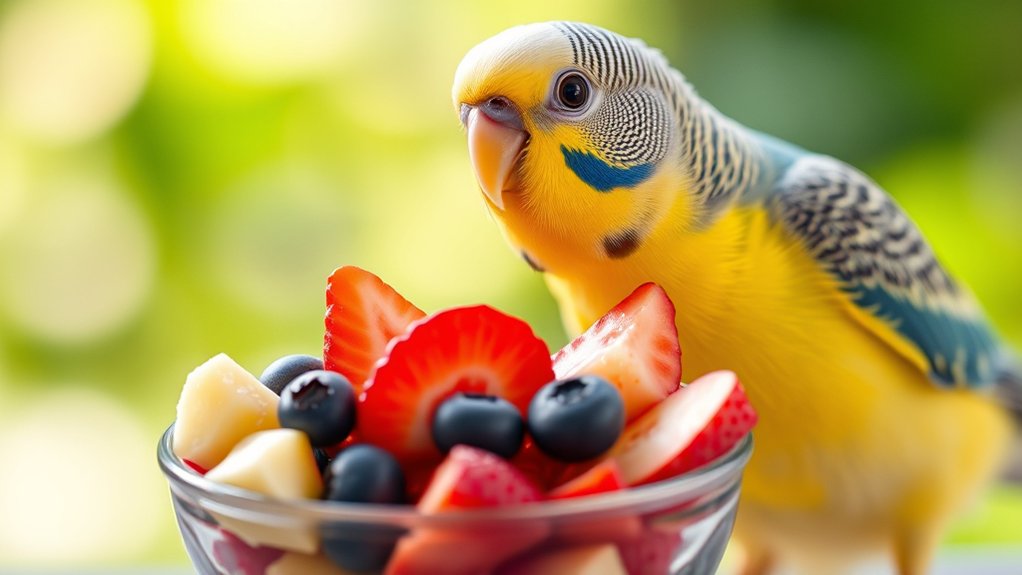
Adding safe fruits to your budgie’s diet is a great way to boost their nutrition with vitamins and antioxidants. You’ll want to pick options like apples, berries, and melons because they’re not only tasty but also safe for your little buddy.
Before you offer any fruit, just make sure to wash it thoroughly and cut it into small, manageable pieces. That way, it’s easier for your feathered friend to enjoy without any trouble.
Nutritional Benefits Of Fruits
Because fruits provide essential vitamins and minerals, including vitamin C and antioxidants, they play a crucial role in keeping your budgie healthy and energetic. Incorporating fresh fruits into your budgie’s diet during fruit harvesting seasons offers excellent nutritional supplementation.
Fruits support immune function, aid digestion, and improve your bird’s feather quality. When feeding fruits, make sure they’re fresh and properly washed to avoid pesticides.
Here are key benefits fruits offer your budgie:
- Boost immune system with vitamin C
- Provide antioxidants to reduce cellular damage
- Supply hydration through high water content
- Improve digestion with natural fibers
- Add variety to prevent dietary boredom
Top Safe Fruit Choices
Which fruits should you choose to keep your budgie both happy and healthy? Opt for safe options like apples (without seeds), pears, blueberries, strawberries, and melons. These fruits provide essential vitamins and antioxidants while being gentle on your budgie’s digestive system.
When introducing new fruits, try using bird cage accessories like feeding cups or small dishes to make the experience engaging and mess-free. You can also incorporate fruits into your training techniques; offering a small piece as a reward encourages positive behavior and helps your budgie associate healthy foods with fun.
Preparing Fruits For Budgies
How should you prepare fruits to make them safe and appealing for your budgie? Proper fruit preparation is key to supporting healthy budgie digestion and ensuring they enjoy their treats without any risks.
Before offering fruit, always wash it thoroughly to remove pesticides or dirt. Remove seeds and pits, as they can be harmful or toxic. Cut the fruit into small, manageable pieces to help your budgie eat comfortably.
Avoid adding sugar or any seasoning that can upset their digestion. Finally, serve fruit fresh and remove any leftovers promptly to prevent spoilage.
Here’s a quick checklist for fruit preparation:
- Wash fruit thoroughly
- Remove seeds and pits
- Cut into bite-sized pieces
- Serve fresh, avoid additives
- Discard uneaten fruit promptly
This approach guarantees your budgie enjoys safe, nutritious fruit every time.
Best Vegetables For A Healthy Budgie Diet
To keep your budgie healthy, you’ll want to offer nutrient-rich vegetables that provide essential vitamins and minerals. It’s important to pick safe veggies because some can actually be harmful to your feathered friend. So, let’s take a look at the best vegetable options you can add to your budgie’s diet.
Nutrient-Rich Vegetable Options
Although budgies enjoy seeds and pellets, including nutrient-rich vegetables in their diet is crucial for their overall health. Vegetables provide essential vitamins and minerals that support your budgie’s bird habitat needs and improve its flight behavior by boosting energy and stamina.
To keep your budgie vibrant and active, offer these nutrient-rich options:
- Spinach, rich in iron and calcium
- Carrots, high in beta-carotene
- Broccoli, packed with vitamin C
- Sweet potatoes, a great source of fiber
- Kale, loaded with antioxidants
These vegetables help maintain a balanced diet, supporting your budgie’s immune system and preventing deficiencies. Remember to introduce new veggies gradually and observe how your budgie responds to ensure peak health and activity in their environment.
Safe Vegetables For Budgies
Which vegetables can you safely offer your budgie to keep its diet both nutritious and enjoyable? Fresh, leafy greens like spinach, kale, and romaine lettuce are excellent choices. Carrots, broccoli, and bell peppers also provide essential vitamins that support your budgie’s overall health and feather grooming.
Avoid onions, avocado, and rhubarb, as these can be toxic. Always wash vegetables thoroughly and introduce new foods gradually to monitor for any adverse reactions. Providing a variety of safe vegetables enriches your budgie’s bird habitat, stimulating natural foraging behaviors.
This diversity not only boosts nutrition but also promotes mental well-being. By carefully selecting safe veggies, you guarantee your budgie enjoys a balanced diet that supports vibrant feathers and a lively, healthy life.
How Pellets Help Balance Budgie Nutrition
When you include pellets in your budgie’s diet, you provide a carefully formulated mix of essential nutrients that seeds alone often lack. Pellets offer a balanced composition designed to meet your bird’s dietary needs, ensuring they get vitamins, minerals, and proteins in appropriate amounts. This helps prevent nutritional deficiencies common with seed-only feeding.
Incorporating pellets ensures your budgie receives vital nutrients often missing from a seed-only diet.
To optimize benefits, you should follow consistent feeding schedules, offering pellets alongside fresh vegetables and seeds.
Pellets help balance nutrition by:
- Delivering a complete range of vitamins and minerals
- Reducing selective eating habits
- Supporting healthy growth and feather condition
- Maintaining energy levels through balanced protein and fat content
- Simplifying portion control with standardized pellet sizes
Healthy Treat Options For Budgies
You’ll want to offer your budgie treats that boost their health, like nutrient-rich fruits and safe vegetables. These tasty snacks not only add variety but also give your feathered friend important vitamins and minerals. Including popular seed-based treats can keep snack time exciting without compromising nutrition. So, let’s take a closer look at which options are best for your budgie’s well-being.
Nutrient-Rich Fruit Choices
Although budgies primarily thrive on seeds and pellets, incorporating nutrient-rich fruits into their diet can provide essential vitamins and natural sweetness. Adding fresh fruits not only boosts their health but also keeps them engaged, especially when paired with bird cage accessories like foraging toys.
You can use fruit treats as rewards during flight training to motivate your budgie.
Consider these top fruit choices for your budgie:
- Apples (remove seeds)
- Blueberries
- Papaya
- Mango
- Pomegranate seeds
Always wash fruits thoroughly and offer them in small, manageable pieces. Avoid fruits with high acidity or pits.
Safe Vegetable Options
Which vegetables make the best healthy treats for your budgie? Leafy greens like spinach, kale, and romaine lettuce are excellent choices, packed with essential vitamins and minerals. You can also offer small pieces of carrot, cucumber, and bell peppers, which add variety and crunch.
Always wash vegetables thoroughly to remove pesticides before placing them in your bird habitat. Introduce new veggies slowly to monitor your budgie’s reaction. Avoid avocado, onion, and garlic, as they’re toxic to budgies.
To encourage snacking, attach fresh veggies to cage accessories like clip-on food holders or hanging treat baskets. This setup keeps veggies clean and accessible, while enriching your budgie’s environment. Offering safe vegetables not only boosts your budgie’s health but also keeps them engaged and happy in their bird habitat.
Popular Seed-Based Treats
Vegetables add great nutrition to your budgie’s diet, but seed-based treats also play a key role in keeping your bird happy and satisfied. Offering a variety of seeds encourages natural foraging behavior, which can boost your budgie’s bird singing habits by keeping it mentally stimulated.
When choosing treats, consider options that complement your bird cage decorations, ensuring they’re safe and accessible. Here are five popular seed-based treats you can offer:
- Millet sprays: A favorite that encourages pecking and play
- Canary grass seed: Nutritious and easy to digest
- Hemp seeds: High in protein and healthy fats
- Flax seeds: Great for feather health
- Sunflower seeds (in moderation): Energy-rich but fatty
These treats balance enjoyment and nutrition, supporting your budgie’s overall well-being.
Tips For Introducing New Foods To Your Budgie
When you introduce new foods to your budgie, start slowly to help them adjust without stress. Offer small amounts alongside their regular seeds or pellets so they don’t feel overwhelmed. Keep mealtime calm and consistent; your budgie’s comfort encourages bird singing, a sign they’re happy and relaxed. Use familiar cage accessories like their favorite perch or feeding dish to make new foods more inviting.
Try mixing new fruits or veggies with their usual diet gradually, observing which ones they prefer. If your budgie seems hesitant, don’t force the food. Patience pays off. Sometimes, mimicking your eating habits near the cage piques their curiosity. Also, ensure fresh water is always available, as hydration aids digestion of new foods.
Foods And Ingredients Budgies Should Avoid
Although budgies enjoy a variety of foods, you should keep certain ingredients away from them to prevent health problems. Some toxic or harmful foods can disrupt your budgie’s health, affecting feather grooming and overall well-being.
Avoiding these ingredients also helps maintain a clean environment along with proper bird cage accessories, which are essential for your budgie’s comfort.
Here are five foods and ingredients you should never feed your budgie:
- Avocado contains persin, which is toxic to budgies.
- Chocolate has harmful compounds that can cause heart and nervous system issues.
- Caffeine stimulates their system dangerously, causing hyperactivity.
- Onions and garlic can cause digestive upset and anemia.
- Alcohol is toxic even in small amounts and can be fatal.
Creating A Balanced Daily Meal Plan For Your Budgie
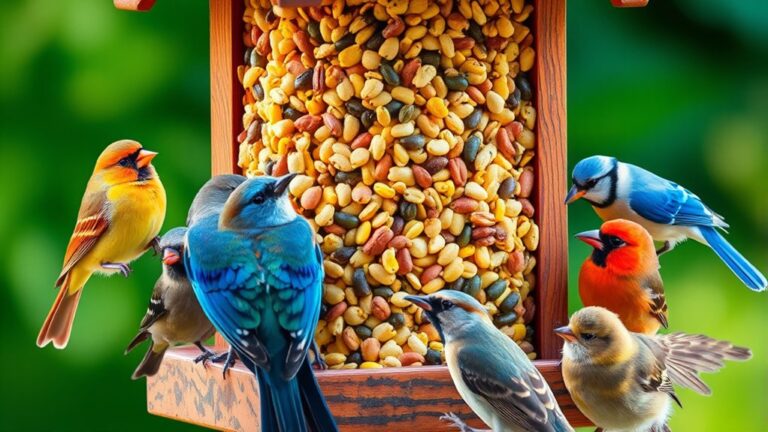
To keep your budgie healthy and happy, you need to provide a balanced daily meal plan that includes a mix of seeds, fresh fruits, vegetables, and pellets. Start with a high-quality seed mix as the base, but don’t rely solely on it.
Providing your budgie with a balanced diet of seeds, fruits, vegetables, and pellets is key to its health and happiness.
Include fresh veggies like spinach or carrots, and fruits such as apples or berries to supply essential vitamins. Pellets offer balanced nutrition and should be a consistent part of the diet.
Remember to clean your bird cage accessories daily, as fresh food can spoil quickly and attract bacteria. Use separate dishes for seeds, pellets, and fresh food to avoid contamination.
Alongside feeding, incorporate budgie training tips such as rewarding your bird with small fruit pieces during learning sessions. This not only motivates your budgie but also strengthens your bond.
How To Keep Your Budgie’s Diet Varied And Interesting
Keeping your budgie’s diet varied and interesting prevents boredom and encourages healthy eating habits. You want to create a stimulating bird habitat that supports both physical and mental well-being. Introducing new foods regularly can keep your budgie engaged and promote better feather grooming through proper nutrition.
To keep things fresh, try these tips:
- Rotate different seeds and pellets to provide diverse nutrients
- Offer fresh fruits and vegetables in small, safe portions
- Introduce foraging toys filled with treats to mimic natural behavior
- Add occasional sprouted seeds for extra vitamins and minerals
- Provide cuttlebone or mineral blocks for calcium and beak health
Frequently Asked Questions
How Often Should I Clean My Budgie’s Food and Water Dishes?
You should clean your budgie’s food and water dishes daily to maintain bird cage hygiene and prevent bacteria buildup. Rinse them thoroughly with hot water and mild soap, then dry completely before refilling.
Also, follow food storage tips by keeping seeds and pellets in airtight containers away from moisture. This routine keeps your budgie healthy and happy by ensuring their eating area stays fresh and safe from contaminants.
Can Budgies Eat Human Snacks Like Bread or Crackers?
You might think feeding your budgie bread or crackers is a gourmet treat, but human snack safety is no joke! Budgies can nibble on tiny amounts occasionally, but these snacks lack nutrients and often contain salt or additives harmful to them.
To keep your bird happy and healthy, focus on bird diet diversity. Offer seeds, fruits, veggies, and specialized pellets instead. Remember, your budgie’s diet should be a colorful, balanced feast, not a junk food buffet!
What Is the Best Time of Day to Feed My Budgie?
You should feed your budgie in the morning and early evening to align with their natural feeding schedules. Bird nutrition experts recommend offering fresh food when they’re most active, usually at dawn and dusk.
This routine helps your budgie digest food properly and stay energized throughout the day. Avoid feeding late at night, as it can disrupt their sleep.
Sticking to consistent feeding times supports their overall health and well-being.
How Do I Know if My Budgie Is Allergic to Certain Foods?
You’ll know if your budgie has food allergies by watching for signs like itching, swelling, sneezing, or changes in droppings. Budgie nutrition is important, so introduce new foods gradually and monitor their reaction closely.
If your budgie shows any allergic symptoms, stop feeding that item immediately and consult an avian vet. Keeping a food diary can help you track what triggers allergies and guarantee your budgie stays healthy and happy.
Should I Provide Separate Feeding Areas for Multiple Budgies?
You don’t necessarily have to provide separate feeding areas for multiple budgies if you manage group feeding well. Just keep a consistent feeding schedule so all birds get their share without competition.
If you notice any aggressive behavior or some budgies aren’t eating enough, then separate bowls or areas can help. Monitoring them closely during feeding times makes certain everyone stays healthy and happy in the group environment.
Conclusion
If you want your budgie to thrive, you can’t just rely on seeds. They’re like giving them a spoonful of boredom! Mixing safe fruits, veggies, and pellets guarantees they get all the nutrients they need.
Introducing new foods might take patience, but it’s worth it to keep their diet exciting and balanced. Avoid harmful ingredients, and watch your feathered friend flourish with energy and happiness every single day.
Remember, the best food for budgies includes a variety of healthy options to ensure they stay vibrant and strong.