What Does a Duckling Eat and How Do You Feed It?
Feeding ducklings can feel overwhelming, especially if you’re new to caring for these adorable little birds. You’re not alone—many people struggle with knowing exactly what to feed them and how often. Getting it right means your ducklings grow up healthy and happy, but the abundance of advice out there can be confusing.
You should feed ducklings specially formulated starter feed with 18-20% protein and provide fresh, clean water at all times.
Offer food 3-4 times daily during their first weeks, gradually reducing feedings as they grow.
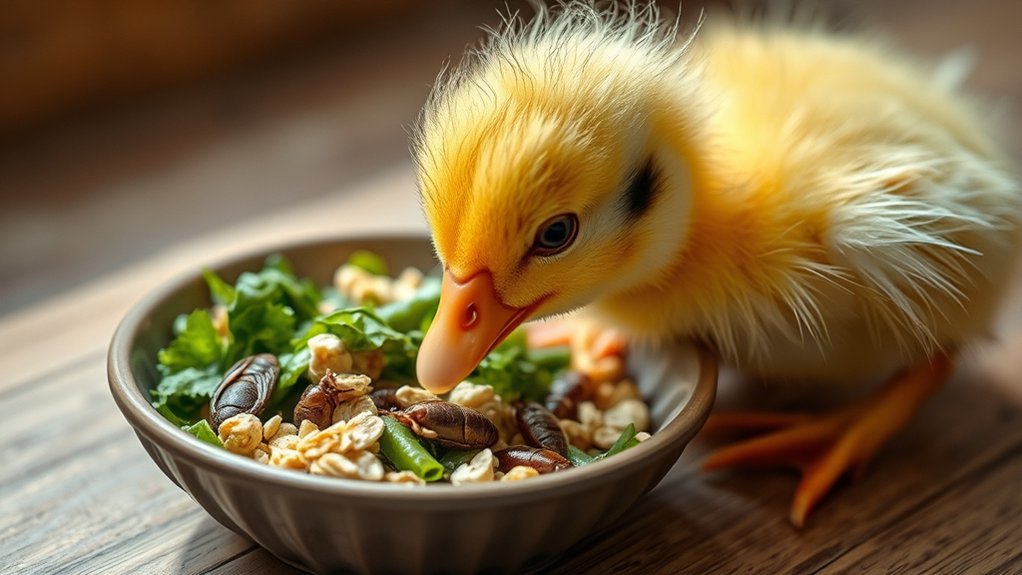
Supplement their diet with finely chopped greens, boiled eggs, and soaked grains for extra nutrients.
Avoid bread, processed foods, and harmful items like avocado or chocolate.
Watch their appetite and hydration closely to keep them healthy.
Keep exploring to uncover detailed feeding tips and best practices.
Key Takeaways
- Feed ducklings starter feed with 18-20% protein, supplemented with finely chopped greens, boiled eggs, and soaked grains for balanced nutrition.
- Offer food 3-4 times daily, gradually reducing frequency as ducklings grow older. Make sure fresh water is always available.
- Avoid bread, processed grains, avocado, chocolate, caffeine, and salted or seasoned foods to prevent toxicity and digestive issues.
- Transition gradually from starter to adult feed over 1-2 weeks by mixing both. Keep water access constant during this time.
- Provide shallow water containers near feeding areas to support hydration and safe drinking without drowning risks.
How to Feed Ducklings: A Beginner’s Guide
Although feeding ducklings may seem straightforward, knowing what and how to offer their food guarantees they grow healthy and strong. You’ll want to establish consistent feeding schedules, typically offering food three to four times a day. This regularity helps their digestion and keeps their energy steady.
Besides their main diet, incorporating nutritional supplements like vitamins and minerals can boost their immune system and support proper growth. Make certain fresh water is always available since ducklings need to wash down their food easily.
When feeding, avoid overfeeding to prevent obesity and water contamination, which can lead to illness. You’ll also want to monitor their behavior and adjust feeding amounts if they seem lethargic or overly hungry.
Choosing the Best Starter Food for Ducklings
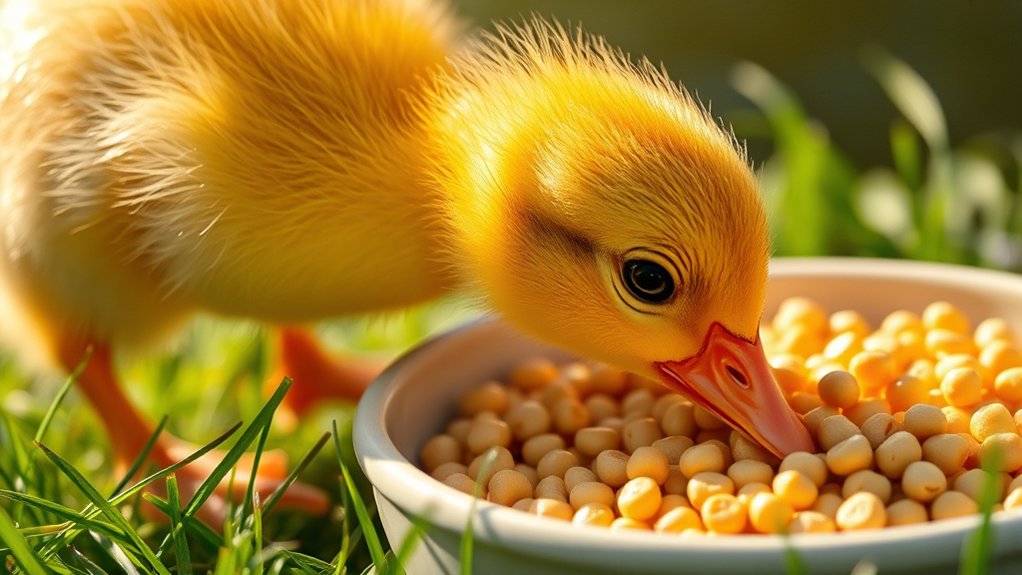
You’ll want to pick a starter food that meets your ducklings’ specific nutritional needs to help them grow strong. So, look for feeds specially formulated for ducklings and avoid anything with harmful ingredients like too much salt or mold. Choosing the right food now really sets the foundation for healthy development.
Nutritional Needs Overview
When choosing the best starter food for ducklings, you need to focus on providing a balanced diet that supports their rapid growth and development. Ducklings require a high-protein feed, usually around 18-20%, to build strong muscles and healthy feathers.
You’ll want to maintain consistent feeding schedules, offering small meals multiple times a day to mimic their natural foraging behavior. Besides the starter feed, including nutritional supplements like vitamins and minerals can help prevent deficiencies and boost their immune system.
Always ensure the food is free from harmful additives or medications not suitable for ducklings. By carefully managing what and when you feed, you’ll set your ducklings up for a healthy start and strong future.
Recommended Starter Feed
Providing your ducklings with the right starter feed sets the foundation for their health and growth. Choosing a feed formulated specifically for ducklings supports proper feather development and encourages natural behavior like foraging and pecking.
Look for a feed that offers:
- High protein content (18-20%) to aid rapid growth and strong feathers
- Balanced vitamins and minerals for immune support
- Small pellet size to match their small beaks and encourage natural eating habits
- Non-medicated formulas to avoid unnecessary additives
Feeding the appropriate starter feed helps your ducklings develop healthy feathers and promotes active, curious behavior essential for their well-being. Ensuring they get the right nutrients early sets them up for a strong, healthy future.
Avoiding Harmful Ingredients
Although selecting a starter feed high in protein and nutrients is crucial, you also need to steer clear of harmful ingredients that can stunt your ducklings’ growth or cause health issues. Avoid feeds with excessive salt, artificial colors, or fillers that offer little nutritional value.
These can disrupt their natural development and interfere with essential behaviors like feather grooming, which is a critical activity for maintaining waterproof plumage. Also, be cautious of feeds containing medications or additives not suited for young ducklings.
These can hinder their immune system during the critical duckling migration phase when they adapt to new environments. By choosing a clean, balanced starter feed free from harmful components, you help your ducklings grow strong, healthy, and ready for life beyond the brooder.
What Ducklings Eat in Their First Week of Life
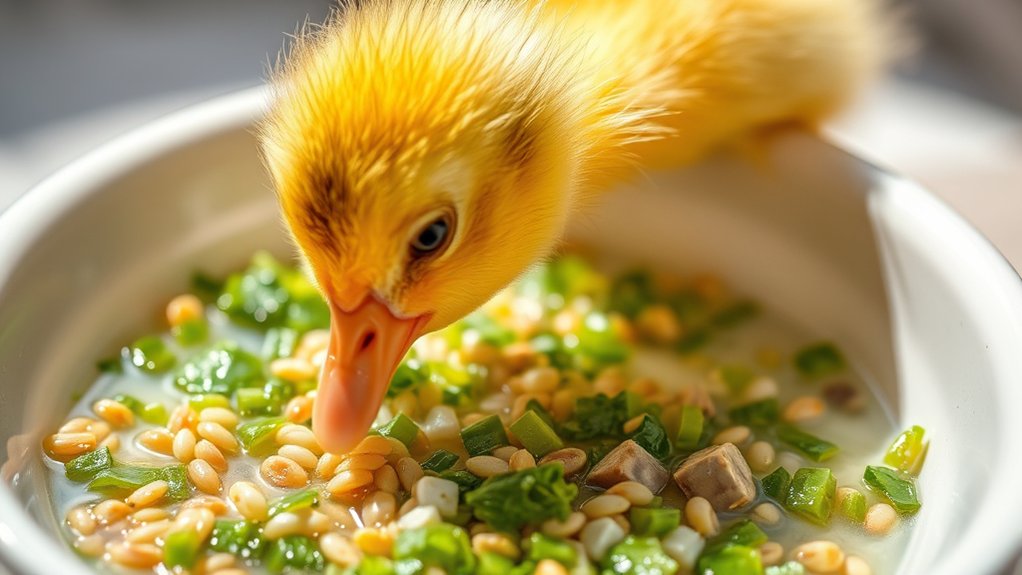
As ducklings begin their first week of life, you’ll want to focus on feeding them easily digestible, nutrient-rich foods to support their rapid growth. Their diet during this critical phase influences duckling genetics expression and feather development, so providing the right nutrients is essential.
Feeding ducklings nutrient-rich, easily digestible foods in their first week supports growth and genetic expression.
You’ll notice their bodies and feathers developing quickly, reflecting their genetic potential when given proper nourishment.
Here’s what you should feed them in this period:
- Starter feed formulated specifically for waterfowl or ducklings
- Hard-boiled eggs, finely chopped for extra protein
- Small amounts of soaked oats or grains to aid digestion
- Fresh, clean water available at all times
Are Vegetables and Fruits Safe for Duckling Diet?
While ducklings primarily need a protein-rich diet, you might wonder if vegetables and fruits can safely supplement their meals. When considering vegetable safety, it’s important to introduce only mild, easy-to-digest options like finely chopped lettuce, peas, or spinach. These provide valuable nutrients without upsetting their delicate digestive systems. Always wash vegetables thoroughly to remove pesticides and cut them into small pieces to prevent choking.
Fruit safety is similar. Offer small amounts of soft fruits such as blueberries, strawberries, or melon. These fruits add natural vitamins and hydration but avoid citrus or overly acidic fruits, which can irritate their stomachs. Remember, fruits and vegetables should only complement their main feed, not replace it.
Foods to Avoid Feeding Ducklings
If you want your ducklings to grow healthy and strong, you need to avoid feeding them certain foods that can harm their development. Feeding inappropriate items can disrupt their feather development and even affect duckling socialization by causing health issues that limit their activity and interaction.
Avoid these foods to keep your ducklings thriving:
- Bread and processed grains: These lack proper nutrients and can cause malnutrition or digestive problems.
- Avocado: Contains persin, which is toxic to ducks and can lead to heart and respiratory issues.
- Chocolate and caffeine: Both are poisonous to ducklings and can cause severe health complications.
- Raw potato or green potato skins: Contain solanine, a harmful toxin that can damage your ducklings’ nervous system.
Sticking to a balanced diet helps ensure your ducklings develop strong feathers and engage well in social activities essential for their growth.
How Often Should You Feed Ducklings Each Day?
Keeping harmful foods out of your ducklings’ diet sets the stage for proper feeding habits. To maintain their health, establish consistent feeding schedules that support steady growth and nutritional balance.
Avoid harmful foods and maintain consistent feeding schedules for healthy, balanced growth in your ducklings.
For the first two weeks, you should feed your ducklings small amounts about four times a day. This frequent feeding helps meet their high energy needs.
After that, you can reduce feedings to three times daily until they’re five weeks old. By six weeks, feeding twice a day is usually sufficient.
Stick to regular times to help their digestion and prevent overeating. Always provide fresh food and clean water during each feeding session.
Monitoring their appetite and growth will help you adjust feeding schedules if necessary, ensuring your ducklings get the right balance of nutrients. Consistency in how often you feed them plays a key role in their overall health and development.
How to Prepare Homemade Duckling Food Recipes
When you prepare homemade duckling food recipes, you take control over the ingredients and guarantee your ducklings get fresh, nutritious meals tailored to their needs. This approach supports their growth and helps maintain optimal duckling grooming by ensuring they receive essential nutrients. During molting behavior, ducklings especially benefit from extra protein and vitamins to support feather regrowth.
Here’s a simple guide to preparing homemade meals:
Mix finely chopped greens like spinach or lettuce for vitamins. Add boiled eggs or mealworms to boost protein for molting. Include soaked oats or rice for energy and easy digestion. Blend small amounts of cornmeal with water for carbohydrate intake.
Always avoid seasoning or salt. Fresh, balanced homemade recipes help your ducklings thrive, supporting their natural grooming habits and molting cycles effectively.
Transitioning Ducklings From Starter to Adult Food
Once your ducklings have grown accustomed to homemade meals, it’s important to adjust their diet to meet changing nutritional needs. As they approach the stage before duckling migration and full feather development, their requirements shift. You’ll want to gradually shift them from starter feed, which is high in protein, to adult food with balanced nutrients suited for mature ducks.
Start mixing a small amount of adult feed into their starter feed, increasing the adult portion over one to two weeks. This smooth change helps avoid digestive upset and supports healthy feather growth. During this period, keep providing fresh water and make certain their food is clean and accessible.
Pay attention to their activity levels and feather condition, signs of proper nutrition. By carefully managing this changeover, you’re setting your ducklings up for strong health, preparing them for the demands of migration and adult life.
Feeding Wild vs. Pet Ducklings: Key Differences
When you’re feeding ducklings, you’ll notice their dietary needs actually differ depending on whether they’re wild or pets. See, the environment they grow up in plays a big role in shaping what they eat and how you should feed them. So, understanding these key differences really helps you provide the best nutrition for each type.
Dietary Needs Comparison
Although both wild and pet ducklings need a balanced diet to grow healthy, their feeding requirements differ markedly due to their environments and available food sources. You’ll notice that duckling behavior varies: wild ducklings forage for diverse natural foods, supporting feather development and energy needs.
In contrast, pet ducklings rely on you to provide a nutritionally complete diet.
Key differences include:
- Wild ducklings eat insects, aquatic plants, and small fish, matching their natural foraging habits.
- Pet ducklings require formulated starter feed rich in protein and vitamins.
- Wild diets adjust seasonally, reflecting natural availability and supporting feather growth.
- Pet diets need supplementation with greens and occasional treats to mimic natural nutrients.
Understanding these differences helps you meet your duckling’s unique dietary needs effectively.
Feeding Environment Impact
How does the feeding environment shape what ducklings eat? Your duckling’s diet depends heavily on its feeding environment and duckling habitat. Wild ducklings forage in ponds, marshes, and fields, consuming insects, aquatic plants, and small invertebrates available in their natural habitat.
In contrast, pet ducklings rely on you to provide a balanced diet tailored to their needs since their feeding environment lacks natural food sources. You’ll need to offer formulated pellets, grains, and occasional treats while guaranteeing fresh water is always accessible.
Understanding these key differences helps you support healthy growth and development. So, whether your duckling lives in the wild or at home, adapting to its feeding environment ensures it gets the right nutrition for a strong start in life.
How to Keep Ducklings Hydrated While Feeding
Keeping ducklings well-hydrated during feeding is essential to their health and growth. You need to provide clean, fresh water regularly to prevent water contamination, which can lead to illness. Aligning water availability with their feeding schedule encourages consistent drinking and digestion.
To keep ducklings hydrated effectively, consider these tips:
- Change water frequently to avoid contamination and bacteria buildup
- Use shallow containers to prevent drowning risks
- Place water near feeding areas for easy access
- Monitor water intake to spot dehydration early
Frequently Asked Questions
Can Ducklings Eat Bread or Crackers?
You shouldn’t feed ducklings bread or crackers because they lack essential nutrients for proper duckling nutrition. Feeding guidelines recommend offering specially formulated starter feed or natural foods like peas and greens instead.
Bread and crackers can cause malnutrition and digestive problems. To keep your duckling healthy, focus on balanced, nutrient-rich options and avoid processed human snacks.
Following proper feeding guidelines guarantees your duckling grows strong and stays active.
How Do I Tell if a Duckling Is Sick?
You can tell if a duckling is sick by watching for signs of illness like lethargy, loss of appetite, or unusual droppings. If it’s fluffed up, has watery eyes, or labored breathing, these are clear duckling health warnings.
You’ll also notice if it’s isolating itself or showing unsteady movements. Keeping a close eye on these signs helps you act quickly and guarantee your duckling stays healthy and happy.
What Temperature Should Duckling Food Be Served At?
You should serve duckling food at room temperature, around 70-75°F (21-24°C), to optimize duckling nutrition. Feeding guidelines suggest avoiding cold or hot food, as it can upset their digestion or cause discomfort.
Warm food encourages better eating habits and nutrient absorption. Always check the temperature before feeding to make sure it’s not too hot or cold. This simple step helps keep your ducklings healthy and thriving.
Can Ducklings Eat Insects or Worms?
Yes, ducklings can eat insects and worms. They’re great for insect consumption and help provide essential protein.
When you offer insects or worms, you support their natural diet and promote healthy growth. Just make sure the insects are small and safe, avoiding anything toxic.
Worm digestion is typically easy for ducklings, but always introduce new foods gradually to prevent digestive upset. You’ll see them enthusiastically pecking at these tasty treats!
How Do I Safely Introduce Ducklings to New Foods?
You should introduce new foods to ducklings gradually to avoid digestive upset. Stick to consistent feeding schedules, offering small amounts of new items alongside their regular diet. Monitor their reaction and adjust accordingly.
Incorporate nutritional supplements if needed to guarantee balanced growth. Always provide fresh water, and avoid sudden changes. This careful approach helps ducklings adapt smoothly while maintaining their health and energy levels.
Conclusion
Feeding ducklings might seem like a breeze—just toss them some bread, right? Nope, not quite. You’ve got to pick the right starter food, avoid toxic treats, and keep their water fresh.
Sure, it sounds like a full-time job, but your little quackers will thank you with healthy growth and happy wobbles. So, if you thought duckling care was easy, think again. These tiny birds demand more gourmet attention than you’d expect!
When it comes to feeding ducklings, choosing the proper diet is key to their well-being and development.