Are Bird Feeders Bad for Birds?
If you love watching birds but worry about whether bird feeders might do more harm than good, you’re not alone. Many people struggle with the idea that feeding birds could spread disease or make them dependent. It’s a common concern, and understanding the right way to use feeders can make all the difference.
Bird feeders aren’t inherently bad if you use and maintain them properly. You need to clean them regularly to prevent disease spread and place them where predators won’t lurk.
Feeding at the right times and offering suitable food helps birds stay healthy without becoming too dependent. Done thoughtfully, feeders can support local bird populations during tough seasons.
Keep following for tips on how to create a safer, more welcoming environment for your backyard birds.
Key Takeaways
- Bird feeders can disrupt natural behaviors, causing migration delays and reduced nesting care if improperly managed.
- Feeders may attract predators like cats and hawks, increasing bird safety risks without careful placement.
- Disease spread among birds is common at feeders due to close contact and contaminated food if not cleaned regularly.
- Improper feeder maintenance leads to mold and bacteria, negatively impacting bird health.
- Responsible feeder use with proper cleaning, timing, and placement supports birds without harming ecosystems.
Main Risks Associated With Bird Feeders
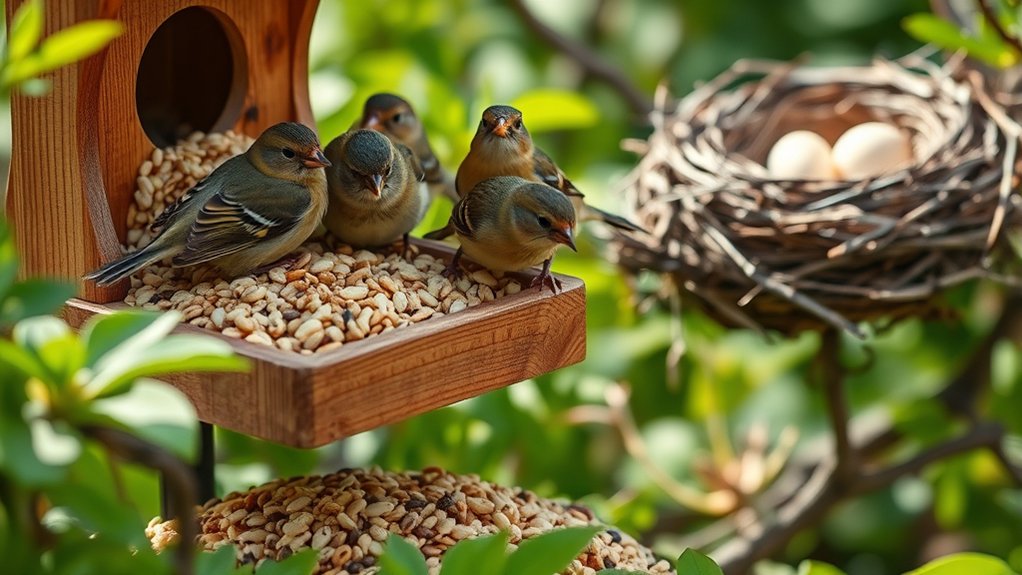
Many bird enthusiasts don’t realize that bird feeders can sometimes pose serious risks to the birds they aim to help. When you put out feeders, you might unintentionally disrupt natural bird migration patterns. Birds may delay their migration, relying on the easy food source. This could leave them vulnerable to harsh weather or scarce resources later.
Moreover, feeders can interfere with nesting behaviors. Birds might spend less time building nests or caring for their young because they’re drawn to the constant availability of food. This can affect their overall reproductive success and the health of future generations.
Furthermore, feeders can attract predators, putting birds at risk while they feed. As you enjoy watching birds at your feeder, it’s important to understand these risks and manage your feeder carefully to minimize harm during these critical periods of bird migration and nesting.
How Can Bird Feeders Spread Diseases Among Birds?

You might not realize it, but bird feeders can actually help spread common diseases among birds. When lots of birds gather around the same feeder, germs can easily pass from one bird to another. It’s kind of like how colds spread among people when we share things.
Knowing how this happens is important because it means you can take simple steps to keep your feathered visitors healthy. Just a little care goes a long way in making sure your backyard birds stay happy and well.
Common Bird Diseases
Although bird feeders attract a variety of feathered visitors, they can also become hotspots for disease transmission. When birds gather, their natural behaviors like seed dispersal and nesting habits can inadvertently spread illnesses.
For example, infected birds may drop contaminated seeds or debris near feeders, which others then pick up. Birds often use nearby nesting sites, where pathogens can linger and infect new generations.
Common diseases include salmonellosis, which causes diarrhea and weakness, and avian pox, resulting in lesions that affect feeding and survival. You should understand that while feeders support bird populations, they also create environments where diseases can quickly spread if not properly maintained.
Regular cleaning and monitoring help reduce these risks and keep your backyard birds healthy.
Transmission Through Shared Feeders
Because birds often share feeders closely, these spots become prime locations for disease transmission. When birds gather, pathogens can pass through saliva, droppings, or contaminated seeds.
Seed dispersal at feeders also spreads germs beyond natural habitats, increasing risks. Habitat disturbance near feeders may force birds into crowded areas, worsening disease spread.
Here’s how common diseases transmit through shared feeders:
| Disease | Transmission Method |
|---|---|
| Salmonellosis | Contaminated droppings |
| Avian Pox | Contact with lesions |
| Trichomoniasis | Shared water or food |
| Coccidiosis | Fecal-oral contamination |
Understanding these risks helps you see why feeders can inadvertently become hotspots for illness among birds in your area.
Preventing Disease Spread
How can you keep your feathered visitors healthy while still enjoying their presence at your feeders? Preventing disease spread starts with smart feeder placement. Avoid overcrowded areas where birds gather tightly because that increases infection risk.
Position feeders apart and away from dense shrubbery to reduce contamination. Regularly clean your feeders with hot, soapy water to eliminate bacteria and mold.
Seed selection also plays a vital role. Choose fresh, mold-free seeds since damp or spoiled seed encourages illness. Opt for seeds that attract fewer birds at the same time, which helps reduce crowding and potential disease transmission.
Do Bird Feeders Make Birds Too Dependent on Humans?

When you put out bird feeders, you might wonder if birds start relying too much on human food instead of searching for their own. And yeah, this shift can affect their natural foraging skills and even change how they behave. So, let’s take a closer look at what dependency on feeders really means for our feathered friends.
Dependency on Human Food
Have you ever wondered if birds become too reliant on feeders for their food? When you provide a steady food source, birds might start depending on your offerings instead of searching naturally. This dependency can reduce their motivation for natural foraging, which is essential for their survival skills and health.
You might unintentionally disrupt their habitat by altering their feeding patterns, leading to changes in local bird behavior. However, occasional feeding typically won’t cause significant dependency if natural food sources remain available.
The key is to balance feeding with preserving their environment, so birds keep practicing natural foraging. By doing this, you help maintain their independence and support a healthy ecosystem without causing harmful reliance on human food.
Impact on Natural Foraging
Although bird feeders provide an easy meal, they can change how birds search for food in the wild. When birds rely heavily on feeders, their natural foraging skills may weaken. This affects their ability to find food in their natural habitat.
This shift can lead to habitat disruption, as birds spend less time exploring their environment and more time near human-provided sources. You might wonder if this dependence harms their survival instincts.
| Effect | Explanation |
|---|---|
| Reduced natural foraging | Birds rely less on finding food naturally |
| Habitat disruption | Altered bird activity impacts ecosystems |
| Food source reliability | Feeders provide consistent but artificial supply |
| Adaptation challenges | Birds may struggle if feeders are removed |
Understanding this impact helps you weigh the pros and cons of feeding birds.
Behavioral Changes in Birds
The changes in how birds search for food naturally lead to shifts in their overall behavior, especially around humans. When you put up a bird feeder, you encourage urban adaptation, where birds become more comfortable living close to people. This can make them less wary and more reliant on the easy food source you provide.
You might notice some species altering their nesting behaviors, choosing spots closer to feeders for convenience and safety. While this can help certain birds thrive in cities, it also risks making them dependent on your feedings, potentially reducing their natural foraging skills.
Can Bird Feeders Attract Predators to Your Backyard?
While bird feeders attract a variety of birds to your backyard, they can also draw the attention of predators looking for an easy meal. Bird predators like hawks, cats, and snakes often lurk nearby, waiting to ambush unsuspecting birds visiting feeders. This risk means you should consider backyard safety carefully when setting up feeders.
To reduce danger, place feeders in open areas where birds can easily spot approaching threats. Avoid positioning them too close to dense shrubs or walls where predators might hide. Regularly clean the area to remove fallen seeds that could lure rodents, attracting additional predators.
Keeping your pets indoors during peak bird activity times also helps protect visiting birds.
Which Bird Feeders Are Safer for Birds?
When choosing bird feeders, you should prioritize designs that minimize risk from predators and disease. Tube feeders with multiple small perches help reduce crowding and aggressive behavior during bird migration seasons, lowering disease spread.
Platform feeders, while versatile, often expose birds to predators and allow food to become contaminated quickly, so use them cautiously. Consider feeders that allow natural feeding postures, respecting local birds’ nesting habits to avoid disrupting breeding cycles.
For example, hanging feeders placed away from dense shrubs can protect birds while respecting their need for safe nesting areas. Feeders with built-in guards deter squirrels and larger predators, keeping birds safer.
During bird migration, providing clean, accessible feeders supports exhausted travelers without increasing their vulnerability. Choosing feeders made from non-toxic materials and easy to clean also promotes safer feeding environments.
How to Clean and Maintain Bird Feeders
Because bird feeders can quickly accumulate dirt, mold, and bacteria, you should clean them regularly to keep visiting birds healthy. Maintaining your feeders not only supports bird species diversity but also preserves bird feeder aesthetics, ensuring your backyard remains inviting.
Follow these steps to clean and maintain your feeders:
- Disassemble the feeder completely to reach all parts.
- Soak components in a solution of one part bleach to nine parts water for 10 minutes.
- Scrub thoroughly with a brush to remove residue and mold.
- Rinse well with clean water and allow everything to dry before refilling.
Regular cleaning prevents disease spread and attracts a wider variety of birds. You’ll notice how well-kept feeders improve your outdoor space visually and encourage different species to visit, enriching your birdwatching experience. Keep this routine every two weeks or more often during wet weather to maintain a safe, attractive feeding environment.
When Is the Best Time to Use Bird Feeders?
Although birds can visit feeders year-round, you’ll get the most activity during early morning and late afternoon when they’re most active. These times allow birds to fuel up before and after their daily activities.
During bird migration seasons, especially in spring and fall, feeders can provide critical energy stops. You’ll notice increased visits as birds rest and refuel on their long journeys.
Pay attention to local nesting habits, too. In spring and early summer, many birds focus on raising young, so feeder use may decrease as they prioritize natural food sources for their chicks.
You can still offer feeders but avoid disturbing nesting areas nearby. Also, reducing feeders during peak nesting helps prevent attracting predators.
Benefits of Using Bird Feeders Responsibly
Using bird feeders responsibly helps support local bird populations while minimizing potential risks to their health and safety. When you manage feeders thoughtfully, you contribute to habitat restoration and predator control efforts in your area.
Here’s how responsible feeding benefits birds:
- Provides consistent nourishment during harsh seasons, helping birds conserve energy.
- Encourages natural foraging behavior by placing feeders near native plants, supporting habitat restoration.
- Reduces disease spread by regularly cleaning feeders and rotating feeding spots.
- Helps you monitor predator activity, enabling better predator control to protect vulnerable birds.
How to Choose the Right Food to Support Local Birds
You’ll want to pick bird food that fits the nutritional needs of the species around you. Remember, birds’ tastes can shift with the seasons. So, offering the right food at the right time really helps keep them healthy all year long.
Nutritional Needs by Species
When selecting bird food, understanding the specific nutritional needs of local species helps you provide the best support for their health and energy. Different birds rely on various nutrients during vital times like bird migration and nest building. To cater to their needs, consider these options:
- High-fat seeds like sunflower and safflower support energy during migration.
- Protein-rich insects or suet aid nest building and chick development.
- Nyjer seeds attract finches needing small, oil-rich foods.
- Fruits and berries provide vitamins and antioxidants for overall health.
Seasonal Food Preferences
Different seasons bring changes in birds’ dietary needs, so adjusting the food you offer helps keep them healthy year-round. In spring and summer, many birds prefer protein-rich foods like mealworms to support breeding and raising chicks.
During fall and winter, they shift toward high-fat seeds such as sunflower and safflower to build energy reserves for colder months. By selecting appropriate foods, you support natural seed dispersal, which aids in maintaining local plant diversity.
Offering seasonal foods also helps prevent habitat alteration caused by birds relying solely on feeders year-round. Keep an eye on your local bird species and their changing preferences, and vary your offerings accordingly. This approach guarantees you promote healthy feeding habits and contribute positively to your local ecosystem.
Tips for Creating a Bird-Friendly Backyard Beyond Bird Feeders
Although bird feeders attract many feathered visitors, creating a truly bird-friendly backyard requires more than just providing food. You can support local bird populations by focusing on habitat restoration and native plant gardening.
Here are four tips to improve your outdoor space beyond feeders:
- Plant native trees, shrubs, and flowers to offer natural food sources, shelter, and nesting sites.
- Provide fresh water through birdbaths or shallow dishes, ensuring you clean them regularly to prevent disease.
- Leave leaf litter and dead wood in some areas to encourage insects, which many birds rely on for protein.
- Avoid pesticides and herbicides to protect birds and their food sources from harmful chemicals.
Frequently Asked Questions
Can Bird Feeders Cause Birds to Become Aggressive Toward Each Other?
Yes, bird feeders can cause birds to become aggressive toward each other. When you provide an easy food source, it can alter their natural feeding habits, making some birds more competitive.
This often leads to territorial disputes around the feeder, especially during scarce seasons. To reduce aggression, you might try offering multiple feeders spaced apart, so birds don’t feel the need to defend a single spot aggressively.
Do Bird Feeders Impact Bird Migration Patterns?
Yes, bird feeders can impact bird migration patterns by causing migration disruption. When you provide easy, consistent food sources, some birds might delay or skip migrating because they develop feeding dependency. This can throw off their natural timing and affect their survival.
To help, you should manage feeders seasonally and avoid overfeeding. This ensures birds maintain their natural instincts and migration behaviors without becoming reliant on human-provided food.
How Do Weather Conditions Affect Bird Feeder Use?
Weather impacts how often you’ll see birds at your feeder. In cold or harsh weather, birds rely more on feeders to meet their energy needs, so their feeding habits shift to frequent visits.
During mild conditions, they might forage naturally and visit feeders less. Rain or snow can also influence feeder use, as birds seek easy food sources.
You can help by keeping feeders clean and stocked, especially when weather gets tough.
Are There Any Legal Restrictions on Using Bird Feeders?
You might think feeding birds is as old-fashioned as sending a telegram, but today, legal restrictions do apply in some areas. Always check local laws because some places require feeding permits to protect native species and prevent disease spread.
Without these permits, you could face fines or be asked to remove your feeder. So, before you hang that feeder, research your local regulations to make sure you’re feeding birds legally and responsibly.
Can Bird Feeders Attract Invasive Bird Species?
Yes, bird feeders can attract invasive bird species, which might disrupt native species in your area. When invasive birds gather at feeders, they can outcompete native birds for food and nesting spots, causing habitat disruption.
To help protect native species, you should choose feeder types and food that favor local birds and clean your feeders regularly to prevent disease spread. This way, you support your local ecosystem while enjoying birdwatching.
Conclusion
Think of bird feeders as delicate bridges. You build them to connect with nature, but they need careful care to stay safe. When you choose the right food, clean regularly, and stay mindful of risks, you create a garden where birds can thrive, not just survive.
By feeding responsibly, you become a guardian of the sky’s tiny travelers, nurturing freedom rather than dependence. This way, you turn your backyard into a vibrant sanctuary of life and song. Responsible bird feeders are key to keeping birds healthy and happy.