What Do Birds Eat and Drink Daily?
If you’ve ever wondered what to feed the birds in your backyard but felt overwhelmed by all the options, you’re not alone. Many people struggle to understand what birds eat and drink daily to keep them healthy and happy. Knowing their diet can help you choose the right bird food and attract a variety of feathered friends.
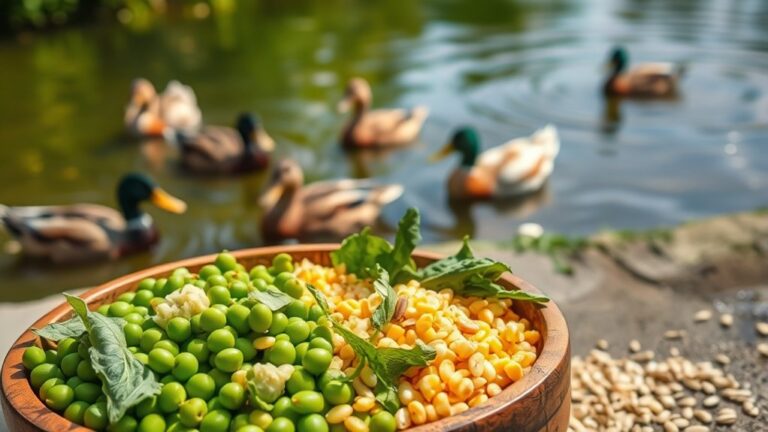
You’ll find birds eating a mix of seeds, fruits, and insects daily to stay energized and healthy. They drink fresh water from ponds, streams, and even rain or dew to stay hydrated.
Their diet shifts with the seasons, with more protein-rich insects during nesting and high-energy seeds while migrating.
Birds also adapt their feeding habits based on their habitat, including urban areas. If you want to understand what influences their eating choices, there’s much more to investigate.
Key Takeaways
- Birds eat a variety of seeds, fruits, insects, and nectar daily to meet their nutritional and energy needs. Their diet changes seasonally, focusing on high-protein insects during breeding and fatty seeds or fruits during migration.
- Birds drink water from natural sources like ponds, streams, dew, and birdbaths to stay hydrated throughout the day.
- Different species have specialized feeding habits. For example, hummingbirds consume nectar, while woodpeckers eat insects found under bark.
- Urban birds adapt by using artificial feeders and foraging diverse foods. They combine natural and human-provided resources to get what they need.
What Do Birds Eat and Drink Every Day?
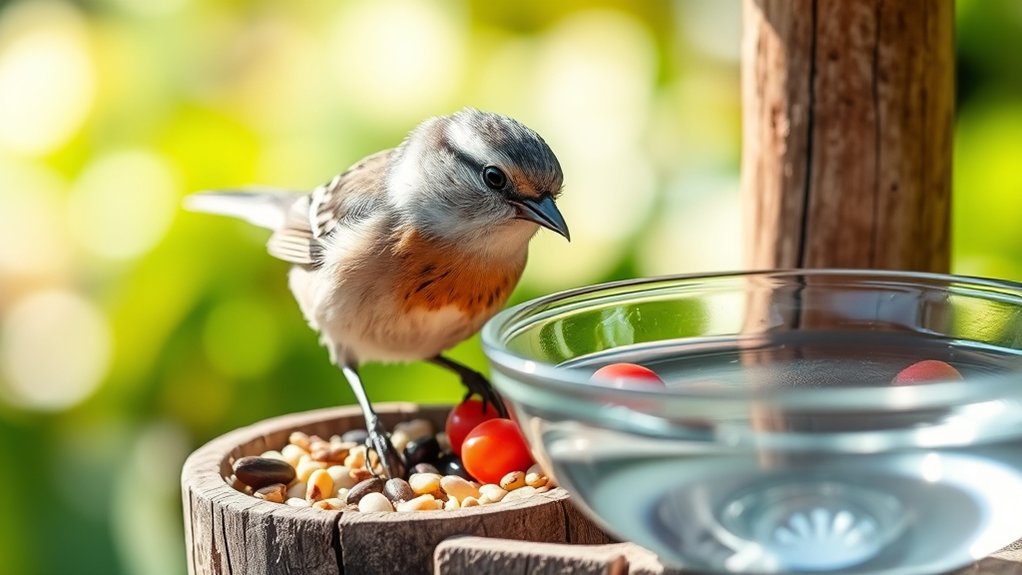
Although birds’ diets vary widely across species, you’ll find that most eat a mix of seeds, fruits, insects, and nectar to meet their nutritional needs. When you observe birds, you’ll notice their eating habits often shift with migration patterns.
During migration, they consume high-energy foods, like fatty seeds or protein-rich insects, to fuel their long journeys. You’ll also see differences in nesting diets, as parent birds focus on feeding their young with more protein-heavy food sources such as insects and small invertebrates to promote growth.
Outside breeding seasons, many birds lean more on seeds and fruits, which are easier to find and digest. So, when you’re watching birds throughout the year, keep in mind that their diet adapts to their life stage and environmental changes.
This dynamic eating behavior helps them survive and thrive in varying habitats and climates.
Where Do Birds Find Water and Stay Hydrated?
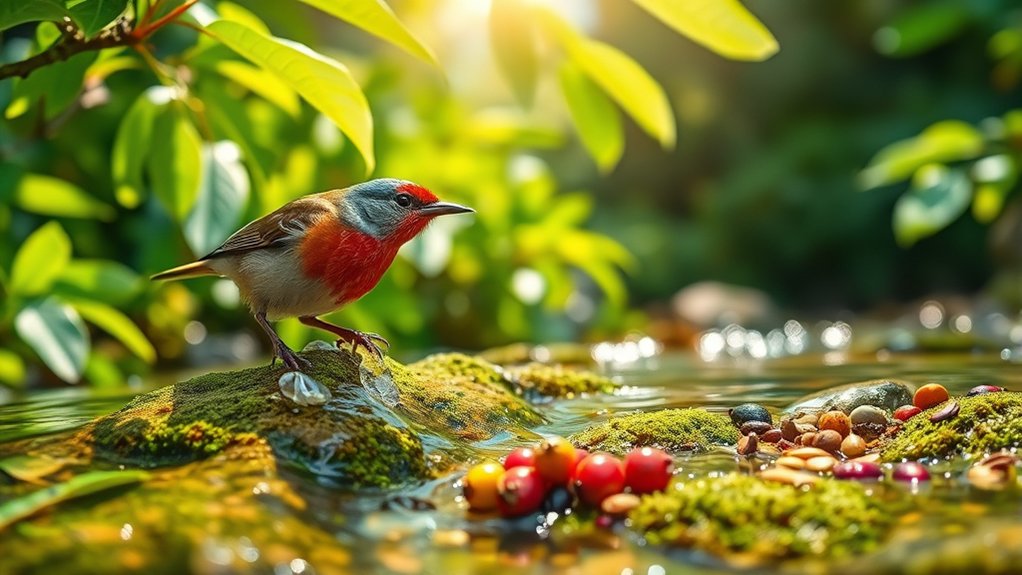
You might be wondering, where do birds actually get their water to stay hydrated? Well, they often rely on natural sources like ponds, streams, and even rainwater. It’s pretty interesting to see how they manage that, right?
Getting a handle on their hydration habits really helps you understand how they survive in all kinds of different environments. Birds are pretty clever when it comes to finding water!
Natural Water Sources
When birds need to stay hydrated, they rely on natural water sources like rivers, lakes, and ponds. These sources provide essential hydration, especially during long journeys influenced by bird migratory patterns or while caring for young during nesting behaviors. You’ll find birds adapt to their environment by seeking out water where it’s most accessible.
Here are three natural water sources birds commonly use:
- Streams and Rivers Offer fresh, flowing water, ideal during migration stops.
- Ponds and Lakes Provide stable water access near nesting sites.
- Dew and Rainwater Collected on leaves or in small puddles, vital in dry areas.
Bird Hydration Habits
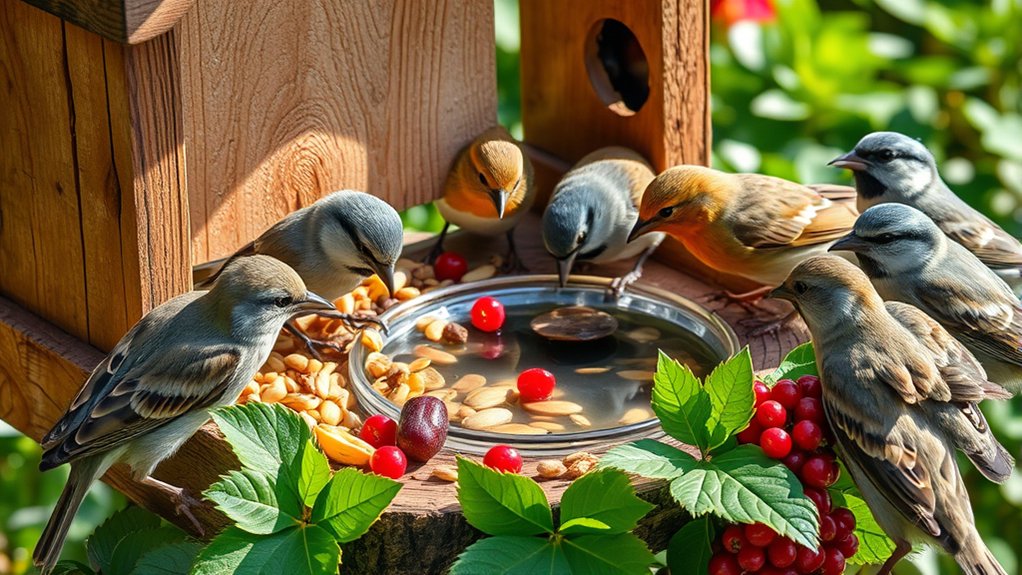
Birds don’t just drink from natural water sources; they develop habits that help them find and stay hydrated throughout the day. You’ll notice many birds visiting birdbaths, puddles, or even dew on leaves to sip water. This hydration is essential not only for survival but also for feather maintenance, as clean, moist feathers keep them insulated and flight-ready.
During nesting season, you’ll see birds prioritize hydration to support nesting nutrition, ensuring they have enough energy for egg production and feeding chicks. Sometimes they get moisture from the food they eat, especially juicy fruits and insects.
Which Seeds and Grains Do Birds Commonly Eat?
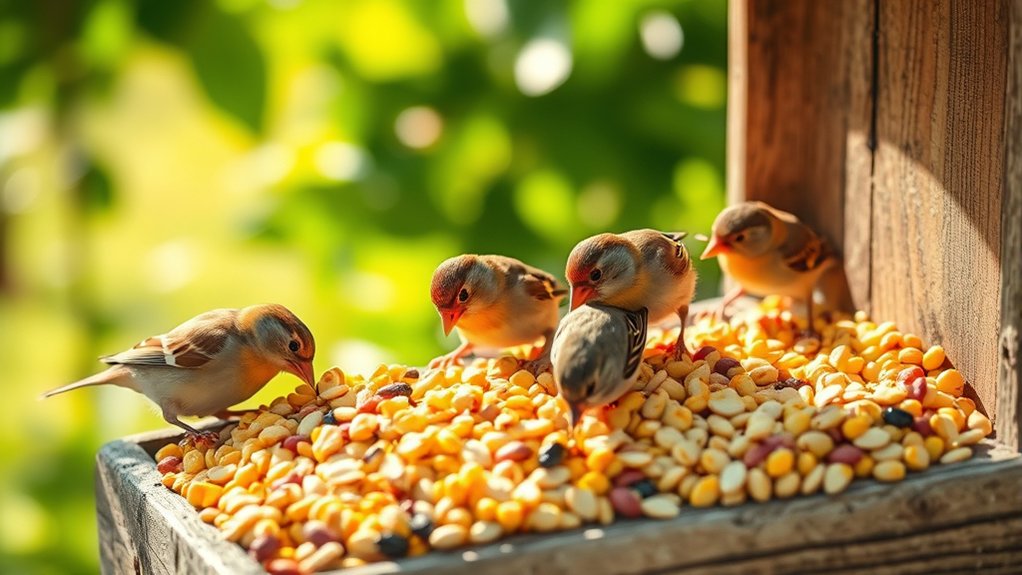
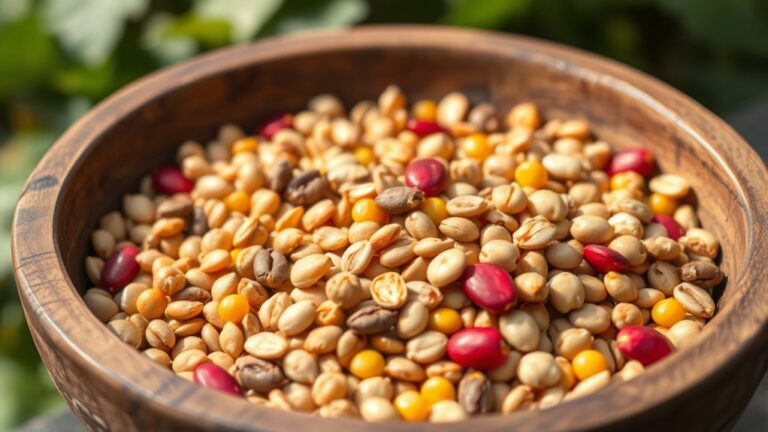
Although many factors influence their diet, small seeds and grains form the staple of most wild birds’ meals. When you observe birds feeding, you’ll notice they thrive on a rich seed diversity and various grain varieties that supply essential nutrients and energy. Understanding these preferences helps you provide the right food if you’re birdwatching or feeding at home.
Here are three common seeds and grains birds commonly eat:
- Sunflower Seeds Packed with fat and protein, these attract a wide range of birds from finches to cardinals.
- Millet Small and easy to eat, millet is favored by sparrows and juncos, supporting their daily energy needs.
- Safflower Seeds These appeal to cardinals and grosbeaks, offering a good fat source while deterring squirrels.
Why Are Insects Important in Birds’ Daily Diets?
You’ll find that insects give birds important nutrients they just can’t get from seeds alone. They’re full of protein, which helps birds build strong muscles and keep active. So, when you think about it, it’s clear why insects are such a key part of many birds’ daily meals.
Nutritional Benefits of Insects
Why do insects play such an essential role in a bird’s daily diet? Because they provide key nutrients that support critical functions. When you think about bird migration, insects offer the energy birds need to travel long distances. Plus, insects help maintain vibrant feather coloration, which is indispensable for attracting mates and camouflaging.
Here are three nutritional benefits insects provide:
- Rich in vitamins and minerals – essential for immune support and overall health.
- High in antioxidants which protect cells during stressful flights like migration.
- Supply of fatty acids promoting healthy feathers and bright coloration.
Insects as Protein Sources
Beyond vitamins and antioxidants, insects serve as a primary protein source for many birds, fueling muscle development and daily activities. When you watch birds during migrant feeding, you’ll see them actively hunting insects to build energy reserves for long flights.
This protein-rich diet is *paramount*, especially during migration, as it supports stamina and overall health. During nesting nutrition, insects become even more *indispensable*. Birds rely on them to provide the nutrients necessary for egg production and to feed hungry chicks, ensuring proper growth and survival.
How Do Fruits and Nectar Fuel Bird Energy?
How exactly do fruits and nectar keep birds energized throughout the day? These natural sweets deliver quick, accessible energy that supports vital activities like migration patterns and feather maintenance. When you observe birds feeding, you’ll notice they rely on these sugary sources to fuel their demanding lifestyles.
Here’s how fruits and nectar power birds:
- Rapid Energy Boost: The simple sugars in nectar and ripe fruits convert quickly into energy, helping birds sustain long flights during migration patterns without lag.
- Hydration Source: Nectar and juicy fruits contain water, keeping birds hydrated, which is essential for prime feather maintenance and overall health.
- Nutrient Supply: Besides sugars, fruits provide vitamins and antioxidants that support feather strength and repair, essential for insulation and flight efficiency.
How Do Small Animals Fit Into a Bird’s Diet?
You’ll find that many birds rely on insects for essential nutrients and energy. Small animals like insects and larvae provide a protein-rich meal that supports growth and survival. So, how exactly do birds catch and benefit from these tiny prey? Let’s take a closer look.
Insect Consumption Benefits
Why do birds rely so heavily on insects and other small animals in their diet? These tiny creatures offer crucial nutrients that support key bird activities. When you observe birds, you’ll notice how insect consumption benefits them in specific ways:
- Feather maintenance: Insects provide essential proteins and fats, helping birds keep their feathers strong and flexible for flight and insulation.
- Nest building: Many birds use insect silk, webs, or even insect parts to reinforce their nests, ensuring durability and comfort for their young.
- Energy boost: Insects are rich in calories, giving birds the energy to forage, migrate, and care for their chicks.
Small Animal Predation
Where do birds find the variety of nutrients they need beyond insects? Small animal predation fills that gap. Many birds hunt tiny mammals, amphibians, or reptiles to get essential proteins and fats.
You’ll notice this especially during mating rituals when birds need extra energy to attract partners or defend territories. Nesting behaviors also demand more nutrition, as parents must feed themselves and their chicks adequately.
By preying on small animals, birds secure nutrients essential for egg production and chick growth. This diet diversity helps them thrive in different habitats and seasons.
How Do Seasonal Changes Affect Bird Eating Habits?
As the seasons shift, birds adjust their eating habits to survive changing conditions. You’ll notice their diet changes mainly due to seasonal migration and breeding diet needs. During migration, birds often fuel up on energy-rich foods like berries and insects to sustain long flights.
When breeding season arrives, their diet shifts to protein-packed insects and larvae to support chick growth.
Here are three key ways seasonal changes affect bird eating habits:
- Seasonal Migration: Birds seek high-calorie foods to build fat reserves for long journeys.
- Breeding Diet: Parents consume more protein to nurture their young with nutrient-rich food.
- Winter Adaptation: With fewer insects, birds rely more on seeds, nuts, and berries for sustenance.
Understanding these shifts helps you appreciate how birds cleverly adapt their diets to thrive year-round.
What Feeding Habits Differ Among Bird Species?
Although all birds need food to survive, their feeding habits can vary widely depending on their species. When you observe different birds, you’ll notice distinct feeding behaviors shaped by their dietary preferences. For instance, hummingbirds feed on nectar, using their long beaks to access flowers, while woodpeckers peck at tree bark to find insects.
Seed-eating birds like finches crack open seeds with strong beaks, whereas raptors hunt live prey such as rodents or fish.
Your understanding of these differences helps you appreciate how birds occupy various ecological niches. Some birds are opportunistic feeders, adapting to available food, while others have specialized diets that restrict their feeding behaviors.
These dietary preferences influence not only what they eat but also how and where they feed. Recognizing these habits gives you insight into their survival strategies and the diverse roles birds play in ecosystems worldwide.
How Do Birds Adapt Their Diets in Urban Areas?
You’ve seen how birds have different diets based on their species and habitats. In urban areas, birds adapt their diets cleverly to thrive despite the challenges of city life. They rely on a mix of natural and human-provided food sources, adjusting their habits through:
- Urban foraging: Birds scavenge in parks, gardens, and streets, finding insects, seeds, and discarded food scraps to supplement their diet.
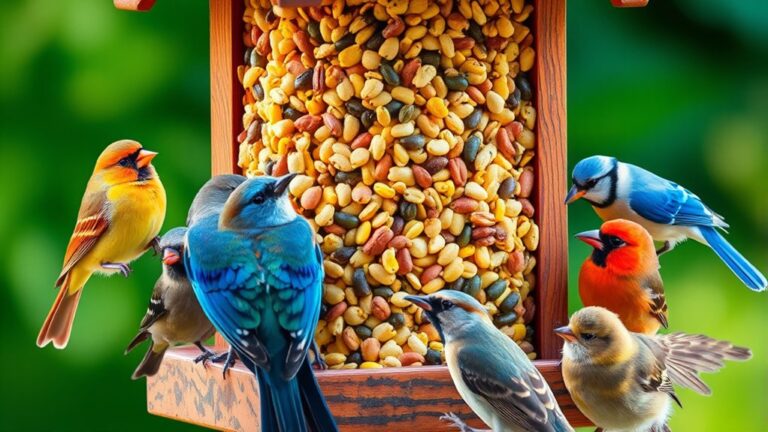
- Artificial feeders: Many birds take advantage of feeders you put out, which offer seeds, suet, or nectar, providing reliable nutrition especially in harsh weather.
- Diet flexibility: Urban birds often broaden their preferences, eating more processed or unconventional foods than their rural counterparts.
Why Bird Diets Matter for Conservation Efforts
Understanding bird diets plays a crucial role in conservation efforts because it helps you identify which habitats and food sources need protection or restoration. When you know what birds eat, you can support their needs throughout the year, especially during critical periods like bird migration and nesting behaviors.
Migrating birds rely on stopover sites rich in specific foods to refuel, so preserving these areas ensures they complete their journeys safely. Likewise, during nesting, birds need nutrient-rich diets to raise healthy chicks. If you neglect these dietary needs, populations can decline, affecting entire ecosystems.
Frequently Asked Questions
How Do Birds Digest Their Food Efficiently?
You digest food efficiently by having a specialized bird digestion system that breaks down food quickly. Your crop stores food temporarily, while the gizzard grinds it with small stones, aiding mechanical digestion.
Enzymes in your stomach chemically break down food, allowing nutrient absorption in the intestines. This process guarantees you get the energy and nutrients you need fast, keeping you active and healthy throughout the day.
What Role Do Bird Beaks Play in Their Eating Habits?
Your bird’s beak plays a vital role in its eating habits by showcasing beak adaptations tailored to its diet. You’ll notice different shapes and sizes depending on feeding techniques. Sharp, hooked beaks help tear meat, while long, slender beaks probe flowers for nectar.
These adaptations let your bird efficiently capture, manipulate, and consume food, ensuring it meets its nutritional needs daily. Understanding these traits helps you appreciate how birds thrive in diverse environments.
How Often Do Birds Need to Eat in a Day?
You might think birds eat constantly, but they usually need to eat several times a day, especially during bird migration patterns when energy demands skyrocket. During bird nesting behaviors, they often feed more frequently to support their young.
Do Birds Have Preferred Feeding Times?
Yes, you’ll notice birds often have preferred feeding times, usually early morning and late afternoon. These habits align with their energy needs during bird migration patterns, helping them fuel long journeys.
Seasonal feeding habits also play a role; birds adjust when and what they eat based on food availability throughout the year. So, by paying attention to these times, you can better observe their natural behavior and support their feeding needs effectively.
How Do Baby Birds Learn What to Eat?
Like a student learning from a patient teacher, baby birds rely on feeding parental guidance to uncover what to eat. You’ll see nestling nutrition carefully provided as parents bring varied foods, teaching their young which items are safe and nourishing.
Through repeated feeding and observation, the chicks learn to recognize suitable food, ensuring they grow strong and healthy. You can think of this process as nature’s way of passing down essential survival skills.
Conclusion
Imagine watching a vibrant bird sip sparkling water from a morning dew drop, then peck at juicy berries and crunchy seeds. You see how their varied diet fuels their lively dance through the trees.
By understanding what birds eat and drink daily, you can appreciate their role in nature’s delicate balance. So next time you spot a bird, remember, it’s not just eating; it’s surviving, thriving, and shaping the world around you through what birds eat and drink daily.