3 Vegetables That Grow Well Together
Finding the perfect combination of vegetables to grow together can be tricky, especially when you’re short on space or just starting out. You’re not alone—many gardeners struggle to figure out which plants support each other instead of competing for resources.
If you want a smart, space-saving garden bed that’s both productive and easy to manage, this guide on vegetables that grow well together is here to help. Vegetables That Grow Well Together.
You can grow tomatoes, basil, and carrots together for a smart, space-saving garden bed. Tomatoes grow tall and give basil light shade, while carrots use the soil below, so they don’t compete much.
This combo helps reduce weeds, supports healthy growth, and uses your space efficiently.
Plant them in similar sun and water conditions, and give each enough airflow. With a little planning, you’ll set up a productive mix that can teach you even more.
Key Takeaways
- Tomatoes, basil, and carrots grow well together because they use different garden spaces. Tomatoes provide height, while basil benefits from their shade.
- Carrots grow underground, reducing competition with above-ground crops. Companion planting helps plants share resources and improve overall garden health.
- Match vegetables with similar water and sunlight needs for better growth.
Why These Vegetables Grow Well Together

These vegetables grow well together because they each bring something useful to the garden without competing for the same resources. You get better crop compatibility when their roots, heights, and growth habits differ, so they don’t crowd each other out.
One plant may use surface moisture while another reaches deeper, and that balance helps your bed stay efficient. You also benefit from nutrient sharing, since some vegetables improve the soil structure or make minerals easier for nearby plants to access.
That means you can support stronger growth without constantly adding more fertilizer. When you plan this way, you reduce stress on each plant and make the most of every inch of space.
You’ll also notice fewer gaps where weeds can take hold. In short, smart pairing helps your garden work as a team, and you get healthier harvests with less effort.
3 Vegetables That Grow Well Together

Three vegetables that grow well together are tomatoes, basil, and carrots. You can use this trio to make your garden more productive and balanced. Tomatoes give basil light shade, while basil can help you enjoy better flavor and fewer pests.
Carrots grow below the soil, so they won’t compete much with the other two. When you plan planting pairs, think about space, sunlight, and root depth.
- Tomatoes offer height and support structure.
- Basil fits neatly around tomato plants.
- Carrots use the lower soil layer.
- Together, they help you use garden space well.
- They’re easy to include in crop rotation plans.
You’ll get better results when you mix crops with different needs. This reduces competition and keeps your beds working harder for you. If you rotate these vegetables next season, you can also help maintain soil health and limit pest buildup.
How to Plant Companion Vegetables for Success
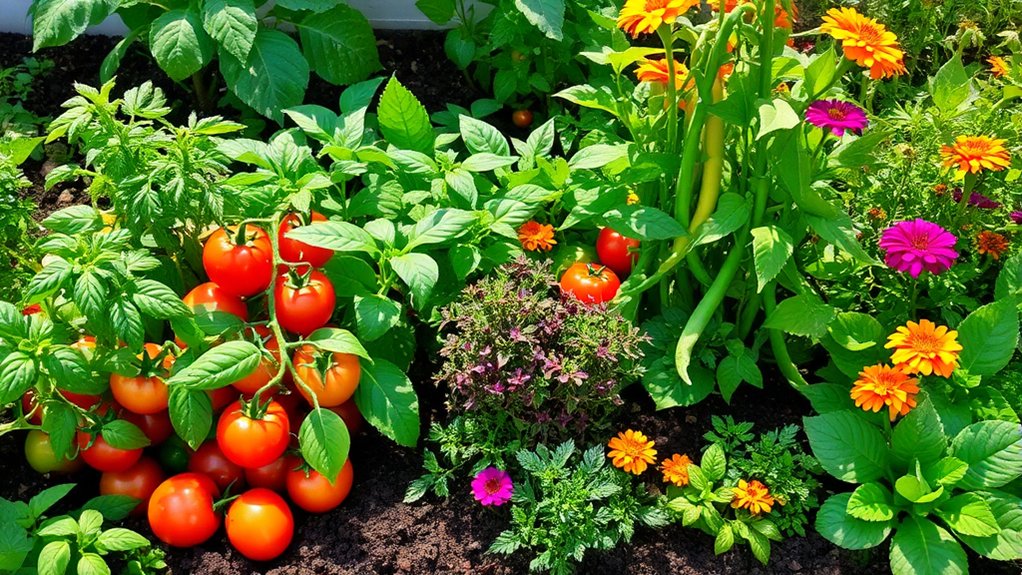
To plant companion vegetables successfully, start by matching plants with similar sunlight, water, and spacing needs. You’ll get better results when you group crops that support each other instead of competing.
Place tall plants where they won’t shade smaller ones, and leave enough room for airflow to reduce disease. Use companion planting to pair fast growers with slower crops, like radishes with carrots or lettuce under tomatoes.
Add herbs or flowers nearby to attract pollinators and helpful insects, which increases plant benefits across the bed. Rotate your pairings each season so pests don’t build up in one spot.
Water deeply at the base, mulch to hold moisture, and check regularly for crowding or nutrient stress. When you plan each bed with purpose, your vegetables can share resources, stay healthier, and produce more.
Start small, observe what thrives, and adjust your layout each season for stronger harvests.
Frequently Asked Questions
Which Vegetables Should Never Be Planted Together?
You shouldn’t plant beans beside onions, garlic, or leeks, and you shouldn’t pair potatoes with tomatoes or peppers. These combinations can stunt growth, invite disease, and increase pest attraction.
Keep brassicas away from strawberries, and avoid planting carrots near dill or fennel. You’ll also want crop rotation to prevent soil problems.
How Much Sunlight Do Companion Vegetables Need?
Most companion vegetables need at least 6 to 8 hours of direct sunlight daily, though some tolerate 4 to 6 hours if you match their growth patterns well. You should check each plant’s sunlight requirements before pairing them, since leafy greens often handle partial shade while tomatoes, peppers, and cucumbers crave full sun.
If you give them enough light, you’ll boost growth, improve yields, and keep your garden healthier overall.
Can Companion Planting Reduce Garden Pests?
Yes, companion planting can reduce garden pests. Why invite trouble when plants can help? You can pair certain crops to confuse pests, mask scents, and attract beneficial insects that prey on harmful bugs.
Some companions act as pest deterrents too by releasing strong aromas or creating barriers. While it won’t eliminate every problem, you’ll often see fewer infestations and healthier growth when you plan your garden thoughtfully.
What Soil pH Is Best for Mixed Vegetable Beds?
You’ll usually do best with a soil pH between 6.0 and 7.0 for mixed vegetable beds, because most crops absorb nutrients well there. You should test your soil first, then add soil amendments like compost, lime, or sulfur to fine-tune it.
Keeping a steady nutrient balance helps roots grow strong and reduces deficiencies. If you grow acid-loving or alkaline-tolerant crops, you can adjust small areas separately.
How Often Should Companion Vegetables Be Watered?
You should water companion vegetables whenever the top inch of soil feels dry, usually one to three times a week. Your watering frequency depends on heat, rain, soil type, and plant size.
Keep moisture retention high by adding mulch and watering deeply at the root zone. You don’t want soggy soil, so check drainage often. In hot spells, you’ll likely need to water more often to keep plants thriving.
Conclusion
When you plant these three vegetables side by side, you’re doing more than filling a garden bed. You’re building a small, living partnership. Each one supports the others, like roots woven beneath the soil, quiet and strong.
That harmony can symbolize how the best growth often happens together, not alone. So as you water, watch, and harvest, remember: your garden is teaching you that teamwork can turn simple seeds into something lasting.
Growing these three vegetables well together shows how companion planting can create a thriving garden. It’s a great example of how plants—and people—flourish when they grow in harmony.