Best Companion Plants for Tomatoes: 3 Top Picks
Growing healthy, flavorful tomatoes can be a challenge, and if you’ve ever struggled with pests, poor yields, or lackluster taste, you’re not alone.
Many gardeners wish there was a simple way to boost their tomato plants naturally without relying on chemicals or complicated techniques.
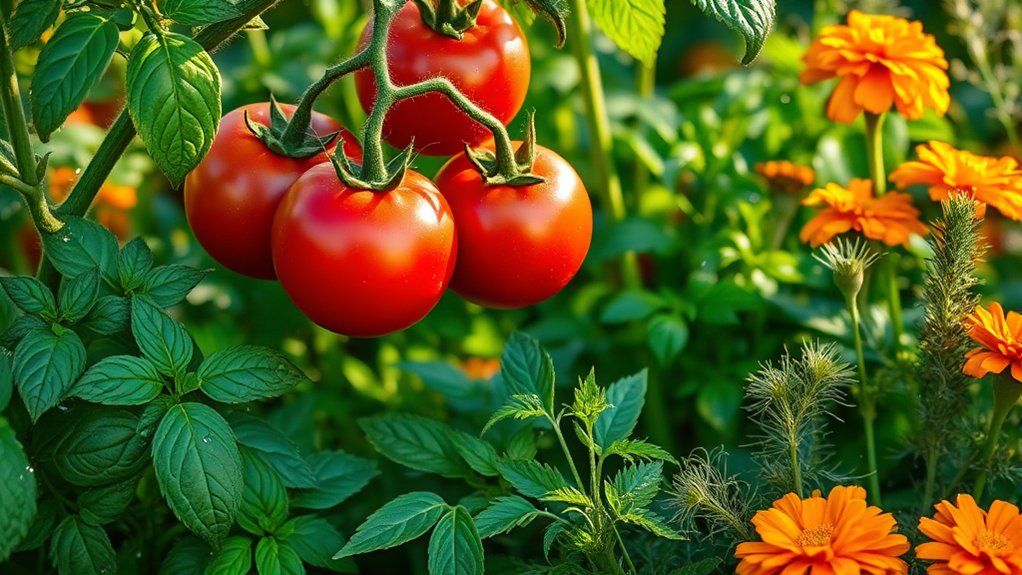
The best companion plants for tomatoes are basil, marigolds, and nasturtiums.
You can tuck basil between tomato plants to boost flavor and keep pests away, while marigolds add bright color and help deter aphids, whiteflies, and nematodes.
Nasturtiums spread low around the bed, confuse pests, and attract helpful insects.
Together, they make your tomato patch healthier, tidier, and more productive.
Keep going, and you’ll see how to use each one for the best results.
Key Takeaways
- Basil is a top tomato companion, thriving in similar sun and water conditions while boosting flavor and helping deter pests.
- Marigolds protect tomatoes by repelling nematodes, aphids, whiteflies, and other pests, while adding bright color to the garden.
- Nasturtiums act as a trap crop and pest deterrent, drawing insects away from tomatoes and attracting beneficial pollinators.
- Plant basil between tomato plants, marigolds along bed edges, and nasturtiums nearby to maximize space and pest control.
- Choose compact, low-maintenance companions and prune basil regularly to prevent crowding and support healthy growth.
Basil: A Classic Tomato Companion

Basil is one of the best-known tomato companions because it grows well alongside tomatoes and fits neatly into the same garden space. You can tuck it between tomato plants to make the most of limited beds or containers.
Basil’s strong scent may help with pest deterrence, and many gardeners value it for flavor improvement, especially when you harvest both crops for the kitchen.
You’ll also find that basil likes similar warmth, sun, and watering habits, so caring for both plants feels simple and efficient. Keep basil trimmed so it doesn’t crowd your tomatoes, and pick leaves often to encourage fresh growth.
If you plant it nearby, you create a compact, useful pairing that supports a productive garden and gives you fresh ingredients at the same time.
Marigolds That Protect Tomato Plants

Marigolds are a smart choice when you want a colorful plant that may also help protect your tomatoes from pests. You can tuck them along bed edges or between tomato rows, where their bright blooms add cheer and their scent can discourage nematodes, whiteflies, and aphids.
That gives you practical pest deterrence benefits without extra effort. Choose French marigolds for compact growth, or African marigolds if you want taller color around your patch.
Keep them in full sun and well-drained soil, then water them moderately so they don’t crowd your tomatoes. You’ll also support soil health improvement by keeping roots active and organic matter cycling in the bed when spent flowers decompose.
For best results, plant marigolds early and let them grow alongside your tomatoes all season. They’re easy to maintain, low-cost, and useful if you want a prettier garden that works a little harder for you.
Why Nasturtiums Work Well With Tomatoes?
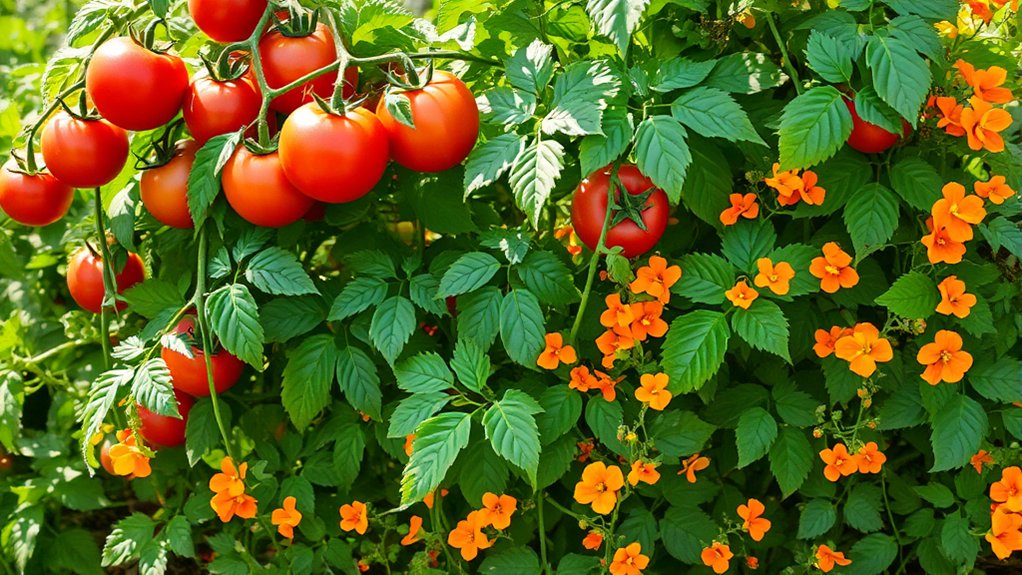
If you like the idea of a plant that does more than just fill space, nasturtiums are a great companion for tomatoes. You can tuck them near your tomato beds to help confuse pests and draw aphids away from your crop. Their peppery leaves and bright blooms add real aesthetic appeal, so your garden looks lively while working harder for you.
Nasturtiums also spread low across the soil, which can shade roots, reduce weeds, and keep moisture from escaping too fast. You’ll appreciate their pest deterrence benefits most when squash bugs, whiteflies, or aphids start showing up. Because nasturtiums attract beneficial insects too, they can support a healthier tomato patch overall.
They don’t compete much with tomatoes for space, and they’re easy to grow from seed. If you want a companion plant that’s useful, attractive, and low-maintenance, nasturtiums fit the job well.
Frequently Asked Questions
Which Herbs Improve Tomato Flavor Most?
Basil usually boosts your tomatoes’ flavor most, especially when you grow it nearby. You’ll also notice oregano, thyme, and parsley can augment flavor profiles in subtle ways.
Try herb combinations like basil with thyme or basil with parsley to diversify aroma and taste around your plants. These herbs won’t change the fruit genetically, but they can support healthier growth and make your garden’s harvest taste richer and more vibrant.
What Flowers Attract Pollinators to Tomato Gardens?
You can lure bees like a banquet lit at dawn by planting marigolds, zinnias, borage, nasturtiums, and cosmos near your tomatoes. These flower varieties match pollinator preferences with bright colors, open blooms, and easy nectar access.
You’ll give bees, hoverflies, and butterflies a welcome stop, and they’ll help your garden hum. Mix different heights and stagger bloom times so you keep visitors coming all season.
Can Companion Plants Deter Tomato Pests Naturally?
Yes, you can use companion plants for pest control around tomatoes, and they often work as natural repellents. You’ll notice strong-scented herbs like basil, marigolds, and chives help confuse or deter aphids, whiteflies, and nematodes.
Plant them close to your tomatoes, and you’ll create a healthier garden without harsh chemicals. They won’t eliminate every pest, but they can reduce damage and support stronger, better-growing plants overall.
How Close Should Companions Be Planted to Tomatoes?
You should plant companions 6 to 18 inches from tomatoes, depending on their size, so you leave room for airflow and root growth. In companion planting, smaller herbs can sit closer, while larger plants need more space.
Keep your planting distance wide enough that tomatoes won’t get crowded, shaded, or compete for water. You’ll get better growth and fewer disease issues when you match spacing to each plant’s mature size.
Which Vegetables Grow Well Beside Tomatoes?
You can grow peppers, carrots, onions, garlic, basil, and lettuce beside tomatoes. Peppers are great neighbors, and many pepper varieties thrive in the same warm, sunny bed.
Carrot companions also fit well since they won’t crowd tomato roots much. Like a good band, these vegetables play different parts without stepping on each other’s toes.
Avoid planting potatoes nearby because they can share pests and disease with your tomatoes.
Conclusion
When you tuck basil, marigolds, and nasturtiums beside your tomatoes, you’re not just filling empty soil. You’re stacking small advantages. Basil may catch your attention with its scent, marigolds with their bright warning, and nasturtiums with their trailing charm.
By coincidence, each one can help your tomato patch thrive. So as you water, prune, and harvest, let these companions work quietly with you. They support healthier plants and a more rewarding crop, making them the best companion plants for tomatoes.