7 Best Foods to Put in a Bird Feeder
If you love watching birds visit your backyard but struggle to find the right foods to attract them, you’re not alone. Many bird enthusiasts want to support their feathered friends with nutritious options but feel overwhelmed by all the choices out there.
To attract more birds and support their health, fill your feeder with nutrient-rich favorites like black oil sunflower seeds, nyjer, and millet. Add nutritious nuts such as peanuts and walnuts, plus suet cakes or peanut butter for energy.
Don’t forget fruits like blueberries or apples for variety, and offer mealworms to provide protein. Mixing these foods appeals to many species year-round and helps birds during migration and breeding.
Keep exploring to find out how each food benefits your feathered visitors.
Key Takeaways
- Black oil sunflower seeds attract many bird species due to their high fat content and thin shells.
- Nyjer seeds are ideal for finches and small birds, especially in winter.
- Peanuts and other unsalted nuts provide essential fats and proteins for chickadees and woodpeckers.
- Suet cakes and mealworms offer high-energy fats and protein, supporting birds in cold seasons.
- Fresh and dried fruits like apples, grapes, and berries add vitamins and natural sugars for diverse bird diets.
Why Picking the Right Foods Makes a Difference
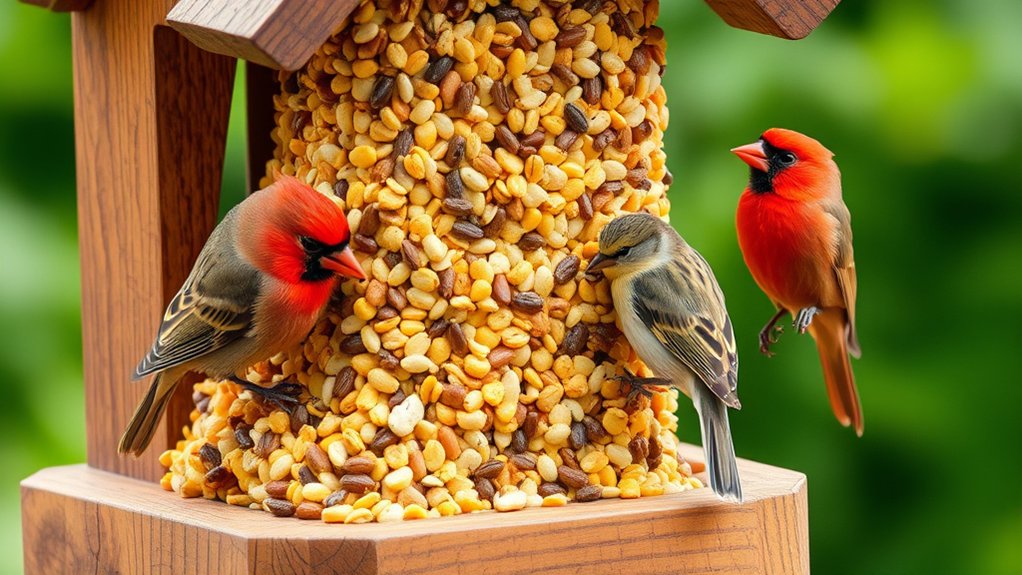
Although it might seem simple, choosing the right foods for your bird feeder directly affects which birds visit and how often. During bird migration, your feeder becomes a vital stopover, so offering the right nutrition helps attract a variety of species passing through.
You want to provide foods that meet the energy needs of migrating birds, especially as they prepare for long flights. Weather impact also plays a big role. Cold snaps increase birds’ energy demands, so high-fat foods become more appealing. Conversely, in warmer weather, birds may prefer lighter options.
Classic Seeds That Attract the Most Birds
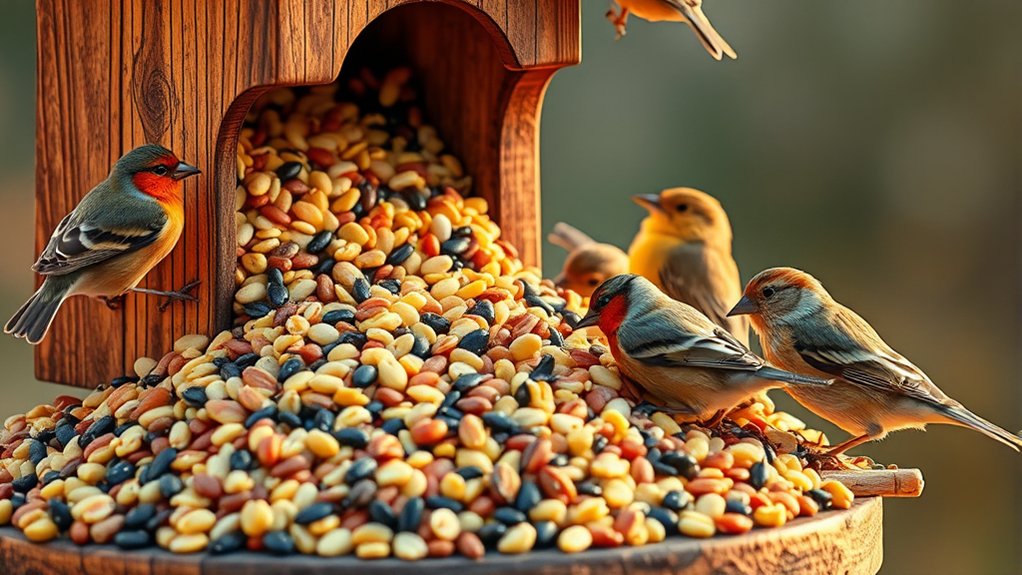
You’ll want to pick popular seed varieties that attract lots of different bird species. Classic seeds like sunflower and millet are favorites for many birds. So, let’s take a look at which seeds will bring the most feathered visitors to your feeder.
Popular Seed Varieties
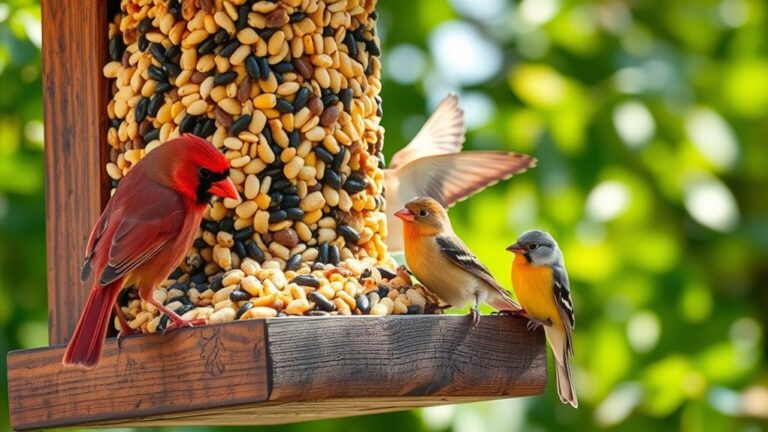
Several popular seed varieties consistently attract a wide range of birds to your feeder. Black oil sunflower seeds top the list, loved for their high fat content and thin shells that small and large birds can easily crack.
Nyjer seeds are perfect for finches, drawing in vibrant goldfinches and siskins. If you want to offer variety, seed blends combine different seeds to appeal to multiple species, but keep regional preferences in mind since birds in your area may favor specific seeds.
For example, safflower seeds work well in the South, while millet is popular in the Midwest. By choosing the right seed varieties, you’ll create a bird feeder that’s both inviting and nutritious, encouraging frequent visits from your local feathered friends.
Attracting Diverse Bird Species
How can you attract a wide variety of birds to your feeder? Understanding bird migration patterns helps you choose the right seeds at the right time.
Classic seeds like black oil sunflower, millet, and nyjer are favorites among many species. To keep your feathered visitors safe, follow predator safety tips: place feeders away from hiding spots and clear surrounding vegetation.
| Seed Type | Attracts | Best Season |
|---|---|---|
| Black Oil Sunflower | Cardinals, Chickadees | Spring & Fall |
| Millet | Sparrows, Doves | Summer |
| Nyjer | Finches, Siskins | Winter |
Nutritious Nuts That Boost Bird Feeder Visits
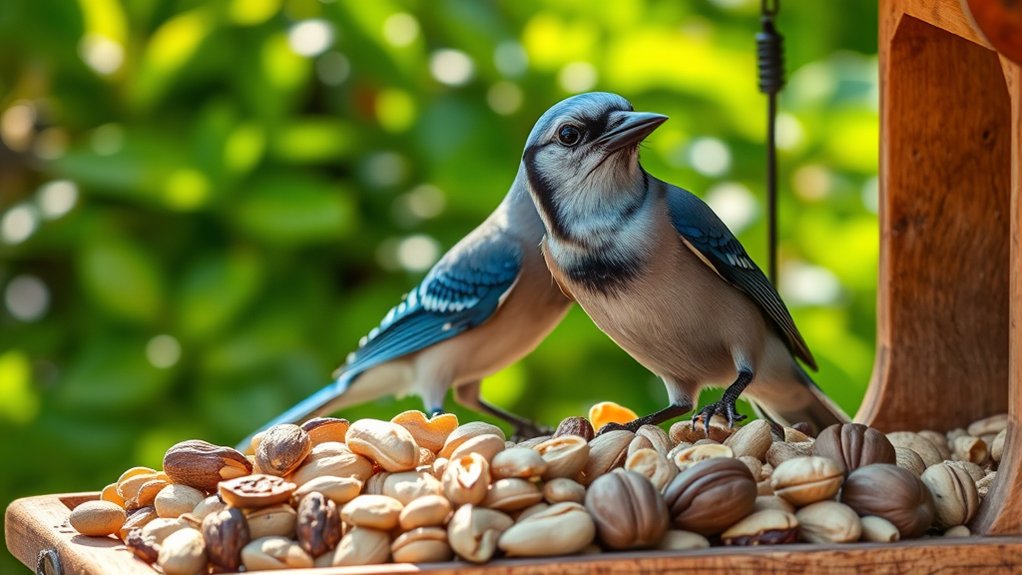
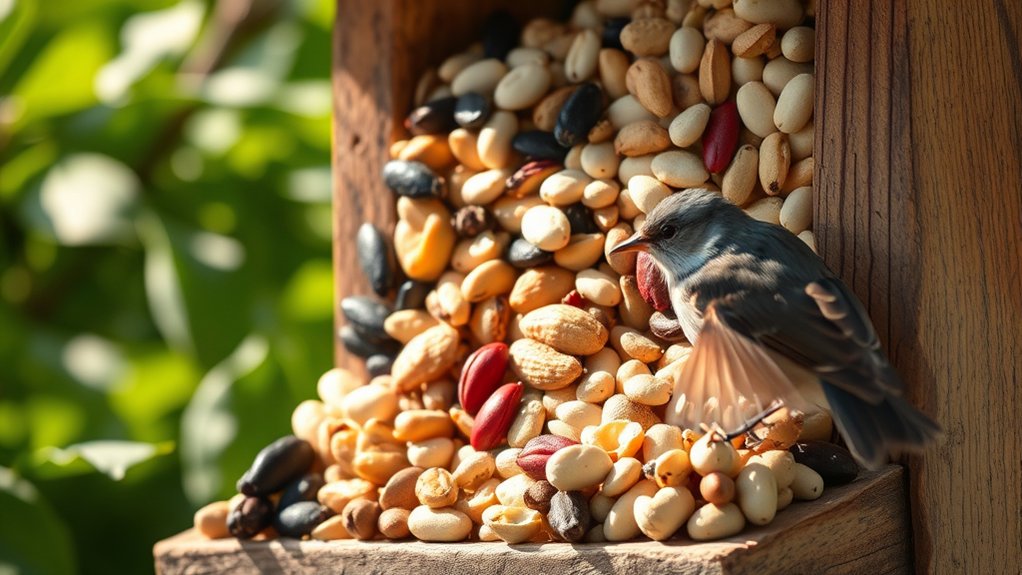
While many birds enjoy seeds and fruits, nutritious nuts offer a powerful way to attract a wider variety of feathered visitors to your feeder. Nuts like peanuts, walnuts, and almonds provide essential fats and proteins that fuel birds through colder months and migration periods.
Incorporating these into your bird feeder complements your bird friendly planting efforts, creating a welcoming habitat year-round.
Seasonal feeding tips suggest offering shelled nuts during winter when natural food is scarce, and whole nuts in warmer seasons to encourage natural foraging behavior. Make sure to avoid salted or flavored nuts, as they can harm birds.
Using platform feeders or mesh bags can help keep nuts accessible and fresh. By adding nutritious nuts to your feeding routine, you’ll see an increase in visits from chickadees, woodpeckers, nuthatches, and even jays, enriching your backyard birdwatching experience.
Fruits That Attract Birds to Your Feeder
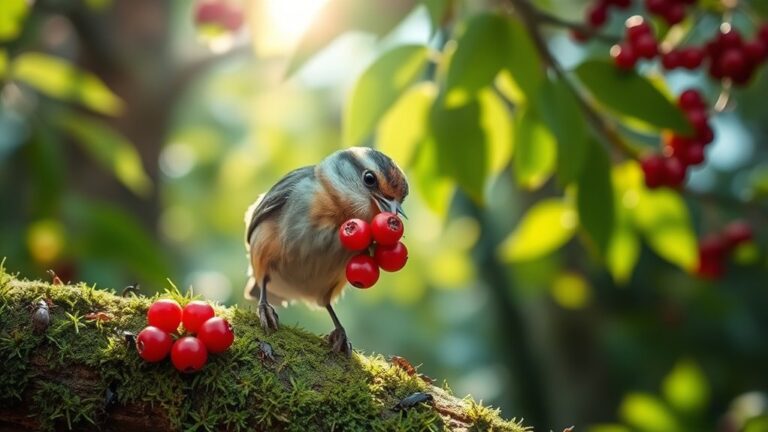
If you want to attract more birds, offering a variety of fruits that match their tastes and nutritional needs is a great idea. Think about seasonal fruits like berries and apples—they provide natural energy and important vitamins. When you pick the right fruits, you’ll notice your feeder staying busy throughout the year. It’s a simple way to keep those feathered visitors coming back!
Best Fruits for Birds
Several fruits stand out as top choices to attract a variety of birds to your feeder. These fruits fit well into different bird habitats and support birds during seasonal migration by providing essential energy.
You’ll find that offering a mix of these fruits can keep your feeder lively year-round.
| Fruit | Bird Types Attracted |
|---|---|
| Blueberries | Thrushes, Robins |
| Apples | Orioles, Woodpeckers |
| Grapes | Waxwings, Finches |
Nutritional Benefits of Fruits
Fruits not only attract a variety of birds but also provide essential nutrients that support their health and energy levels. When you offer fresh fruits in your feeder, you’re supplying crucial vitamins, minerals, and natural sugars that fuel birds’ daily activities.
These nutrients aid bird digestion by promoting gut health and efficient nutrient absorption. Understanding fruit harvesting helps you select ripe, nutrient-rich options that birds can easily digest. Birds often prefer fruits with softer textures, which break down quickly in their digestive systems, maximizing energy intake.
Including fruits like berries, apples, and oranges in your feeder encourages diverse species to visit, benefiting from these nutritional boosts. By choosing the right fruits, you support bird vitality and encourage repeated visits to your feeder.
Seasonal Fruit Choices
When should you change the fruits in your bird feeder to keep attracting a variety of species? Switch your offerings with the seasons to match birds’ natural diets.
In warmer months, fresh tropical fruit like mango or papaya can attract colorful species that enjoy juicy, sweet treats. As temperatures drop, dried berries become a valuable option since they’re easy to store, nutrient-dense, and birds love their concentrated flavor.
You can also mix in seasonal favorites such as apple slices or grapes to keep your feeder appealing. By rotating tropical fruit and dried berries throughout the year, you’ll provide a diverse menu that supports local bird populations and keeps your feeder busy no matter the season.
Suet and Fat-Based Foods for Feeding Birds
Why do birds flock to suet and other fat-based foods, especially during colder months? Bird fat provides a high-energy source essential for survival when temperatures drop. Suet, made from rendered animal fat, offers essential calories that help birds stay warm and active.
You can even try homemade suet recipes combining bird fat with seeds, nuts, and dried fruits to attract a variety of species.
Here’s a quick guide to fat-based bird foods:
| Food Type | Benefits |
|---|---|
| Suet Cakes | High energy, easy to hang |
| Peanut Butter | Rich in fats and protein |
| Lard Balls | Attracts woodpeckers and nuthatches |
| Suet with Seeds | Adds nutrition and texture |
| Fat Mixed with Berries | Provides energy and vitamins |
Offering these fat-rich treats will keep your feathered friends fueled through winter’s chill.
Mealworms and Insects for Protein-Loving Birds
Since birds need protein to build feathers and maintain energy, mealworms and insects make excellent additions to your feeder. These protein-packed snacks provide essential insect protein that many birds crave, especially during breeding and molting seasons.
Mealworms stand out for their impressive nutrition; they’re rich in amino acids and fats that fuel active birds. Offering live or dried mealworms can attract a variety of species such as bluebirds, wrens, and chickadees, all of which benefit from the high-quality protein.
Mealworms provide essential amino acids and fats, attracting species like bluebirds, wrens, and chickadees with high-quality protein.
Incorporating insects into your feeder helps support birds’ diets naturally, mimicking what they’d find in the wild. Unlike seeds alone, insect protein promotes muscle development and overall health.
You can buy mealworms easily or even raise them yourself for a fresh supply. Just make sure to keep them dry and clean to maintain their mealworm nutrition. By adding insects to your feeder, you give protein-loving birds a nutritious boost they’ll appreciate daily.
How Mixing Foods Brings More Birds to Your Feeder
Adding variety to your bird feeder can attract a wider range of species by meeting different dietary needs all at once. When you mix seeds, nuts, and dried fruits, you create a buffet that appeals to birds with diverse preferences.
During bird migration, many species pass through your area with varying nutritional requirements. Some need high-energy seeds while others seek protein-rich insects. Offering a combination helps support their energy needs and increases the chances that more birds will stop by.
Also, mixed foods cater to birds’ nesting habits. Breeding birds often look for specific nutrients to strengthen themselves and feed their young. By providing a mix, you help them find what they need nearby.
Plus, different food types encourage both ground-feeders and perching birds to visit your feeder. So, mixing foods not only boosts the variety of visitors but also supports their health during critical times like migration and nesting.
Frequently Asked Questions
How Often Should I Clean My Bird Feeder?
You should clean your bird feeder at least once every two weeks to keep it safe for your feathered visitors. Regular feeder cleaning helps prevent mold, bacteria, and disease, protecting bird health.
During wet or humid weather, clean it more often, even weekly. Always use a mild bleach solution or hot soapy water, then rinse thoroughly and dry before refilling.
Staying consistent with feeder cleaning guarantees a healthy environment for birds.
What Types of Feeders Prevent Seed Waste?
To prevent seed waste, you should choose feeders with thoughtful design, like tube or hopper feeders that control seed flow. These designs limit spillage and keep seeds dry.
Also, your seed selection matters. Pick seeds that suit your local birds to reduce leftovers. Nyjer or sunflower seeds work well in specialized feeders.
Can Feeding Birds Year-Round Harm Them?
Feeding birds year-round can sometimes harm them if it disrupts their natural bird migration and nesting habits. You might unintentionally encourage birds to stay in one place instead of migrating, which can affect their survival during harsh seasons.
Also, constant feeding during nesting can make them dependent on you, reducing their natural foraging skills. To help, adjust feeding based on local bird behavior and seasons, supporting their natural cycles.
How Do I Keep Squirrels Away From My Feeder?
To keep squirrels away from your feeder, use squirrel deterrents like baffles or cages that block access. Choose a feeder design with weight-sensitive perches that close when a squirrel lands. You might feel like a Victorian inventor tweaking your setup, but these modern tricks work!
Also, place your feeder away from jumping off points like trees or fences. Regularly cleaning up spilled seed helps too, so squirrels don’t get tempted to hang around.
What Is the Best Feeder Placement for Safety?
You should place your feeder where bird species feel safe, ideally 10-12 feet from trees or shrubs to prevent predators from ambushing. Make sure it’s at least 5 feet off the ground to deter ground predators.
Choose a spot with good feeder durability, like a sturdy pole or hanging hook, to withstand weather and squirrels. This placement helps birds feed calmly while keeping your feeder secure and accessible.
Conclusion
Choosing the right foods for your bird feeder is like planting a vibrant garden. You cultivate a lively, welcoming space where colorful visitors gather. Just as a gardener mixes blooms to attract butterflies, you can blend seeds, nuts, fruits, and insects to invite a diverse flock.
By feeding thoughtfully, you create a small sanctuary full of life and joy. So, vary it up and watch your feeder become a bustling haven for feathered friends. Remember, the best foods to put in a bird feeder will keep your backyard birds happy and coming back for more.