How to Grow Zucchini in 7 Steps
If you’ve ever tried growing zucchini and ended up with weak plants or tiny fruits, you’re not alone. Many people struggle to get their zucchini to thrive despite their best efforts.
The good news? With the right steps, you can grow healthy, productive zucchini plants that deliver delicious harvests all season long.
Choose a sunny spot with 6 to 8 hours of direct light and well-drained soil. Work in compost or well-rotted manure, then plant zucchini seeds 1 inch deep after frost danger passes, or set out hardened-off seedlings.
Water deeply at the base, mulch, and feed when plants are young and again at flowering.
Watch for pests and disease, prune lightly for airflow, and harvest fruits at 6 to 8 inches for the best yield and flavor, plus more tips ahead.
Key Takeaways
- Choose a sunny, well-drained spot and enrich the soil with compost before planting zucchini.
- Sow seeds after frost danger passes, about 1 inch deep. Thin or transplant seedlings after hardening off.
- Water deeply at the base, keeping soil evenly moist but not soggy. Use mulch to conserve moisture.
- Feed plants with balanced fertilizer or compost at planting and again when flowering begins.
- Harvest zucchini often at 6 to 8 inches long, using clean tools to encourage continuous production.
Choose the Best Spot for Zucchini
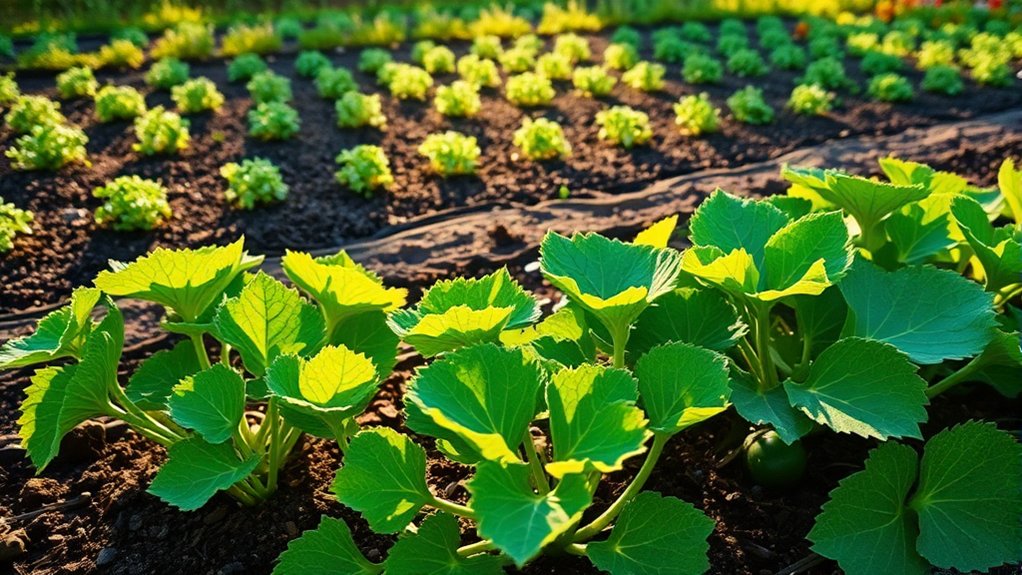
Pick a sunny spot with rich, well-drained soil for your zucchini, since these plants thrive in at least 6 to 8 hours of direct light each day. Check your sunlight requirements before you plant, because shade will slow growth and reduce fruiting.
You’ll get better results in a space that stays warm, open, and protected from strong winds. Leave enough room for vines to spread, since crowded plants compete for light and airflow.
If you’re short on space, choose a location near a fence or trellis that won’t block the sun. You can also think about companion planting, pairing zucchini with flowers or herbs that help attract pollinators and support healthy growth.
Avoid low spots where water lingers after rain, and don’t set your plants under trees or beside tall crops that cast heavy shade. A bright, spacious site gives your zucchini the strong start it needs for productive harvests.
Prepare Soil for Fast Growth
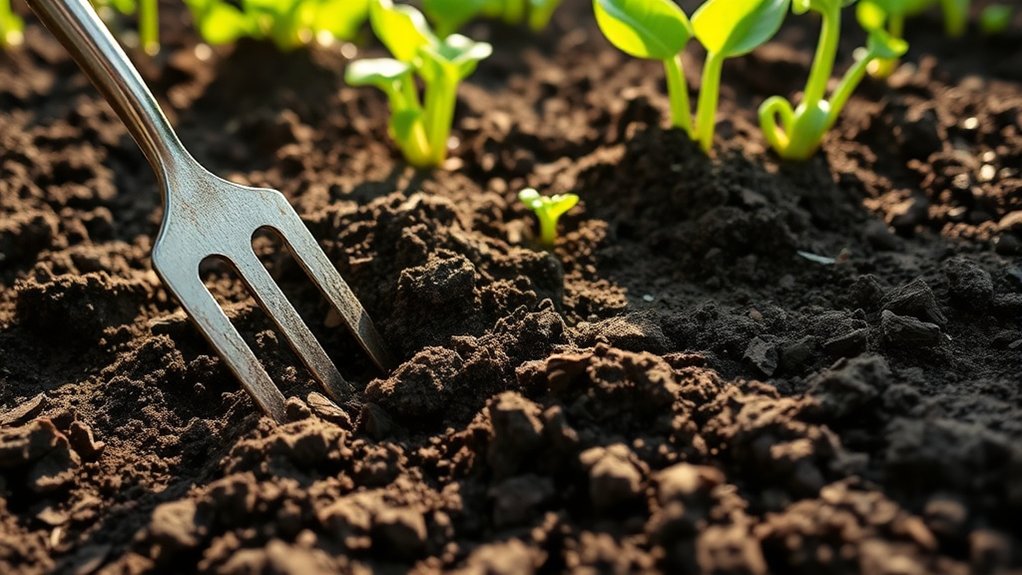
Before you plant, work the soil so your zucchini can grow quickly and strongly. Start by loosening the top 8 to 12 inches with a garden fork or tiller, then break up clumps so roots can spread easily. Mix in rich compost or well-rotted manure as soil amendments to boost fertility and improve texture.
If your ground stays soggy after rain, add coarse organic matter for drainage improvement, or build a raised bed so excess water moves away from the roots. Zucchini grows best in loose, warm, well-drained soil with plenty of nutrients.
Aim for a slightly acidic to neutral pH, and work any lime or sulfur into the bed only if a test shows it’s needed. Rake the surface smooth, remove rocks and debris, and water the bed lightly so it settles before you move on. This prep gives your plants a strong start and supports fast, vigorous growth.
Plant Zucchini Seeds or Transplants
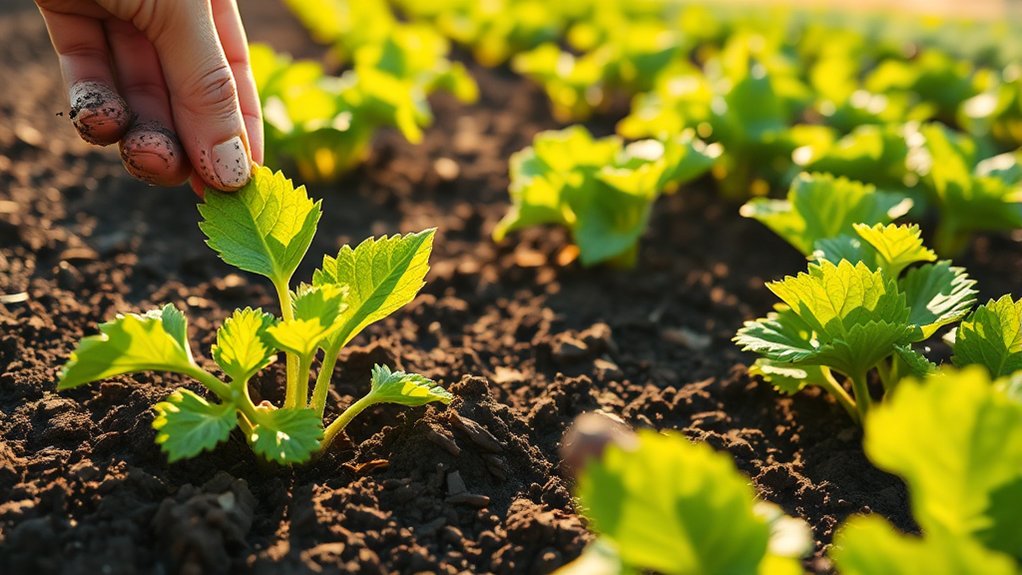
You can plant zucchini in two ways: by directly sowing seeds or by setting out transplants. If you decide to sow seeds, make sure the soil is warm and the danger of frost has passed before planting. On the other hand, if you’re using seedlings, be gentle when handling them and give them plenty of room to grow. Either way, it’s important to keep the soil moist so your plants can get off to a strong start.
Direct Sowing Seeds
For zucchini, you can either sow seeds directly in the garden or start with transplants, but direct sowing often works best because zucchini grow quickly and dislike root disturbance. Choose your planting time after all frost danger has passed and soil has warmed.
Plant seeds at the right seed depth, about 1 inch deep, and space them so each plant has room to spread. Drop two or three seeds per spot, then thin to the strongest seedling once they emerge.
Keep the soil consistently moist, but not soggy, until germination. If your weather stays cool, wait a little longer; zucchini sprout and grow faster in warm conditions.
With steady warmth, sunlight, and careful watering, your direct-sown zucchini should establish quickly and start producing soon.
Transplanting Seedlings
If you’d rather skip direct sowing or need to get a jump on the season, transplant zucchini seedlings once the weather is warm and the soil is workable. Choose healthy seedlings with sturdy stems and true leaves.
Harden them off for a week by setting them outside for increasing periods each day. This step helps prevent shock and improves seedling care.
Set plants in a sunny spot with rich, well-drained soil, spacing them about 2 to 3 feet apart. Dig holes deep enough to cover the root ball, then water them in well.
Watch transplant timing closely, since zucchini hates cold soil and frost. Keep the soil evenly moist, mulch lightly, and protect young plants from wind until they settle in and start growing quickly.
Water Zucchini Properly
Water zucchini deeply at the base so the roots get steady moisture without soaking the leaves. You want the water to penetrate several inches into the soil, then let the top layer dry slightly before you water again.
Check soil moisture with your finger; if the soil feels dry about an inch down, it’s time to irrigate. Drip irrigation works well because it delivers water slowly and directly to the root zone, reducing waste and keeping foliage dry.
Water early in the day so plants can absorb moisture before heat builds. During hot, windy spells, you may need to water more often, while cool or rainy weather means you can back off.
Aim for consistent watering rather than irregular soaking and drought cycles, since zucchini responds best to steady moisture. If leaves wilt in afternoon heat but recover by evening, that’s normal; if they stay limp, give the plants a thorough drink.
Feed and Mulch Zucchini Plants
Nourish zucchini with a balanced fertilizer or compost when plants are young, then side-dress again as they start flowering and setting fruit. This steady feeding gives your plants the zucchini nutrients they need for strong vines, broad leaves, and steady harvests.
Feed zucchini when young, then again as flowering begins for strong vines, broad leaves, and steady harvests.
Work the amendment lightly into the soil around, not against, the stems so you don’t disturb roots.
After feeding, spread a 2 to 3 inch layer of organic mulch around each plant. Use straw, shredded leaves, or grass clippings that haven’t been treated with herbicide. Mulch helps hold moisture, keeps soil cooler, and blocks weeds that would compete for food and water.
Leave a small gap around the stem to keep the crown dry.
Check your plants weekly and refresh the mulch as it breaks down. If growth looks pale or weak, add a light dose of compost tea or another gentle feeding, then water well.
Prevent Common Zucchini Pests and Diseases
Keep a close eye on zucchini plants so pests and diseases don’t get a foothold. Use monitoring techniques every few days to spot squash bugs, beetles, or powdery mildew early.
Strong pest control starts with organic solutions like neem oil, hand-picking, and soapy water sprays. Boost disease resistance by spacing plants well, watering at the soil line, and removing damaged leaves quickly.
Companion planting with nasturtiums or marigolds can confuse pests and invite helpful insects. Crop rotation helps you break disease cycles, especially in beds that held squash family crops last year.
Add insect barriers over young seedlings to block hungry pests before they settle in. If fungal spots appear, apply approved fungal treatments and improve airflow around the leaves.
Harvest Zucchini at the Right Size
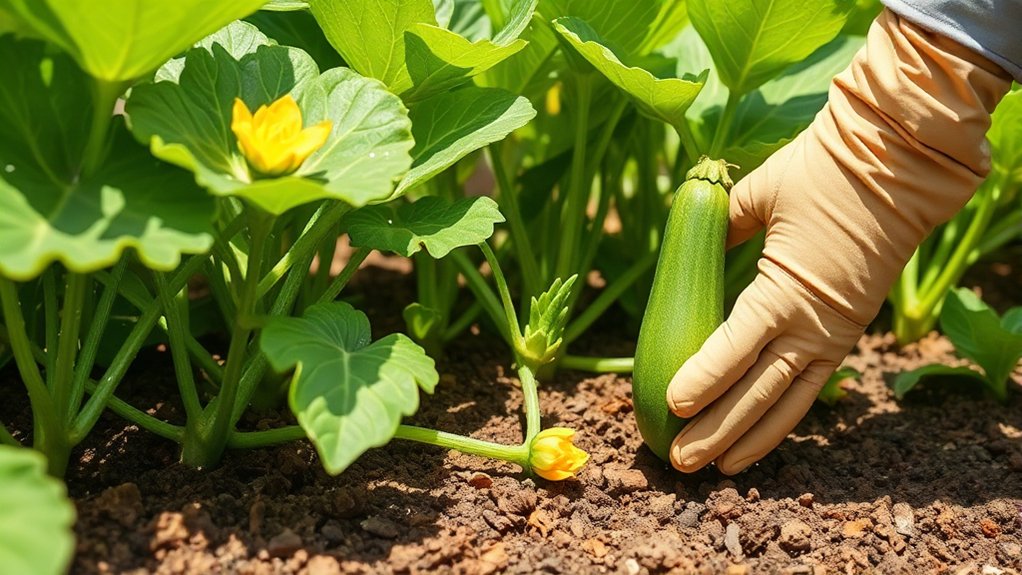
You’ll get the best flavor and texture when you harvest zucchini at about 6 to 8 inches long. It’s a good idea to pick them often because frequent harvesting helps the plants keep producing tender fruits instead of letting them get oversized. Try to check your plants every day or two so you don’t miss that perfect size.
Ideal Harvest Length
Aim to harvest zucchini when the fruits reach about 6 to 8 inches long, while the skin still feels tender and glossy. At this ideal size, the flesh stays mild, and you avoid the watery texture that comes with oversized squash.
The best timing is when you can still press the skin lightly with a fingernail and leave a small mark.
- Picture a dark green zucchini no longer than your hand, smooth and straight.
- Imagine a small blossom end that still looks fresh and delicate.
- Envision a firm stem and shiny skin catching the morning light.
When you pick at this stage, you’ll get better flavor and a more tender bite.
Frequent Picking Tips
Check your zucchini plants every day or two, because fruits can double in size quickly and slip past the best picking stage. Keep a steady picking frequency so you catch zucchini at peak fruit maturity, when skins stay tender and seeds remain small.
Use clean harvesting tools, like a sharp knife or pruners, to avoid tearing stems and protect plant health. If vines get crowded, light pruning techniques can improve airflow and help you spot hidden fruit.
Watch seasonal timing closely, since warm weather speeds growth and can shorten your window. After harvest, handle squash gently and use smart storage methods, such as refrigerating them unwashed in a breathable bag.
Picking often also gives you more recipe ideas, from sautés to bread, while encouraging even more production.
Frequently Asked Questions
Can Zucchini Grow in Containers on a Patio?
Yes, zucchini can grow in containers on a patio, and you can make it thrive with container gardening. Choose a large pot, at least 5 gallons, with drainage holes, and place it where it gets full sun.
Use rich potting mix, water consistently, and feed it regularly. For patio planting, pick compact varieties and give each plant enough space so it doesn’t crowd neighboring containers or your walkway.
How Long Until Zucchini Plants Produce Fruit?
You’ll usually see zucchini fruit in 35 to 55 days after planting, depending on variety and weather. Since zucchini can grow up to 2 inches a day, your growth timeline moves fast once flowers appear.
After pollination, fruit development starts right away, and you can harvest tender squash in about a week. Keep plants watered and fed, and you’ll get an early, steady crop through the season.
Should I Hand-Pollinate Zucchini Flowers?
Yes, you should hand-pollinate zucchini flowers if bees aren’t doing the job. You’ll spot male and female blooms by flower anatomy: males have straight stems, while females show tiny fruit behind the petals.
Use simple pollination techniques like brushing pollen from a male flower onto the female center with a small brush or cotton swab. Do it early in the morning for the best results and better fruit set.
Can I Save Zucchini Seeds for Next Year?
Yes, you can save zucchini seeds for next year if you let the fruit fully mature first. You should scoop out the seeds, rinse off the pulp, and dry them completely before storage.
Keep them in a cool, dark, dry place to protect seed storage and preserve seed viability. If you save seeds from open-pollinated varieties, you’ll get the most reliable results.
Avoid hybrid zucchini, since their offspring may not grow true.
What Varieties of Zucchini Grow Best in Small Spaces?
You’ll want compact varieties like ‘Patio Star,’ ‘Bush Baby,’ and ‘Eight Ball’ for small spaces. They stay tidy and produce well, so your garden won’t sprawl like a cat in a sunbeam.
You can also use vertical gardening to save room and boost airflow. Train vines on a sturdy trellis, choose dwarf types, and harvest often. That way, you’ll keep plants productive, neat, and easy to manage in tight spots.
Conclusion
Growing zucchini doesn’t have to be complicated. If you pick a sunny spot, prepare rich soil, and keep your plants watered and fed, you’ll be well on your way to a big harvest.
Since one zucchini plant can produce 6 to 10 pounds of fruit in a single season, even a few plants can fill your kitchen fast. Watch for pests, pick zucchini when they’re small, and you’ll enjoy fresh homegrown squash all summer.
By following these simple steps, you’ll find that growing zucchini is both easy and rewarding. With a little care, your garden will provide plenty of delicious zucchini to enjoy throughout the season.