How to Grow Bell Peppers in 3 Steps
Growing bell peppers can feel tricky if you’re new to gardening or have struggled with getting them just right. You’re not alone—many people want those vibrant, crunchy peppers but find it hard to get plants to thrive.
The good news? With a little guidance, you can grow bell peppers successfully and enjoy fresh harvests all season long.
To grow bell peppers in 3 steps, first choose a variety that fits your climate, space, and season length, with disease resistance if possible.
Next, plant them after frost in warm, loose, well-drained soil with 6 to 8 hours of sun.
Finally, water deeply, keep the soil evenly moist, feed with balanced fertilizer, and harvest peppers when they’re full size and glossy.
Stick around, and you’ll pick up a few extra tips.
Key Takeaways
- Choose a sunny, warm spot with loose, well-drained soil. Plant after frost danger passes.
- Select a bell pepper variety suited to your climate, space, and season length.
- Keep soil evenly moist by watering at the base. Use mulch to conserve moisture.
- Feed plants with balanced fertilizer, then switch to lower-nitrogen feed once flowering begins.
- Harvest peppers when they are full-sized and glossy. Pick regularly to encourage more fruit.
Choose the Right Bell Pepper Variety

Start by choosing a bell pepper variety that fits your climate and growing space. You’ll find sweet pepper varieties in many colors, shapes, and maturity times, so pick one that matches your goals.
If your season is short, choose early-bearing types that finish faster. If you want larger harvests, look for vigorous plants with strong disease resistance. In small gardens or containers, compact varieties can save space and still produce well.
When comparing hybrid vs heirloom options, think about what matters most to you. Hybrids often give you more uniform fruit, better yield, and improved resilience. Heirlooms can offer richer flavor, unusual colors, and seeds you can save from year to year.
Read seed packets carefully and compare plant size, days to maturity, and fruit description. By selecting the right type now, you’ll set yourself up for healthier plants and better peppers later.
Plant Bell Peppers in Warm, Full-Sun Soil
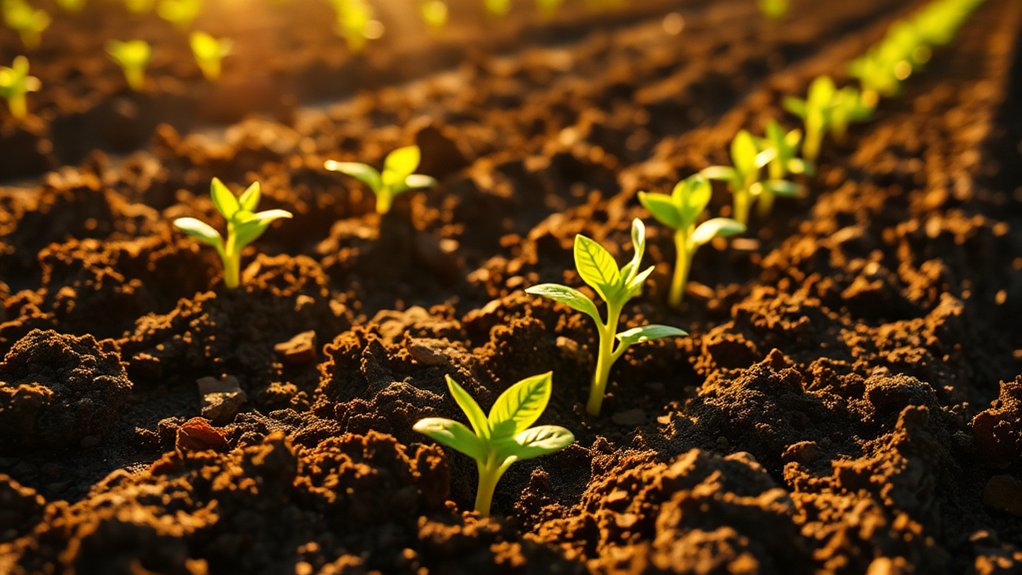
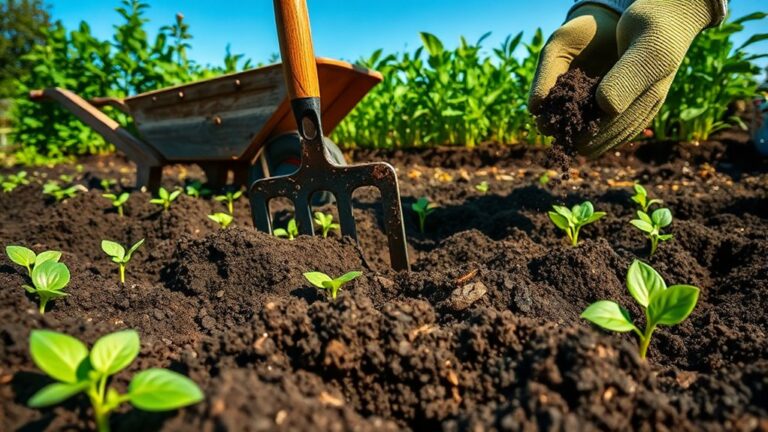
Once the soil has warmed and all frost risk has passed, you can plant bell peppers in a sunny spot that gets at least six to eight hours of direct light each day. Aim for a soil temperature of at least 65°F because cool ground slows growth and can stunt young plants.
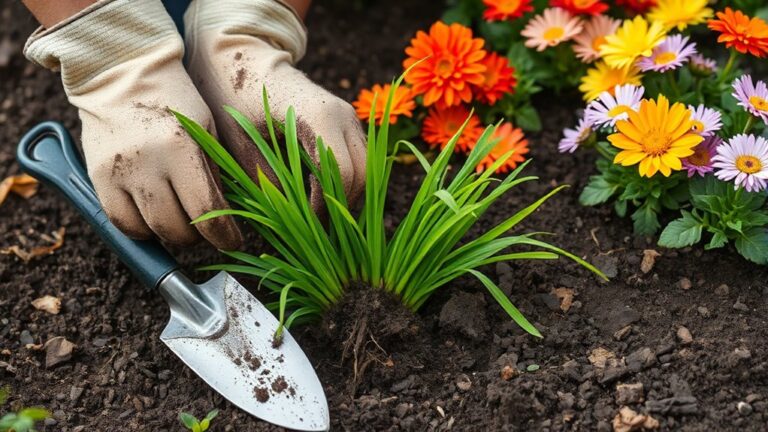
Choose a bed with strong sun exposure and loose, well-drained soil so roots can spread easily. Set each transplant at the same depth it grew in its pot, then firm the soil gently around the stem.
Choose a sunny, well-drained bed and plant transplants at the same depth they grew before.
Space plants far enough apart for airflow and even light. Avoid shady areas near fences, trees, or tall crops. Check that the planting site drains well after rain.
A warm site helps peppers establish quickly and encourages sturdy stems, healthy leaves, and earlier fruiting. When you give them heat and light from the start, you set up strong growth for the rest of the season.
Water, Fertilize, and Harvest Bell Peppers
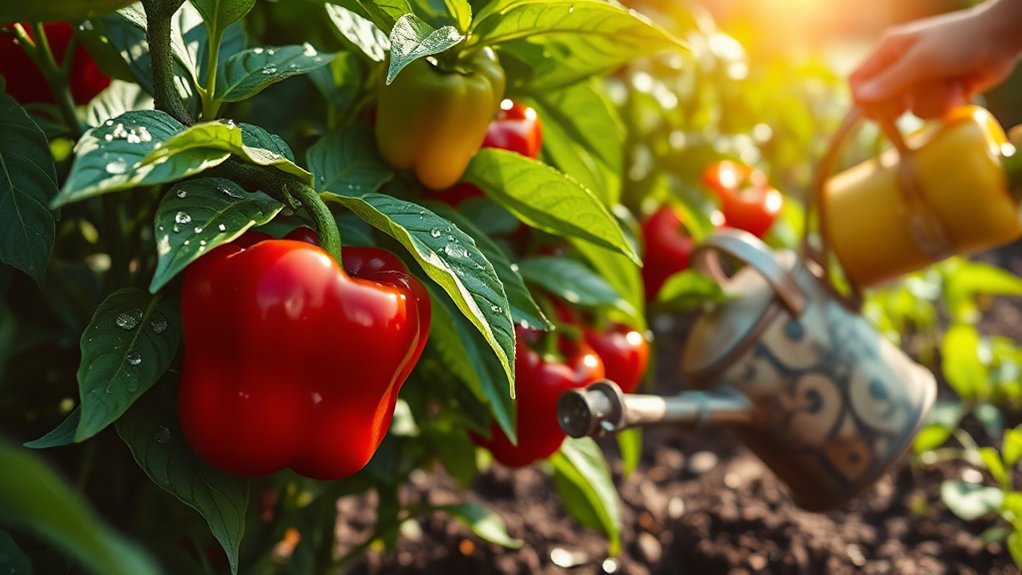
After your pepper plants are settled in the warm sun, keep the soil evenly moist so they grow steadily without stress. Water deeply at the base, then let the top inch dry before you water again. Mulch helps hold moisture and cut weeds, while good drainage keeps roots healthy.
Feed plants with a balanced fertilizer when they start blooming, then switch to a low-nitrogen formula if foliage grows too fast. Check leaves often for aphids, hornworms, and other pests, and use simple pest control early so damage stays small.
If branches get crowded, apply light pruning techniques to improve airflow and direct energy into fruit. Harvest bell peppers when they reach full size and glossy color, or pick them green if you prefer. Snip fruit with clean shears instead of pulling so you don’t break stems.
Keep picking regularly, and your plants will keep producing longer all season.
Frequently Asked Questions
How Long Do Bell Pepper Seeds Take to Germinate?
Bell pepper seeds usually take 7 to 14 days to germinate, but you’ll see faster sprouts when you keep the germination temperature warm, around 75 to 85°F. You can speed things up with seed soaking for 12 to 24 hours before planting.
Keep the soil moist, not soggy, and give your seeds steady warmth and light. If conditions dip, germination can slow down a lot, so stay patient and consistent.
Can Bell Peppers Grow in Containers?
Yes, you can grow bell peppers in containers, and you’ll get good results if you choose the right setup. Pick a container size of at least 5 gallons per plant, use a loose, well-draining soil type, and give them full sun.
Meet their sunlight requirements with 6 to 8 hours daily, and adjust watering frequency so the soil stays evenly moist, not soggy. Feed them regularly for stronger harvests.
Do Bell Peppers Need Pruning for Better Yields?
Yes, you can prune bell peppers to boost yield improvement, but it isn’t essential. You should use simple pruning techniques to remove crowded leaves, weak shoots, and early flowers on young plants. This helps redirect energy into stronger stems and bigger fruit.
Don’t overdo it, though, because too much pruning can stress plants and reduce harvests. You’ll get the best results with light, regular maintenance and good sunlight, water, and feeding.
What Pests Commonly Damage Bell Pepper Plants?
Aphids, whiteflies, cutworms, flea beetles, and pepper weevils commonly damage bell pepper plants. You’ll spot chewed leaves, curling growth, sticky residue, or dropped flowers during pest identification.
Check undersides of leaves often, and use prevention strategies like row covers, handpicking, neem oil, and keeping weeds down. You can also attract beneficial insects and avoid overwatering, since stressed plants invite more pest trouble in your garden.
How Do You Store Bell Peppers After Harvesting?
You can store bell peppers by keeping them dry, cool, and uncut. First, place whole peppers in the fridge’s crisper drawer in a breathable bag. Crispness meets longevity there.
For longer keeping, you can freeze sliced peppers after blanching. These storage methods work best when you remove bruised spots and avoid washing until use.
For extra preservation tips, check peppers often and use the freshest ones first.
Conclusion
Growing bell peppers is easier than you might think. Choose the right variety, plant them in warm, sunny soil, and keep them watered and fed as they grow.
With a little care, your plants can become a bright, productive patch in your garden, like a small sunlit treasure chest filling up with color. Soon, you’ll be harvesting crisp, sweet peppers and enjoying the reward of your effort all season long growing bell peppers.