How to Design a Flower Bed in 3 Steps
Designing the perfect flower bed can feel overwhelming, especially if you’re unsure where to start or how to keep it thriving. You’re not alone—many people struggle with creating a beautiful, manageable garden space that blooms all season long. How to Design a Flower Bed.
Luckily, with a few simple steps, you can turn any outdoor area into a vibrant flower bed you’ll love.
Start by choosing a spot with at least six hours of sun, good drainage, and easy access for watering and weeding.
Next, outline the bed with a hose or rope, then pick a shape and size you can maintain without stepping inside.
Finally, choose flowers that match your light conditions and layer them by height and bloom time for steady color.
Once you’ve got the basics, there’s more to make it really thrive.
Key Takeaways
- Choose a sunny, well-drained location with easy access for watering, weeding, and maintenance.
- Mark the bed’s shape and size with a hose or rope, keeping it manageable and visually balanced.
- Select flowers suited to the site’s light conditions, spacing, and mature height for layered color.
- Prepare the soil by improving drainage and matching amendments to your plants’ needs.
- Mix perennials and annuals with staggered bloom times for continuous color and healthier growth.
Choose the Best Flower Bed Location
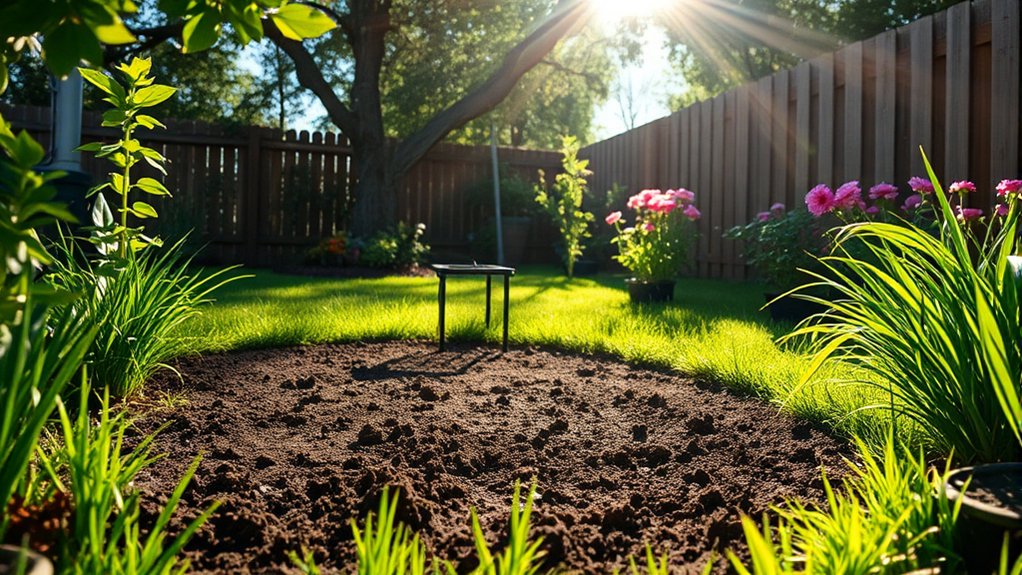
Start by choosing a spot that gives your flowers the light they need, since most varieties thrive in at least six hours of sun a day. You should also check how the area handles wind and heat, because strong exposure can stress delicate blooms.
Look closely at the soil type before you commit; sandy soil drains quickly, while clay holds moisture longer. Match the site to plants that can handle those conditions, or amend the soil if needed.
Match your site to the soil you have, or amend it to suit your flowers.
Make drainage considerations a priority, since standing water can rot roots and invite disease. Avoid low pockets where rain collects, and choose a gently sloped area if possible.
You’ll also want easy access for watering, weeding, and future maintenance, so pick a location you can reach without trouble. When you balance light, soil, and drainage, you set your flower bed up for healthy growth and fewer problems later.
Plan Your Flower Bed Shape and Size

Once you’ve picked the right spot, decide how big your flower bed should be and what shape fits the space best. A small bed can soften a walkway, while a larger one can anchor a yard. Sketch the outline with a hose or rope, then walk around it to see how it feels from every angle.
Use clean curves for a relaxed look, or straight edges for a more formal design. Keep the width manageable so you can reach the center without stepping inside.
| Shape | Best use |
|---|---|
| Curved | Natural, flowing yards |
| Rectangular | Tight borders and paths |
| Oval | Gentle focal points |
Measure the area before you buy flower bed materials, and plan for edging, mulch, and access. This step also helps you estimate soil preparation needs, since larger beds may need more amendment and leveling.
Choose a size that fits your space and maintenance goals.
Choose Flowers by Sun, Height, and Bloom Time

Next, choose flowers that match your bed’s sun exposure, mature height, and bloom season so the planting looks good and performs well. Place sun-loving flowers, such as coneflowers and salvias, where they’ll receive at least six hours of light.
In part shade, pick hostas, astilbes, or impatiens that won’t scorch. Then layer plants by height: put taller varieties in the back or center, medium growers in the middle, and low plants along edges to create depth and keep each one visible.
Mix early, midseason, and late bloomers so your bed stays colorful for months, not weeks. Use perennial selections for structure and pair them with annuals for quick color. Check mature size on plant tags so you avoid crowding and reduce future pruning.
When you balance light, height, and timing, you’ll build a flower bed that stays healthy, fills in smoothly, and delivers steady seasonal blooms.
Frequently Asked Questions
How Do I Prepare the Soil Before Planting?
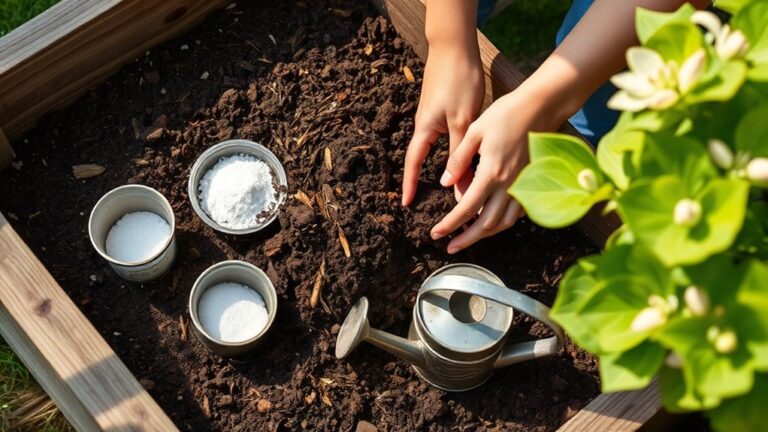
Test your soil first so you know its pH and nutrient levels. Then clear weeds and rocks, and loosen the top 8 to 12 inches with a shovel or fork.
Mix in organic amendments like compost or aged manure to improve texture and fertility. If your soil drains poorly, add coarse sand or raised bed mix.
Rake the surface smooth, water lightly, and you’re ready to plant.
What Tools Do I Need for Flower Bed Installation?
You’ll need a shovel, garden fork, rake, hoe, trowel, measuring tape, gloves, and a wheelbarrow for flower bed installation. Use the shovel and fork to loosen soil, the rake to level it, and the trowel to place plants. A hose or watering can helps finish the job.
During flower selection and bed layout, keep stakes, string, and paper handy so you can map spacing and shapes before planting.
How Often Should I Water a New Flower Bed?
You should water a new flower bed daily for the first 1–2 weeks; 80% of young plants fail from inconsistent moisture. After that, cut back to every 2–3 days, then weekly as roots settle.
Your watering schedule should stay even but not soggy, and you’ll need to adjust for flower types, sun, and soil. Check the top inch of soil with your finger, and water deeply when it feels dry.
Should I Use Mulch in My Flower Bed?
Yes, you should use mulch in your flower bed. It helps retain moisture, suppress weeds, and keep soil temperatures steady, so your plants stay healthier.
The mulch benefits are especially strong for new beds. Choose from several mulch types, like shredded bark, straw, or compost, depending on your plants and style.
Apply a 2- to 3-inch layer, but keep it away from stems to prevent rot and pests.
How Do I Keep Weeds Out of My Flower Bed?
You keep weeds out by stopping them early because they never seem to take a hint. For weed prevention, lay down mulch, pull sprouts fast, and crowd out gaps with healthy plants.
Use landscape fabric only where it helps, and water your flowers, not the weeds. If stubborn invaders keep returning, try natural herbicides carefully on sunny days.
Stay consistent, and you’ll save yourself a lot of future scrubbing.
Conclusion
Now you’ve got the basics to design a flower bed that really works for your space. Pick a smart spot, shape it to fit your yard, and choose flowers that match sun, height, and bloom time.
Think of it like arranging a choir: when each voice comes in at the right moment, the whole performance shines. A good bed does the same. My neighbor’s once dull corner turned into a 12-month burst of color.
With these tips, you’re ready to design a flower bed that brings beauty and life to your outdoor space all year round.