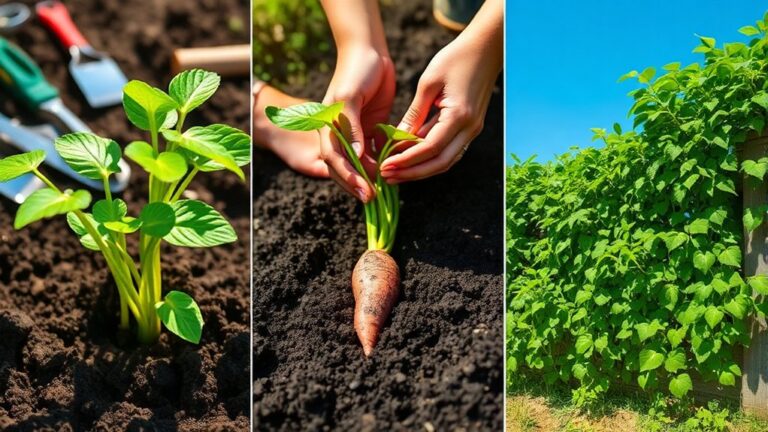
How to Prepare Soil for a Vegetable Garden in 3 Steps
Getting your vegetable garden off to a great start can feel overwhelming, especially when you’re not sure where to begin with your soil. You’re not alone—many people struggle with preparing their soil properly to ensure a healthy, bountiful garden. How to Prepare Soil for a Vegetable Garden.
But with the right approach, you can create the perfect foundation for your veggies to thrive.
Start by testing your soil from a few spots to check pH and nutrient levels, then use the results to guide what your vegetables need.
Next, spread compost over the bed and add only the amendments your soil test calls for, such as lime, sulfur, or organic nutrients.
Finally, mix everything into the top 6 to 8 inches, rake it smooth, water deeply, and let it settle.
There’s more you can do to make it even better.
Key Takeaways
- Test the soil first to check pH and nutrient levels before adding anything.
- Use compost and targeted amendments to correct deficiencies and improve soil structure.
- Mix amendments into the top 6 to 8 inches of soil, then rake smooth and remove debris.
- Shape the bed for good drainage and lightly firm the surface without compacting it.
- Water the bed thoroughly, let it settle, and fill any low spots before planting.
Test Your Vegetable Garden Soil
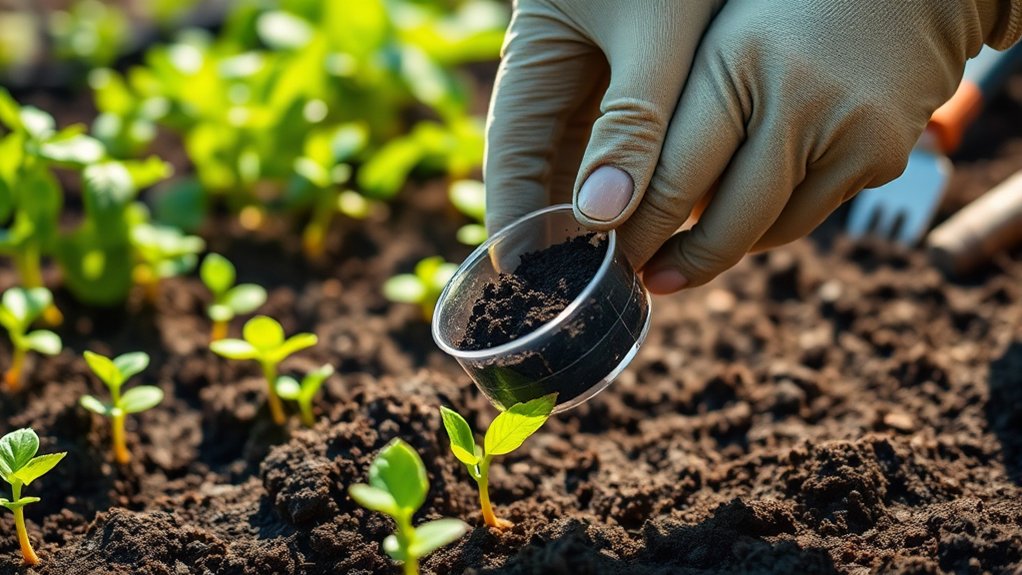
Before you plant anything, test your vegetable garden soil so you know what you’re working with. A simple soil test tells you your soil pH and nutrient levels, so you can make smarter choices before planting.
Collect samples from several spots in the bed, mix them together, and follow the lab or kit instructions carefully. Don’t grab soil from the surface only; dig a few inches down for a more accurate reading.
Once you get results, check whether the pH matches what your vegetables need. Most crops grow best in slightly acidic to neutral soil, but the exact range varies.
Review nutrient levels for nitrogen, phosphorus, potassium, and key micronutrients. If the test shows deficiencies or an imbalance, you’ll know what your garden needs next.
Keep the report, because it gives you a baseline for future seasons and helps you track changes over time.
Add Compost and Soil Amendments
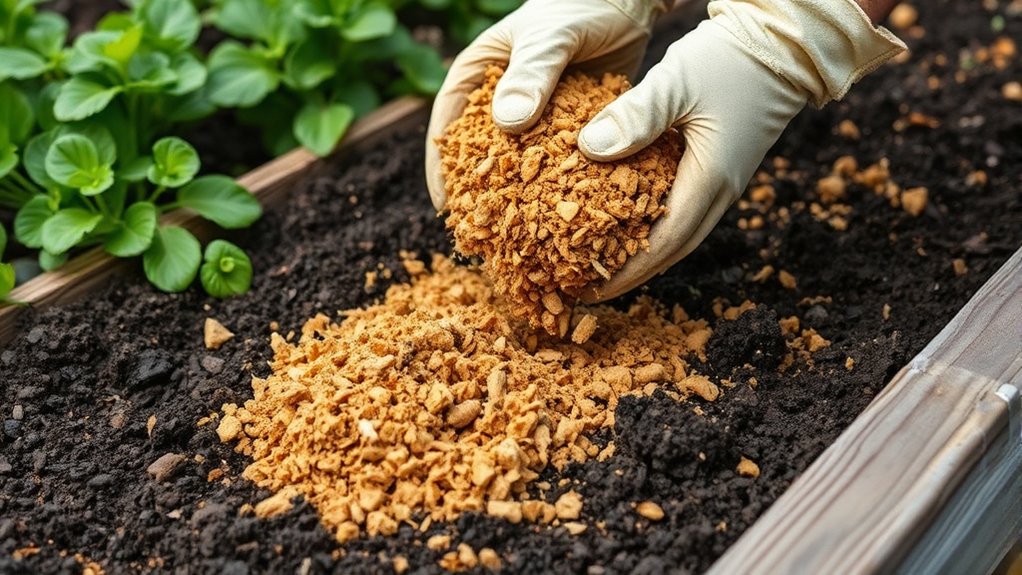
Once you’ve tested your soil, you can improve it with compost and other amendments to give your vegetables a stronger start. Compost benefits your bed by adding organic matter, feeding soil life, and helping roots spread more easily.
Spread a generous layer over the surface, then choose amendments based on your soil types. Sandy soil may need more compost to hold moisture, while heavy clay often needs compost to loosen it.
If your results show poor nutrient balance, add a targeted organic amendment such as aged manure, bone meal, or kelp meal. Check pH levels before you add lime or sulfur, since the wrong adjustment can limit nutrient uptake.
You don’t need to overdo it; a thoughtful mix works better than stuffing the bed with extras. Focus on what your vegetables actually need, and you’ll build healthier soil that supports steady growth all season.
Mix, Level, and Water the Bed
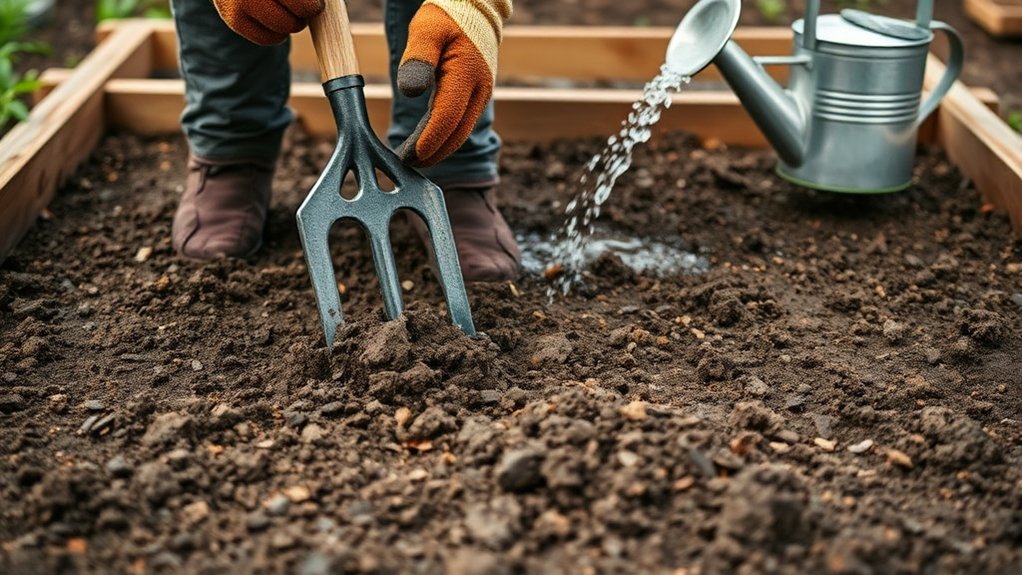
Work the compost and amendments into the top 6 to 8 inches of soil with a shovel or garden fork, breaking up clumps as you go so the bed is loose and even. As you mix, watch the soil texture and stop when the color and crumb feel uniform.
- Rake the surface level, removing stones, roots, and old debris.
- Shape the bed so water moves evenly and doesn’t pool in low spots.
- Firm the top lightly with your feet or the back of a rake; don’t pack it down.
- Water the bed slowly until it’s moist several inches deep, which helps settling and drainage improvement.
After watering, check again for dips or crusting. Add a little dry soil where needed, then smooth the top once more. Let the bed rest for a day if you can, so the mix settles before you plant.
Frequently Asked Questions
How Often Should I Test My Garden Soil?
You should test your garden soil every 2 to 3 years, and more often if your plants struggle or you add lots of amendments. You’ll want to watch soil pH and nutrient levels, since both can shift over time.
If you grow heavy feeders, test yearly. After major changes like composting, liming, or flooding, retest sooner. Regular checks help you keep your vegetables healthy and productive throughout the season.
What Compost Is Best for Vegetable Gardens?
You’ll get the best results with finished organic compost made from yard waste, leaves, and kitchen scraps. It breaks down fully, so you won’t burn roots or add weeds.
Rich, dark compost boosts drainage, holds moisture, and feeds soil microbes, so your vegetables grow stronger. Choose compost that smells earthy, not sour, and mix it into your beds before planting for the biggest compost benefits.
Can I Use Manure as a Soil Amendment?
Yes, you can use manure as a soil amendment if you choose the right manure types and handle them safely. You’ll get strong nutrient benefits, especially from well-aged cow, horse, or chicken manure.
Don’t use fresh manure directly on crops, since it can burn plants and carry pathogens. Mix composted manure into your soil before planting, and let it break down fully so your vegetables grow healthy and productive.
Should I Till the Soil Before Adding Compost?
Usually, you don’t need to till before adding compost. If your soil’s hard and compacted, light tilling can help mix in compost and improve soil texture, like fluffing a dense blanket.
But excessive tilling can damage structure and disrupt soil life. Spread compost on top or work it into the top few inches instead. That gives you the tilling benefits without overworking the bed, and your plants will thank you.
How Do I Know if My Soil Drains Well?
You can tell by doing a simple drainage test. Dig a hole about 12 inches deep, fill it with water, and let it drain once. Refill it, then time how long it takes to empty.
If water disappears within 2 to 4 hours, your soil drains well. Slow drainage usually means heavy clay or poor soil composition. Add compost to improve structure and help water move through more easily.
Conclusion
Now your garden bed’s ready to become a generous field of promise. When you test the soil, feed it with compost, and mix it well, you’re like a careful steward tending a small kingdom.
Each step teaches patience: a weak patch can grow strong, and bare earth can become abundance. Level the bed, water it, and trust the quiet work below.
What you plant next won’t just grow in dirt. It’ll thrive in a home you’ve prepared by following how to prepare soil for a vegetable garden.