7 Simple Tips to Help Birds
If you’ve ever wished to attract more birds to your yard but didn’t know where to start, you’re not alone. Many people struggle with creating a welcoming space that supports our feathered friends.
Luckily, there are simple, effective ways to make your outdoor space a safe haven for birds, and it’s easier than you might think.
You can help birds by planting native trees and flowers they love, which provide food and shelter. Keep fresh water available in shaded spots, changing it often.
Set up clean, safe bird feeders away from windows and predators.
Create birdhouses and brush piles for shelter. Avoid pesticides, keep cats indoors, and get involved in local bird conservation efforts.
These simple actions make a big difference, and you’ll find even more ways to support our feathered friends.
Key Takeaways
- Plant native trees and flowers to provide food, shelter, and attract local birds naturally. This helps create a welcoming environment for them.
- Offer fresh, clean water in shallow birdbaths. Change it regularly and adjust for the seasons so birds always have access to water.
- Maintain bird feeders by using quality seeds and cleaning them biweekly. Place feeders near cover but away from windows to keep birds safe.
- Create safe shelters with properly ventilated birdhouses and brush piles. Put them in shaded, quiet areas where birds can feel secure.
- Avoid pesticides and keep cats indoors. This protects birds and supports their health and safety in your area.
Plant Native Flowers and Trees Birds Love

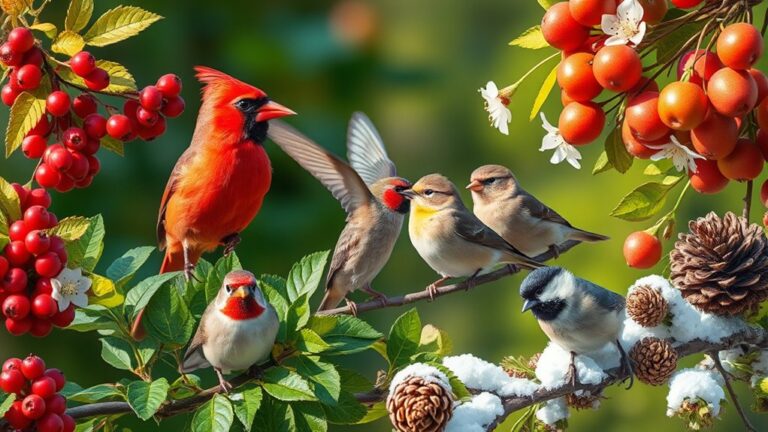
One of the easiest ways to attract birds to your yard is by planting native flowers and trees they naturally love. When you choose native flora, you’re providing food and shelter that local birds depend on.
These plants have evolved alongside your region’s bird species, making them the best choice for supporting their needs. Focus on bird friendly trees like oaks, maples, and dogwoods, which offer berries, nuts, and nesting sites.
Native flowers also attract the insects birds enjoy eating, boosting your yard’s appeal. Plus, native plants require less maintenance since they’re adapted to your local climate and soil.
Provide Fresh Water for Birds
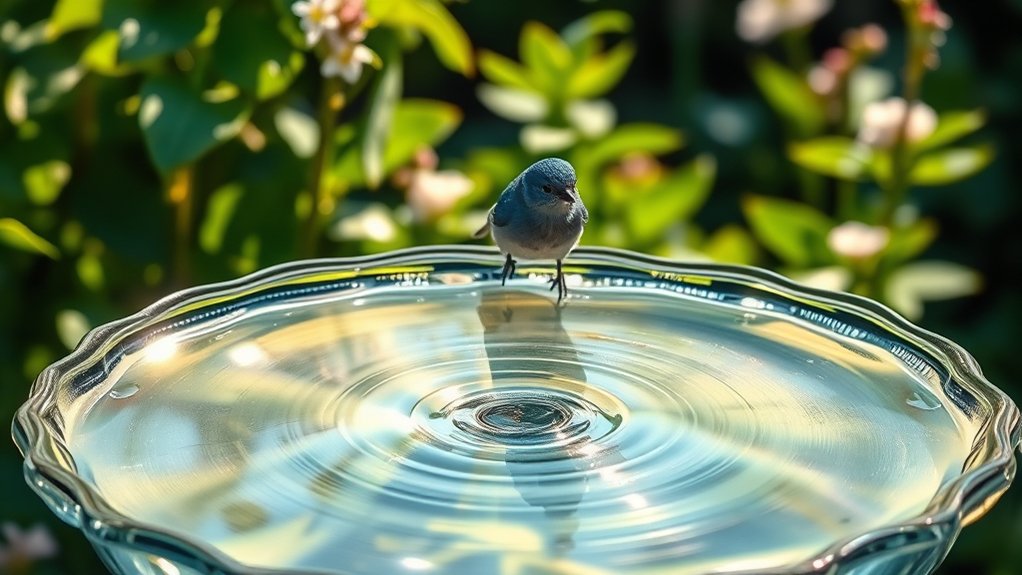
You can really make a difference by providing clean, fresh water for birds to drink and bathe in. Using shallow dishes or birdbaths works best because they’re easy for birds to access.
It’s important to change the water regularly to keep it safe and fresh. Birds especially need more water during hot or dry seasons, so be sure to keep an eye on your water sources all year round.
Importance of Clean Water
Why does fresh water matter so much to birds? Clean water is essential for their survival. It helps maintain proper hydration cycles and supports overall health. When you provide clean water, you’re helping birds avoid harmful bacteria and parasites that can thrive in stagnant, dirty water.
To keep water fresh, consider these factors:
| Factor | Why It Matters |
|---|---|
| Water filtration | Removes debris and contaminants |
| Regular cleaning | Prevents algae and bacteria buildup |
| Frequent refills | Maintains freshness and hydration |
Best Water Sources
Where can birds find the freshest water in your yard? Providing clean, accessible water is key. You can create inviting water sources that balance birdbath aesthetics with water conservation. Here are four great options:
- Shallow Birdbaths Use shallow basins with textured bottoms to prevent slipping and improve birdbath aesthetics.
- Drip Fountains Moving water attracts birds while reducing evaporation.
- Misting Systems Offer a gentle spray, saving water compared to full baths.
- Natural Puddles Collect rainwater in low spots, blending beauty and eco-friendly water conservation.
Keep water fresh by changing it daily and placing sources in shaded areas. This way, you provide birds with the best hydration while maintaining a beautiful, sustainable garden.
Seasonal Water Needs
How do birds’ water needs change throughout the year? In warmer months, birds rely more on fresh water to stay hydrated and cool, especially during dry spells. You can help by refilling birdbaths frequently to support their water conservation and drought resilience.
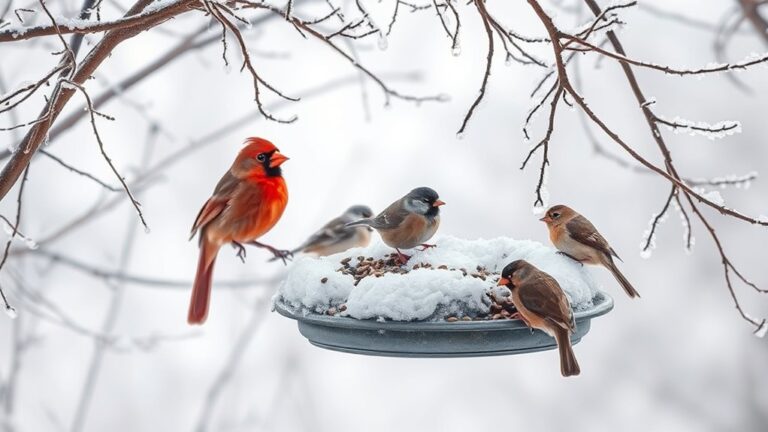
In colder seasons, water sources may freeze, so providing a heated birdbath or regularly breaking ice helps birds access essential water. Remember, keeping water clean and fresh is essential year-round, as stagnant water can harm birds.
Set Up and Maintain Safe, Clean Bird Feeders
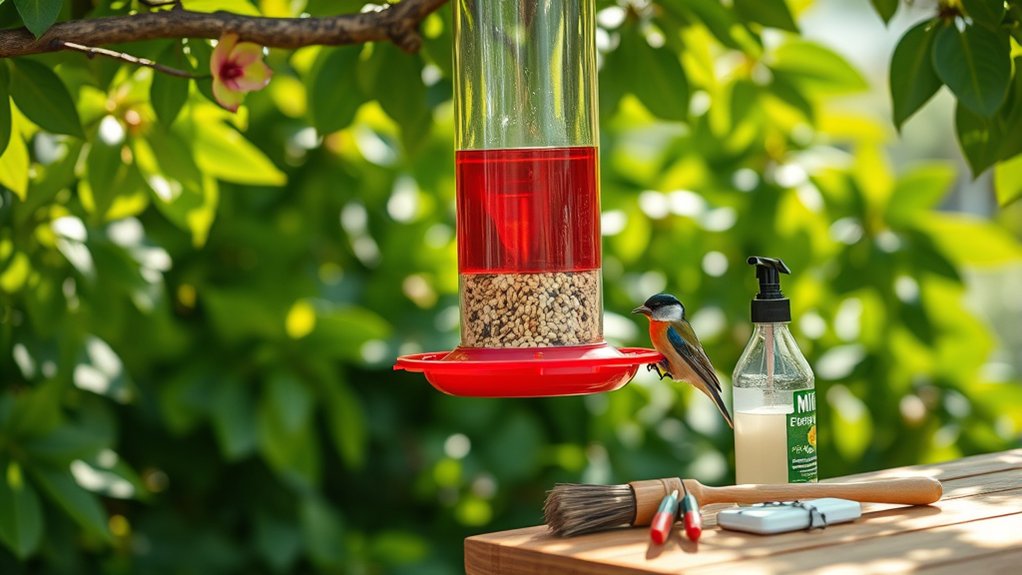
Although setting up bird feeders is straightforward, maintaining them safely and cleanly takes consistent effort. Proper bird feeder placement is key; position feeders away from windows to prevent collisions and near shrubs to offer quick cover from predators.
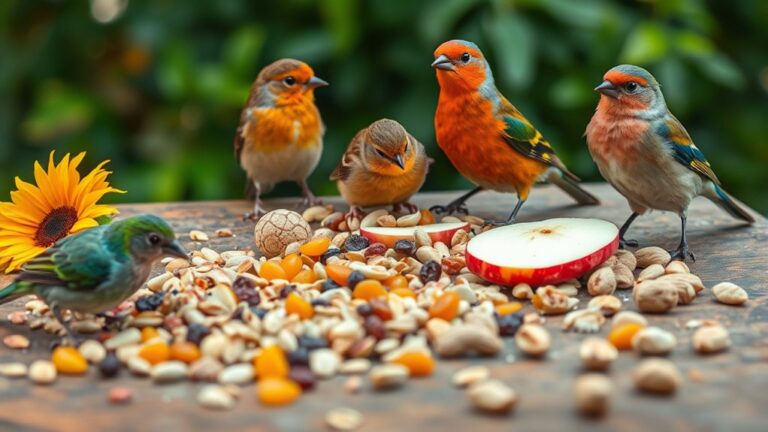
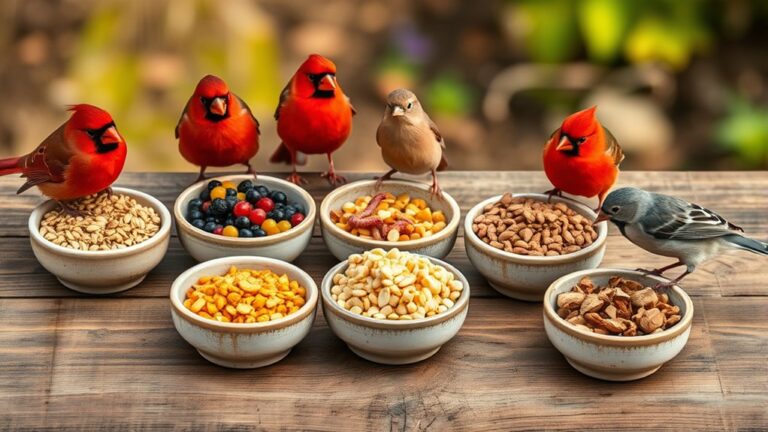
Selecting the right seeds helps attract the birds you want and reduces waste. Use fresh, high-quality seed and avoid mixes with fillers birds typically discard.
To keep your feeders safe and clean, follow these steps:
- Clean feeders every two weeks with hot, soapy water to prevent mold and disease.
- Remove wet or clumped seed daily to avoid spoilage.
- Inspect feeders regularly for damage or sharp edges that could harm birds.
- Rotate feeder locations periodically to reduce parasite buildup.
Create Shelter With Birdhouses and Brush Piles
Providing shelter is just as important as offering food when you want to support local birds. Start by choosing the right birdhouse design. Make sure it suits the species in your area. A well-ventilated, predator-proof birdhouse with the correct entrance hole size will encourage birds to make it their home. Position the birdhouse away from direct sunlight and strong winds for added comfort.
Next, create brush piles to provide natural shelter and protection. When deciding on brush pile placement, pick a quiet, shaded spot near shrubs or trees to offer birds easy access to cover. Make sure the pile is dense enough to hide birds from predators but still allows movement within. Regularly refresh your brush pile by adding new branches and leaves to keep it inviting. Together, thoughtful birdhouse design and strategic brush pile placement create safe havens that help birds thrive in your yard.
Avoid Pesticides and Chemicals That Harm Birds
You can protect birds by steering clear of pesticides and harmful chemicals in your garden. These substances can poison birds and disrupt their food sources. Instead, using natural alternatives keeps your space safe and healthy.
Try simple, safe garden practices that encourage birds to thrive without risking their well-being. It’s easier than you might think, and birds will thank you for it!
Harmful Effects On Birds
When you choose to use pesticides and chemicals in your garden, you risk harming the birds that visit. These substances can disrupt bird flight by affecting their nervous system. This makes it harder for them to escape predators or find food. Chemicals can also interfere with nesting habits, reducing the chances of successful breeding.
Here are four harmful effects pesticides and chemicals have on birds:
- Poisoning from ingesting contaminated insects or seeds.
- Damage to feathers, impairing flight and insulation.
- Disruption of reproductive systems, leading to fewer offspring.
- Contamination of water sources, causing illness or death.
Natural Alternatives To Pesticides
Protecting birds from the dangers of pesticides means finding safer ways to manage pests. You can adopt organic gardening techniques to keep your garden healthy without harmful chemicals.
Using natural predators like ladybugs or introducing beneficial insects helps control pest populations effectively. Planting pest resistant plants also reduces the need for chemical treatments, as these varieties naturally repel or withstand common garden pests.
Crop rotation and companion planting work well by disrupting pest cycles and enhancing plant health. By choosing these natural alternatives to pesticides, you create a safer environment for birds and other wildlife, helping them thrive without exposure to toxic substances.
This approach not only protects birds but also promotes a balanced and sustainable garden ecosystem you’ll be proud of.
Safe Garden Practices
Avoiding harmful pesticides and chemicals is one of the simplest ways to keep your garden safe for birds. When you choose bird friendly planting and natural predator control methods, you create a welcoming environment for your feathered friends.
Here’s how to practice safe garden habits:
- Opt for native plants that attract and support local bird species.
- Use organic compost and natural fertilizers instead of chemical ones.
- Implement predator control by encouraging beneficial insects and birds that keep pests in check.
- Avoid synthetic pesticides; try homemade sprays or insecticidal soaps that won’t harm birds.
Keep Cats Indoors to Protect Birds
Keeping your cat indoors can save countless birds each year from becoming prey. When you keep your cat inside, you’re directly improving bird safety in your neighborhood. Cats are natural hunters, and even well-fed outdoor cats pose a significant threat to local bird populations.
By choosing indoor cats, you reduce this risk dramatically, creating a safer environment for birds to thrive.
You can enrich your cat’s indoor life with toys, climbing structures, and interactive play to satisfy their hunting instincts without endangering birds. Moreover, keeping cats indoors protects your pet from dangers like traffic and predators.
Get Involved With Local Bird Conservation
Taking steps to safeguard birds in your own home, like keeping cats indoors, is just the beginning. To make a bigger impact, get involved with local bird conservation efforts. You can contribute directly through community outreach and volunteer programs that support bird habitats and awareness.
Here are four ways to engage:
- Join local birdwatching groups to learn and share knowledge.
- Participate in volunteer programs that restore natural habitats.
- Help organize or promote community outreach events to educate others.
- Support or attend local conservation fundraisers or clean-up days.
Frequently Asked Questions
How Do Birds Navigate During Migration?
You rely on bird orientation cues like the sun, stars, and landmarks to understand how birds migrate. Birds use magnetic navigation by sensing Earth’s magnetic field, helping them maintain direction even when visual cues are missing.
This natural compass guides them over long distances. You’d be amazed how they combine these methods seamlessly, adjusting their routes based on environmental changes, ensuring they reach their destinations accurately every migration season.
What Is the Average Lifespan of Common Backyard Birds?
You might be surprised that the average bird lifespan in your backyard can be as short as one to five years, yet some backyard bird longevity stories stretch over a decade.
While tiny songbirds like sparrows often live just a few years, larger birds like robins can reach up to six years or more. Understanding bird lifespan helps you appreciate every fleeting moment you share with these vibrant visitors.
How Can I Identify Bird Species by Their Calls?
You can identify bird species by their calls through bird call recognition and song pattern analysis. Start by listening carefully to repetitive sounds and unique rhythms. Use apps or online databases that help compare calls.
Pay attention to pitch, tempo, and sequence, as each species has distinct patterns. The more you practice song pattern analysis, the easier it gets to match calls to species, enhancing your birdwatching skills quickly.
What Are the Signs of a Bird in Distress?
If you spot a bird dramatically flapping like it’s auditioning for a soap opera, that’s a clear emergency signal. Birds in distress often show ruffled feathers, sluggish movements, or unusual silence because tweeting happily just isn’t an option when your bird health is on the line.
You’ll also notice labored breathing or visible wounds. When you see these signs, it’s time to act swiftly and help your feathered friend before the drama turns tragic.
Can Feeding Birds Year-Round Cause Dependency?
Feeding birds year-round can sometimes alter their natural bird feeding habits, making them reliant on your food instead of foraging. However, if you adjust your feeding based on seasonal feeding impacts, offering more in harsh winters and less in abundant seasons, you help them maintain their independence.
You shouldn’t worry too much about dependency if you provide varied, natural foods and reduce feeding when nature offers plenty. This encourages birds to keep their survival skills sharp.
Conclusion
By following these simple tips, you can make a real difference for local birds. For example, when a community in Portland planted native flowers and kept cats indoors, they saw a 30% rise in songbird visits within a year.
You don’t have to be an expert to help. Just start small, stay consistent, and watch your efforts attract and protect beautiful birds right in your own backyard.
Every action counts when it comes to helping birds!