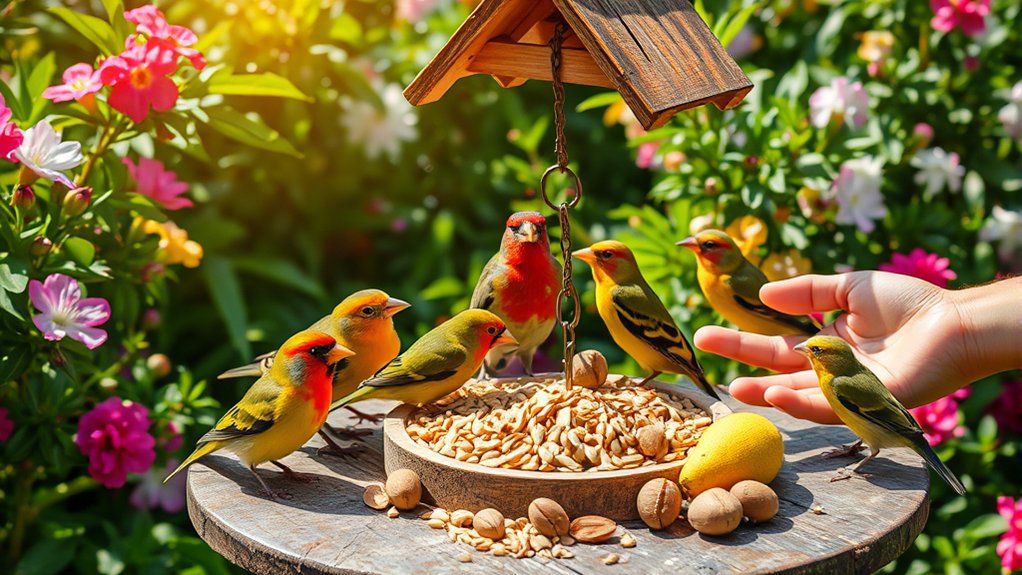
How Do You Feed Birds in Your Backyard in 5 Simple Steps?
Feeding birds in your backyard can seem tricky if you’re not sure where to start or what they really want. You’re not alone—many people struggle to attract birds or keep them coming back.
Luckily, with the right tips and tools, creating a lively bird haven is easier than you think.
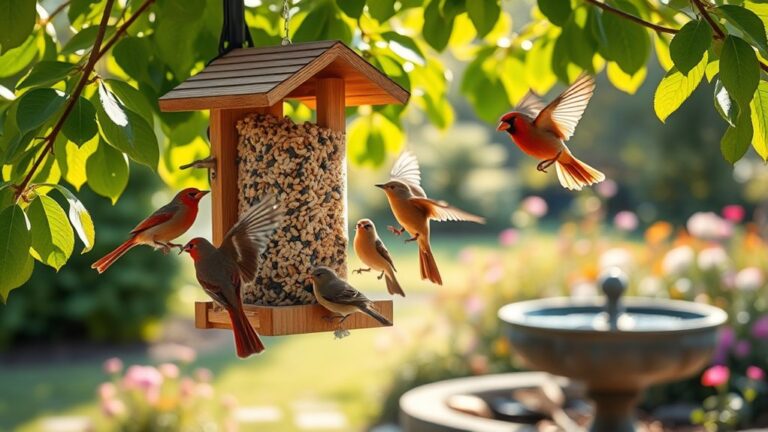
To feed birds in your backyard, start by choosing seeds that local birds love, like sunflower seeds for finches and millet for ground feeders. Use feeders that fit your seeds, such as tube feeders for small seeds or platform feeders for mixed food.
Place feeders safely away from predators and windows.
Clean your feeders weekly to prevent disease, and provide fresh water and shelter to keep birds coming back.
Keep going to uncover tips for a thriving backyard bird haven.
Key Takeaways
- Choose seeds and food based on local birds’ preferences, like sunflower seeds, millet, nyjer, suet, and peanuts.
- Select appropriate feeders such as tube, platform, or suet feeders to match the type of food you offer.
- Place feeders safely away from predators, windows, and pets to keep visiting birds protected.
- Clean feeders weekly with soapy water and a bleach solution to prevent disease and mold buildup.
- Provide fresh water every day and maintain natural shelter like trees and birdhouses to keep birds comfortable.
Choose Seeds and Food to Feed Backyard Birds
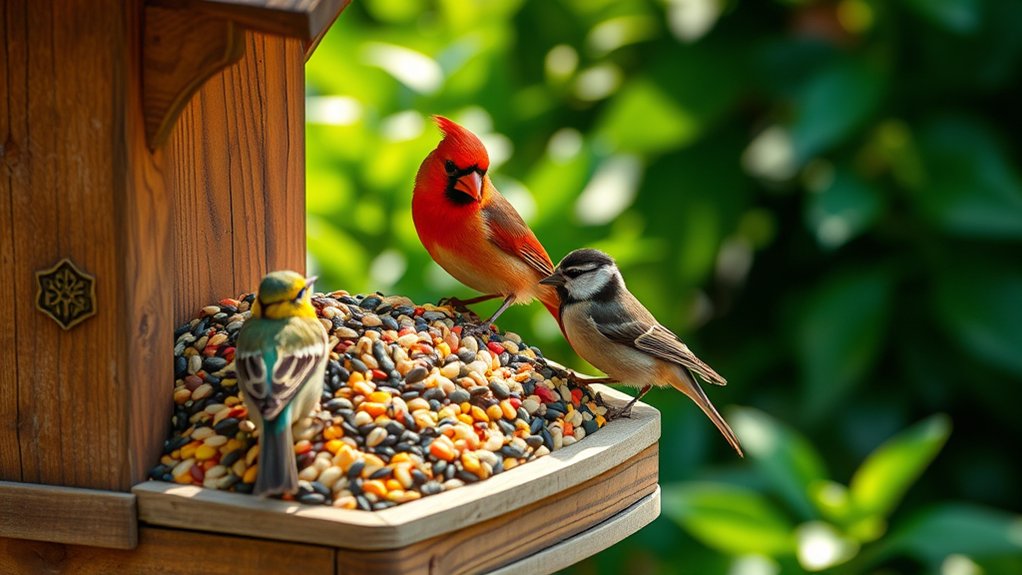
When you choose seeds and food for your backyard birds, focus on their nutritional needs and preferences to attract a variety of species. Different birds have distinct bird diet preferences, so offering a mix helps cater to many.
Black oil sunflower seeds are a favorite among cardinals, chickadees, and finches because they’re high in fat and easy to crack. Millet appeals to ground feeders like sparrows and juncos, while nyjer seeds attract finches such as goldfinches and siskins.
If you want to invite woodpeckers or nuthatches, try suet or peanuts, which provide essential energy, especially in colder months. Avoid fillers like red millet or wheat, as many birds tend to ignore them.
Pick Bird Feeders That Match Your Food and Birds
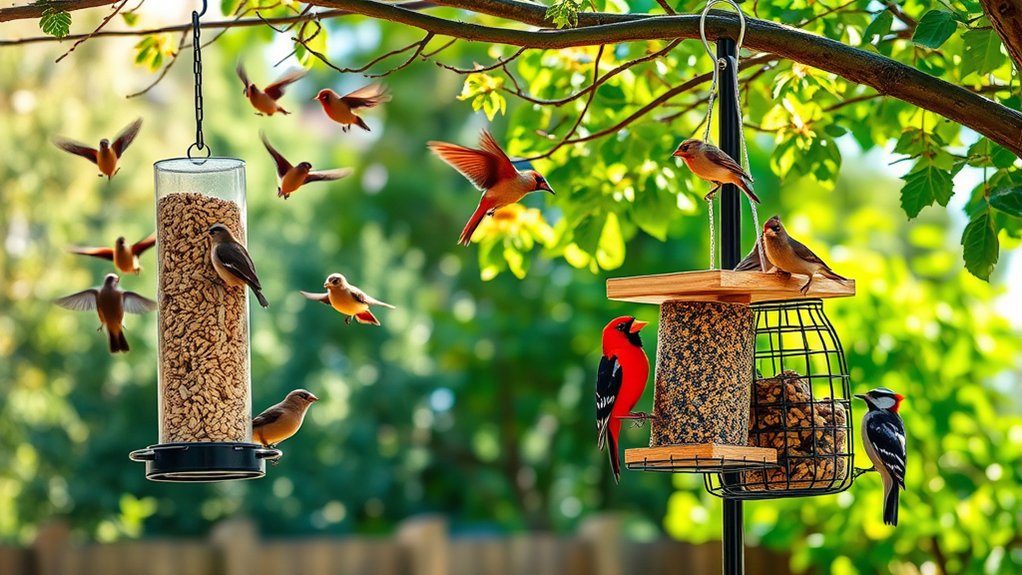
Although choosing the right seeds is important, selecting bird feeders that suit both your food and target birds guarantees your backyard visitors can easily access their meals. Different bird species preferences mean you need to match feeders to the type of food and the birds you want to attract.
Also, seasonal feeding strategies can affect your choice, as some feeders work better in winter or summer.
Here are three tips for picking the right feeders:
- Use tube feeders for small seeds like sunflower or millet, appealing to finches and chickadees.
- Try platform feeders for mixed seeds or fruit, attracting a variety of birds including cardinals and jays.
- Opt for suet feeders in colder months to provide high-energy food for woodpeckers and nuthatches.
Place Feeders Safely to Protect Birds and Pets
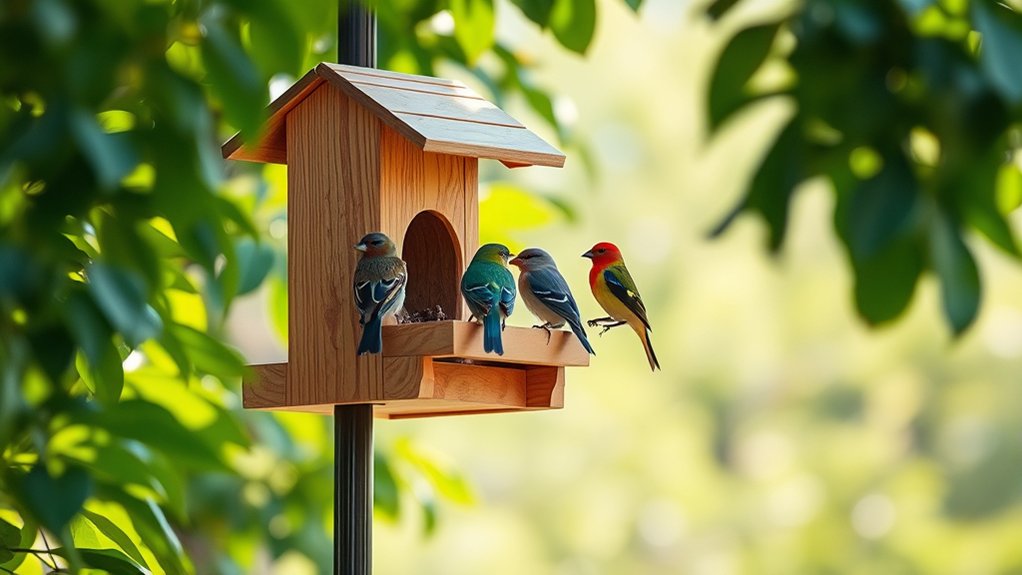
Choosing the right feeders is only part of the equation; placing them thoughtfully plays a big role in keeping both birds and your pets safe. When setting up feeders, practice bird predator awareness by avoiding spots that give cats or hawks easy access.
Place feeders at least 10 feet away from shrubs or trees where predators can hide, but close enough (about 3 to 5 feet) to a window to enjoy watching birds without risking collisions.
Use feeder placement strategies that create safe zones, like positioning feeders over mulch or gravel instead of grass. This makes it harder for ground predators to approach unnoticed.
Also, avoid placing feeders near areas where your pets frequently roam to prevent conflicts or stress. By being mindful of where you hang your feeders, you protect your feathered visitors and keep your pets safe, ensuring a peaceful backyard environment for everyone.
Clean Feeders Regularly to Keep Birds Healthy
To keep your backyard birds healthy, you’ll need to clean your feeders regularly. Establishing simple cleaning routines prevents mold, bacteria, and disease from spreading among visiting birds.
Regular maintenance not only protects their health but also guarantees your feeders stay attractive and inviting.
Here’s a quick guide to effective cleaning routines:
- Empty remaining seed and scrub the feeder with warm, soapy water at least once a week.
- Rinse thoroughly to remove soap residue, then soak the feeder in a diluted bleach solution (one part bleach to nine parts water) for 10 minutes.
- Rinse again and let the feeder dry completely before refilling.
Provide Water and Shelter for a Bird-Friendly Yard
When you provide fresh water and safe shelter, you create an inviting environment that encourages birds to visit and stay longer. Set up a clean birdbath or shallow water source, replenishing it daily to support birds’ hydration and bathing needs. This is especially important during bird migration patterns when they require extra energy and rest.
To protect birds year-round, focus on nesting site preservation by maintaining natural shrubs, trees, and brush piles. These offer safe hiding spots from predators and harsh weather. You can also install birdhouses designed for local species to improve shelter options.
Frequently Asked Questions
What Time of Day Do Birds Visit Feeders Most Often?
Birds visit feeders most often in the early morning and late afternoon. During bird migration, their feeding schedules become essential as they need extra energy for long flights.
You’ll notice increased activity around dawn when birds fuel up after resting overnight, and again before sunset to prepare for the night. Adjusting your feeding times to match these peak periods helps you attract more visitors and supports their natural rhythms during migration.
How Do I Attract Specific Bird Species to My Yard?
To attract specific bird species, keep in mind that 70% of birds prefer native plants and feeders suited to their diets. Study bird species preferences, like sunflower seeds for cardinals or nectar for hummingbirds, and match your offerings.
Also, consider seasonal migration patterns. Provide food and shelter during peak migration times to welcome travelers. By tailoring your yard to their needs and seasonal habits, you’ll see your favorite birds visit more often and feel right at home.
Can Feeding Birds Affect Their Natural Foraging Behavior?
Yes, feeding birds can affect their natural foraging behavior if they start relying too much on your feeders. While occasional feeding won’t cause problems, consistent, easy food sources might create dependency concerns. This can make birds less motivated to search for food naturally.
To avoid this, you should offer food seasonally and vary types to encourage natural foraging skills. That way, you help birds without disrupting their instincts or survival habits.
What Are Signs of Bird Feeder Overpopulation?
You’ll notice signs of bird feeder overpopulation when aggressive behavior spikes and smaller birds get pushed away. Crowding can disrupt bird migration patterns, causing some to linger unnaturally.
Also, watch for increased disease spread and poor nesting habits nearby, as stressed birds might abandon nests or fail to breed properly. If your feeder attracts too many birds at once, it’s time to reduce food or add more feeders to balance the population.
How Do Seasonal Changes Affect Bird Feeding Habits?
Seasonal changes flip bird feeding habits upside down like a whirlwind! You’ll notice migration patterns shifting as some birds leave for warmer spots, reducing your backyard visitors.
Meanwhile, nesting behaviors kick in spring and summer, making birds crave protein-rich foods for their chicks. In colder months, they seek high-energy seeds and suet to survive. Adjust your feeding accordingly to match their changing needs throughout the year.
Conclusion
So, you want to be the ultimate bird boss, huh? Just pick the right seeds, match ‘em with feeders that scream “bird buffet,” and place them like a pro because evidently, birds have safety standards.
Don’t forget to scrub those feeders like you’re prepping for a dinner party. Birds are picky, you know! Toss in some water and shelter, and voilà, you’ve got a backyard bird paradise.
Who knew feeding birds was this much work? But hey, they’re worth it. Follow these simple tips, and you’ll master how to feed birds in your backyard in no time.