5 Backyard Privacy Landscaping Ideas
Creating backyard privacy can be a real challenge, and if you’re struggling to find the right solution, you’re not alone. Many people want a peaceful outdoor space shielded from neighbors’ views but don’t know where to start or what works best.
Luckily, there are plenty of smart backyard privacy landscaping ideas that can help you transform your backyard into a private retreat.
You can create backyard privacy with tall plants like bamboo, dense hedges, or evergreen shrubs that block views year-round. Add layered planting with tall, medium, and low plants for a natural screen that feels lush, not boxed in.
Pergolas and trellises let you train vines overhead or along edges. Hardscape features like stone walls, raised planters, and decorative fences add structure.
With a few smart choices, you’ll uncover even more ways to shape a private outdoor retreat.
Key Takeaways
- Plant tall shrubs, bamboo, or dense hedges to create a natural privacy screen.
- Layer tall, medium, and low plants for fuller coverage and a softer look.
- Build a living fence with evergreens, grasses, or climbing vines for year-round screening.
- Add pergolas or trellises to block views while keeping the space open and bright.
- Use stone walls, raised planters, or decorative fences to define space and enhance privacy.
Tall Plants for Backyard Privacy

Tall plants can turn an open yard into a more secluded retreat without building a fence. You can use them to soften views, block neighboring windows, and make your outdoor space feel calmer. Choose species that suit your climate and sunlight, then place them where you need cover most.
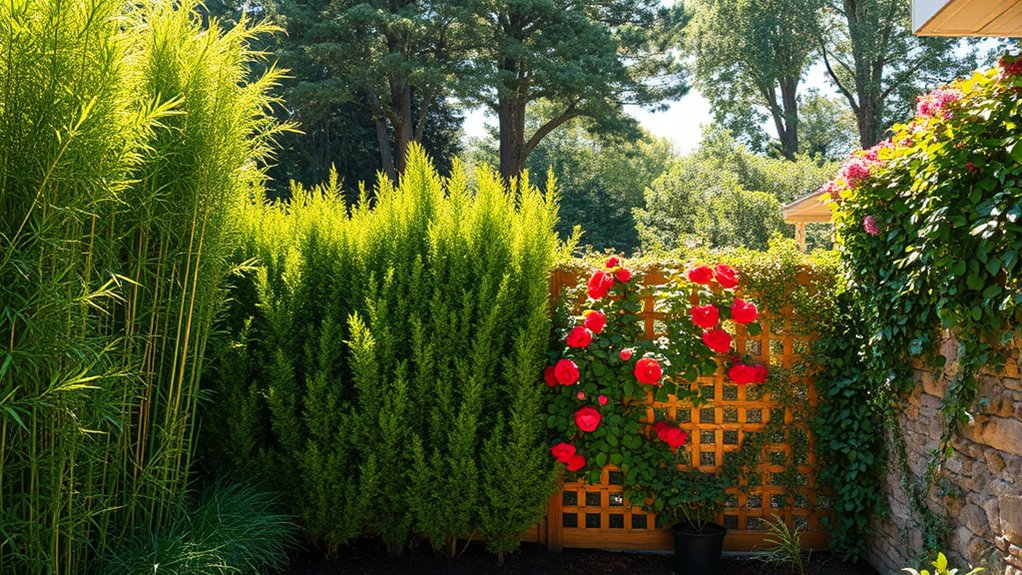
Bamboo screening works well when you want fast height and a clean, modern look, while dense hedges give you a fuller, greener barrier that feels natural year-round. You’ll get the best results if you mix evergreen and flowering options so your yard stays attractive in every season.
Keep plants healthy with regular watering, pruning, and enough room to grow. If you select the right tall plants, you’ll create privacy that feels alive, stylish, and easier to maintain than a hard boundary.
Build Layers for Backyard Privacy

Layering different types of plants and structures gives you privacy that feels fuller and more natural than a single row of greenery. You can start with tall shrubs or ornamental grasses at the back, then add medium-height plants in front, and finish with low groundcovers near the edge.
This staggered setup blocks views without feeling heavy or boxed in. Mix textures, leaf shapes, and colors so your yard stays interesting from every angle. You can also place benches, trellises, or planters where they double as focal points and help break up open sightlines.
Choose plants that offer seasonal interest, such as spring flowers, summer foliage, fall color, or winter berries, so your space looks good year-round. By varying height and density, you create privacy that softens hard edges and makes your backyard feel more inviting.
Build a Living Backyard Privacy Fence
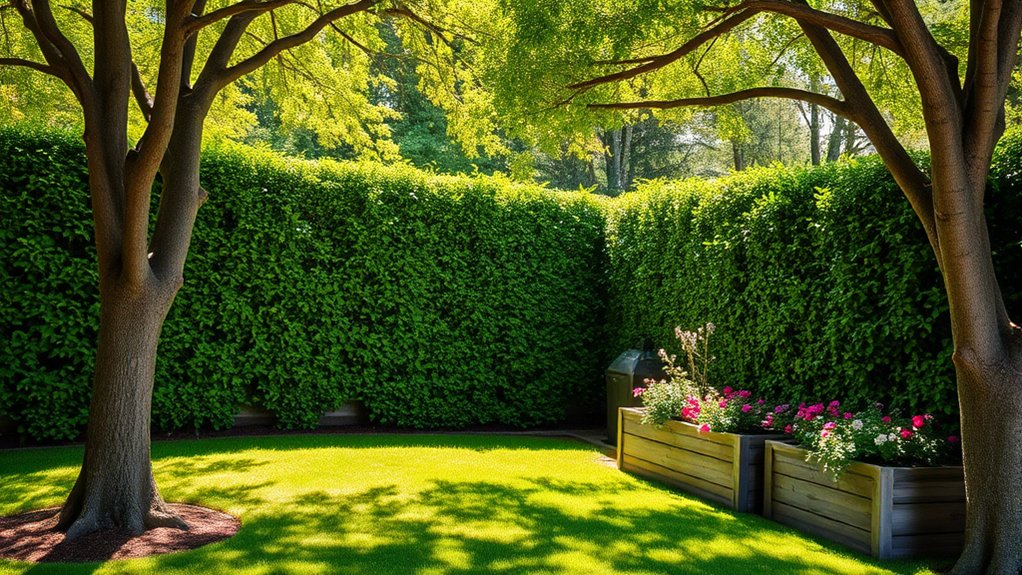
A living backyard privacy fence uses dense shrubs, small trees, or climbing vines to create a natural screen that feels softer than a solid wall. You can line your property with evergreens, holly, arborvitae, or bamboo to block views year-round.
If you want faster coverage, mix young plants with staggered spacing so gaps close in sooner. Choose species that match your climate, soil, and sunlight, then prune them regularly to keep the edge neat and dense.
This approach gives you one of the best fencing alternatives because it adds privacy, color, and habitat at the same time. You can also investigate green wall options such as layered hedges or compact screening plants along a narrow border.
Water new plantings well, mulch around the base, and watch for pests so your living barrier stays healthy. Over time, it’ll become a lush boundary that feels welcoming, not harsh.
Use Pergolas and Trellises
Pergolas and trellises add privacy without making your backyard feel closed in. You can place a pergola over a seating area to define the space and soften views from neighboring yards.
Choose pergola designs with slatted tops, side panels, or angled beams to filter sightlines while still letting in light and air. A trellis works well along a fence, beside a patio, or over an entry path, giving you a vertical screen that feels light and decorative.
Train trellis plants like jasmine, clematis, or climbing roses to grow upward and fill gaps with greenery and blooms. If you want faster coverage, mix evergreen vines with seasonal flowering climbers for year-round interest.
Keep the structure proportioned to your yard so it supports privacy without overwhelming the landscape. With the right placement, these features create a cozy retreat that feels open, inviting, and shielded from prying eyes.
Add Hardscape Privacy Features
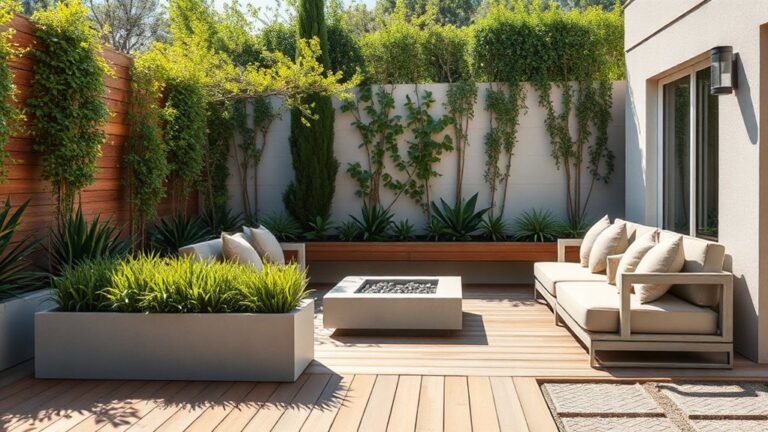
Stone walls, gabion screens, and raised planters can all add privacy while giving your backyard a polished, permanent feel. You can use hardscape elements to block views, shape movement, and create cozy outdoor rooms without relying only on plants. Unlike temporary solutions, these features stand up to wind, weather, and time, so your space stays private year-round.
- Build low stone walls along the property edge to define boundaries and soften sightlines.
- Install decorative fences with solid panels or mixed materials for a stylish screen.
- Add raised planters near seating areas to layer greenery and hide direct views.
When you combine these features, you’ll create depth and structure that feels intentional. Pair stone walls with climbing vines, or use decorative fences behind shrubs for extra coverage. You’ll get privacy, texture, and a backyard that feels finished.
Frequently Asked Questions
How Much Maintenance Do Privacy Plants Require Year-Round?
Privacy plants usually need moderate maintenance year-round, but you can choose varieties that fit your routine. Your plant selection matters most: evergreens often need less attention, while fast growers may need more pruning.
In spring and summer, you’ll water, mulch, and trim. In fall, you’ll clean up debris. In winter, you’ll check for damage.
Consistent seasonal care keeps them healthy, dense, and effective without demanding constant work.
What Backyard Privacy Options Work in Windy Areas?
For windy areas, you’ll want low, sturdy options like wind resistant plants, layered hedges, and natural barriers such as stone walls or lattice screens. Since winds can cut garden survival by up to 30%, choose flexible shrubs, ornamental grasses, and evergreen trees with deep roots.
You can also add slatted fencing to reduce gusts without blocking airflow. Mix plant heights, and you’ll create privacy that stands strong and looks great.
How Can I Add Privacy Without Blocking Natural Light?
You can add privacy without blocking natural light by using partial screens, spaced slats, or airy hedges. You’ll keep bright areas open while guiding views away from your space.
Try layered plantings with taller shrubs behind lower ones, and place focal points where you want attention drawn. Use light barriers like lattice panels, frosted glass, or climbing vines to soften sightlines without making your yard feel closed in.
Which Privacy Landscaping Ideas Are Best for Small Yards?
For small yards, you’ll get the best privacy from vertical gardens, decorative trellises, layered plantings, and outdoor screens. Start with tall, slim features that don’t eat up space, then build upward with climbers and compact shrubs. You’ll create a hidden nook without crowding the yard.
Want more? Mix a trellis with a living wall, and you’ll boost privacy, texture, and style while keeping the area open and inviting.
Do I Need Permits for Backyard Privacy Structures?
You might, depending on your city and the structure you want. You’ll need to check fence regulations and local landscaping codes before you build, because height, setbacks, materials, and visibility rules can trigger permits.
If you’re adding a pergola, wall, or tall fence, your permit office can tell you what’s required. Call before you dig so you don’t face fines, delays, or an expensive redo later.
Conclusion
When you step outside and notice your neighbor’s window just as you’re craving a quiet morning coffee, it can feel a little too familiar. That’s where smart privacy landscaping steps in.
Whether you plant tall greenery, layer your yard, grow a living fence, or add a pergola or hardscape feature, you create a space that feels like yours.
And sometimes, the best backyard moment is simply the one you get to enjoy in peace. That’s the magic of backyard privacy landscaping.