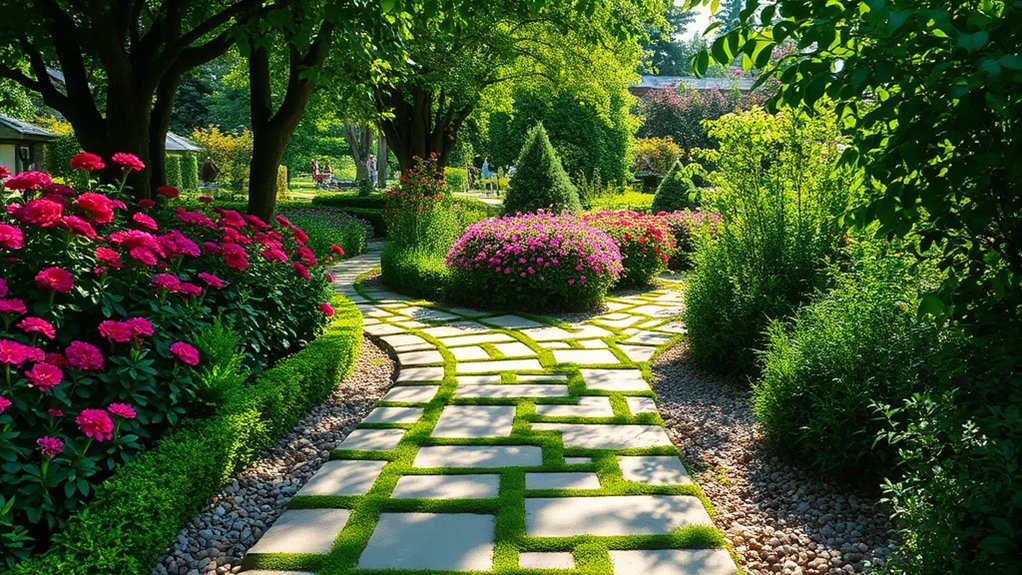
Garden Pathway Ideas for Designing a Beautiful Walkway
If you’ve ever stared at your garden wondering how to create a stunning walkway that ties everything together, you’re not alone. Many people struggle to find the perfect balance between style and functionality when designing a garden pathway ideas.
Luckily, with a few thoughtful ideas, you can transform your outdoor space into a welcoming oasis.
To design a beautiful garden walkway, you’ll want to match the path style to your space, whether that’s cottage curves, clean modern lines, or a rustic feel.
Choose materials like stone, concrete, gravel, or permeable pavers, then shape the route to flow naturally around beds and seating areas.
Add crisp borders, proper width, and soft lighting for safety and charm. With the right details, your path can feel both practical and inviting, and there’s more to discover.
Key Takeaways
- Choose a path style that matches your garden, such as cottage curves, modern straight lines, or rustic bends.
- Plan the route naturally around beds, trees, seating, and focal points for a smooth, purposeful flow.
- Pick durable materials like stone, concrete, gravel, or permeable pavers to suit style, climate, and drainage needs.
- Add clean borders and proper width, ideally 3 to 4 feet, for comfort, structure, and easier maintenance.
- Include low, warm lighting along edges and turns to improve safety, visibility, and evening ambiance.
Choose a Garden Path Style

Before you build, choose a garden path style that fits how you use the space and the look you want. If you love a cottage style, let the path meander with curved pathways, soft edges, and playful touches that feel welcoming.
Choose a garden path style that suits your space, whether it’s cottage charm, modern order, or rustic ease.
For a cleaner look, a modern design can use straight lines and a formal layout to guide movement with calm precision. If you want rustic charm, pick a style that feels natural and relaxed, with gentle bends and an unforced rhythm.
You can also blend styles by matching the path to your plantings, architecture, and daily routines. Think about how seasonal changes will affect the route, since shade, blooms, and fallen leaves can shift the experience.
Eco-friendly options can support a thoughtful design too, helping your path suit both your garden and your values. Choose the style that makes every step feel intentional.
Choose Materials for Your Garden Path
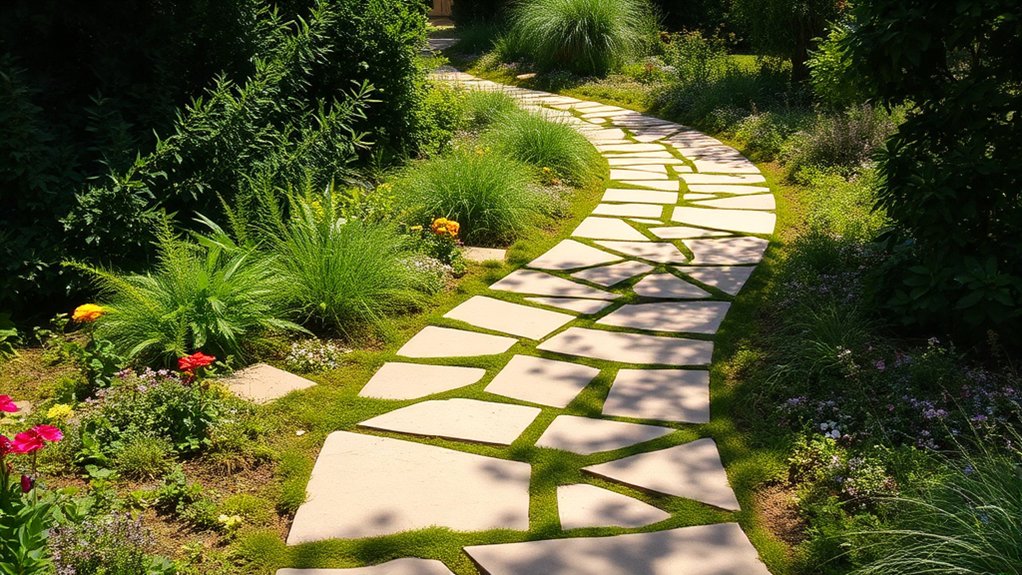
Once you’ve settled on the path style, the next step is choosing materials that match your garden’s look, budget, and maintenance needs. You can use natural stone for a timeless, high-end finish, or pick concrete slabs for a clean, modern feel.
If you want eco friendly options, consider permeable pavers that help water soak into the ground. Decorative gravel gives you texture and an easy, affordable surface, while reclaimed wood adds warmth and character in rustic gardens.
Brick patterns work well when you want classic charm and visual rhythm. Look for local materials whenever possible since they often cost less to transport and blend naturally with your landscape.
Think about durability, slip resistance, and upkeep before you decide. When you choose wisely, your materials will support the garden’s style and make your walkway feel inviting, practical, and long-lasting.
Plan the Path Shape and Route
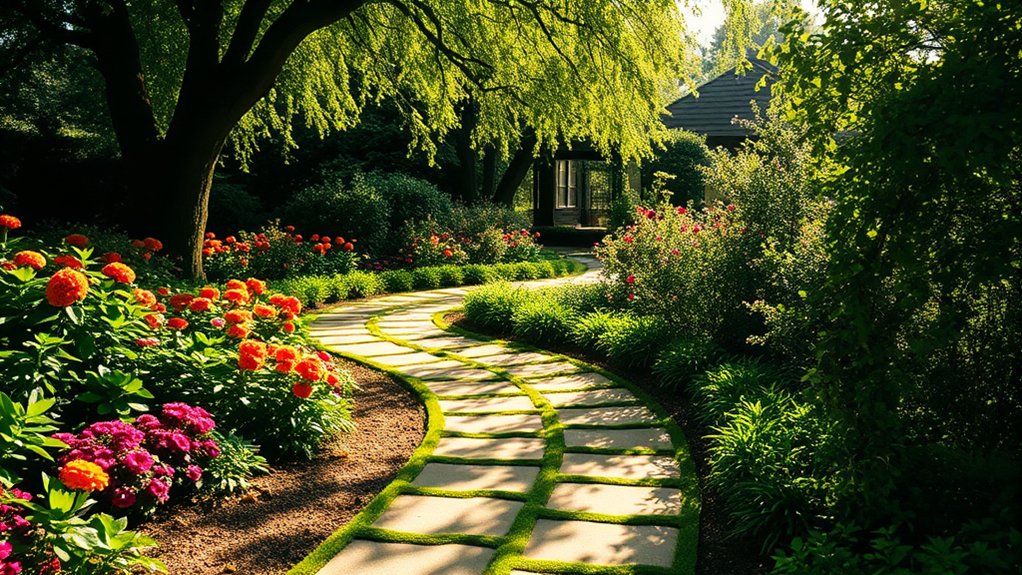
Now that you’ve chosen your materials, sketch the path’s shape and route so it feels natural in the garden and serves a clear purpose. Trace how you move from one area to another, then let the walkway guide that journey with natural curves instead of stiff lines.
You can soften corners around beds, trees, and borders so the route blends into the landscape. Keep the line simple when you want a direct connection, or add gentle bends when you want to slow the pace and create interest.
Think about how the path links entrances, seating, sheds, and focal points, because strong functional flow makes the garden easier to enjoy. Walk the space first, notice where you already step, and shape the route around those habits.
Then adjust the design until it feels balanced, intentional, and easy to follow. If the path supports how you use the garden, it’ll look better and work better too.
Size Your Garden Path for Comfort
A garden path should feel comfortable to walk on, so size it to match how you use the space. Think about path width first: a narrow line works for solo strolling, while a wider route supports user comfort when two people walk side by side. Your material selection also matters, because smooth, stable surfaces improve footing and help with path durability through seasonal changes.
- Use 3 to 4 feet for most walkways.
- Choose 5 feet or more for accessibility features.
- Keep turns wide enough for easy movement.
- Match the scale to your garden’s aesthetic balance.
You’ll also make maintenance ease better when you leave enough room to sweep, prune, and carry tools. When the path feels proportionate, it looks intentional and works hard every day.
Design Borders That Frame the Path
You can frame your garden path with clean edges that give it a crisp, finished look. Try layering plants alongside the border to soften the transition and add some texture. Then, use contrasting materials to really make the path stand out. It’s a simple way to create a polished yet inviting feel.
Define Clean Edges
Crisp borders give a garden pathway its finished look and help guide the eye along the route. You can define clean edges with edging techniques that separate the walk from turf, gravel, or beds. Choose materials that suit your style and make upkeep easier.
- Install steel edging for a sleek, modern line.
- Set brick or stone flush with the path for a classic frame.
- Use cut-in turf lines to keep grass from creeping over.
- Add a narrow strip of mulch or pebbles to soften the transition.
These choices create a neat, intentional border and make routine care simpler. Follow simple maintenance tips, like trimming stray growth and checking for shifting pieces, so your walkway stays sharp and inviting all season.
Layer Plants Alongside
Layering plants alongside a path softens hard edges and turns the walkway into a framed garden feature. You can use layering techniques to place low groundcovers near the edge, mid-height perennials behind them, and taller shrubs farther back. This creates depth, guides the eye, and makes the path feel intentional.
Choose plant selections that echo your climate and light conditions, so they thrive with less fuss. Repeat a few colors or textures along the border to keep the design cohesive. Leave enough space for growth, so plants won’t spill awkwardly onto the path.
If you want a polished look, trim anything that starts crowding the walkway. With thoughtful layers, your path won’t just connect spaces; it’ll become part of the garden’s structure.
Use Contrasting Materials
Using contrasting materials around your path can make the walkway stand out and give it a clean, finished edge. You can frame the route with stone, brick, gravel, or timber to create visual separation and guide each step.
Try these ideas:
- Lay dark pavers beside light gravel for bold contrasting colors.
- Pair smooth slabs with rough edging stones for rich texture combinations.
- Use reclaimed brick to soften curves and add warmth.
- Set metal edging against mulch for a crisp, modern line.
These borders help you define the path, control spreading plants, and make the garden feel organized. When you match material choice to your style, you’ll turn a simple walkway into a polished feature that feels intentional and inviting.
Use Plants to Soften the Path
Plants can take a hard-edged pathway and make it feel inviting. You can frame the edges with low ground cover options like thyme, creeping sedum, or dwarf mondo grass to blur the line between paving and soil. These plants spill gently over stones and soften sharp corners without crowding the walkway.
If your path runs beside a fence, wall, or trellis, climbing plants can add vertical softness and create a more layered look. Choose varieties that suit your climate and won’t overwhelm the space. Mix textures for interest: fine leaves beside broad leaves, or glossy foliage beside matte finishes.
You’ll also want to leave enough room so plants don’t block the route or make maintenance harder. When you combine neat edging with living greenery, your walkway feels more relaxed, lush, and naturally connected to the rest of the garden.
Add Lighting for Safety and Ambience
You can add pathway safety lights to guide each step and help prevent trips after dark. Plus, soft lighting creates a warm evening glow that makes your garden feel welcoming. Just place solar lamps along the path where they’ll get plenty of sun during the day and steady light at night.
Pathway Safety Lights
A few well-placed pathway lights can make your garden safer after dark while also giving it a warm, inviting glow. Choose fixtures that guide each step and highlight edges without creating glare.
For strong pathway illumination, space lights evenly so you can see changes in grade, stone joints, and borders clearly. That simple setup improves landscape safety and helps you move confidently at night.
Consider:
- Low bollards for steady guidance
- Stake lights near turns
- Recessed step lights for risers
- Solar lights for easy upkeep
Pick finishes that match your walkway materials, then test the spacing at dusk. You’ll create a practical route that feels polished, secure, and easy to follow.
Ambient Evening Glow
As daylight fades, add soft lighting to your garden pathway to boost safety and create a welcoming evening mood. You can line the edges with low-glare fixtures that guide your steps without overpowering the landscape.
Choose warm-toned bulbs to highlight stone, gravel, or mulch, and let the light skim across plants for gentle texture. Hang twinkling lanterns from hooks, branches, or pergolas to add charm without cluttering the path.
Keep light levels balanced so you can move confidently while still enjoying the scene. When you layer illumination thoughtfully, you create soft shadows that deepen the garden’s character and make each turn feel inviting.
This subtle glow turns an ordinary walkway into a calm evening retreat.
Solar Lamp Placement
Solar lamps can extend that gentle evening glow while keeping your pathway safe and easy to follow. You can shape both mood and visibility with smart lighting placement, spacing each fixture to guide footsteps without harsh glare. Choose solar lamp types that suit your style and the path’s scale.
- Line a narrow walkway with low stakes for a subtle runway effect.
- Place lantern-style lamps near turns so you don’t miss curves.
- Use taller posts by entry points to create a welcoming focal point.
- Mix warm white lights with greenery to soften stone, gravel, or pavers.
Keep panels in direct sun and trim nearby plants so each lamp charges well. With thoughtful placement, you’ll enjoy safer nighttime movement and a garden that feels inviting after dark.
Build a Gravel Garden Path
A gravel garden path gives your yard a relaxed, natural look while keeping your footing steady through beds, borders, and damp spots. Start by marking the route, then dig out the soil a few inches deep and level the base.
Add landscape fabric to slow weeds, then spread compacted crushed stone for support. For gravel selection, choose angular stones that lock together better than rounded pebbles, and pick a size that feels comfortable underfoot.
Add edging to hold the sides in place and keep the path crisp. Pour the top layer evenly, rake it smooth, and walk it down to settle.
For easy maintenance tips, top up thin areas each season, pull stray weeds early, and use a rake to restore the surface after storms. If you keep the path slightly crowned, water will drain off instead of pooling.
Create Stepping-Stone Garden Paths
Stepping-stone paths add a simple, inviting route through lawn, beds, or mulch without covering the whole area. You can place natural stone slabs at a comfortable stride, then surround them with decorative gravel for clean edges and easy drainage. Use spacing that matches your walking pace, and let the stones guide movement naturally through your garden.
- Choose stones with color contrast to brighten shaded areas.
- Mix sizes for texture variety and a more organic look.
- Frame the path with seasonal plants that soften hard edges.
- Keep up with path maintenance by brushing off soil and resetting wobbly pieces.
When you set the stones slightly above grade, you create a polished surface that still feels relaxed. You’ll enjoy a walkway that looks intentional, feels welcoming, and blends beautifully with the rest of your landscape.
Avoid Common Garden Path Mistakes
Even the best-looking garden path can fall flat if it’s poorly planned or installed, so it helps to sidestep a few common mistakes early on. You should map the route before you dig, because a path that ignores natural foot traffic feels awkward and gets ignored.
Don’t choose materials that clash with your garden style or climate; slippery stone, loose gravel, and brittle pavers can cause trouble fast. Keep the width practical, especially where two people might pass.
You’ll also want solid edging and a level base to prevent shifting and weeds. Skipping drainage is another big error, since pooled water damages surfaces and roots.
Follow smart pathway maintenance tips by sweeping debris, checking joints, and replacing damaged pieces quickly. Finally, avoid packing in too many design features; clean lines often look better and work better than cluttered layouts.
Frequently Asked Questions
How Do I Maintain a Garden Path Year-Round?
You can maintain a garden path year-round by sweeping debris, pulling weeds, and checking for cracks regularly. Use seasonal upkeep to clear leaves in fall and remove moss in damp months. Also, inspect drainage after heavy rain.
Your material choices matter too. Seal stone, level gravel, and replace loose pavers before they worsen. In winter, shovel carefully and avoid harsh salts.
Consistent attention keeps your path safe, clean, and attractive.
What Budget Should I Plan for a Garden Walkway?
You should plan about $8 to $30 per square foot for a basic walkway, though a simple gravel path can cost less. For example, if you’re building a 100-square-foot path with pavers, you might spend $1,500 to $3,000.
Your material options, labor, and site prep will drive the total up or down. Follow smart installation tips like leveling the base and choosing durable edging to avoid costly repairs later.
Can I Install a Path Over Uneven Terrain?
Yes, you can install a path over uneven terrain if you prepare it properly. You’ll need to use path leveling techniques to smooth slopes, fill low spots, and create stable support.
Choose your materials carefully, since pavers, gravel, or stepping stones handle grade changes differently. You should also add edging and drainage so the surface stays secure, safe, and long-lasting.
Planning ahead makes the job much easier.
Which Path Designs Suit Small Gardens Best?
You’ll do best with narrow, simple paths in small gardens. Straight stepping-stone runs, slim gravel strips, or compact pavers keep the area open and easy to move through.
Choose light paving materials to reflect space and make the garden feel bigger. Use gentle curves only if they guide the eye without wasting room.
Prioritize space optimization, and you’ll create a walkway that feels practical, airy, and inviting.
How Do I Make a Garden Path Pet-Friendly?
You can make your garden path pet-friendly by choosing pet-safe materials like smooth flagstone, sealed pavers, or decomposed granite that won’t scratch paws. Keep the surface even and use durable materials that resist digging, slipping, and chewing.
Avoid sharp gravel and toxic sealers. Add gentle curves, good drainage, and shaded spots so your pets stay comfortable. You’ll also want to trim edges and rinse away mud regularly.
Conclusion
By choosing the right style, materials, and layout, you can turn a simple route into a stunning feature in your garden. A well-planned path doesn’t just guide your steps; it adds charm, safety, and structure.
In fact, studies show that people are up to 20% more likely to use outdoor spaces that feel inviting and easy to move through. So, keep your walkway comfortable, polished, and personal.
You’ll enjoy it every day when your garden pathway reflects your style and enhances your outdoor space.