Garden Ideas for Narrow Spaces: Simple How-To Guide
Struggling to make the most of a narrow garden? You’re not alone. Many people find it challenging to create a beautiful, functional outdoor space when room is tight.
But with the right ideas and a bit of planning, even the smallest, narrow gardens can become charming retreats. Garden Ideas for Narrow Spaces.
Measure your narrow garden first, noting walls, corners, drains, and any tapering spots. Then sketch a simple plan that uses straight lines, slim borders, and one clear path.
Choose plants that match your light levels, with taller ones at the back and compact, trailing varieties in front.
Add trellises, wall planters, and containers to save floor space, and use pale paths or mirrors to boost light.
With a few smart tweaks, you’ll uncover even more ways to make it work.
Key Takeaways
- Measure the space carefully, noting obstacles, tapering areas, and vertical limits before planning the garden layout.
- Use straight lines, slim borders, and one-person-wide paths to keep a narrow garden feeling open and easy to move through.
- Add vertical features like trellises, wall planters, hanging pots, and green walls to save ground space.
- Choose plants that suit the light, with taller plants at the back, shorter ones in front, and trailing varieties for softness.
- Grow in flexible containers and use light colors, mulch, and simple irrigation to make maintenance easier and boost brightness.
Measure Your Narrow Garden Space
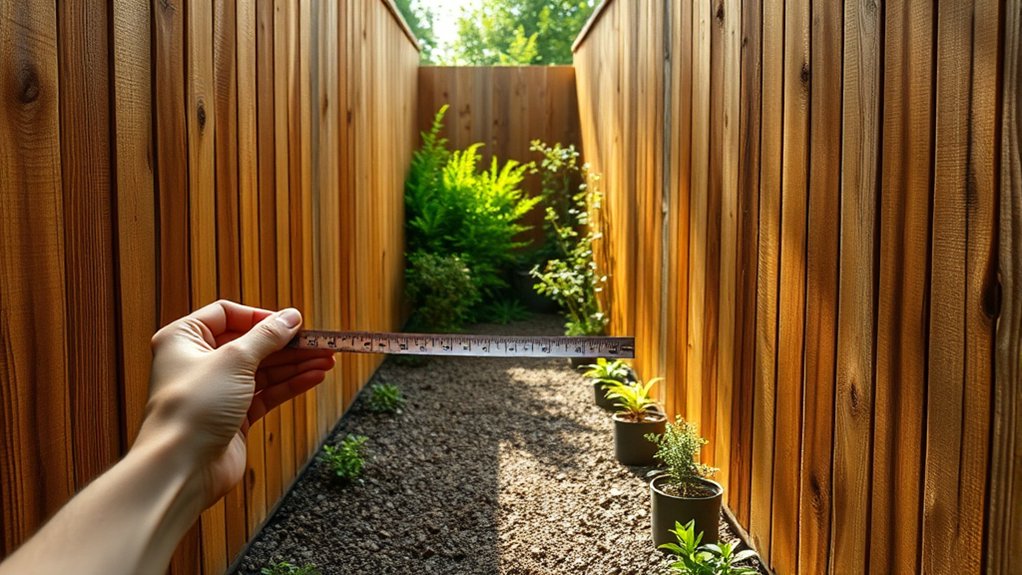
Before you pick plants or plan layout, grab a tape measure and map out your narrow garden space. Measure the full length and width, then note any bumps, corners, fences, steps, or drains that cut into usable area. Record every number in a notebook or app so you can compare options later.
For accurate garden measurements, check the space at more than one point, since narrow areas often taper or bow. Include the height of walls, railings, and overhangs too, because vertical limits affect what you can grow.
Next, make simple space calculations to find the actual planting zone, not just the footprint. Subtract fixed features from the total area, and leave room for walking, opening gates, and reaching plants.
If you want, sketch the plot to scale on graph paper. When you measure carefully now, you avoid overcrowding later and set yourself up for a garden that fits and feels balanced.
Choose the Best Layout for Narrow Gardens
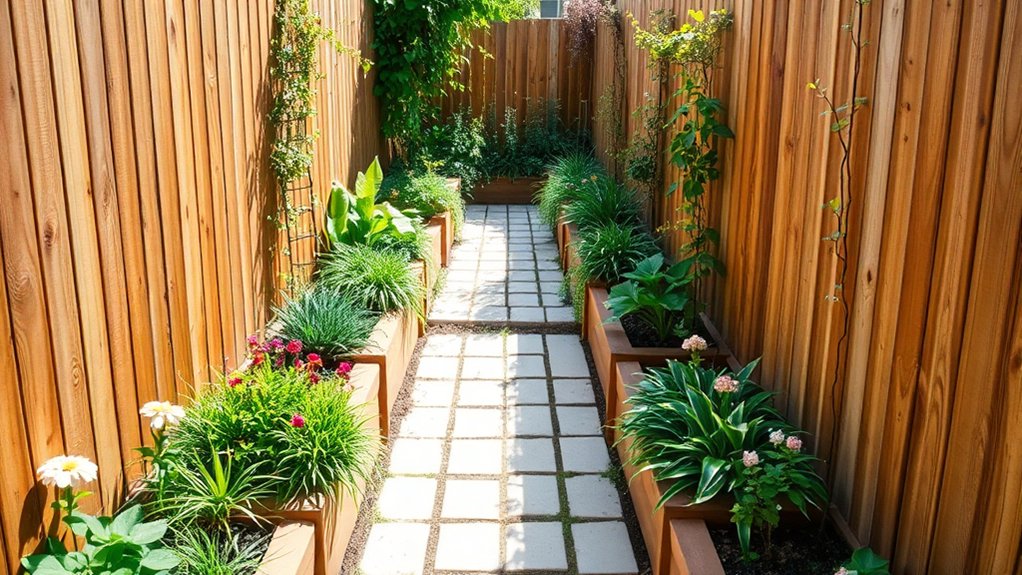
You can make a narrow garden feel larger by choosing a space-saving layout that keeps paths clear and planting beds efficient. Try using straight lines, slim borders, and grouped plants to create a nice flow without crowding the space.
Also, think about adding some vertical design ideas like trellises, wall planters, and hanging pots. Growing upward helps you maximize every inch and makes the garden feel more open.
Space-Saving Layouts
When you’re working with a narrow garden, the layout matters as much as the plants you choose. Start by dividing the space into clear zones, so you can move through it easily without wasting an inch.
A straight path down one side often works best, especially if you want to highlight key garden features like a bench, pot cluster, or small water bowl. You can also use staggered beds to soften the long shape and make the area feel wider.
Keep planting techniques simple: place taller plants at the back and shorter ones near the front to maintain balance and light. Avoid overcrowding, and leave enough breathing room for upkeep.
With a clean, practical plan, your narrow garden’ll feel organized, inviting, and much larger.
Vertical Design Ideas
Once your layout is set, look upward to make a narrow garden feel larger without taking up floor space. You can mix trellis options with climbing vines to frame paths and soften fences.
Add wall planters and vertical shelves for herbs, flowers, or trailing greens, then use plant ladders for a layered look. Modular systems let you shift containers as light changes, while decorative screens create privacy and support artful displays.
If you want bold impact, build green walls or hanging gardens on one long side, keeping the center open. Choose materials that match your home, and repeat shapes for balance.
- slim trellises climbing with jasmine
- wall planters packed with herbs
- hanging gardens above a bench
- modular systems beside decorative screens
Match Plants to Light and Space

Start by reading the light in your narrow space, then choose plants that fit both the exposure and the footprint. For bright spots, pick sun loving plants with compact growth so they won’t crowd paths.
In softer light, lean on shade tolerant options that still bring color and steady structure. Mix seasonal blooms with fragrant herbs to add interest without clutter, and use foliage textures to keep the bed lively year-round.
You can also tuck in trailing varieties at the edge of containers for a softer look.
| Light | Plant type | Benefit |
|---|---|---|
| Full sun | Sun loving plants | Strong bloom |
| Partial shade | Shade tolerant options | Easy care |
| Small gaps | Compact growth | Neat fit |
| Edge spaces | Trailing varieties | Soft spill |
Choose a balanced color palette, then repeat a few plants for a clean, unified look that feels intentional and calm.
Use Vertical Garden Ideas to Save Floor Space
If your narrow space still feels tight after choosing the right plants, go vertical to free up valuable floor area. You can turn blank walls, fences, and railings into productive green layers that add color without crowding your path. Start with sturdy trellis options for climbing vines, then place hanging planters at different heights to create depth and movement.
Keep the look balanced by repeating a few plant types and spacing them so each one gets light and air.
A slim lattice panel with jasmine softens a bare wall.
Wall-mounted pockets hold herbs near the kitchen door.
Hanging planters cascade over a narrow balcony edge.
A tall obelisk supports beans or flowering climbers.
You’ll make the space feel fuller, taller, and more intentional while leaving room to walk, sit, and enjoy the garden.
Grow in Containers to Keep Things Flexible
Choose the right-sized containers so your plants have enough room without crowding your narrow space. You can mix pots, planters, and window boxes to match each plant’s needs and keep the layout neat. Plus, with moveable container arrangements, you’ll find it easy to shift things around whenever light, space, or style changes.
Choose Right-Sized Containers
When space is tight, containers let you garden without committing to a fixed layout. Choose pots that match each plant’s root size, so you don’t waste precious floor space or crowd growth.
Lightweight container materials like fiberglass, resin, or glazed ceramic work well in narrow spots. Drainage solutions such as raised feet or saucers with holes help prevent soggy roots.
For seasonal plants, pick compact containers that make plant selection easier and keep your display tidy. Use color coordination to tie the whole area together, then rely on simple maintenance tips like checking soil moisture, trimming dead growth, and rejuvenating potting mix.
- Slim pots along a wall
- Herbs in matching planters
- Bright flowers near a doorway
- A single tall container centerpiece
Moveable Container Arrangements
A few well-placed containers can make a narrow garden feel surprisingly adaptable, because you can shift them with the seasons, the light, or your mood. Group pots at different heights to create depth, then slide them apart when plants need more airflow or easier access.
Put herbs near the door, sun-lovers at the brightest end, and shade-tolerant plants where walls soften the glare. This container mobility lets you respond quickly to weather changes and gives you room to refresh the layout whenever you want.
Choose lightweight planters, rolling saucers, or narrow stands to boost arrangement versatility without crowding the path. You’ll also make watering, feeding, and pruning simpler, since each container stays easy to reach.
Layer Plants for Depth and Texture
To make a narrow garden feel fuller without crowding it, layer plants by height and texture so the eye moves through the space. Place taller shrubs or grasses at the back, mid-height bloomers in the middle, and low growers at the front.
Use layering techniques that mix upright and mounding forms, and choose plant combinations that create texture contrasts without visual clutter. Repeat a few color harmonies to unify the bed, then shift in seasonal rotations so something fresh always stands out.
Mix upright and mounding forms, echo a few color harmonies, and rotate blooms seasonally for lasting freshness.
Anchor the design with one or two focal points, like a sculptural leaf or bright flower, so the space feels intentional.
- feathery grasses brushing beside broad, glossy leaves
- compact flowers spilling around slim stems
- deep green foliage lifting soft pink and white blooms
- a single vivid accent guiding your eye forward
Add a Simple Path Through the Garden
Even in a tight garden, a simple path can make the space feel easier to enter and larger to investigate. You can guide the eye with a narrow ribbon of stepping stones, gravel, or brick. Then keep the line gentle and uncluttered.
Good path design lets you move without squeezing past plants, and it gives each bed a clear edge. Choose path materials that fit your style and stay practical in weather and traffic.
| Path material | Effect |
|---|---|
| Gravel | Soft, informal, easy to shape |
| Brick | Warm, tidy, classic |
| Flat stone | Natural, calm, sturdy |
You should keep the path just wide enough for one person, and you can curve it slightly to slow the pace. Add low borders beside it, and your garden will feel organized, inviting, and pleasantly connected from end to end.
Maximize Light in a Narrow Garden
When a narrow garden feels dim, you can brighten it by making the most of every bit of available light. Start by observing sunlight angles through the day, then place taller plants where they won’t block lower beds.
Keep pathways pale and uncluttered so they reflect light back across the space. Trim overhanging branches, and choose slim supports that let sunshine move freely.
Keep pathways light and clear so they reflect sunshine through the garden, and use slim supports that let brightness flow freely.
You can also use mirrors or glossy surfaces carefully to bounce light into darker corners without creating harsh glare. Watch shadow effects from fences, sheds, and neighboring walls, then arrange plants to fill those cooler spots with shade-tolerant greens.
White gravel that glows in afternoon sun
A narrow trellis casting airy lines
Bright foliage catching morning light
A reflective pot lifting a dim corner
Style Small Garden Details That Stand Out
You can make a narrow garden really pop by using bold container accents that add color, texture, and height. Think about eye-catching pots, sculptural planters, or grouping containers together to create focal points without making the space feel crowded.
Then, try adding some vertical decor like wall art, trellises, or hanging pieces. These draw the eye upward and bring a stylish touch to your garden. It’s a simple way to add interest and make the most of a small space.
Bold Container Accents
A narrow garden still has room for drama, and bold container accents deliver it fast. You can turn tight corners into focal points with bold color choices that echo your favorite blooms.
Pick container materials that add contrast, like matte ceramic, weathered metal, or textured fiberstone, so each pot feels intentional. Place one large pot near the entry, then cluster smaller ones beside it for rhythm and depth.
Keep the planting simple, and let the containers do the talking.
A cobalt pot beside chartreuse foliage
A rust-colored planter framing white blossoms
A sleek black urn catching morning light
A terracotta cluster softening a brick path
Vertical Decor Highlights
If your narrow garden needs more presence, go vertical with decor that draws the eye upward. Mount slim shelves, trellises, or lattice panels so you can layer texture without crowding the floor.
Use hanging planters filled with trailing herbs or flowers to soften hard edges and add movement at different heights. Choose weatherproof wall art that reflects your style, but keep it simple so the space still feels open.
A narrow mirror can bounce light and make the garden seem wider. Pick a few strong pieces instead of many small ones, and space them evenly to guide the eye along the length.
When you repeat colors or materials, you’ll create harmony, and your small garden will feel polished, lively, and intentionally designed.
Keep Your Narrow Garden Easy to Maintain
In a narrow garden, every choice should earn its place, so focus on plants, materials, and layouts that cut down on upkeep. Choose compact, slow-growing plants that won’t need constant trimming, and group them by sun and water needs so you can care for them fast. Use mulch benefits to your advantage by locking in moisture, suppressing weeds, and reducing soil splash. Add easy irrigation, like drip lines or soaker hoses, so you don’t waste time hand-watering tight corners.
Edge beds with simple stone or steel strips. Leave clear paths for quick pruning and cleanup. Plant perennials instead of high-maintenance annuals. Store tools nearby in a slim bench box.
Keep containers lightweight and movable, so you can shift them for cleaning or seasonal change. When you simplify every layer, your narrow garden stays tidy, healthy, and enjoyable without stealing your weekends.
Frequently Asked Questions
What Budget Should I Plan for a Narrow Garden Makeover?
Plan on $200 to $2,000 for a narrow garden makeover, depending on what you change. You can keep it budget-friendly by using containers, mulch, and repurposed materials.
If you hire help or install lighting, costs rise fast. Buy essential tools like a trowel, pruners, and gloves first.
You’ll spend less if you phase the project, source plants locally, and handle the labor yourself wherever possible.
How Do I Keep Pets Out of a Narrow Garden?
You keep pets out of a narrow garden by making the space annoyingly unappealing because apparently your dog thinks mulch is a buffet. Use pet deterrents like motion sprinklers, low fencing, and citrus peels, and shape your garden layout so there’s a clear path for you but not for paws.
You can also protect plants with raised beds and thorny borders. Block access, redirect curiosity, and your garden stays yours.
Which Materials Work Best for Narrow Garden Fencing?
You’ll get the best results from powder-coated steel, vinyl, or treated cedar for narrow garden fencing. These materials handle weather well and offer strong material durability without adding bulk.
Choose slim fencing styles like vertical slats or horizontal panels to keep the space feeling open. If you want low maintenance, vinyl works great. If you prefer a natural look, cedar adds warmth while still lasting when you seal it regularly.
Can I Add Water Features to a Narrow Garden?
Yes, you can add water features to a narrow garden, and they’ll brighten it like a ribbon of silver. You should choose slim water feature options, such as wall fountains, tiered bowls, or a narrow rill, so you don’t crowd the space.
Small pond designs work well too if you keep them shallow and compact. You’ll get soothing sound, movement, and a focal point without sacrificing precious room.
How Do I Protect Narrow Garden Plants From Strong Winds?
You can protect your narrow garden plants from strong winds by adding windbreak options like trellis screens, lattice panels, or dense shrubs. Then, choose sturdy plants suited to exposed spots.
You should stake tall plants, group pots together, and place tender varieties behind harder ones. Mulch helps roots stay anchored, and regular watering keeps plants less stressed.
If gusts stay fierce, you’ll need flexible supports and low, compact growth.
Conclusion
With the right plan, you can turn a narrow garden into a stylish, useful retreat. Measure first, then choose a layout that fits your light and space. Add vertical features, flexible containers, and a simple path to make every inch count.
Did you know vertical gardening can increase growing space by up to 50%? That extra height helps you grow more without crowding the floor, and it keeps your garden easy to enjoy and maintain.
By using these tips, you’ll create a beautiful and functional space that makes the most of your narrow garden.