What to Feed Birds: Top 10 Nutritious Choices
If you love watching birds visit your yard but struggle to find the right food to keep them healthy and happy, you’re not alone. Many people want to provide nutritious options but aren’t sure where to start. Feeding birds well can feel overwhelming, but with a little guidance, you can easily attract a variety of feathered friends all year round.
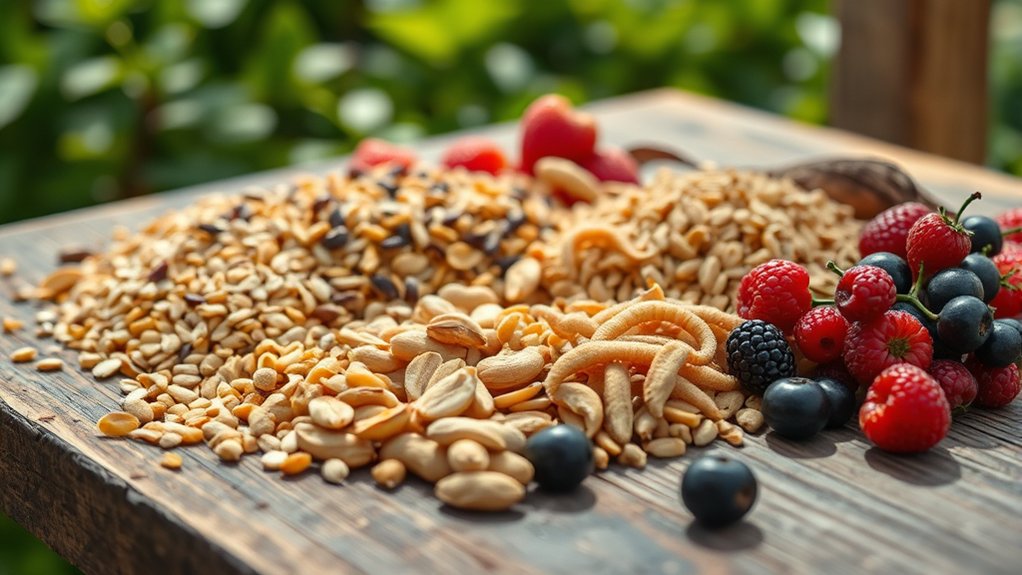
You’ll want to feed birds a variety of seeds like sunflower, millet, and safflower, along with nuts such as unsalted almonds and peanuts for essential fats and protein. Include insects like mealworms for a protein boost, and offer suet to provide energy during colder months.
Fresh fruits like berries and apples add vitamins, while clean water is a must. Avoid bread, as it lacks nutrients. Delve into these choices further to support birds all year round.
Key Takeaways
- Offer black oil sunflower seeds for high fats, proteins, and energy that attract many bird species.
- Provide mealworms and insects to supply essential protein and attract insect-eating birds.
- Include nuts like unsalted almonds and peanuts for vital fats, amino acids, and winter energy reserves.
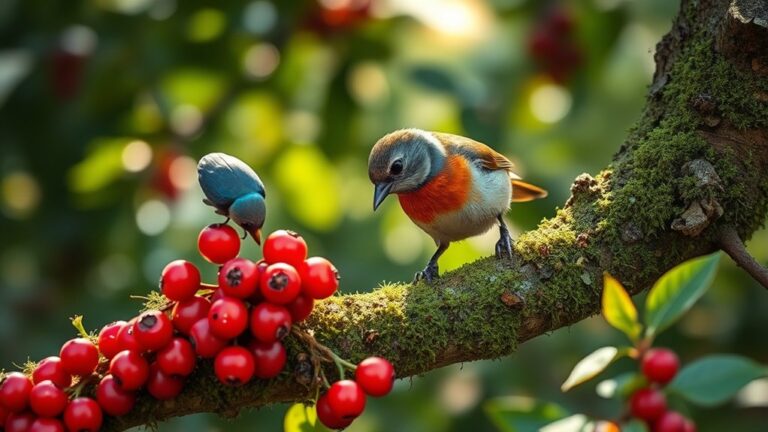
- Supply fresh fruits such as berries and apples for vitamins, antioxidants, and immune support.
- Use suet cakes in cold weather for dense calories and quick energy, especially for woodpeckers and nuthatches.
Best Seeds for Nutritious, Energy-Rich Bird Food

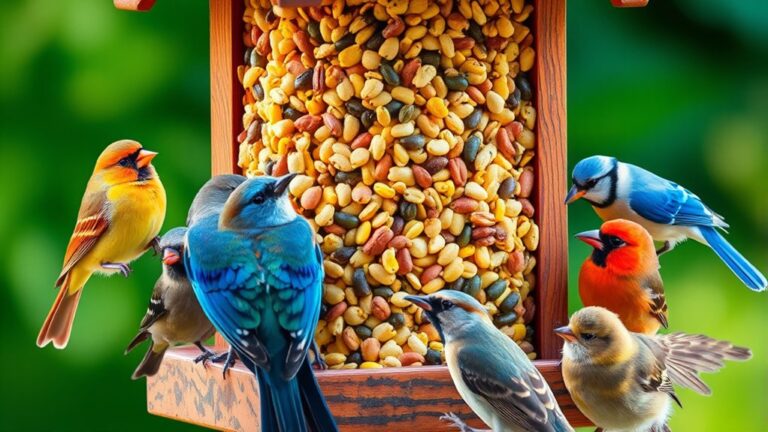
When you want to attract healthy, energetic birds, choosing the right seeds makes all the difference. Opt for sunflower seeds, millet, and safflower seeds. They’re packed with nutrients and energy that fuel birds during bird migration.
These seeds provide essential fats and proteins, helping birds maintain stamina on long journeys. You’ll notice that birds also play a role in seed dispersal when they eat these seeds and carry them to new locations. This supports plant growth and ecosystem health.
Offering a variety of seeds mimics natural feeding habits and encourages a diverse bird population in your yard. Black oil sunflower seeds are especially popular because their thin shells make feeding easy and they deliver a high energy boost.
Why Suet Is a High-Calorie Favorite for Birds

Because suet offers a dense source of calories, birds rely on it especially during cold months or energy-intensive activities like migration. You’ll find suet cakes are among the best fat supplements, providing birds with essential energy to stay warm and active. Unlike seeds, suet is a pure fat source, which means birds get more fuel per bite.
When you add suet cakes to your feeder, you attract insect-eaters like woodpeckers and nuthatches, which need fat to survive harsh conditions.
Here’s a quick look at why suet is so valuable:
| Benefit | Why It Matters |
|---|---|
| High-Calorie Content | Supports energy needs |
| Fat Supplements | Essential for cold weather |
| Easy to Digest | Quick energy absorption |
| Attracts Insectivores | Supports diverse bird species |
| Stores Well | Lasts through winter months |
Adding suet cakes to your bird feeding routine boosts their survival chances and keeps your backyard lively.
How Fresh Fruits Boost Birds’ Vitamin Intake

You’ll find fresh fruits packed with essential vitamins like A, C, and E, which help birds stay healthy and energetic. Plus, offering fruits gives them natural antioxidants that boost their immune systems. Adding fresh fruit to their diet can really make a difference in their overall well-being.
Essential Vitamins in Fruits
How do fresh fruits improve a bird’s diet beyond just taste? They provide essential vitamins that support crucial functions, like maintaining colorful plumage and regulating migratory patterns. When you offer birds fresh fruits, you’re not just feeding them; you’re boosting their health in key ways.
Here are some essential vitamins found in fresh fruits that benefit birds:
- Vitamin A: Supports healthy feathers and vibrant coloration.
- Vitamin C: Enhances immune function and reduces stress.
- Vitamin E: Aids in cell repair and muscle function.
- B-complex Vitamins: Help with energy metabolism and nervous system health.
Benefits of Fresh Fruit
Why should you include fresh fruits in your bird feeding routine? Fresh fruits provide essential vitamins that support birds’ health, especially during critical times like bird migration and nesting habits.
When birds migrate, they need an energy boost and nutrients to maintain stamina. Fresh fruits offer natural sugars and vitamins like A and C, which help strengthen their immune systems.
During nesting, birds require extra nutrients to care for their eggs and chicks. By offering fresh fruits, you guarantee they get antioxidants and hydration, promoting healthy development.
Including fruits like berries, apples, or oranges complements seeds and insects, creating a balanced diet. So, by adding fresh fruits to your bird feeding, you actively support their survival and reproductive success throughout the year.
Nuts That Provide Essential Fats and Protein for Birds
You’ll want to include nuts that are packed with essential fats and protein to keep birds healthy and energetic. Varieties like walnuts, almonds, and peanuts offer great nutrition. But it’s important to feed them safely and in moderation. So, let’s take a closer look at which nuts work best and how to serve them properly.
Benefits of Essential Fats
Because birds rely on fats for energy and healthy feather growth, providing nuts rich in essential fats and protein can considerably boost their diet. Bird fat contains essential lipids that support crucial functions like brain health, immune response, and cell repair.
When you offer nuts high in these fats, you help birds maintain their energy levels and develop strong, vibrant feathers. Essential lipids also improve their ability to withstand cold weather and recover from stress.
Here are key benefits of essential fats in birds’ diets:
- Boosts energy reserves for daily activities
- Supports feather quality and molting processes
- Improves immune system function
- Promotes brain and nervous system health
Including these fats guarantees birds thrive naturally and stay healthy year-round.
Protein-Rich Nut Varieties
Although birds benefit from various foods, nuts that are rich in both essential fats and protein offer a powerful combination to support their overall health. Protein-rich nuts like almonds, walnuts, and pecans provide the energy birds need during demanding periods such as bird migration.
These nuts also supply essential amino acids that help birds maintain strong muscles and feathers. During nesting habits, protein plays a vital role in supporting egg production and the growth of hatchlings.
Safe Nut Feeding Tips
How can you safely offer nuts that provide essential fats and protein to birds without causing harm? Start by choosing unsalted, unseasoned nuts like almonds, walnuts, or pecans. These support birds during migration and nest building.
Always chop nuts into small pieces so birds can easily consume them without choking. Avoid moldy or spoiled nuts, as they can be toxic.
Finally, offer nuts in moderation to supplement, not replace, natural food sources.
- Select fresh, unsalted nuts to guarantee safety
- Chop nuts into bite-sized pieces for easy eating
- Discard any moldy or spoiled nuts immediately
- Provide nuts during migration and nest building seasons to boost energy and nutrition
Why Birds Love Mealworms and Other Insects
When you offer mealworms and other insects in your backyard, you’re providing birds with a rich source of protein and essential nutrients that fuel their energy and growth. Birds naturally seek out insects due to their high nutritional value, especially during breeding and molting seasons.
Mealworm benefits include being easy to digest and packed with essential amino acids, making them a favorite among many bird species. By introducing a variety of insects, you promote insect diversity, which attracts a wider range of birds and supports their varied dietary needs.
This diversity mimics what birds find in the wild, helping them stay healthy and active. You’ll notice birds eagerly visiting your feeders when you supply insects, as they help build strong muscles and maintain vibrant feathers.
Best Grains to Feed Birds for Balanced Nutrition
You’ll want to offer grains that pack a nutritional punch, like millet, cracked corn, and oats. These help keep birds healthy and active. Mixing these grains in the right proportions is key to making sure they get a balanced diet. And don’t forget—providing fresh, clean feed regularly will attract and support a variety of bird species, too.
Nutrient-Rich Grain Options
Why choose grains as a staple for feeding birds? Grains offer essential nutrients that support bird migration and nesting habits, providing energy and building blocks for growth. They’re easy to store and serve, making them a practical choice to keep birds healthy year-round.
Focus on these nutrient-rich grain options to meet birds’ dietary needs:
- Millet: Small, energy-packed seeds ideal during migration.
- Cracked corn: High in carbohydrates for sustained energy.
- Sorghum: Rich in protein, supporting muscle development.
- Oats: Provide fiber and vitamins important for nesting birds.
Including these grains helps birds maintain stamina during migration and build strong nests. By offering a variety, you guarantee balanced nutrition that supports their natural behaviors and overall well-being.
Feeding Tips For Birds
Although feeding birds might seem straightforward, selecting the best grains guarantees they get balanced nutrition essential for their energy and health. When choosing grains, opt for millet, cracked corn, and sunflower seeds, as these provide crucial nutrients that support bird migration and daily activities.
You’ll want to adjust grain types seasonally; for example, during nesting habits, birds need protein-rich seeds to nurture their young. Avoid offering salted or flavored grains, which can harm birds.
Place feeders in safe, sheltered spots to protect feeding birds from predators and harsh weather. Clean feeders regularly to prevent disease spread.
Why Fresh Water Matters When Feeding Birds
Since birds rely on clean water for drinking and bathing, providing fresh water regularly is vital when feeding them. Bird hydration is essential for their health, digestion, and overall well-being.
Providing fresh water regularly is crucial for birds’ health, hydration, and overall well-being.
Stale or dirty water can discourage birds from visiting your feeder and may even spread diseases. Maintaining water cleanliness ensures birds stay safe and hydrated.
To support bird hydration effectively, you should:
- Change water daily to prevent bacteria buildup
- Use shallow dishes to make drinking and bathing easier
- Place water sources away from feeders to reduce contamination
- Clean water containers regularly with mild soap and rinse thoroughly
Safe Alternatives to Bread for Feeding Birds
While many people think bread is a convenient bird snack, it lacks the nutrients birds need and can even harm them. Instead, you can offer safer alternatives that support their bird migration and nesting habits.
Seeds like sunflower, millet, and safflower provide essential fats and proteins birds rely on during long migrations. Offering chopped nuts gives them energy without the risk of mold or toxins found in bread.
You might also try unsalted, dried fruits such as raisins or cranberries, which supply natural sugars and vitamins to fuel their journeys. Moreover, mealworms are excellent for boosting protein intake, especially during nesting when birds need to feed their young.
Seasonal Foods That Help Birds Thrive Year-Round
As the seasons change, you can adjust the foods you offer to match birds’ shifting nutritional needs. This helps them stay healthy and energized all year long. Understanding migration patterns lets you provide the right nourishment for birds passing through or settling in your area. During nesting season, offering protein-rich foods supports parents feeding their young.
Adjust your bird feeding to seasonal needs, supporting health, energy, and nesting success year-round.
Here are seasonal food options to help birds thrive year-round:
- Spring: Mealworms and soft fruits to aid nesting habits and chick development.
- Summer: Fresh berries and nectar to replenish energy after long flights.
- Fall: High-fat seeds like sunflower and safflower to help build fat reserves before migration.
- Winter: Suet cakes and nuts for sustained energy in cold weather when natural food is scarce.
How to Choose Nutritious Bird Feeders and Mixes
Choosing the right bird feeders and mixes can make a big difference in attracting healthy, vibrant birds to your yard. You’ll want feeders that keep seeds dry and are easy to clean, preventing mold and bacteria growth.
Consider bird feeder placement carefully: put feeders where birds feel safe but visible, away from predators and harsh weather. When selecting mixes, choose ones with a variety of seeds like sunflower, millet, and safflower to appeal to different species.
Store your seeds properly in airtight containers to maintain freshness and avoid pests.
| Feeder Type | Ideal Placement | Best Mix Components |
|---|---|---|
| Tube feeders | Near shrubs or trees | Black oil sunflower, millet |
| Hopper feeders | Open areas with cover nearby | Safflower, cracked corn |
| Platform feeders | Elevated, sheltered spots | Mixed seeds, nuts |
| Nyjer feeders | Wind-protected locations | Nyjer seed |
| Suet feeders | Shaded areas | Suet cakes with nuts/seeds |
Use seed storage tips and strategic bird feeder placement to keep your feeders inviting and nutritious.
Frequently Asked Questions
How Often Should I Clean My Bird Feeders?
You should clean your bird feeders at least once every two weeks to prevent mold and bacteria buildup. During wet or humid weather, increase feeder cleaning to once a week.
Always empty old bird food and wash feeders with hot, soapy water, then rinse thoroughly. Proper bird food storage is key. Keep seeds dry and sealed to avoid contamination.
Regular feeder cleaning keeps birds healthy and encourages them to keep visiting your yard.
Can Feeding Birds Attract Unwanted Wildlife?
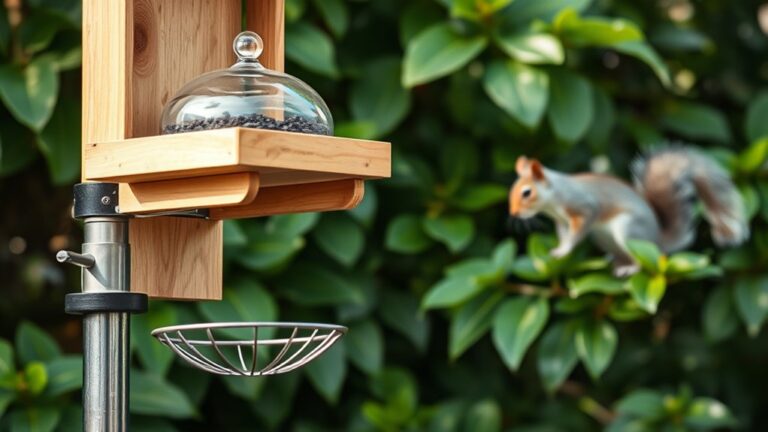
Yes, feeding birds can attract unwanted wildlife like squirrels, raccoons, or even rodents. To prevent wildlife conflicts, you need to practice good attractant management by cleaning up spilled seeds regularly and using feeders designed to deter larger animals.
You can also control feeding times and quantities to reduce excess food that draws these critters. Staying proactive helps you enjoy birdwatching without inviting trouble from other wildlife.
What Is the Best Time of Day to Feed Birds?
The best time of day to feed birds is early morning and late afternoon. During bird migration seasons, these times help you support birds when they need energy most.
Seasonal feeding is especially important in spring and fall, as migrating birds rely on your food to fuel their journey. By feeding birds at these times, you’ll help them stay nourished and energized throughout their migration and changing seasons.
How Do I Prevent Mold in Stored Bird Food?
You know what they say: “An ounce of prevention is worth a pound of cure.” To prevent mold in stored bird food, keep it in airtight containers and store it in a cool, dry place. Avoid moisture exposure at all costs.
Rotate your stock regularly and only buy what you can use quickly. These mold prevention storage tips will keep the food fresh and safe for your feathered friends.
Are There Any Foods Harmful to Birds to Avoid?
Yes, you should avoid feeding birds toxic seeds like apple seeds and cherry pits, as they contain harmful compounds. Also, steer clear of dangerous foods such as chocolate, avocado, and salty or sugary snacks since these can seriously harm birds.
Instead, stick to safe options to keep them healthy. Remember, even some common human foods can be toxic, so always double-check before offering anything new to your feathered friends.
Conclusion
Now that you know the top nutritious choices for feeding birds, you might think you’re ready to fill your feeder. But wait, there’s one secret that can truly transform your bird-feeding experience.
It’s not just about what you offer but how you present it. Curious? Keep exploring, and you’ll realize how simple tweaks can turn your backyard into a vibrant haven, attracting lively, healthy birds all year round.
Ready to see the magic of what to feed birds?