10 Best Foods to Feed Small Birds
If you love watching small birds visit your garden but struggle to find the right foods to attract them, you’re not alone. Many people want to provide the best nutrition for their feathered friends but feel overwhelmed by the choices. Finding the perfect blend of seeds, fruits, and treats can make all the difference in keeping these vibrant visitors happy and healthy.
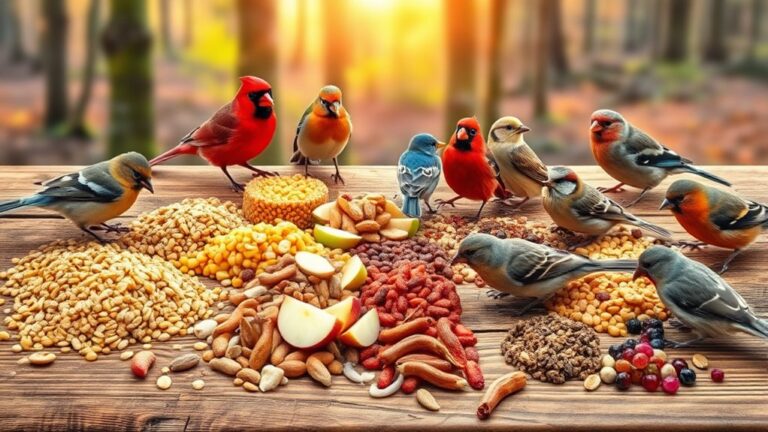
You can attract vibrant small birds by offering black oil sunflower seeds, millet, Nyjer, and safflower seeds, plus sunflower seeds and unsalted peanuts for nutty treats.
Fresh fruits like berries, apples, and grapes provide vitamins, while mealworms boost protein.
Suet offers essential energy, especially in cold months, and safe veggies such as peas, corn, carrots, and cucumber add nutrients.
These foods support their health and activity throughout the year, and there’s plenty more to investigate about feeding your feathered visitors right.
Key Takeaways
- Black oil sunflower seeds, millet, and Nyjer seed are top seeds favored by small birds for nutrition and easy cracking.
- Fresh fruits like berries, apples, and grapes provide essential vitamins, antioxidants, and energy to small birds.
- Mealworms offer high protein and fat, supporting growth, molting, and energy, especially during breeding and cold months.
- Suet cakes supply dense calories and warmth, which are crucial for energy and survival during cold weather and migration.
- Safe vegetables such as peas, corn, carrots, and cucumber add hydration and vitamins, complementing birds’ natural diets.
Understanding the Best Foods to Feed Small Birds
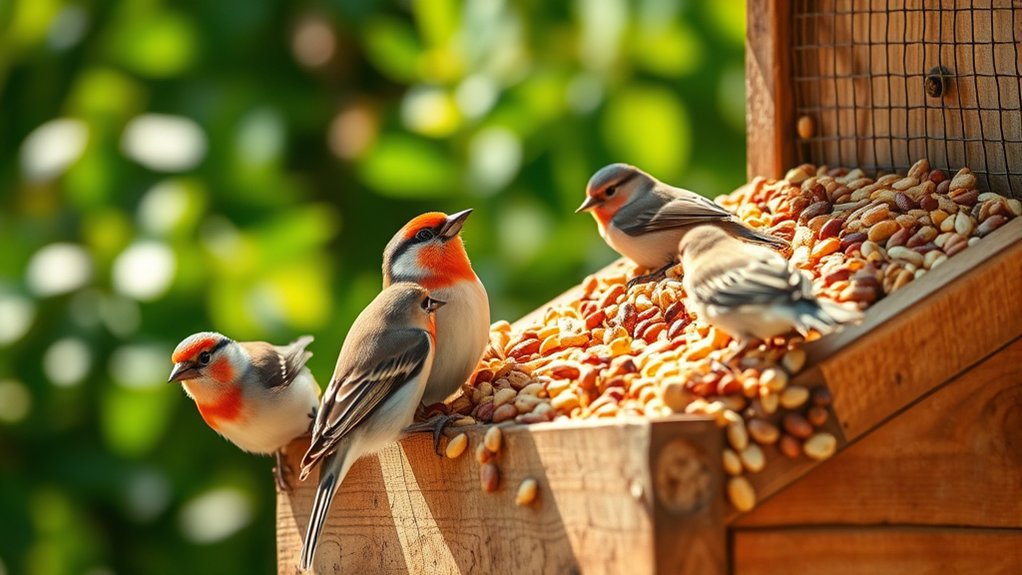
When feeding small birds, you need to focus on providing a balanced diet that meets their energy and nutritional needs. Small birds require a mix of proteins, fats, and carbohydrates to support vital activities like bird migration and nest building.
During migration, birds burn a lot of energy, so high-fat foods help them stay strong and fueled. In nest building, protein-rich foods aid in feather growth and overall health. You’ll want to offer a variety of foods that mimic what birds find in nature, such as insects and seeds, to guarantee they get all necessary nutrients.
Best Seeds to Attract Small Birds
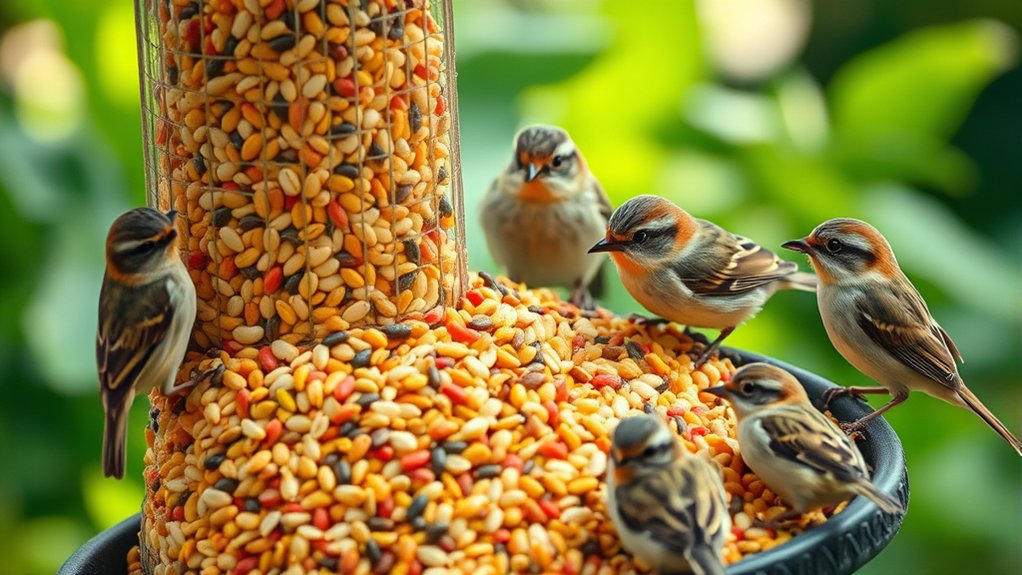
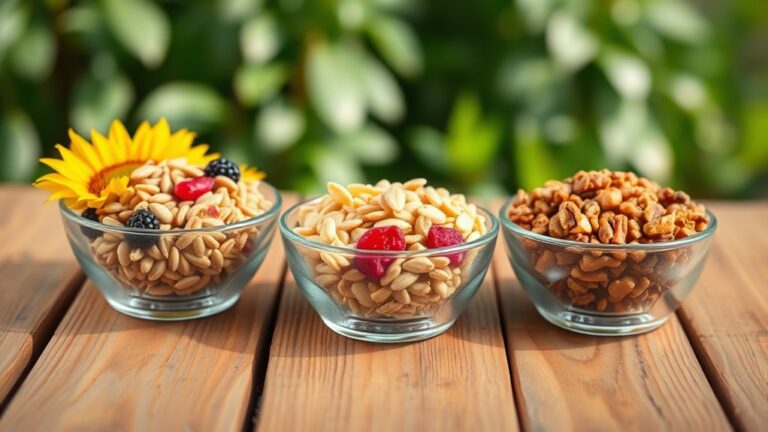
You’ll want to choose seeds that small birds love and that give them the nutrients they need to stay healthy. Popular options like nyjer, millet, and sunflower seeds attract all kinds of species. Plus, they provide essential fats and proteins. When you know which seeds to offer, your bird feeder can quickly become a favorite spot for local wildlife.
Popular Small Bird Seeds
Several popular seeds consistently attract small birds to your feeder, making them a great choice for bird enthusiasts. Black oil sunflower seeds top the list, favored by finches, chickadees, and nuthatches during bird migration and nesting behaviors. These seeds have thin shells, which small birds can easily crack open.
Millet is another excellent option, especially for ground-feeders like sparrows and juncos. Nyjer seed draws colorful finches like goldfinches, whose migration patterns bring them to feeders stocked with this tiny seed.
Offering a mix of these seeds supports birds throughout their seasonal movements and nesting periods, providing essential fuel and encouraging regular visits. By understanding which seeds attract local species during their migration and nesting behaviors, you’ll create a welcoming environment that keeps small birds coming back.
Nutritional Benefits of Seeds
Understanding the nutritional benefits of various seeds helps you choose the best options to attract and nourish small birds. Seed diversity plays a vital role in offering a balanced diet, providing essential nutrients that small birds need for energy, growth, and overall health.
When selecting seeds, focus on those with high nutritional value to support different bird species effectively.
Here are key nutritional benefits to contemplate:
- Sunflower seeds offer rich fats and proteins for energy.
- Millet is easy to digest and packed with carbohydrates.
- Nyjer seeds are high in oil content, boosting calorie intake.
- Safflower seeds provide essential vitamins and minerals.
Nutty Treats Loved by Small Birds
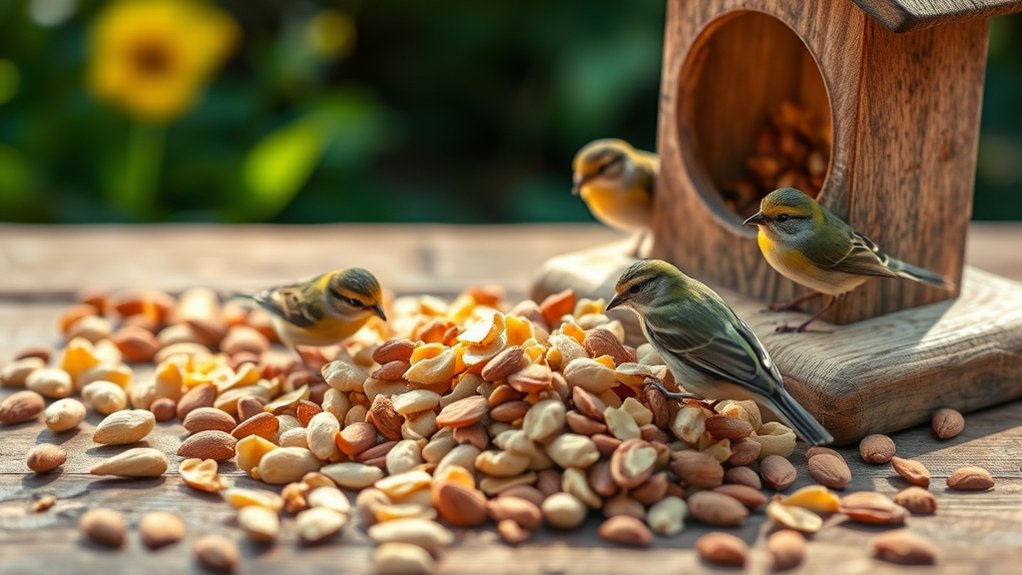
Two popular nutty treats that small birds adore are sunflower seeds and peanuts. These nutrient-rich snacks fit perfectly into their natural bird habitat, providing essential fats and proteins that support energy and feather health.
When you add these nuts to your feeding routine, consider the feeding frequency carefully. Offering them a few times a week prevents overfeeding and keeps your feathered friends coming back for more.
Sunflower seeds, especially black oil varieties, are easy for small birds to crack open. Peanuts, either shelled or unshelled, offer a satisfying challenge that stimulates natural foraging behavior.
Remember to avoid salted or flavored nuts, as these can harm birds. By including these nutty treats in your feeding plan, you improve your backyard’s appeal and ensure small birds receive a balanced diet.
Fresh Fruits That Feed Small Birds Naturally
You can really boost your small birds’ health by offering fresh fruits that are packed with vitamins and antioxidants. Fruits like apples, berries, and melons are favorites because they provide great nutrition and taste.
Just make sure to wash the fruits thoroughly and prepare them safely before feeding. This way, your feathered friends get the best benefits without any risks.
Nutritional Benefits Of Fruits
Why do small birds flock to fresh fruits? It’s because fruit varieties offer rich nutritional value that supports their health and energy. When you provide fresh fruits, you’re giving birds a natural source of essential nutrients that help them thrive.
Fruits are packed with:
- Vitamins like A and C that boost immunity
- Natural sugars for quick energy
- Dietary fiber for digestion
- Antioxidants that protect cells
Popular Fruits For Birds
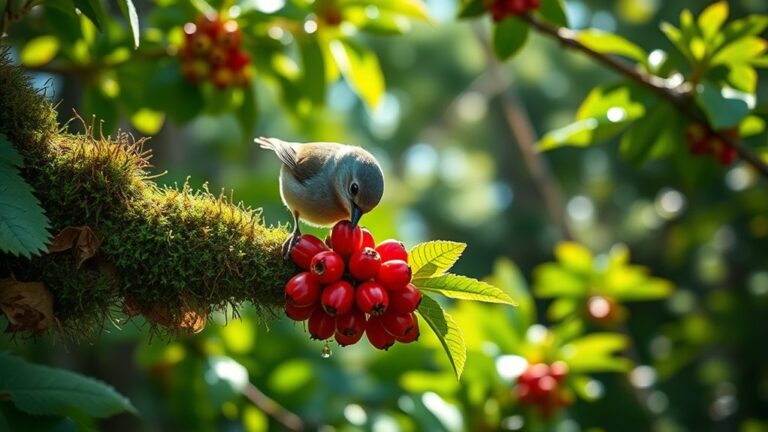
Several fresh fruits stand out as favorite snacks for small birds, offering both taste and nutrition. Berries like blueberries, raspberries, and blackberries provide essential vitamins and antioxidants that support energy during bird migration.
Apples, sliced thinly, give a juicy treat that many songbirds enjoy, especially as they prepare for nesting habits in spring. Grapes, cut in halves, are another popular choice, rich in natural sugars that fuel active birds.
You’ll also notice birds feeding on chopped pears and melons, which supply hydration and nutrients. By offering these fresh fruits, you help small birds maintain strength throughout their seasonal journeys and nesting periods.
Including a variety of these fruits in your bird feeding routine encourages natural foraging behaviors and supports their overall health.
Preparing Fruits Safely
Although fresh fruits provide essential nutrients for small birds, preparing them safely guarantees the birds can enjoy these treats without harm. To guarantee bird safety, you should carefully select and prepare a fruit variety that suits their dietary needs and avoids any risks.
Here’s how to prepare fruits safely:
- Always wash fruits thoroughly to remove pesticides and dirt.
- Remove seeds, pits, and stems, as many contain toxins harmful to birds.
- Cut fruits into small, manageable pieces to prevent choking.
- Offer fruits fresh and remove any leftovers promptly to avoid mold growth.
Mealworms as a Protein Boost for Small Birds
When you want to give small birds a nutritious protein boost, mealworms are an excellent choice. Incorporating mealworms into their diet promotes bird dietary diversity and supplies essential insect protein sources that many small birds crave. These wriggly treats are easy to offer and loved by species like chickadees, wrens, and bluebirds.
Mealworms provide the right balance of protein and fat, crucial for growth, molting, and energy. Offering mealworms regularly supports a healthy, varied diet, especially during breeding or colder months when natural insect availability decreases.
| Feature | Benefit |
|---|---|
| High Protein | Supports muscle and feather growth |
| Easy to Digest | Quick nutrient absorption |
| Natural Insect | Mimics wild diet |
| Attracts Many Birds | Increases your birdwatching opportunities |
| Convenient Feeding | Can be offered live or dried |
Suet for Energy and Warmth in Small Birds
You’ll want to offer suet to small birds because it provides essential energy and helps them stay warm. It’s especially important during colder months when food can be scarce. There are different types of suet, too. Some come mixed with seeds or fruits, which can attract a variety of bird species.
To serve it safely, you can use a suet feeder or simply place it in a protected spot where birds can easily access it. This way, the suet stays clean and the birds stay safe while they enjoy their treat.
Benefits of Suet
Because small birds burn energy quickly, suet provides a dense source of calories that helps them stay active and warm, especially in colder months. You’ll notice suet’s benefits extend beyond just energy. It supports essential behaviors linked to bird migration and nesting habits.
When you offer suet, you’re helping birds fuel their long migratory journeys and maintain the stamina needed for nest building and raising young. Suet’s high-fat content is critical during these demanding periods.
Here’s why you should include suet in your feeding routine:
- Supplies essential energy for long-distance bird migration
- Helps regulate body temperature in chilly weather
- Supports increased activity during nesting season
- Provides a reliable food source when insects are scarce
Feeding suet means you’re actively aiding small birds’ survival and reproduction.
Types of Suet
Suet comes in several varieties, each designed to meet the specific energy and warmth needs of small birds. You’ll find plain suet cakes packed with pure fat for quick energy, and those mixed with seeds, nuts, or dried fruits, which provide extra nutrients.
During colder months, high-fat suet is especially beneficial, helping birds maintain body heat. When deciding what type to offer, consider your birdhouse placement. If it’s shaded and protected, birds might prefer softer suet that’s easier to peck.
Also, pay attention to migration patterns. Birds passing through may favor certain suet blends depending on their energy needs. Offering the right suet type supports their survival and encourages frequent visits to your yard throughout the year.
How to Offer Suet
Offering suet to small birds requires a few simple steps to guarantee they can easily access and enjoy its energy-rich benefits. Suet provides essential calories during bird migration and supports nest building in colder months.
To offer suet effectively, use suet cages or feeders designed for small birds to prevent larger birds from dominating the food. Hang feeders in sheltered spots to protect suet from rain and melting.
Place feeders near trees or shrubs where birds feel safe landing and feeding. Refresh suet regularly, especially in warm weather, to maintain its quality and prevent spoilage.
How Nectar Supports Small Birds
When you provide nectar to small birds, you give them an essential energy boost, especially during cold months or migration periods. Nectar is a quick source of sugar that fuels their high metabolism, helping them maintain energy levels when natural food is scarce.
During bird migration, small birds rely heavily on nectar to sustain long flights and replenish before reaching nesting sites.
Small birds depend on nectar to fuel long migratory flights and recover before nesting.
You’ll notice that offering nectar supports their nesting habits as well. Breeding birds expend a lot of energy building nests and caring for chicks, so nectar helps meet these demanding nutritional needs.
Hummingbirds and orioles, for instance, are attracted to nectar feeders, which supplement their diet alongside insects and fruit.
Safe Vegetables to Offer Small Birds
Several vegetables make excellent, safe snacks for small birds, providing essential vitamins and hydration. Offering these veggies can support their energy needs during bird migration and aid in nest building by boosting overall health.
When choosing vegetables, stick to fresh, pesticide-free options to keep the birds safe and healthy.
Here are some safe vegetables to offer small birds:
- Peas: High in protein and easy to eat.
- Corn: Soft, sweet kernels provide energy.
- Carrots: Rich in beta-carotene, but chop finely.
- Cucumber: Offers hydration and vitamins.
Avoid seasoning or cooking these vegetables, as small birds benefit most from raw, natural foods. By including these veggies in your feeding routine, you help small birds maintain strength throughout migration and support their nesting activities.
Remember to introduce new foods gradually and observe how the birds respond to ensure they’re enjoying a balanced diet.
Seasonal Foods for Feeding Small Birds Year-Round
Although small birds need consistent nourishment throughout the year, their dietary preferences shift with the seasons. During spring and summer, when birds focus on nesting habits, they require protein-rich foods like mealworms and suet to support egg production and feeding hatchlings.
As you feed birds in fall, offer seeds and nuts to help them build fat reserves for migration. In winter, high-fat foods like sunflower seeds and peanuts provide essential energy to survive colder temperatures.
Understanding these seasonal needs guarantees you provide the right nutrients when birds need them most. Also, keep in mind that bird migration patterns influence which species you’ll see in your yard and what they prefer to eat.
Tips for Choosing the Best Food for Backyard Birds
Adjusting your bird-feeding approach with the seasons is just one part of supporting backyard birds. To choose the best food, you need to consider bird migration patterns and nesting habits. Different species need specific nutrients during breeding or migration to stay healthy and energized.
When selecting bird food, keep these tips in mind:
- Offer a variety of seeds and suet to attract diverse species.
- Choose foods that match the dietary needs linked to nesting habits, like high-protein options during breeding.
- Adjust feeding amounts and types based on bird migration timing to support energy needs.
- Avoid foods with fillers or artificial additives that may harm birds.
Frequently Asked Questions
How Often Should I Clean Bird Feeders to Prevent Disease?
You should clean bird feeders at least once every two weeks to prevent disease, and more often if you notice mold or wet seed. Regular cleaning helps keep seed varieties fresh and safe.
Sticking to consistent feeding schedules also reduces leftover food, minimizing contamination risks. Use hot soapy water or a diluted bleach solution, rinse well, and dry completely before refilling.
This routine keeps your small birds healthy and encourages them to keep visiting.
Can Feeding Birds Affect Their Migration Patterns?
Oh sure, because birds totally check their calendars based on your snack schedule! In reality, migration triggers rely on daylight and temperature, not your seasonal feeding habits.
While feeding birds can offer them extra energy, it won’t rewrite their instinctual GPS. So, don’t worry, your feeders won’t turn migratory birds into permanent residents; they’ll still follow nature’s cues, not your backyard buffet.
Keep feeding but respect those epic, instinct-driven journeys.
What Types of Feeders Are Best for Small Birds?
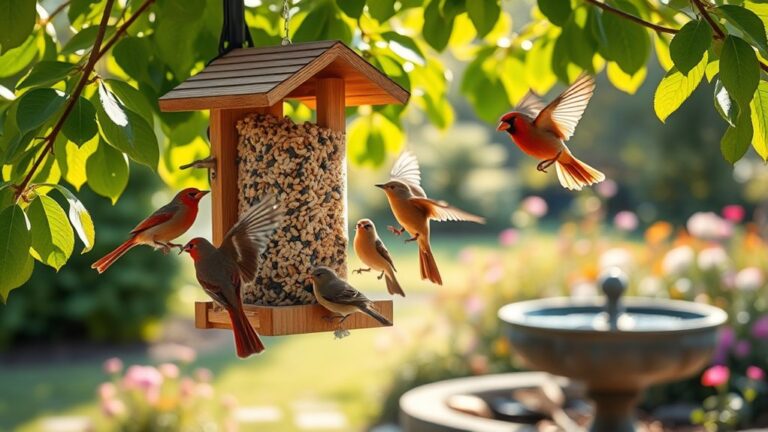
You’ll want tube feeders or small hopper feeders since they cater well to the seed preferences of small birds like finches and chickadees. These feeders keep seeds fresh and prevent larger birds from dominating.
When considering feeder placement, hang them near shrubs or trees to offer cover and make birds feel safe. Avoid placing feeders too close to windows to reduce collision risks. This setup encourages more small birds to visit and feed comfortably.
How to Deter Squirrels From Stealing Bird Food?
Imagine your bird feeder as a castle under siege by clever invaders. To defend it, you need effective bird deterrents like squirrel-proof feeders with weight-sensitive perches or cages that close under a squirrel’s weight.
Adding a baffle above or below the feeder can also block their climb. By using these tools, you’ll protect your feathered friends’ feast while keeping those pesky squirrels at bay.
Is It Safe to Feed Birds During Extreme Weather Conditions?
Yes, you can safely feed birds during extreme weather conditions, but you need to adjust your approach. Make sure to provide fresh water regularly to support bird hydration, especially in freezing or very hot weather.
Follow seasonal feeding tips like offering high-energy foods in winter and fresh fruits in summer. Keeping feeders clean and accessible helps birds survive harsh weather.
Your care makes a big difference in their well-being during these tough times.
Conclusion
Feeding small birds can bring joy and life to your backyard, but remember, “you are what you eat.” By offering a variety of seeds, nuts, fruits, and even mealworms, you help keep them healthy and vibrant.
Always choose fresh, safe foods and adapt to seasonal availability to support them year-round. With a little care and the right choices, you’ll create a welcoming haven for these delightful visitors.
Keep their needs in mind, and they’ll keep coming back to enjoy the best foods to feed small birds!