3 Flowers That Attract Hummingbirds
Attracting hummingbirds to your garden can feel like a tricky challenge. You’re not alone—many people struggle to find the right plants that will keep these tiny visitors coming back.
If you’ve ever wished for a garden buzzing with hummingbird activity, the secret often lies in choosing flowers that truly appeal to them.
You can attract hummingbirds with bee balm, salvia, and columbine. Bee balm’s spiky blooms give them easy landing spots, while salvia adds bright vertical color and rich nectar. Flowers That Attract Hummingbirds.
Columbine brings graceful, nodding flowers that work well in partial shade.
Plant them in clusters so the birds can feed quickly, and mix bloom times for steady color and nectar through the season.
With the right layout, your garden will keep these visitors coming back for more.
Key Takeaways
- Bee balm is a top hummingbird favorite because its spiky blooms offer easy landing spots and plenty of nectar.
- Salvia attracts hummingbirds with bright, tubular flowers that provide quick, efficient nectar access.
- Columbine adds graceful, nectar-rich blooms that work well in partial shade and draw hummingbirds reliably.
- Plant these flowers in clusters to help hummingbirds feed quickly and visit more often.
- Use bright reds, oranges, and pinks, and keep blooms coming through the season for steady hummingbird visits.
3 Flowers That Attract Hummingbirds
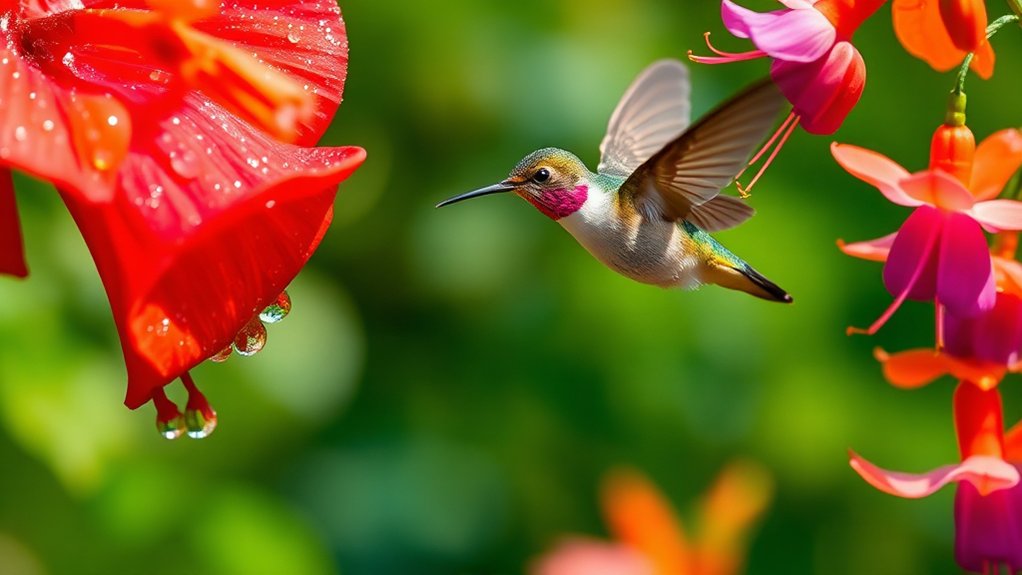
If you want your garden to buzz with activity, plant flowers that hummingbirds can’t resist. You can start with bee balm, a bold choice among flower varieties because its spiky blooms give hummingbirds an easy landing spot.
Next, try salvia, which adds vertical color and fits well into your garden design along borders, containers, or mixed beds. Then add columbine, whose nodding flowers offer a graceful shape that draws attention without overwhelming the rest of your planting scheme.
When you combine these three flowers, you create layers of color, height, and texture that help your space feel lively. Place bee balm where you want a focal point, use salvia to guide the eye, and tuck columbine into partial shade for balance.
Why Hummingbirds Choose Nectar-Rich Blooms
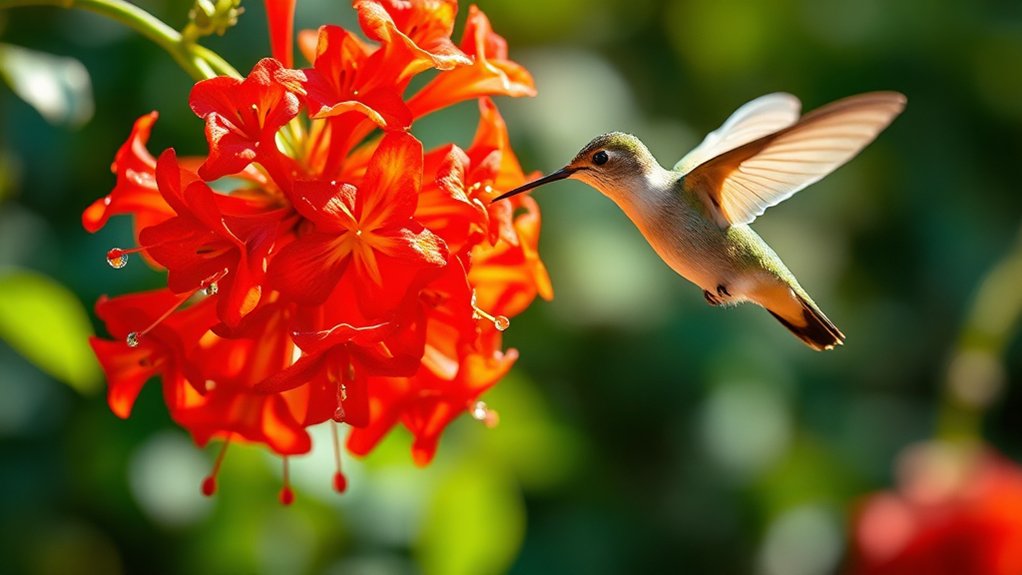
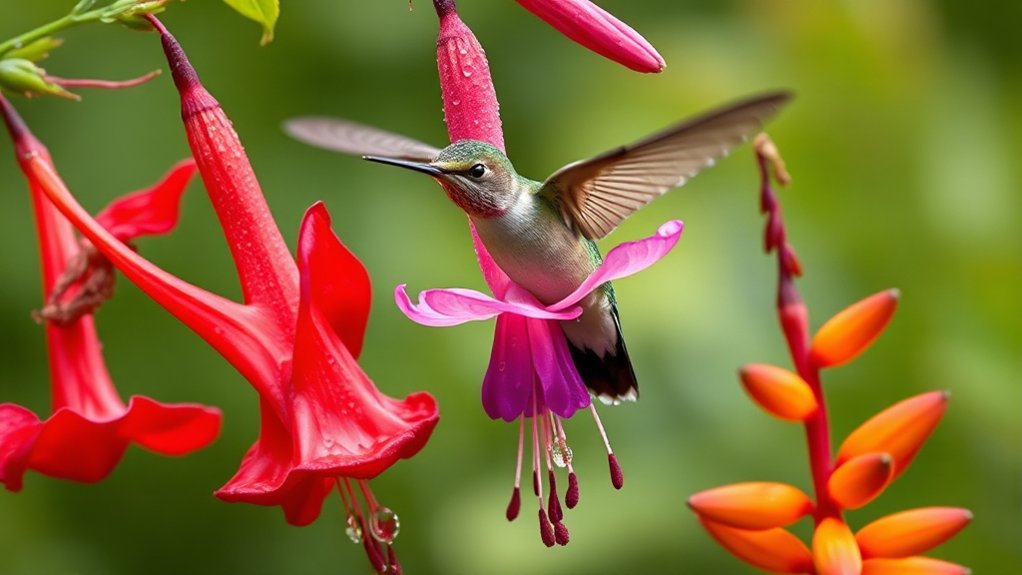
Hummingbirds choose nectar-rich blooms because they need a fast, reliable energy source to fuel their nonstop movement. You see them favor flowers that deliver sweet fuel quickly, because every sip helps power hovering, darting, and sudden turns.
Their nectar preferences lean toward blossoms with deep tubes and abundant nectar, which let them feed efficiently while guarding energy. Color attraction also plays a role, since bright reds, oranges, and pinks catch their eyes fast.
| Bloom type | What it offers | Your reward |
|---|---|---|
| Red tubular | Easy access | More visits |
| Coral trumpet | Rich nectar | More motion |
| Pink salvia | Quick refill | More delight |
When you notice these blooms, you understand why they matter: they match a hummingbird’s pace, satisfy its appetite, and keep your garden alive with movement, color, and wonder.
How to Plant Flowers for More Hummingbirds
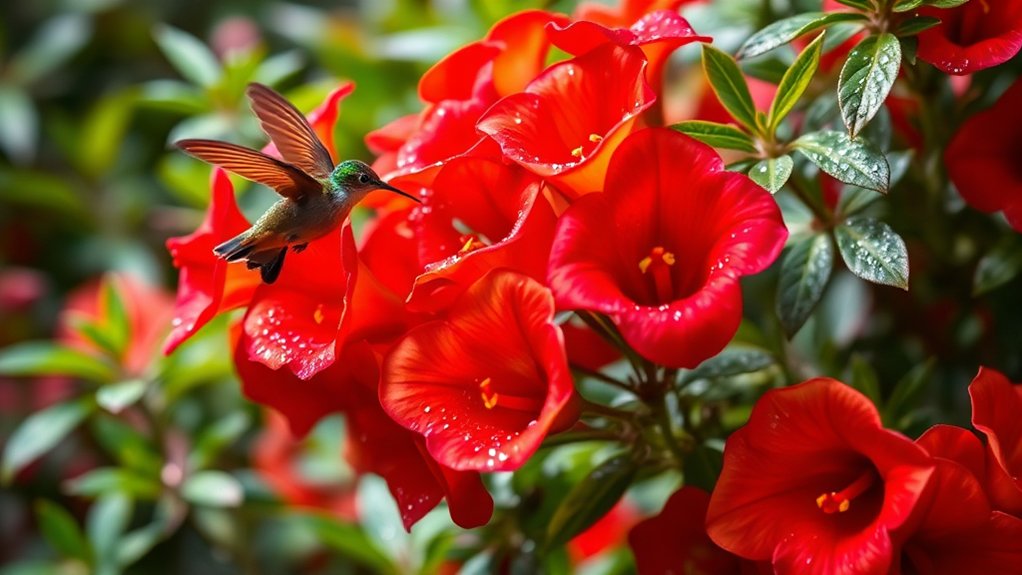
To bring more hummingbirds to your yard, plant flowers in clusters so they can feed quickly without wasting energy. Choose a mix of tubular, brightly colored blooms, then group them where birds can spot them easily from above.
For better flower selection, include varieties that bloom at different times, so you keep nectar available through the season. Use planting techniques that improve drainage and sunlight, because healthy plants produce more flowers and nectar.
Place taller plants behind shorter ones to create layers, and leave open flight paths between beds so hummingbirds can hover safely. Avoid pesticides, since they can harm the insects birds also eat.
Water newly planted flowers regularly until roots establish, then mulch lightly to hold moisture. If you add a shallow water source nearby, you’ll make your garden even more inviting for visiting hummingbirds.
Frequently Asked Questions
Which Flower Colors Do Hummingbirds Prefer Most?
You’ll usually attract hummingbirds best with red, orange, and bright pink flowers. You’ll also find they can visit purple and coral blooms, too. Their flower color preferences lean toward vivid, warm shades because those colors stand out and often signal nectar production.
If you want more visits, plant a mix of tubular flowers in these colors, and keep your garden blooming through the season.
Do Hummingbirds Visit Flowers in Containers or Hanging Baskets?
Yes, you can attract hummingbirds with flowers in containers or hanging baskets. In fact, one study found they’ll visit feeders and blooms dozens of times a day, which can feel magical.
You can use container gardening to place nectar-rich plants near patios, and smart hanging basket choices to keep blossoms at eye level. You’ll give hummingbirds easy access, and they’ll reward you with quick, colorful visits all season.
How Often Should I Refill Hummingbird Feeders?
You should refill your hummingbird feeder whenever it’s nearly empty, usually every 1 to 3 days in hot weather and every 3 to 5 days in cooler conditions. You’ll need faster feeder maintenance if ants, mold, or cloudy nectar appear.
Stick to a 4:1 sugar ratio of water to sugar, and replace the nectar often so you keep birds healthy and coming back.
Can Native Flowers Attract More Hummingbirds Than Hybrids?
Yes, you can absolutely see more hummingbirds with native flowers than hybrids. Sometimes it feels like the birds throw a parade for them. Native flowers often offer richer nectar, better shape, and familiar signals, so you get the biggest payoff.
Their native plant benefits include healthier ecosystems and easier care, while hybrid flower drawbacks can mean less nectar or awkward blooms. Plant both, but you’ll usually lure more hummingbirds with natives.
What Time of Day Are Hummingbirds Most Active?
You’ll usually see hummingbirds most active in the early morning, right after sunrise, when they need fuel after the night. Their morning activity often peaks then, and they’ll visit flowers or feeders repeatedly.
You may also notice a second burst during evening feeding before sunset. On hot days, they may rest more at midday, so watch for quick, darting visits during cooler hours for the best viewing.
Conclusion
If you want hummingbirds to treat your yard like a five-star nectar buffet, plant the flowers they can’t resist: bright, tubular, and loaded with sugar. Give them sun, staggered blooms, and a little water, and they’ll reward you by zipping around like tiny, jewel-toned divas with a caffeine problem.
You don’t need a grand design, just the right flowers and a bit of patience. Soon, your garden won’t just look alive; it’ll gossip. These 3 flowers that attract hummingbirds will turn your outdoor space into their favorite hangout.