How to Grow Lavender in 10 Steps
If you’ve ever tried growing lavender and felt frustrated by wilted plants or poor blooms, you’re not alone. Many people struggle to get this fragrant herb thriving in their garden.
The good news? With the right approach, growing lavender can be incredibly rewarding and surprisingly simple.
Choose the right lavender variety for your climate, then plant it in full sun with fast-draining soil. Test pH, work in grit if needed, and avoid rich compost.
Water deeply but only when the soil dries out.
Prune after flowering to keep plants bushy, and feed sparingly in spring.
Watch for aphids, root rot, and leaf spot, and harvest buds when they just begin to open.
Keep going, and you’ll find a few more helpful tips.
Key Takeaways
- Choose a lavender variety suited to your climate, and plant it in full sun with excellent drainage.
- Prepare slightly alkaline, gritty soil; avoid rich amendments that encourage leafy growth and weak fragrance.
- Water deeply but infrequently, letting the soil dry between waterings, especially for potted lavender.
- Prune after flowering, remove spent stems, and feed sparingly to keep plants compact and blooming well.
- Watch for aphids, root rot, and leaf spot, and harvest buds when they are just beginning to open.
Choose the Right Lavender Variety
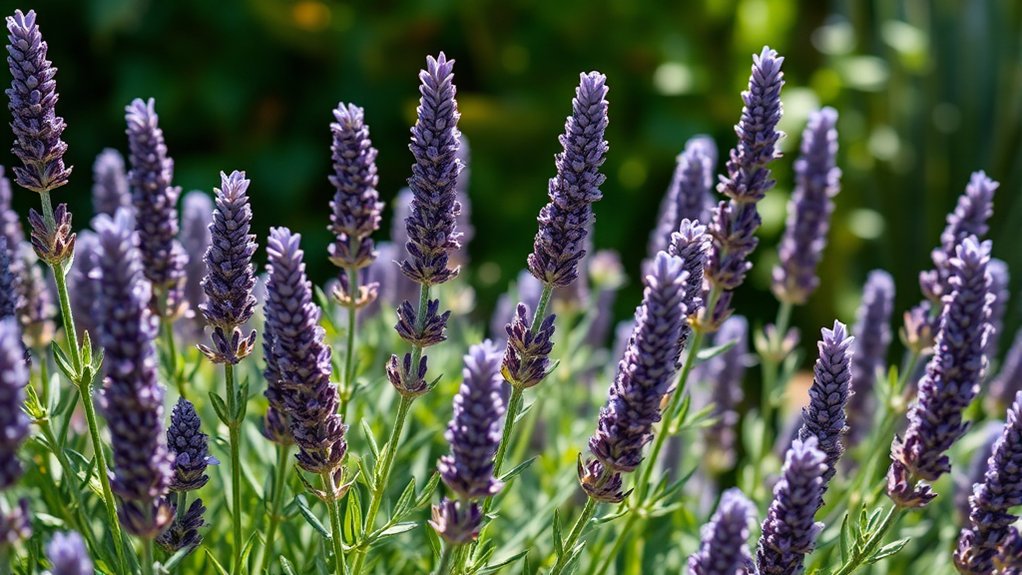
Choosing the right lavender variety is the first step to success, since different types thrive in different climates and garden conditions. You’ll get better results when you match lavender varieties to your region’s temperatures, humidity, and seasonal patterns.
English lavender works well in cooler areas and often gives you the strongest fragrance for culinary or drying use. French and Spanish types handle warmer weather better and can keep blooming longer in mild climates.
English lavender suits cooler climates, while French and Spanish varieties thrive in warmer weather and bloom longer.
If your winters are harsh, choose a hardy variety that can survive cold snaps without extra protection. If summers stay hot and humid, pick a variety bred for heat tolerance and airflow.
Check the plant label for mature size, bloom time, and hardiness zone so you know what to expect. When you select lavender varieties that fit your growing conditions, you’ll set yourself up for healthier plants, fuller blooms, and less maintenance later.
Pick a Sunny, Well-Drained Spot
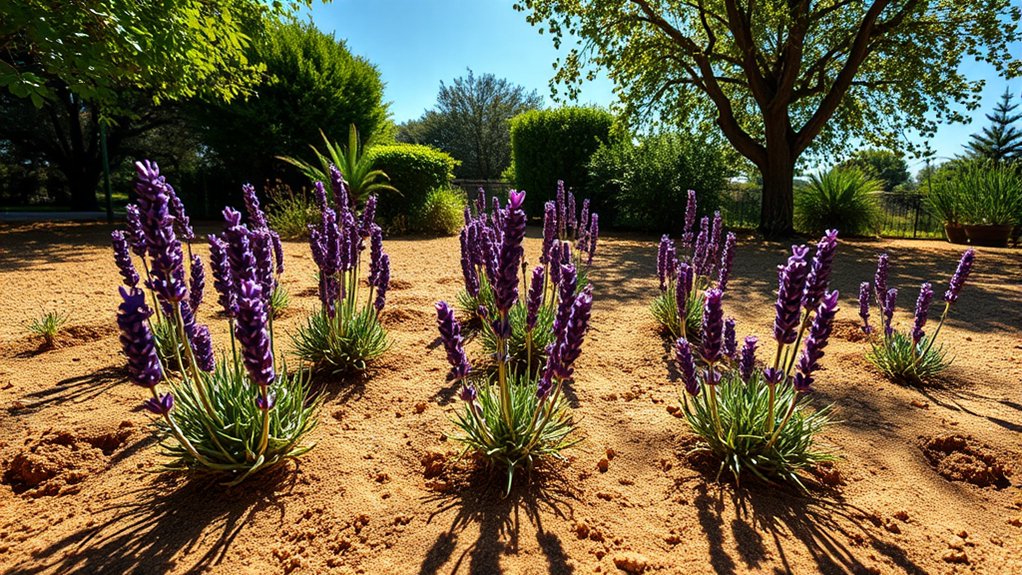
Choose a spot that gets full sun all day—lavender loves bright, direct light. You’ll also want soil that drains quickly because soggy roots can cause problems fast. If your yard tends to stay wet after it rains, try picking a higher, drier spot or fix the soil before planting.
Full Sun Exposure
Lavender thrives best when you give it plenty of direct sun and excellent drainage. Place it where it gets at least 6 to 8 hours of bright light each day, and you’ll see stronger stems, richer color, and more blooms. Full sun also boosts pollinator attraction, drawing bees and butterflies to your garden.
If you’re planning companion planting, pair lavender with sun-loving herbs and flowers that won’t crowd its airflow.
- Choose the brightest part of your yard.
- Avoid shade from trees, fences, or buildings.
- Rotate pots so all sides get even light.
- Watch for leggy growth, which signals too little sun.
When you give lavender steady sun, you help it stay compact, fragrant, and productive through the season.
Fast-Draining Soil
Good drainage is just as important as sunlight when you grow lavender because soggy roots can quickly lead to rot and weak plants. You should choose loose, gritty soil that sheds water fast and lets roots breathe.
If your garden holds moisture, mix in soil amendments like coarse sand, gravel, or compost to improve structure. Use drainage solutions that fit your space, such as raised beds or mounds.
| Soil issue | Better choice |
|---|---|
| Heavy clay | Add grit |
| Wet spots | Raise bed |
| Poor airflow | Space plants |
| Slow runoff | Shape a mound |
| Sticky soil | Blend amendments |
Check after rain; water should drain within minutes, not hours. If it lingers, lavender won’t thrive.
Prepare Soil for Healthy Lavender
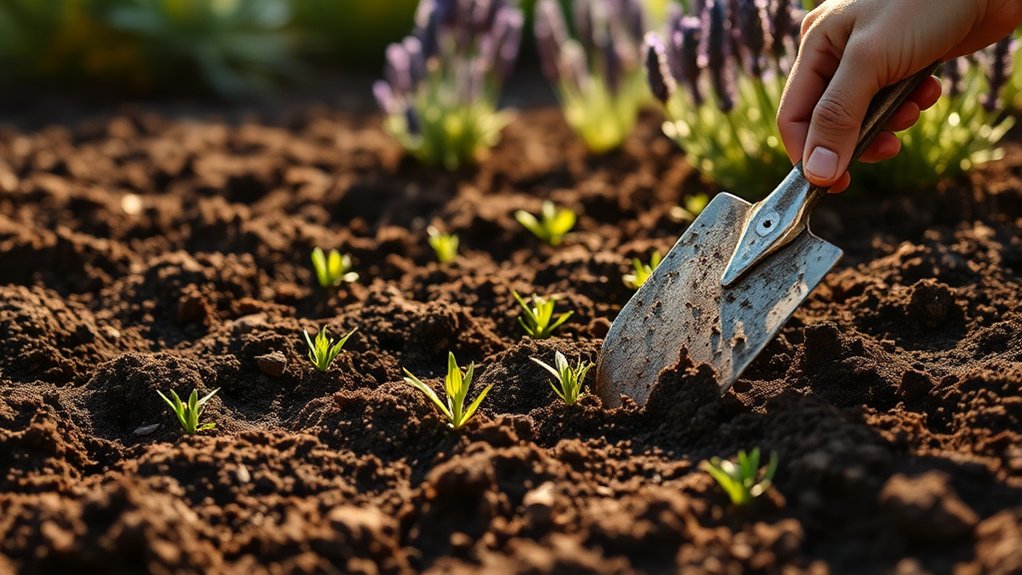
To give lavender the best start, choose a sunny spot with soil that drains quickly and stays on the lean side. Test your soil pH first; lavender prefers a slightly alkaline range, so you can adjust gently if needed. Then check the nutrient balance and skip rich amendments that push leafy growth instead of fragrance.
Mix in coarse sand, fine gravel, or grit to open heavy soil and improve airflow around roots. If your bed holds water, mound it slightly so excess moisture runs off. Break up clods, remove weeds, and work the top layer until it feels loose, crumbly, and well drained.
Before you plant, focus on:
- Simple pH testing
- Lean, low-fertility soil
- Better drainage with grit
- A smooth, weed-free surface
Plant Lavender at the Right Time
Plant lavender when the weather is mild and the soil has warmed up, so young roots can settle in without stress. In most gardens, spring gives you the best start, but fall works in warm climates where plants can root before winter.
Watch your local frost dates and match your lavender planting timing to your region’s seasonal growth patterns. If you plant too early, cold snaps can slow establishment; if you wait too long, heat can strain tender plants.
Choose a calm day, and set plants or cuttings into their final spot once daytime temperatures stay steady. Then give them plenty of space to grow and breathe.
When you time planting well, lavender settles faster, forms stronger roots, and enters the growing season ready to thrive. This simple step makes the rest of your care easier and helps you build a healthier, longer-lasting lavender patch.
Water Lavender the Right Way
Lavender prefers deep but infrequent watering, so you should soak the soil thoroughly and then let it dry out before watering again. Check the top few inches with your finger before you decide on watering frequency, because lavender hates soggy roots and thrives in drier conditions.
Soak lavender deeply, then let the soil dry before watering again; soggy roots are its enemy.
Aim for consistent moisture levels early on, then reduce watering once plants establish strong roots. Water at the base, not over the foliage, so you keep leaves dry and limit disease. If you grow lavender in pots, monitor them more closely since containers dry faster.
- Water in the morning for faster drying.
- Use well-drained soil to prevent standing water.
- Skip watering after steady rain.
- Adjust watering frequency during hot, windy spells.
If the plant droops or growth slows, inspect the soil before adding more water. Healthy lavender looks best when you err on the dry side.
Mulch Lavender Carefully
Mulch lightly around lavender with a thin layer of gravel, sand, or other fast-draining material, keeping it away from the crown and stems. Choose mulch types that shed water quickly and let air reach the soil, because lavender hates soggy roots.
Crushed stone, pea gravel, and coarse sand work well, while bark chips can hold too much moisture in damp climates. Apply mulch after the soil warms in spring, so you don’t trap cold, wet conditions near new growth.
Mulch timing matters most after planting or once the bed has settled, not when the ground is already saturated. Keep the layer thin, about 1 inch, and spread it evenly over bare soil only.
Check the mulch each season and refresh it if it compacts or washes away. This simple step helps suppress weeds and keeps the root zone dry, which supports healthy lavender growth.
Prune Lavender to Keep It Bushy
Once your lavender has good drainage and the bed is settled, pruning helps it stay compact and productive. You should trim the plant after flowering to encourage fresh side shoots and prevent woody, open stems. Use clean shears and cut back about one-third of the soft growth, but never into old, leafless wood. This keeps the crown healthy and the shape even.
For lavender shaping techniques, follow the plant’s natural mounded form instead of shearing it flat.
Remove spent flower spikes first to tidy the plant. Shorten leggy stems to just above leafy nodes. Avoid cutting during hard frost or extreme heat.
Use seasonal pruning tips to schedule a light spring trim and a stronger post-bloom cut.
With regular, careful pruning, you’ll keep lavender bushy, fragrant, and full of blooms year after year.
Feed Lavender Sparingly
Although lavender is a low-feeding plant, you can give it a light boost in poor soil by using a balanced, slow-release fertilizer sparingly in spring. Choose mild fertilizer types with lower nitrogen, because too much leaf growth can reduce flowers and fragrance.
Apply it once, then let the plant do the rest; lavender prefers lean conditions, and extra feeding won’t improve it. Watch nutrient timing carefully so you feed only as new growth starts, not late in summer or during dormancy.
If your soil is already rich, skip fertilizer entirely and rely on good sun, drainage, and pruning to keep plants vigorous. For container-grown lavender, use a diluted liquid feed only if growth looks pale or slow.
Always follow label rates, then err on the side of less. With restraint, you’ll support healthy roots without making your lavender soft, floppy, or overworked.
Prevent Common Lavender Pests and Diseases
You can keep your lavender healthy by regularly checking the leaves for aphids. If you spot any, wash them off early before they have a chance to spread. It’s a simple step but makes a big difference.
Also, to prevent root rot, make sure you plant your lavender in well-drained soil. Only water it when the soil feels dry to the touch. Overwatering is a common mistake, so being careful here really helps.
Keep an eye out for leaf spots too. If you notice any, remove the affected foliage quickly. Doing this can stop the problem from spreading to the rest of your plant.
Aphid Control Methods
Aphids can quickly weaken lavender by sucking sap from new growth, so catch them early and act fast. Inspect stems and leaf undersides often, then use a strong water spray to knock pests off. Encourage natural predators and beneficial insects like ladybugs and lacewings to keep populations down.
You can also use neem oil or insecticidal soap on infestations, following label directions carefully. Place sticky traps near plants to monitor pressure. Try companion planting with herbs that attract beneficial insects. Mix simple DIY sprays, such as diluted garlic spray. Reapply treatments after rain or new growth.
Keep plants spaced for airflow, and pinch off heavily infested tips. Consistent checks and quick action help you protect lavender without harsh chemicals.
Root Rot Prevention
Root rot is one of the most common lavender problems, and it usually starts when soil stays wet too long. You can prevent it by planting lavender in gritty, fast-draining soil and checking soil moisture before you water again. Let the top few inches dry out completely, since lavender hates soggy roots.
If your bed holds water, add drainage solutions such as raised beds, sand, or gravel, and avoid heavy clay spots. Space plants well so air can move through the base, and use pots with drainage holes if you grow lavender in containers.
Water deeply but infrequently, then stop once the plant is established. If a plant wilts despite moist soil, inspect the roots and remove damaged growth right away.
Leaf Spot Management
Leaf spot can show up as dark, discolored patches on lavender leaves, especially when plants stay damp or crowded. You’ll catch leaf spot identification early by checking lower leaves after rain or overhead watering.
Improve airflow, space plants well, and water at the base so foliage dries fast. Remove infected leaves and debris right away to limit spread.
If the problem persists, look into treatment options like copper-based sprays or approved fungicides, but use them only as directed. Keep weeds down and prune lightly to help sunlight reach the plant.
Healthy lavender resists disease better, so focus on dry soil, full sun, and clean tools. Watch weekly, and you’ll spot trouble before it weakens your plants.
Harvest Lavender for Fragrance and Use
Once your lavender buds are fully formed and just starting to open, you can harvest them for fragrance and use by cutting the stems in the morning after the dew dries. Use sharp shears and cut long stems, leaving enough foliage for the plant to recover quickly.
Gather small bundles and tie them with twine, then hang them upside down in a dark, airy spot. This helps preserve color and scent for later lavender uses, from sachets to dried bouquets.
You can also strip fresh blossoms for culinary blends, bath salts, or homemade crafts. If you want essential oils, distill the flowers soon after cutting, when the aroma is strongest.
Handle the stems gently so you don’t bruise the blooms and lose fragrance. After drying, store your lavender in airtight containers away from heat and sunlight.
With timely harvesting, you’ll enjoy richer scent, better quality, and a longer season of practical beauty.
Frequently Asked Questions
Can Lavender Grow Indoors Year-Round?
Yes, you can grow lavender indoors year-round if you give it plenty of direct indoor lighting and keep humidity levels low. You should place it near a south-facing window or under a grow light for 12 to 14 hours daily.
Water sparingly, use well-draining soil, and choose a pot with drainage holes. You’ll also want good airflow because lavender hates soggy roots and stale, damp conditions.
How Long Does Lavender Take to Bloom?
Like a patient clock, lavender usually takes 3 to 6 months to bloom from seed. You’ll often wait until the second season for fuller flowers.
Your lavender blooming timeline depends on variety and growth conditions, including full sun, sharp drainage, and lean soil.
If you start with established plants, you can see blooms sooner, often within weeks after planting. Keep pruning lightly, and you’ll encourage repeat flowering.
Is Lavender Safe for Pets and Children?
Lavender’s usually safe for children and many pets, but you should still watch lavender toxicity levels, especially if they nibble large amounts. You can grow it confidently around curious kids and choose pet friendly plants for safer landscaping.
If your dog or cat eats a lot, you should call your vet. You’ll also want to avoid applying concentrated lavender oils near babies, since those can irritate skin or cause discomfort.
Can I Propagate Lavender From Cuttings?
Yes, you can propagate lavender from cuttings, and you’ll often get strong, true-to-type plants this way. Use softwood or semi-ripe lavender cutting methods. Take a healthy stem, remove the lower leaves, and place it in a light, well-draining mix.
Keep it warm, bright, and slightly humid. Under ideal lavender conditions, roots usually form in a few weeks. Don’t overwater, or the cutting may rot before it establishes.
Does Lavender Attract Bees and Butterflies?
Yes, lavender does attract bees and butterflies like a sunlit magnet in bloom. You’ll see pollinators flock to its nectar-rich flowers, boosting pollinator benefits in your garden.
You’ll also enjoy better garden aesthetics since those purple spikes add color, fragrance, and movement. Plant lavender in full sun, and you’ll create a lively, buzzing haven that feels both beautiful and alive.
It’s a win for you and your garden.
Conclusion
Now you can nurture your lavender with confidence. Choose the right variety, give it sunshine, and set it in sweet, sandy soil. Plant at the proper time, water wisely, and prune to keep it plush and pretty.
Feed it sparingly, fend off pests, and finally, harvest those fragrant flowers for home or use. With these simple steps, you’ll enjoy a thriving, vibrant lavender patch that’s lovely, low-maintenance, and long-lasting.
By following these tips, your lavender will grow beautifully and fill your garden with its signature scent. Growing lavender is easier than you think, and the rewards make it all worthwhile.