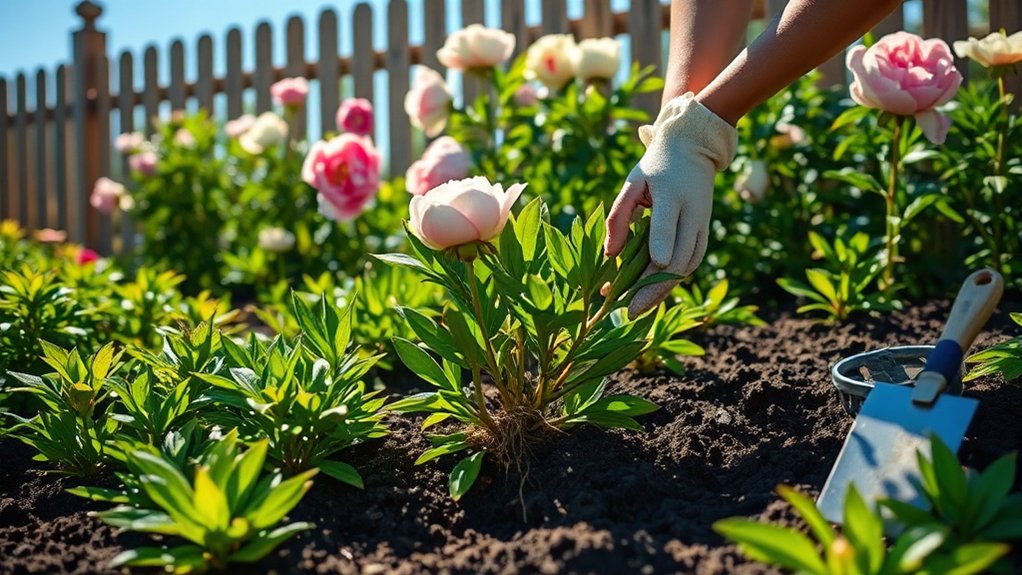
How to Grow Peonies in 10 Simple Steps
If you’ve ever wanted to grow stunning peonies but found the process confusing or frustrating, you’re not alone. Many people struggle to get these beautiful flowers to thrive in their gardens.
The good news? With the right guidance, growing peonies can be simple and rewarding.
Choose a peony variety that suits your space, then plant it in a sunny spot with at least six hours of light and good air flow. How to Grow Peonies.
Loosen the soil, mix in compost, and set roots just 1 to 2 inches deep with eyes up. Water deeply, mulch lightly, feed in spring, and add support early.
Deadhead spent blooms, prune after frost, and watch for pests and disease. A few more tips can help you grow them beautifully year after year.
Key Takeaways
- Choose a peony variety suited to your climate, bloom time, and space.
- Plant peonies in full sun with good air circulation and no root competition.
- Prepare fertile, well-drained soil with compost and proper pH before planting.
- Set roots 1 to 2 inches deep, water well, mulch lightly, and add support early.
- Maintain plants by feeding lightly, deadheading, pruning after frost, and preventing pests and disease.
Choose the Best Peony Variety
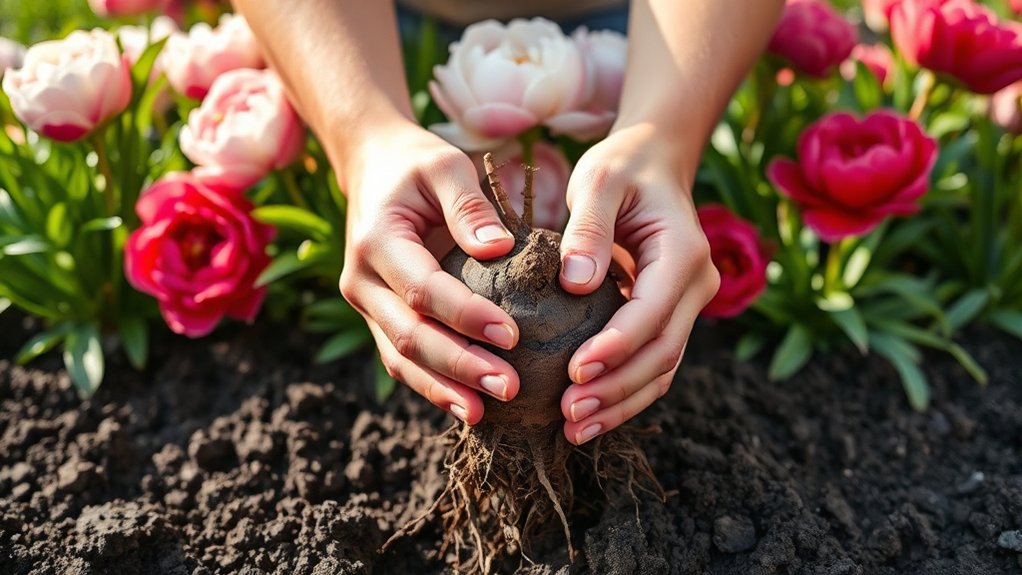
Before you plant, choose the peony variety that fits your climate, space, and style. Herbaceous peonies die back each winter and return strong in spring, while tree peonies keep woody stems and offer a longer display.
If you want the longest bloom season, add intersectional, or Itoh, types for sturdy stems and repeat interest. Check mature size before you buy so you don’t crowd nearby plants. You’ll also want to match bloom time: early, midseason, or late varieties let you stretch color across weeks.
When you practice peony care, pick disease-resistant cultivars and order healthy roots or grafted plants from trusted growers. Seasonal tips matter too; in cold regions, choose hardy selections that handle freezing, and in warm zones, favor varieties with lower chill needs.
Choose the Best Planting Spot
Pick a sunny spot with well-drained soil, because peonies bloom best when they get at least six hours of direct light each day. You should check the sunlight requirements before you plant, since too much shade can reduce flowers and weaken stems.
Give each plant enough room so air can move freely around it, which helps keep foliage healthy. Avoid spots where trees or shrubs steal light and water, and choose a place that’s easy for you to admire from a path or window.
Give each peony room to breathe, and avoid shade from nearby trees or shrubs.
If you want to add companion plants, place low-growing options nearby so they won’t crowd the peonies or block sunlight. A border, bed edge, or open garden section often works well.
You’ll set your peonies up for stronger growth and better blooms when you choose a location that stays bright, open, and uncluttered through the growing season.
Prepare Soil for Healthy Growth
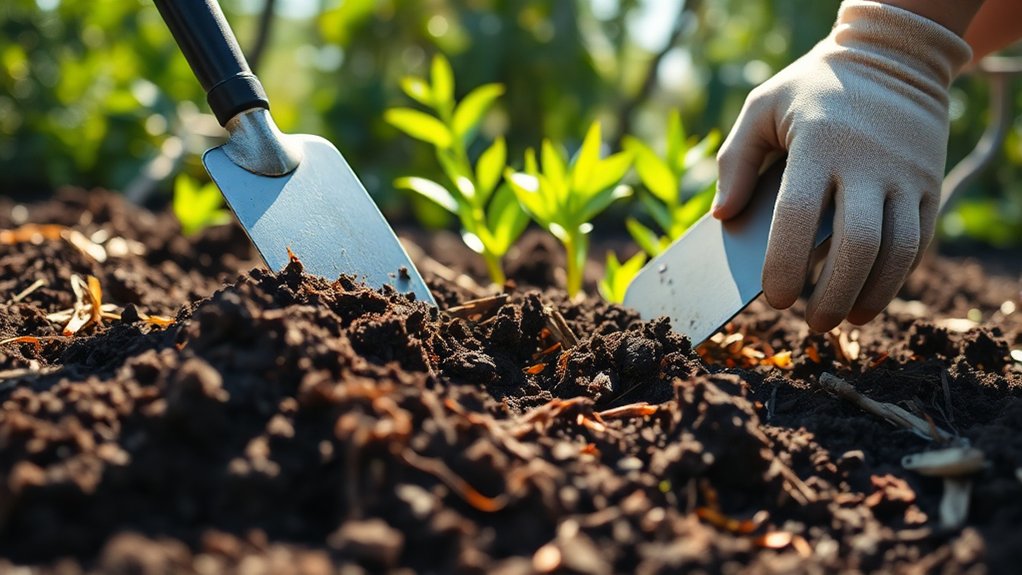
Start by loosening the soil and mixing in compost or well-rotted manure to give peonies the rich, fertile base they need. You should aim for loose, crumbly earth that lets roots spread easily.
Add plenty of organic matter to improve texture and support steady growth. If your soil feels heavy, work in coarse sand or fine bark for drainage improvement, because peonies hate soggy conditions.
Use soil testing to check soil pH and adjust it toward slightly acidic to neutral, where these plants perform best. Keep the nutrient balance moderate; too much nitrogen can produce weak growth and fewer blooms.
You can also use simple aeration techniques, like turning the top layer with a garden fork, to boost airflow and water movement. Finish by raking the bed smooth so it’s ready for planting and future care.
Plant Peonies at the Right Depth
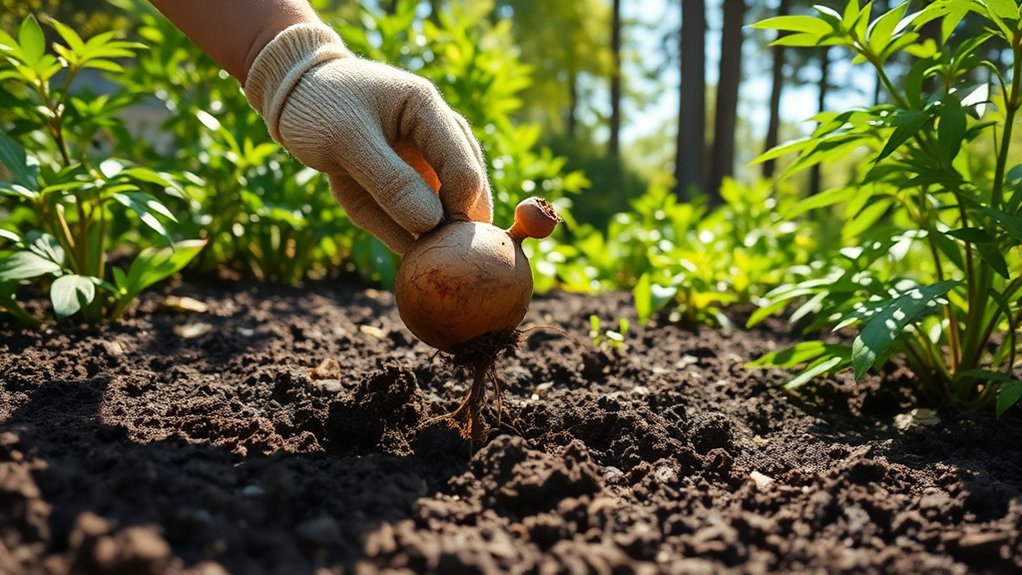
Set peony roots at the right depth so they can bloom well; the eyes should sit just 1 to 2 inches below the soil surface in colder areas, and even shallower in warmer climates. Check peony depth before you cover the roots, because planting too deep can delay blooms for years.
At the ideal planting time, usually in fall, you can set each crown carefully in the hole, then backfill gently so the eyes stay positioned correctly. Use a ruler or your hand to gauge the depth, and adjust if the soil settles.
- Place roots flat, not curled.
- Keep eyes facing upward.
- Recheck peony depth before firming soil.
If you plant them too shallow, frost can expose the roots; too deep, and you may get lush leaves but few flowers. By getting the depth right now, you give your peonies the best chance to establish quickly and bloom beautifully later.
Water Peonies Well After Planting
Right after you plant your peonies, give them a good, deep watering. This helps the soil settle nicely around the roots. Then, add a layer of mulch on top—it’ll hold in moisture and stop the ground from drying out too quickly. After that, just keep an eye on the soil and water whenever the top inch starts to feel dry. Easy enough!
Initial Deep Watering
Give your newly planted peonies a deep, thorough watering to settle the soil around the roots and eliminate air pockets. Use deep watering techniques so moisture reaches the full root zone instead of staying on the surface. Water slowly at the base until the soil feels evenly moist, not soggy.
Check the initial soil moisture with your finger; if the top few inches feel dry, add more water. Aim the stream low and direct. Pause briefly so water can soak in. Recheck after a few minutes.
You’ll help your peonies establish faster when you water this way right after planting. Consistent, careful watering now gives roots the strong start they need for healthy growth and future blooms.
Moisture Retention Tips
To help newly planted peonies hold moisture, spread a 2- to 3-inch layer of mulch around the base, keeping it a few inches away from the stems. This helps steady soil moisture and reduces evaporation after planting. You can use watering techniques that soak the root zone without splashing the foliage.
| Tip | Benefit |
|---|---|
| Mulch lightly | Locks in moisture |
| Check soil | Prevents drying |
| Water slowly | Reaches roots |
| Avoid wet stems | Cuts rot risk |
| Refresh mulch | Maintains coverage |
You’ll give your peonies a better start when you protect the soil surface and keep moisture where roots can use it. Keep an eye on the bed after rain or heat, and adjust your watering techniques so the soil stays evenly moist, not soggy.
Watering Schedule Basics
With mulch helping the soil hold moisture, your next job is to keep up a steady watering schedule after planting peonies. Water deeply right away, then check the top few inches of soil every few days. You want the roots to stay evenly moist, not soggy, as they settle in.
In dry spells, aim for about an inch of water each week. Adjust with rainfall monitoring so you don’t overwater. Drip irrigation works well because it sends moisture straight to the root zone and helps you avoid wet leaves.
Water early in the morning. Soak the soil, then let it dry slightly. Reduce watering once plants establish.
Mulch Peonies Without Smothering Them
Choose a light mulch like shredded bark, compost, or straw. This way, your peonies get protection without any extra weight. Just spread it in a thin layer around the plants, but make sure to keep it a few inches away from the stems and crown. By doing this, you help hold moisture and keep weeds down without smothering the new growth.
Choosing The Right Mulch
A light layer of mulch can help peonies hold moisture, suppress weeds, and keep roots a bit cooler. But too much of it can suffocate the crown and invite rot. Choose organic mulch that breaks down slowly, like shredded bark or composted leaves. This way, you get steady mulch benefits without a heavy mat.
Compare mulch types for texture, drainage, and how well they fit your soil. Use seasonal mulch sparingly in spring, then refresh only when it thins. If you want mulch alternatives, try leaf mold or pine needles.
Careful mulch application and light mulch layering matter more than depth, and simple mulch maintenance keeps everything balanced.
- Shredded bark works well for most gardens.
- Composted leaves add nutrients as they decompose.
- Pine needles stay loose and airy.
Proper Mulch Placement
Once you’ve picked a light, breathable mulch, place it only around the soil, not against the peony crown or stems. You can use organic mulch like shredded bark, compost, or straw, depending on your climate and garden style.
Keep mulch thickness to about 2 inches so you get the benefits of weed prevention, moisture retention, and steadier soil temperature without trapping excess moisture. Leave a small gap around each plant to reduce rot and let air circulate.
Seasonal mulching works best after the ground warms in spring and again in fall if needed. As mulch decomposes, it feeds the soil, improves texture, and adds aesthetic appeal.
Check it often and pull it back if it settles too close to the crown.
Feed Peonies for Better Growth
To help peonies bloom strongly year after year, give them a light feeding at the right time. Use a balanced, low-nitrogen fertilizer in early spring, just as shoots emerge. This way, you support roots without pushing weak growth.
When you compare fertilizer types, choose one that offers steady nutrients rather than a quick surge. Stick to a simple feeding schedule: once in spring is usually enough for established plants. If your soil is poor, you can add a second light feeding after flowering, but don’t overdo it.
- Sprinkle fertilizer around the drip line, not against the stems.
- Water well after feeding so nutrients move into the soil.
- Skip high-nitrogen products that can reduce flowering.
You can also enrich the bed with compost for slow, natural nutrition. Keep the layer thin because peonies dislike being buried too deeply. With gentle feeding, you’ll help them store energy, build strong crowns, and return with fuller blooms next season.
Support Peony Blooms Before They Flop
When your peonies start forming those heavy buds, it’s a good idea to put supports in place early. This way, the stems can grow right through them without any trouble. You can use rings, cages, or stakes—whatever works best—to keep the blooms standing tall as they open.
If you notice a stem still leaning, don’t worry. Just tie the bloom gently with some soft twine so you won’t damage it. That little extra care will help your peonies stay beautiful and upright!
Install Peony Supports
Set peony supports early, before the stems get top-heavy and start to sprawl. Choose a support ring, grid, or sturdy cage that matches your peony varieties and bed style. Slide it into place in spring, when shoots are 6 to 12 inches tall, so you won’t disturb roots later.
Keep plant spacing in mind; crowded plants need taller, wider support to stay upright and catch light.
Center the support around each clump, then press the legs firmly into the soil. Use low-profile supports that disappear as foliage fills in. Check growth weekly and adjust the frame if stems lean outward.
With the right support, you’ll help blooms stay clean, visible, and protected from rain and wind.
Tie Blooms Gently
Even with supports in place, heavy peony blooms can still bow under their own weight, especially after rain or in windy spots. You can prevent breakage by tying stems loosely to the support with soft garden twine or cloth strips.
Keep each tie below the flower head so you don’t crush the bloom structure. Use simple tying techniques: loop, secure, and leave a little room for stems to sway. Check plants every few days as buds expand, since tight ties can pinch growth.
If a stem leans far outward, add a second tie lower down for balance. You’re guiding the plant, not restraining it. Gentle support keeps blossoms upright, protects petals, and lets your peonies stay full, graceful, and display-ready throughout the season.
Prune and Deadhead Peonies Properly
After your peonies finish blooming, deadhead the spent flowers to keep the plant looking tidy and redirect energy into root growth and next year’s blooms. Use clean, sharp snips and cut just above the first healthy leaf set. These pruning techniques help you avoid damaging new buds and keep the plant focused on storing strength.
Don’t remove healthy foliage, since the leaves keep feeding the roots through summer. In late fall, after frost turns the stems brown, cut the stems back to ground level. These deadheading tips and seasonal cuts keep your peonies neat without stressing them.
- Snip faded blooms before they set seed.
- Leave green leaves in place until frost.
- Remove dead stems only when the season ends.
With simple care, you’ll help your peonies rebloom strongly and stay attractive all season.
Prevent Peony Pests and Diseases
Keep an eye out for common peony problems so you can catch them early and limit damage. Use seasonal monitoring for aphids, thrips, and botrytis, and practice pest identification before you treat.
You can reduce outbreaks with proper sanitation: remove fallen leaves, cut back diseased stems, and clean tools after each use. Focus on disease prevention by spacing plants for airflow and avoiding overhead watering.
Support soil health with compost, so roots stay strong.
| Problem | Fix |
|---|---|
| Aphids | Rinse with water or use organic treatments |
| Botrytis | Improve airflow and remove debris |
| Powdery mildew | Water at the base and thin crowded growth |
| Slugs | Handpick at dusk and use barriers |
| Weak growth | Add compost and encourage beneficial insects |
Companion planting with alyssum, dill, or yarrow can attract beneficial insects that help keep pests down. If you act fast and stay consistent, your peonies will stay healthier and bloom better year after year.
Frequently Asked Questions
When Do Peonies Bloom Each Year?
Peonies usually bloom once a year in late spring to early summer, depending on your climate and peony varieties. You’ll often see flowers from April through June, with some types opening a bit earlier or later.
To get the best display, you should watch blooming conditions like sunlight, soil, and weather. If you choose different varieties, you can stretch the season and enjoy blossoms for several weeks.
How Long Do Peonies Live in One Garden?
Peonies can live in your garden for 50 years or more, and some keep thriving for a century with good peony care. You’ll help them last by meeting their soil requirements: give them fertile, well-drained soil, full sun, and enough space.
Avoid planting them too deep, and don’t move them often. With steady care, you’ll enjoy their blooms for decades and maybe even pass them on to future gardeners.
Can Peonies Grow Well in Containers?
Yes, peonies can grow well in containers, but you’ll need to choose the right setup. Think of it like giving a diva a stage: they’ll perform, but only with care.
Use large container types with drainage holes, and follow smart potting tips by using rich, well-draining soil. You should water consistently, give them full sun, and protect roots from extreme heat or cold for best blooms.
Should Peonies Be Cut Back in Fall?
Yes, you should cut peonies back in fall after the foliage yellows and dies. You’ll improve fall care and reduce disease by removing spent stems close to the ground.
Use clean pruning techniques and dispose of debris rather than composting it if disease was present. Don’t cut them too early, since the leaves help feed the roots for next year’s blooms.
A light mulch can protect crowns through winter.
Do Peonies Attract Bees and Butterflies?
Yes, peonies do attract bees and butterflies, like a medieval guide in your modern garden. You’ll see them visit the blooms for nectar and pollen, especially on sunny days.
These flowers offer pollinator benefits, making them great nectar sources. Pair peonies with other garden companions to keep your beds lively.
With proper plant care, you’ll support more pollinators and enjoy a brighter, buzzing garden throughout the blooming season.
Conclusion
You’ve done the hard part, and peonies reward patience like few flowers can. Plant them shallow, feed them well, and they’ll answer with lush blooms. Skip the basics, and you’ll get leafy disappointment instead.
Support them before they flop, prune them when needed, and keep pests at bay. With the right care, these old-fashioned favorites can turn a plain garden into a showstopper year after year. Growing peonies takes effort, but the beauty they bring feels effortless after all your work.