How to Feed a Bird in 7 Simple Steps
If you’ve ever wanted to attract more birds to your yard but felt unsure where to start, you’re not alone. Many people struggle with choosing the right food and setting up feeders that actually work. Feeding birds can seem tricky, but with a little guidance, you can create a welcoming space for your feathered friends.
To feed birds in 7 simple steps, start by choosing the right food like sunflower or nyjer seeds for local favorites and suet or mealworms during breeding season.
Pick a safe spot near natural cover, about 5 to 6 feet high, away from predators and noise.
Set up and clean your feeder regularly, refilling early and late to match bird activity.
Use varied feeders and foods to attract more species, then watch patiently to enjoy their visits.
There’s plenty more to discover for a thriving bird-friendly yard.
Key Takeaways
- Choose bird-friendly foods like sunflower seeds, nyjer, suet, or mealworms to attract diverse species.
- Place feeders 5-6 feet high near natural cover to protect birds from predators.
- Clean feeders regularly with a bleach solution to prevent mold and disease.
- Refill feeders early morning and late afternoon to match peak bird feeding times.
- Observe quietly from a distance using binoculars to avoid disturbing the birds.
Choose the Best Food to Feed Birds in Your Area
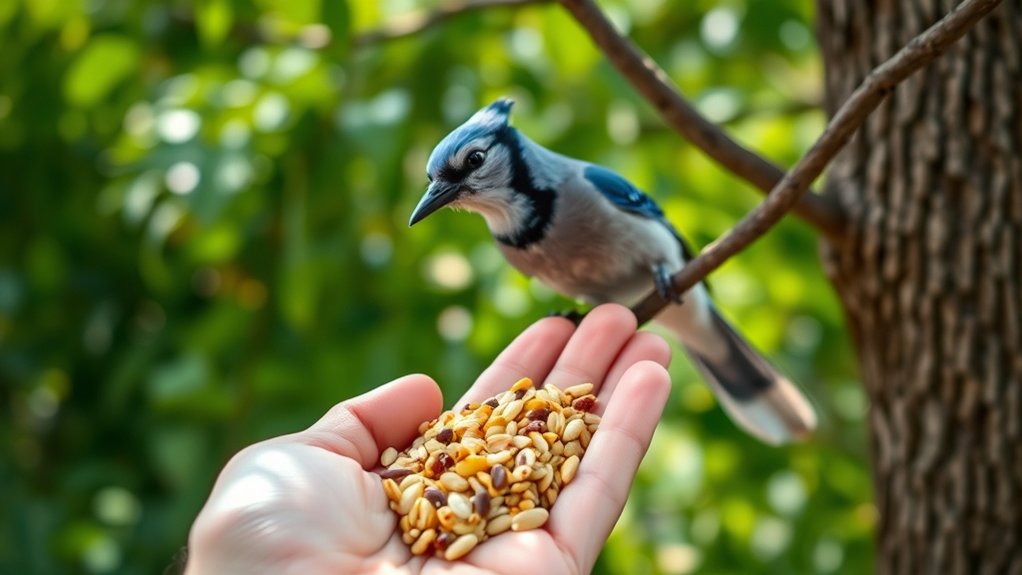
When you choose the best food to feed birds in your area, you’ll attract the species that thrive locally. Start by researching common bird preferences in your region. Different birds favor specific seed varieties, so offering a mix tailored to local tastes maximizes your chances of welcoming diverse visitors.
For example, sunflower seeds attract cardinals and finches, while nyjer seeds are favorites of goldfinches. Avoid generic seed mixes that may include fillers birds ignore, like milo or wheat. Instead, focus on high-quality seed varieties that meet your birds’ nutritional needs.
Keep in mind that some birds prefer suet or fruit over seeds, so consider those options if you want to broaden your birdwatching experience. By paying attention to bird preferences and providing the right seed varieties, you create a welcoming environment that encourages birds to come regularly, making your feeding efforts enjoyable and rewarding.
Find a Safe and Convenient Spot to Feed Birds

You’ll want to pick a spot that offers shelter from predators to keep the birds safe. It’s also a good idea to choose a place that’s easy for you to get to and where you can clearly see the birds, so you can enjoy watching them. Just try to avoid busy areas with lots of noise and activity, since that might scare the birds away.
Choose Shelter From Predators
Although feeding birds can be rewarding, ensuring their safety from predators is essential. You need to practice predator awareness by observing common threats in your area, such as cats, hawks, or raccoons.
When you select shelter placement, choose spots near dense shrubs, trees, or other natural cover where birds can quickly hide if danger approaches. Avoid open areas that leave birds exposed and vulnerable. Position feeders close enough to these shelters so birds can easily dart to safety but not so close that predators can lurk nearby.
Consider Accessibility And Visibility
Placing feeders near shelter is only part of the equation for a successful feeding spot. You also want to take into account accessibility and visibility to make feeding easier and more enjoyable for both you and the birds.
Use these accessibility tips to guarantee you can refill and clean feeders without hassle:
- Position feeders at reachable heights or near walkways.
- Choose spots with clear lines of sight to monitor bird activity.
- Use visibility enhancements like bright colors or reflective elements to attract birds.
Avoid High-Traffic Areas
Since birds are easily startled, avoid setting up feeders in high-traffic areas where people or pets constantly pass by. Choosing a quiet spot helps prevent wildlife disturbance and promotes urban safety.
You want birds to feel secure while feeding, so pick a location away from busy sidewalks, driveways, or playgrounds. This reduces stress for birds and prevents accidents involving pets.
Here’s a quick guide to help you find a safe and convenient spot:
| Location Type | Pros |
|---|---|
| Backyard corner | Sheltered, less disturbance |
| Balcony | Accessible, urban safety |
| Near shrubs | Natural cover, safe |
| Quiet garden area | Peaceful, less traffic |
| Away from pets | Reduced wildlife disturbance |
Set Up Your Bird Feeder the Right Way

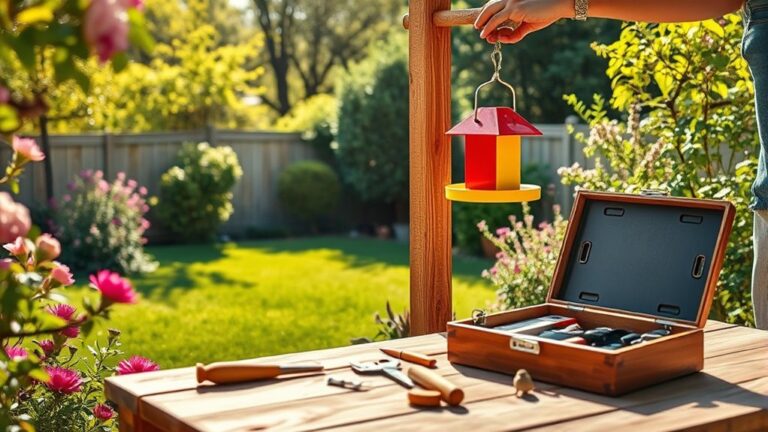
When you set up your bird feeder the right way, you create a welcoming spot that attracts a variety of birds while keeping them safe. Consider bird migration patterns to place feeders where birds naturally pass through. Also, respect nesting habits by positioning feeders away from nesting areas to avoid disturbing birds during breeding season.
Setting up feeders thoughtfully attracts diverse birds while ensuring their safety and respecting their natural habits.
To guarantee your feeder invites feathered visitors, keep these tips in mind:
- Choose a location sheltered from strong winds and predators like cats.
- Mount the feeder 5 to 6 feet above ground to deter ground predators.
- Place feeders near natural cover, such as shrubs or trees, providing quick escape routes.
Refill Your Feeders at the Best Times
You’ll want to refill your feeders early in the morning or late afternoon—those are the times when birds are most active. Try to adjust the timing as the seasons change, so you match the daylight and bird habits. That way, your feeder stays stocked right when the birds need it the most.
Optimal Feeding Times
Although birds can visit feeders throughout the day, refilling your feeders early in the morning and late in the afternoon guarantees they have fresh food during peak activity times. Birds rely on their morning routines to fuel up after a long night and their evening habits to prepare for the cold. By aligning with these natural rhythms, you guarantee your feeders are most inviting.
Try these tips for ideal feeding times:
- Refill feeders just after sunrise to support morning routines.
- Top off feeders before sunset to aid evening habits.
- Avoid midday refills, as birds are less active then.
Sticking to these times helps you provide fresh food when birds need it most. This encourages frequent visits and supports their daily energy needs.
Seasonal Timing Adjustments
Feeding birds at the right times changes with the seasons, so adjusting your schedule helps meet their shifting needs. During seasonal migration, birds increase their energy requirements, so you’ll want to refill feeders more frequently in spring and fall to support their long journeys.
In summer, focus on the breeding cycles. Parent birds need extra nutrition to raise their young, so keep feeders stocked with protein-rich foods like mealworms. As winter arrives, birds rely heavily on feeders for energy to stay warm, making timely refills essential.
Keep Feeders Clean to Protect Bird Health
Because birds rely on your feeders for nourishment, keeping them clean is essential to prevent the spread of disease. Dirty feeders can harbor mold, bacteria, and fungi that harm birds.
Regular cleaning not only safeguards their health but also supports pest prevention by discouraging unwanted visitors like rodents and insects.
Here are some essential sanitization tips to keep your feeders safe and inviting:
- Clean feeders at least once every two weeks using a solution of one part bleach to nine parts water. Rinse thoroughly.
- Remove old or moldy seed promptly to avoid contamination.
- Place feeders in sunny spots to help dry and reduce mold growth.
Use Different Foods and Feeders to Attract More Birds
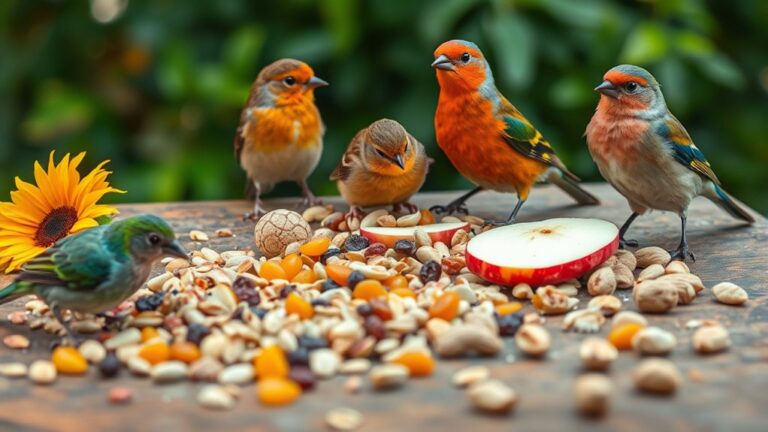
Why settle for just one type of birdseed when you can attract a wider variety of birds by offering different foods and feeders? By mixing different seed varieties like sunflower seeds, millet, and nyjer, you’ll invite diverse species to your yard. Some birds prefer small seeds, while others go for larger ones. Offering variety guarantees everyone gets a treat.
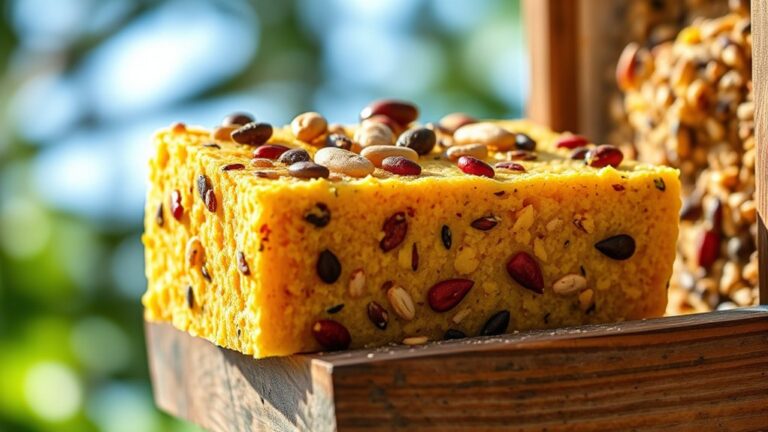
Don’t stop at seeds; try suet, fruit, or peanuts to appeal to even more birds. Using multiple bird feeder styles boosts your chances, too. Tube feeders are great for small songbirds, platform feeders attract ground feeders, and suet cages bring woodpeckers and nuthatches. You can even hang nectar feeders for hummingbirds.
Watch and Enjoy the Birds Visiting Your Yard
Once birds start visiting your yard, take time to observe their behaviors and enjoy the variety they bring. You’ll notice different bird songs filling the air, each species with its unique melody. Listening closely can help you identify who’s visiting. Watching their nesting habits is just as fascinating. Some birds build intricate nests, while others use simple scrapes.
To make the experience even more rewarding, try these tips:
- Keep a notebook to jot down bird songs and behaviors you observe.
- Use binoculars to get a closer look without disturbing the birds.
- Set up a comfortable spot where you can sit quietly and watch for longer periods.
Enjoying this peaceful connection with nature will deepen your appreciation for the birds and encourage you to provide a welcoming environment. Watching them thrive in your yard is one of the best rewards of feeding birds.
Frequently Asked Questions
Can Feeding Birds Cause Dependency on Humans?
Yes, feeding birds can cause dependency on humans if done too frequently. When you regularly provide food, bird behavior may change, making them rely less on natural sources.
Your consistent human interaction might reduce their survival skills, especially in harsh conditions. It’s important to feed birds occasionally and provide natural habitats to support their independence.
That way, you encourage healthy bird behavior without creating dependency on you.
How Do I Prevent Squirrels From Stealing Bird Food?
You know what they say, “Prevention is better than cure.” To stop squirrels from stealing bird food, use effective squirrel deterrents like baffles or cages around your feeder.
Also, pay attention to bird feeder placement. Hang feeders at least 10 feet away from launching spots like trees or fences. This makes it harder for squirrels to reach the food.
Combining these strategies guarantees your feathered friends get the treats without unwanted squirrel guests.
What Should I Do if I Find a Sick Bird?
If you find a sick bird, your first priority is wild bird health. Gently place the bird in a ventilated box lined with soft cloth, keeping it warm and quiet.
Avoid giving food or water unless advised by a professional. Contact a licensed wildlife rehabilitator or veterinarian experienced in emergency bird care right away. Acting quickly and carefully increases the bird’s chances of recovery while minimizing stress and harm.
Are There Any Legal Restrictions on Feeding Wild Birds?
Yes, you need to be aware of wildlife laws and feeding regulations before feeding wild birds. Some areas have strict rules to protect local ecosystems and prevent dependency.
You should check with local authorities or wildlife agencies to see if feeding is allowed and what types of food are safe. Following these regulations helps you support birds responsibly without harming their natural behaviors or habitats.
How Can I Attract Specific Bird Species to My Yard?
You could fill your yard with a thousand birds overnight if you perfectly match their habitat preferences! To attract specific bird species, research what food they love and the plants they prefer.
Provide native plants, water sources, and appropriate feeders that mimic their natural environment. Tailoring your yard to their needs creates a welcoming habitat, making these birds feel right at home and enthusiastic to visit your space regularly.
Conclusion
Feeding birds isn’t just a hobby, it’s like hosting a feathered festival right in your backyard! With the right food, spot, and clean feeders, you’ll become the most popular bird hangout in town.
Each refill is like ringing a dinner bell, attracting colorful guests who’ll bring endless joy and chirpy concerts. So get ready—your yard’s about to become the hottest bird café on the block.
And remember, feeding a bird is the key to turning your outdoor space into a vibrant sanctuary where feathered friends gather and thrive.