3 Best Drought Tolerant Flowers for Your Garden
Struggling to keep your garden vibrant during dry spells? You’re not alone. Many gardeners find it tough to maintain beautiful blooms without constant watering.
That’s why choosing drought tolerant flowers is a game changer for anyone wanting a colorful, low-maintenance garden.
For a colorful, low-water garden, you can’t go wrong with black-eyed Susan, blanket flower, and lavender.
Black-eyed Susan gives you sunny yellow blooms, a long season of color, and plenty of pollinator appeal.
Blanket flower adds red, orange, and gold tones with a neat, cheerful look.
Lavender brings soft purple spikes, silvery foliage, and a lovely scent.
Together, they thrive in sun, handle drought well, and make your garden look great with less effort, too.
Key Takeaways
- Black-eyed Susan is a tough perennial with long-blooming yellow flowers that attract bees and butterflies.
- Blanket flower offers bright red, orange, and gold blooms and stays tidy in borders or containers.
- Lavender adds fragrant purple spikes, silvery foliage, and thrives in full sun with little water.
- Drought-tolerant flowers often have deep roots, small leaves, and waxy coatings that reduce water loss.
- Mulch, deep watering, and early morning irrigation help these flowers establish and bloom with less water.
The 3 Best Drought-Tolerant Flowers for Your Garden

When water runs low, the right flowers can keep your garden bright without constant care. For smart plant selection, start with black-eyed Susan, a tough perennial with sunny yellow petals and a long bloom season. It gives you bold color variety and attracts pollinators.
Next, choose blanket flower, which brings red, orange, and gold tones that look lively in borders or containers. You’ll appreciate its cheerful blooms and tidy growth.
Finally, add lavender for soft purple spikes and silvery foliage that soften harsh edges. It suits sunny spots and pairs well with both formal and casual layouts.
Together, these three flowers give you dependable style without demanding much attention. Mix them in clusters so each color stands out, and place them where they’ll get plenty of light.
With the right choices, you can build a garden that looks full, balanced, and inviting through the season.
How Drought-Tolerant Flowers Use Less Water

Drought-tolerant flowers use less water because they’re built to handle dry conditions efficiently. You’ll notice thicker leaves, deeper roots, and waxy surfaces that slow moisture loss and help plants tap water stored farther below. These traits support smart water conservation in your garden, so you can water less often without stressing the plant.
| Feature | How It Helps | Water Savings |
|---|---|---|
| Deep roots | Reach moisture below the surface | Less frequent watering |
| Small leaves | Reduce evaporation | Slower moisture loss |
| Waxy coating | Blocks drying wind and sun | Better retention |
Good soil moisture management also matters. You can group these flowers with similar plants and avoid overwatering. This keeps roots healthier and prevents waste. By choosing plants with these natural adaptations, you’ll use less water while still enjoying color and texture in your garden during dry spells, heat waves, and seasonal droughts.
How to Keep Drought-Tolerant Flowers Blooming
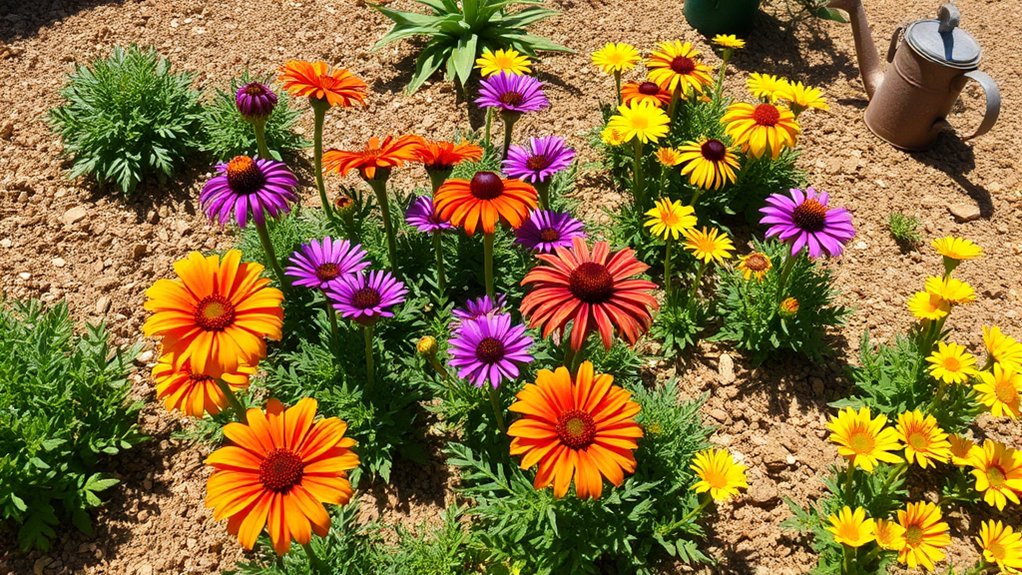
To keep drought-tolerant flowers blooming, give them the right balance of stress and support. Start with smart soil preparation: loosen compacted ground, mix in compost, and improve drainage so roots can spread deep and stay healthy.
Then use watering techniques that encourage resilience. Water deeply but less often so moisture reaches the root zone instead of sitting at the surface. Early morning watering cuts evaporation and helps foliage dry quickly, which lowers disease risk.
Water deeply and less often, aiming moisture at the roots. Early morning watering reduces evaporation and disease risk.
You should also deadhead spent blooms to push the plant toward more flowers instead of seed production. Add a thin layer of mulch to conserve moisture, but keep it away from stems.
Feed lightly with a low-nitrogen fertilizer if growth slows, since too much nitrogen can give you leafy plants and fewer blooms. Finally, watch for stress signals like drooping or scorched edges and adjust care before flowers fade.
Frequently Asked Questions
Which Drought-Tolerant Flowers Attract the Most Pollinators?
Sunflowers, lavender, coneflowers, bee balm, and blanket flowers attract the most pollinators. You’ll draw bees, butterflies, and hummingbirds when you choose blooms with strong pollinator preferences for nectar-rich, open centers.
Bright flower colors like purple, yellow, orange, and red help too. Plant several of these together, and you’ll create a steady feeding spot that keeps visitors coming all season. Deadhead spent blooms, and you’ll encourage even more flowers.
Can Drought-Tolerant Flowers Grow in Containers?
Yes, you can grow drought-tolerant flowers in containers, and you’ll often get great results. Container gardening lets you control soil, drainage, and sun exposure, which helps these plants thrive.
Use watering techniques like deep, infrequent soaking and check moisture before watering again. Choose roomy pots with drainage holes, and you’ll reduce stress on roots.
With the right mix, your container flowers can stay healthy and colorful.
What Soil Type Is Best for Drought-Tolerant Flowers?
Well-drained, sandy or loamy soil works best for drought-tolerant flowers because it lets roots breathe and prevents rot. You should mix in soil amendments like compost or coarse sand to improve structure without holding too much moisture.
If your ground stays wet, add drainage solutions such as raised beds, gravel, or drainage pipes. With the right soil, you’ll help your flowers establish deep roots and thrive with less watering.
Do Drought-Tolerant Flowers Survive Winter Frost?
Yes, many drought-tolerant flowers can survive winter frost if you choose the right varieties. In fact, some perennials handle temperatures below 20°F.
You should give them winter care by cutting back dead stems, mulching roots, and avoiding soggy soil. Add frost protection with frost cloths or cloches during hard freezes.
You’ll help your plants rest safely and bounce back strong when warmer weather returns in spring.
How Often Should Newly Planted Drought-Tolerant Flowers Be Watered?
You should water newly planted drought-tolerant flowers every 2 to 3 days for the first couple of weeks, then cut back to once a week as root establishment improves. Check the soil first; if the top inch feels dry, water deeply. You’ll help roots grow down instead of staying shallow.
After a month or two, you can usually reduce watering frequency further, depending on heat, rainfall, and your soil type.
Conclusion
Choose these drought-tolerant flowers, and you’ll grow beauty with less water and less worry. They don’t just survive dry spells; they thrive through them, turning a thirsty garden into a bold, bright refuge.
Give them sun, well-drained soil, and a little care, and they’ll keep blooming when other plants fade. Isn’t that the best kind of garden? One that teaches you resilience while asking for so little in return.
For a garden that stays vibrant even in tough conditions, these drought-tolerant flowers are the perfect choice.