10 Vegetables That Grow Quickly
Growing your own vegetables can be incredibly rewarding, but waiting weeks or even months for a harvest can test anyone’s patience.
If you’ve struggled with slow-growing crops or just want to enjoy fresh veggies sooner, you’re not alone. Many gardeners wish for quick results to keep their motivation high and their kitchen stocked with homegrown goodness.
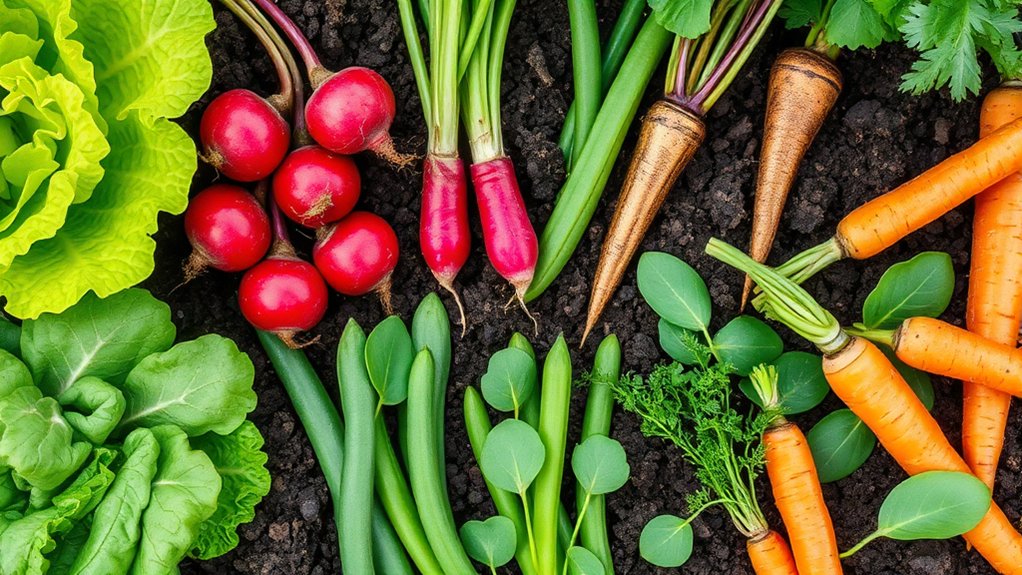
If you want fast harvests, you can grow radishes, lettuce, spinach, arugula, green onions, baby carrots, bush beans, zucchini, and peas. Vegetables That Grow Quickly.
Choose quick-maturing varieties, plant in loose, well-drained soil, and keep moisture steady for strong growth.
You can also try mesclun mix or baby leaves for even quicker results.
With the right timing and care, you’ll get fresh crops in just weeks, and there’s even more to discover below.
Key Takeaways
- Choose fast-growing varieties like lettuce, radishes, spinach, arugula, and bush beans for quick harvests.
- Match crops to cool or warm seasons and sow them in loose, well-drained soil for strong early growth.
- Harvest leafy greens and herbs as baby leaves or outer leaves to keep plants producing longer.
- Plant root crops like radishes, green onions, and baby carrots early and thin seedlings for better development.
- Support quick crops like peas and zucchini with regular watering, sunlight, and frequent harvesting.
How to Choose Fast-Growing Vegetables

When you’re choosing fast-growing vegetables, start with crops that match your climate, season, and available space. You’ll get better results when you make seasonal selection your first filter, because temperature and daylight shape how quickly plants grow.
Pick varieties labeled early, quick, or baby, and check their maturity dates before you buy seeds. Then match those options to your garden bed, raised box, or container so you don’t overcrowd plants.
Good soil preparation also speeds growth. Loosen compacted earth, mix in compost, and make sure drainage stays steady. Healthy soil lets roots expand and absorb nutrients without delay.
You should also consider your watering routine, since uneven moisture can slow development and reduce yield. If you plan carefully, you’ll choose vegetables that fit your conditions and mature on schedule, giving you a reliable harvest without wasting space or time.
Radishes: The Fastest Root Crop
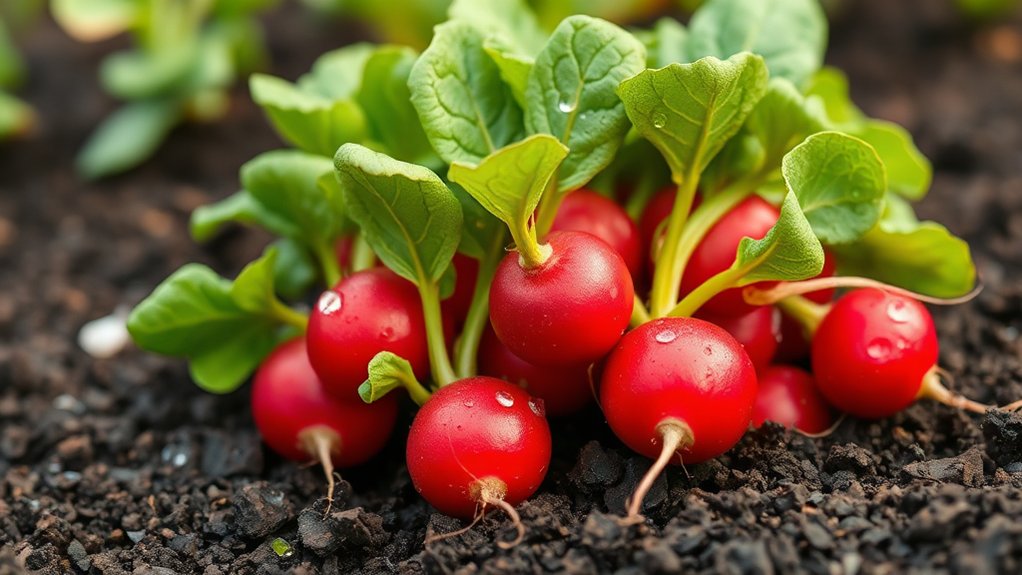
Radishes give you one of the quickest returns in the garden — they’re often ready to pull in just a few weeks. You can actually watch them swell fast, which is pretty satisfying.
Then, you’ll want to harvest them young if you’re after the crispest texture and mildest flavor. Just a heads-up: if you wait too long, they’ll get woody. So, it’s a good idea to check them early and often.
Quick Growth Timeline
If you want a crop that rewards you fast, radishes are hard to beat. After solid soil preparation, you can sow seeds directly and watch them move from sprout to usable root in just a few weeks.
Companion planting helps you tuck radishes between slower vegetables so you make the most of every row. Their quick growth timeline usually looks like this:
- Day 1: You plant the seeds shallowly.
- Days 3-5: You spot the first green shoots.
- Weeks 2-3: You thin crowded seedlings so roots can form.
- Weeks 3-5: You check size and color as the roots swell.
Because radishes grow so fast, you can fit them into short gaps in your garden plan and keep your beds productive without waiting long for results.
Harvesting Young Radishes
Even before the roots reach full size, you can pull young radishes for a milder, crisper bite. Check them when the shoulders peek above the soil; that’s your cue to harvest.
Gently loosen the ideal soil with your fingers or a small fork, then lift each root by its greens. Don’t wait too long, or they’ll turn pithy and sharp.
Different radish varieties mature at slightly different speeds, so sample one before you harvest the whole row. Rinse off the dirt, trim the tops, and chill them right away for the best crunch.
If you keep sowing every week or two, you’ll enjoy a steady supply of tender radishes all season. Try them sliced, salted, or tucked into salads and sandwiches.
Lettuce: Fresh Greens in Weeks
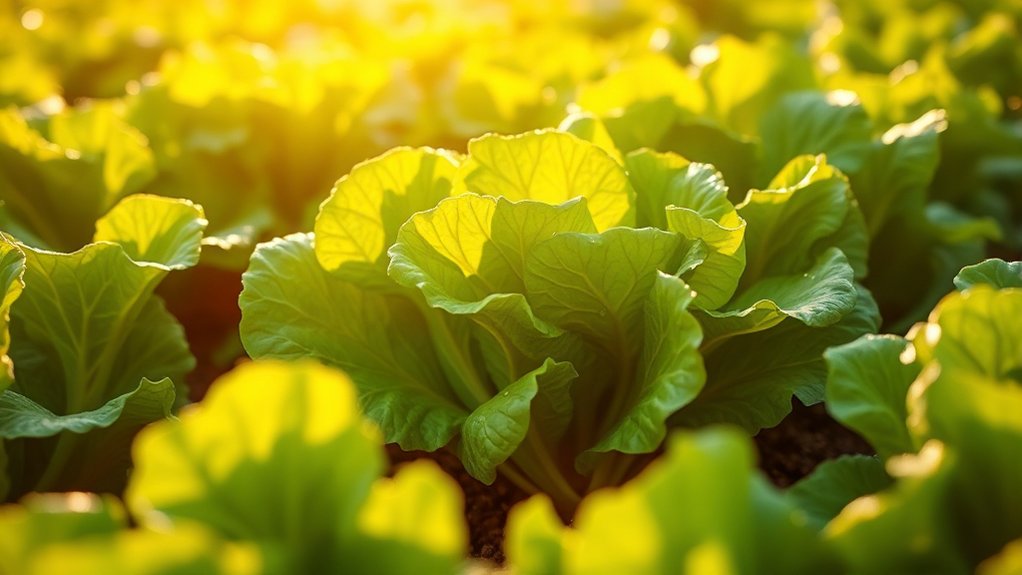
Lettuce sprouts quickly, so you won’t have to wait long to see those tender green seedlings popping up. You can start snipping baby leaves in just a few weeks—perfect for fresh salads and sandwiches. As long as you keep the soil moist and the weather cool, you’ll be able to keep harvesting before the plants fully mature.
Fast Germination Time
Because lettuce germinates fast, you can see tiny sprouts in just a few days and start harvesting fresh greens in a matter of weeks. To get that quick start, focus on seed selection and give the seeds ideal conditions from the beginning.
You’ll improve results when you:
- Choose fresh, high-quality seeds.
- Sow them in loose, moist soil.
- Keep the temperature cool and steady.
- Provide gentle light as soon as sprouts appear.
You don’t need fancy tools; a small tray or garden bed works fine. Water lightly so the soil stays damp, not soggy, and check daily for sprouts.
With a little care, you’ll enjoy fast, reliable germination and a rewarding head start in your vegetable garden.
Harvesting Baby Leaves
Start snipping lettuce once the baby leaves are large enough to eat, usually when they’re just a few inches tall. You can harvest outer leaves first and let the center keep growing for repeat cuts. Pick in the morning for crisp texture and the best flavor.
Use sharp scissors to avoid tearing tender stems. Keep your plants in ideal growing conditions with cool temperatures, moist soil, and partial sun. You’ll get more tender harvests this way.
Try different baby leaf varieties so you can enjoy varied colors and tastes.
| Variety | Flavor | Best Use |
|---|---|---|
| Oakleaf | Mild | Salads |
| Red Romaine | Crisp | Wraps |
| Mesclun mix | Mixed | Quick bowls |
Wash, dry, and chill your greens right away.
Spinach: A Cool-Season Speedster
Spinach is one of the quickest cool-season crops you can grow, often ready for baby leaves in just a few weeks. Choose compact spinach varieties that suit your space, then time your ideal planting for early spring or fall when temperatures stay mild. You’ll get the best growth in rich, moist soil and partial sun.
- Sow seeds 1/2 inch deep and keep them evenly watered.
- Thin seedlings so each plant has room to unfurl.
- Harvest outer leaves first, and let the center keep producing.
- Replant every 2 to 3 weeks for a steady supply.
Cool weather keeps spinach tender and slows bolting, so you can enjoy more harvests before heat arrives. If you want fast results with little fuss, spinach gives you a reliable, nutritious crop that rewards simple care and timely picking.
Arugula: Peppery Leaves Fast
Arugula grows fast, so you can go from seed to salad in a short time with very little effort. You can sow it directly in cool soil, and it usually sprouts quickly. Give it a sunny spot with rich, moist earth, and you’ll harvest tender leaves before many other greens even get started.
Pick young leaves often, and the plants keep producing fresh growth. That steady harvest makes arugula a smart choice when you want a quick crop without much fuss.
You’ll also enjoy arugula benefits, since the leaves add a bold, peppery bite plus nutrients to your meals. Toss them into sandwiches, top pizzas with them, or mix them into simple arugula recipes like salads and pasta dishes.
Because the flavor is strong, you don’t need much to make an impact. Grow it for fast results, easy picking, and a lively green that keeps your kitchen stocked.
Green Onions: Easy Harvests in No Time
Green onions are one of the fastest vegetables you can grow, giving you fresh harvests before many crops are even established. You can tuck a green onion patch into a sunny bed, then snip tender tops whenever you need them. Their crisp flavor brightens salads, soups, eggs, and stir-fries, so the culinary uses are endless.
- Sow seeds shallowly and keep soil evenly moist.
- Thin seedlings so each plant has room to thicken.
- Harvest by cutting leaves, or pull whole plants when needed.
- Try companion planting near carrots, lettuce, or herbs.
With these growing tips, you’ll enjoy quick, steady harvests without much effort. Green onions don’t demand much space, and they bounce back after cutting, making them perfect for small gardens or containers. If you want fast rewards and fresh flavor, this easy crop belongs in your garden.
Baby Carrots: Small Roots, Quick Reward
You can grow baby carrots quickly by choosing fast-growing varieties that mature in a short window. Just plant them in loose soil, and you’ll give the roots plenty of room to size up fast. Then, harvest them early when they’re tender and sweet. It’s a quick reward that’s totally worth it!
Fast-Growing Varieties
Baby carrots give you one of the quickest wins in the garden, especially if you want a fast crop without waiting months for harvest. You can pick fast-growing varieties that fit small spaces and reward you early.
In container gardening, choose short-rooted types and keep the soil loose. For extra variety, pair them with fast growing herbs nearby to make the space more useful.
- Nantes types stay tender and uniform.
- Chantenay varieties handle heavier soil.
- Thumbelina grows round, tiny roots.
- Little Finger gives you slender, sweet carrots.
You’ll get the best results when you sow evenly and thin seedlings early. These choices help you grow a quick, productive crop without a lot of fuss.
Harvesting Baby Carrots
When the shoulders of baby carrots peek above the soil, it’s time to check them. Gently brush away a little dirt and judge their thickness; you want tender roots, not oversized ones. Different carrot varieties mature at different rates, so read the seed packet and watch closely.
Good soil preparation matters because loose, stone-free earth lets roots form straight and pull cleanly. To harvest, grip the greens near the base and wiggle the carrot upward, or loosen the soil with a fork first if it resists.
Pick them in the cool morning for the best crunch and sweetest flavor. If you leave a few behind, they’ll keep growing, but don’t wait too long or they’ll turn woody.
Bush Beans: Fast Pods for the Garden
Bush beans are one of the quickest vegetables you can grow, sending up tender pods in just a few weeks after planting. You can pick compact bush bean varieties for small beds, raised rows, or containers, and they’ll keep producing if you harvest often.
For best results, tuck them into warm soil and give them steady moisture without soaking the roots. Companion planting can help, too; grow them near carrots, radishes, or lettuce to use space well and shade the soil a bit.
- Sow seeds directly outdoors after frost.
- Thin seedlings so air moves freely.
- Mulch lightly to hold moisture.
- Harvest pods before they get stringy.
You’ll notice new flowers and pods quickly, which makes bush beans satisfying for impatient gardeners. Pick them young for the best flavor, then keep checking plants every couple of days. With a little care, you’ll enjoy a fast, dependable crop.
Zucchini: Fast Growth, Big Harvests
Zucchini grows fast, and once the plants get going, you’ll be picking tender squash almost before you expect it. You can sow seeds directly in warm soil, or start them indoors if your season is short. Choose sunny ground with rich, well-drained soil, then give each plant plenty of room to spread.
For zucchini care, water deeply at the base, mulch to hold moisture, and feed lightly when growth slows. Watch for blossoms because male and female flowers appear separately, and healthy pollination helps fruit form quickly. Harvest often while fruits are young and glossy to keep plants producing.
Among zucchini varieties, you’ll find dark green, yellow, and striped types, plus compact bush forms for smaller spaces. If you stay on top of weeds, pests, and regular picking, one plant can keep your kitchen stocked for weeks with mild, versatile squash.
Peas: Early Pods for Spring Gardens
After the last zucchini harvests, peas can take over the cool-season space and reward you with crisp, sweet pods early in the year. For spring planting, choose a sunny spot with loose soil and add a trellis before you sow. You’ll help vines climb cleanly, keep pods off damp ground, and make picking easier.
- Sow seeds as soon as soil can be worked.
- Water lightly, but don’t let beds dry out.
- Harvest often to encourage more pod development.
- Pick when pods feel full, bright, and tender.
You don’t need much fertilizer; peas fix their own nitrogen and thrive in cool weather. If you plant them in succession, you’ll stretch your harvest and keep fresh pods coming.
Watch for aphids, and pinch off damaged tips to keep growth strong. With a little care, you’ll get an early, reliable crop that tastes best straight from the vine.
Frequently Asked Questions
Which Fast-Growing Vegetables Do Best in Containers?
Radishes, lettuce, spinach, arugula, and bush beans do best in containers because you can harvest them quickly and keep them compact. You should choose a deep, well-drained pot for container selection, and you’ll want to watch vegetable spacing so roots don’t crowd each other.
Herbs like basil and parsley also thrive in pots, and they’ll keep giving you fresh leaves with regular watering and plenty of sun.
How Often Should Quick Vegetables Be Watered?
You should water quick vegetables whenever the top inch of soil feels dry, usually every day or every other day in warm weather. Check soil moisture with your finger, and adjust watering frequency based on heat, wind, and container size.
Don’t let the soil dry out completely, but avoid soggy roots too. Consistent watering helps fast growers stay tender, productive, and less stressed throughout the season.
Can Fast-Growing Vegetables Be Grown Indoors?
Yes, you can grow fast-growing vegetables indoors. Like a tiny train racing through a station, they can move from seed to salad in weeks if you give them the right setup.
You’ll need indoor gardening containers, rich soil, and steady moisture. Pay attention to lighting requirements too, because leafy greens and herbs need bright light to thrive.
With a sunny window or grow lights, you can harvest fresh produce year-round.
What Pests Commonly Attack Young Vegetable Seedlings?
Young vegetable seedlings often get attacked by aphids, slugs, snails, cutworms, flea beetles, and fungus gnats. You’ll also see thrips or damping-off from soil-borne fungi.
For strong seedling protection, inspect plants daily, keep leaves dry, and use row covers. Good pest prevention starts with clean soil, proper spacing, and gentle watering.
If you catch problems early, you’ll stop damage fast and help your seedlings grow into healthy, productive plants.
How Can I Extend the Harvest From Fast-Growing Crops?
Succession planting lets you sow new batches every 1 to 2 weeks, so you keep harvesting as earlier crops finish. You can also pair crops with companion planting to save space, shade roots, and reduce pest pressure.
Pick cut-and-come-again varieties, harvest leaves young, and water consistently to slow bolting. If you stagger sowings of lettuce, radishes, and beans, you’ll stretch your harvest much longer and waste less garden space.
Conclusion
When you pick fast-growing vegetables, your garden starts humming like a busy kitchen. Radishes, lettuce, spinach, arugula, baby carrots, bush beans, zucchini, and peas each race from seed to table with surprising speed.
With the right timing and a little care, you can keep fresh harvests coming without the long wait. So grab your seeds, dig in, and let your garden reward you sooner than you’d expect. Growing 10 vegetables that grow quickly is a smart way to enjoy fresh flavors faster.