What Is Bird Food Made Of?
If you’ve ever stood in the bird food aisle feeling overwhelmed by the endless options, you’re not alone. Many people struggle to find the perfect blend that will attract and nourish their backyard visitors.
Choosing the right bird food can be tricky because different birds have different needs and preferences.
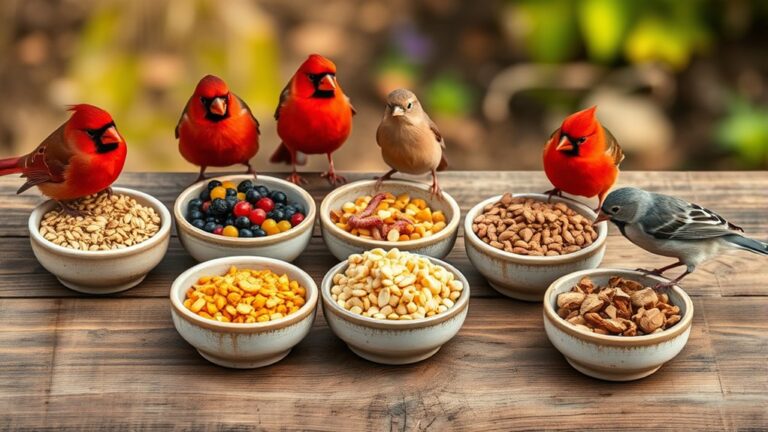
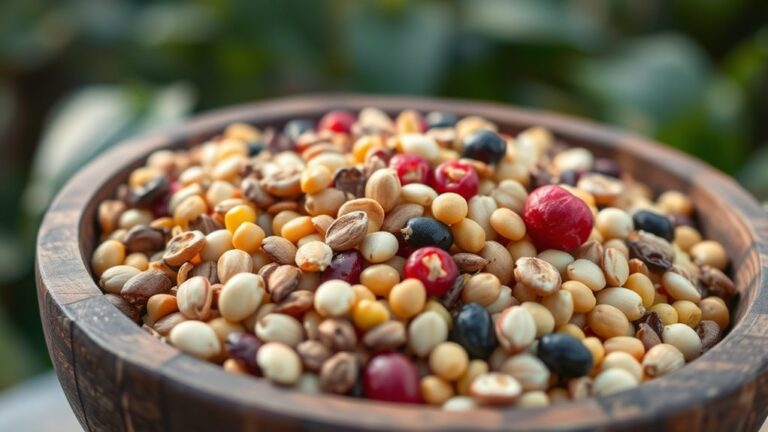
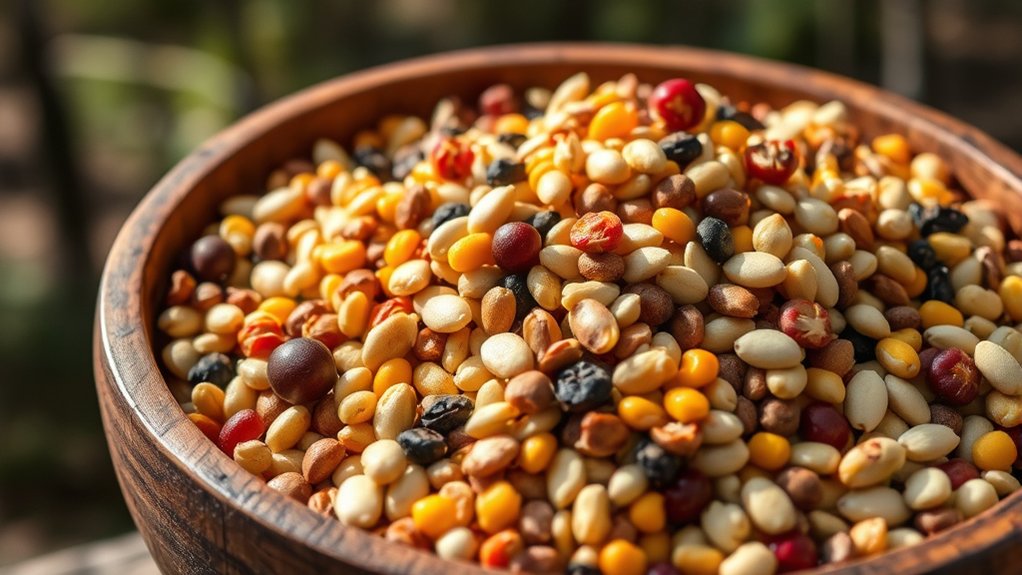
Bird food is made of seeds, nuts, dried fruits, insects, grains, vitamins, and minerals, all blended to meet different birds’ nutritional needs. Seeds and grains provide energy, while nuts add healthy fats and protein. Insects support muscle growth and feathers.
Vitamins and minerals boost health, and dried fruits offer natural sweetness. Different birds prefer certain ingredients based on their eating habits and seasons.
Keep exploring to learn how to choose the best mix for your backyard visitors.
Key Takeaways
- Bird food mainly consists of seeds, nuts, suet, and dried fruits that provide energy and essential nutrients.
- Protein sources like mealworms and insects support muscle health and chick growth during nesting.
- Grains such as millet and cracked corn supply energy and attract ground-feeding bird species.
- Vitamins, minerals, and calcium are added to boost immune health and overall bird vitality.
- Bird food formulations vary by species, season, and feeding habits to meet specific dietary needs.
Common Bird Food Ingredients
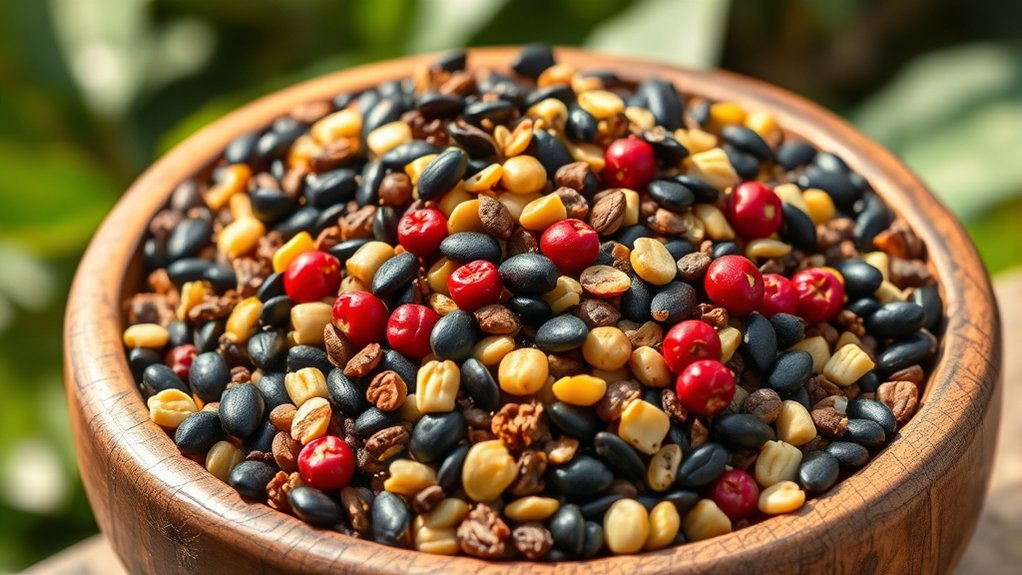
Although bird food varies widely, you’ll often find a few staple ingredients that attract many species. These ingredients are carefully chosen to support birds during critical times like bird migration and nesting habits.
During migration, birds need high-energy foods such as sunflower seeds, suet, and nuts to fuel their long journeys. You’ll notice that many bird mixes include these to provide essential calories.
When nesting, birds require protein-rich foods like mealworms or insects to help feed their growing chicks. You can also find grains like millet and cracked corn, which appeal to ground-feeding birds and offer steady energy.
Incorporating a variety of these ingredients helps you attract a broad range of birds, matching their dietary needs throughout the year. By understanding these common ingredients, you’ll better support birds during their most demanding seasons, enhancing your backyard’s birdwatching experience.
Why Seeds Are Essential in Bird Food
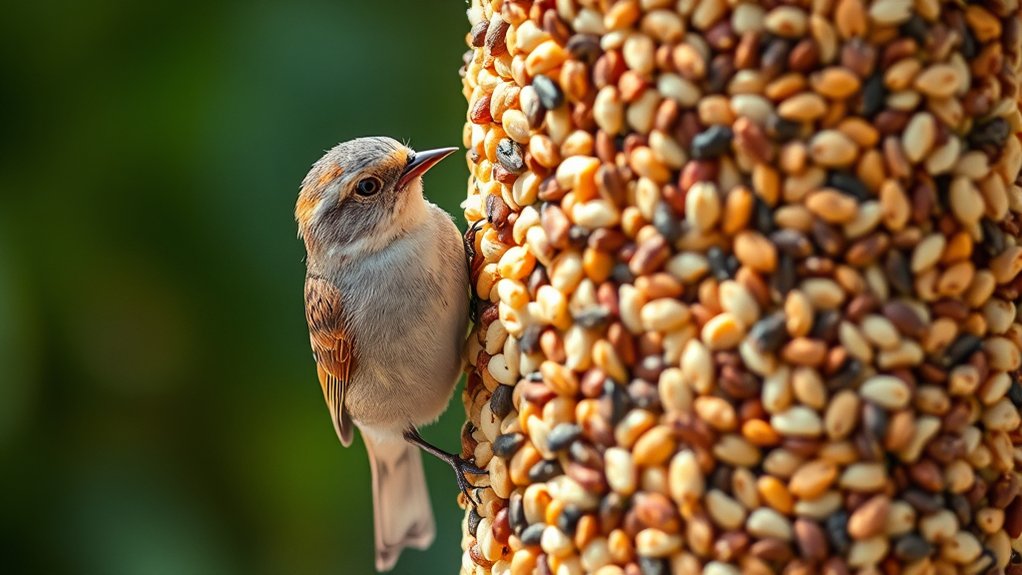
Many common bird food ingredients include seeds because they provide essential nutrients and energy that birds need daily. When you offer a variety of seeds, you support seed diversity, which attracts different bird species with unique dietary needs. This diversity guarantees birds get a balanced mix of fats, proteins, and carbohydrates crucial for their health.
You’ll notice that during bird migration, seeds become even more indispensable. Migratory birds rely on high-energy seeds to fuel their long journeys. Without access to diverse seeds, they might struggle to find enough nourishment, affecting their stamina and survival.
How Nuts Enhance Bird Food Nutrition
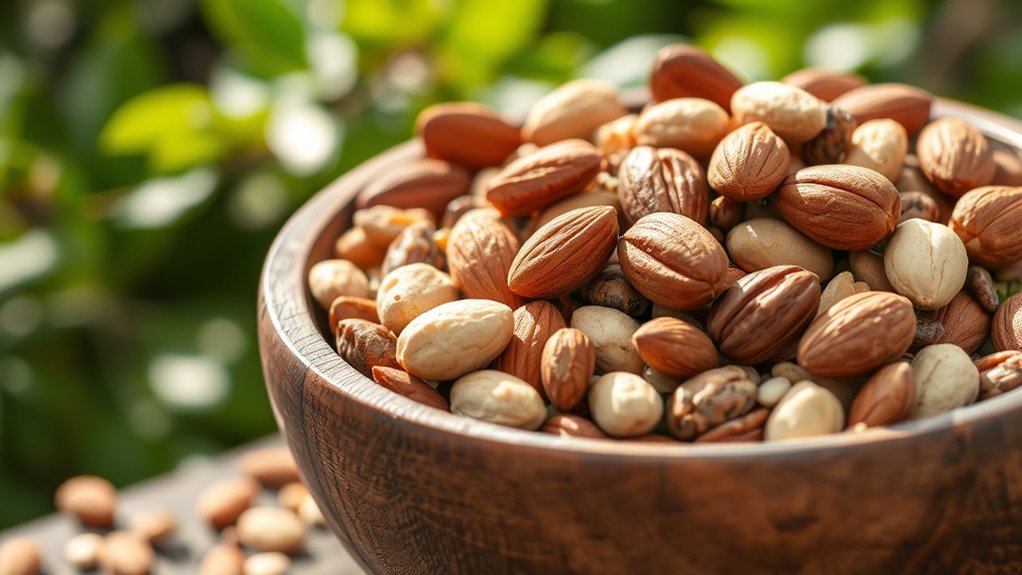
Because nuts pack a dense source of healthy fats, proteins, and essential vitamins, they markedly boost the nutritional value of bird food. When you include nuts, you help birds get energy and nutrients they might miss from seeds alone.
However, nuts have some nutritional drawbacks, like being high in fat, which can be an issue if overused. To balance this, you can mix nuts with alternative ingredients such as grains or legumes.
Here’s why nuts matter in bird food:
- Energy Boost: Nuts provide concentrated calories, perfect for active birds or those in colder climates.
- Protein Power: They offer essential amino acids necessary for growth and feather maintenance.
- Vitamin Rich: Nuts contain vitamins like E and B-complex that support immune health and metabolism.
The Role of Dried Fruits in Bird Diets
How do dried fruits fit into a bird’s diet? When you include dried fruits, you’re adding a concentrated source of natural sugars, vitamins, and fiber that many birds need.
Dried fruit benefits go beyond just taste; they provide energy and essential nutrients that support a bird’s health and robustness. Because fresh fruits spoil quickly, fruit preservation methods like drying help keep these nutrients intact while extending shelf life.
This means you can offer birds nutrient-rich treats year-round without worrying about spoilage. When you choose dried fruits, look for options without added sugars or preservatives, ensuring the food stays healthy and safe.
You’ll notice that birds often enjoy the chewy texture and sweet flavor, which encourages natural foraging behavior. Overall, dried fruits serve as a valuable component in bird diets by complementing seeds and nuts, making their meals more balanced and enjoyable.
Why Insects and Mealworms Are Included in Bird Food
If you want to provide birds with a protein-rich boost, including insects and mealworms in their diet is vital. Birds rely on insect protein for growth, energy, and overall health. Mealworm benefits make them a popular choice in bird food because they’re packed with nutrients and easy for birds to digest. Here’s why you should consider these ingredients:
- High-quality protein: Insect protein supports muscle development and feathers, which is essential during breeding and molting seasons.
- Natural diet component: Many wild birds naturally consume insects, so adding them mimics their diet and promotes better health.
- Rich in essential nutrients: Mealworms provide fats, vitamins, and minerals that help birds maintain energy and immune function.
How Grains Give Wild Birds Energy
You’ll find that common grains like millet, corn, and oats pack a powerful energy punch for wild birds. These grains provide essential nutrients that help birds stay active and healthy throughout the day.
Knowing this, it’s easier to choose the best food to support local wildlife. Plus, offering the right grains means you’re giving birds the fuel they need to thrive.
Common Energy-Rich Grains
Why do wild birds flock to feeders filled with grains? These energy-rich grains play a vital role in supporting their migration patterns and nesting behaviors. When you offer these grains, you’re helping birds fuel long flights and busy nesting seasons.
Here are three common grains you’ll find in bird food mixes:
- Millet Small and easy to digest, millet provides quick energy, perfect for birds on the move.
- Cracked Corn Larger and filling, cracked corn helps birds store energy before migration.
- Sunflower Seeds Packed with fats and oils, sunflower seeds give birds sustained energy during nesting.
Nutritional Benefits For Birds
Because grains contain concentrated nutrients, they provide wild birds with the energy needed to stay active and healthy. When you offer grains, you’re fueling birds for demanding activities like bird migration, which requires intense stamina and energy reserves.
During nesting behaviors, birds need extra nutrition to build nests and care for their young. Grains supply essential carbohydrates, proteins, and fats that support these crucial processes.
The Importance of Vitamins and Minerals in Bird Feed
Although seeds and grains form the base of most bird diets, vitamins and minerals play an indispensable role in keeping your feathered friends healthy and active. These nutrients support vital functions like bird migration and nesting habits.
Without proper vitamins and minerals, birds may struggle with energy, immune defense, and reproduction.
Here are three key reasons why you should guarantee your bird feed includes essential vitamins and minerals:
- Energy Boost: Minerals like iron help transport oxygen, giving birds the stamina needed for long migrations.
- Feather Health: Vitamins A and E promote strong feathers, which are essential for flight and insulation during nesting.
- Reproductive Success: Calcium supports eggshell formation and healthy offspring during breeding seasons.
Fillers and Additives in Bird Food: What to Watch For
Alongside vitamins and minerals, the other ingredients in bird food can considerably impact your birds’ health. Fillers and additives like artificial preservatives and flavor boosters are common, but not always beneficial.
You should watch for these because they can reduce nutritional value or cause allergic reactions. Fillers often bulk up the food but provide little nourishment, while additives may improve taste or shelf life but could harm sensitive birds over time.
Here’s a quick guide to common fillers and additives:
| Ingredient Type | What to Watch For |
|---|---|
| Fillers | Corn gluten, wheat middlings (low nutrition) |
| Artificial Preservatives | BHA, BHT (may affect bird health) |
| Flavor Boosters | MSG, artificial flavors (possible allergies) |
| Fillers/Additives Mix | Soybean hulls, carrageenan (minimal benefits) |
Choosing bird food with minimal fillers and safe additives helps keep your feathered friends healthy and happy.
How Bird Food Varies by Species and Feeding Habits
You’ll notice that different bird species prefer specific seeds, so choosing the right mix really matters. Some birds are insectivores—they rely mostly on insects—while granivores focus on seeds. Knowing these feeding habits makes it easier to provide the best food for each type.
Seed Preferences by Species
Because different bird species have unique feeding habits and beak shapes, their seed preferences vary widely. When you’re choosing bird food, consider how bird migration and nesting preferences influence these choices. Migratory birds may need high-energy seeds during their journey, while nesting birds often prefer seeds that support chick growth.
Here are three common seed preferences by species:
- Finches love nyjer and thistle seeds, perfect for their small, pointed beaks.
- Cardinals prefer sunflower seeds, which provide the fats needed for nesting and raising young.
- Sparrows often eat millet, a small seed ideal for their versatile beaks and local migration patterns.
Understanding these preferences helps you attract the right birds to your feeder year-round.
Insectivores vs. Granivores
Different bird species don’t just vary in seed preferences. They also have distinct feeding habits shaped by their diets. When you observe insectivores, like warblers or flycatchers, you’ll notice they primarily eat insects. These insects provide essential protein for their energy needs, especially during migration patterns.
These birds often adjust their diets seasonally, feeding heavily on insects when nesting behaviors require extra nutrition for raising young. On the other hand, granivores such as finches and sparrows focus on seeds. They rely on nutrient-rich grains to sustain themselves year-round.
Understanding these differences helps you choose the right bird food. Offering mealworms for insectivores or mixed seeds for granivores aligns with their natural habits. This supports their health through migration and successful nesting.
Tips for Choosing the Best Bird Food for Your Backyard
When selecting bird food for your backyard, consider the types of birds you want to attract and their dietary preferences. Different species have unique requirements influenced by bird migration patterns and nesting habits. For instance, some birds eat more insects during nesting season, while others rely heavily on seeds year-round.
Choosing bird food depends on the species’ migration and nesting habits, affecting their dietary needs.
Here are three tips to help you choose the best bird food:
- Research local bird species: Identify which birds are common in your area during migration and nesting periods to tailor your food choices.
- Match food to dietary needs: Offer a mix of seeds, suet, or mealworms depending on whether the birds are insectivores or granivores.
- Use fresh, high-quality food: Avoid moldy or stale food to keep birds healthy and encourage repeat visits.
Frequently Asked Questions
How Should Bird Food Be Stored to Maintain Freshness?
You should store bird food in airtight storage containers to guarantee seed preservation and keep it fresh longer. Choose containers that block moisture and pests, as damp or contaminated seeds spoil quickly.
Keep the containers in a cool, dry place away from direct sunlight. By doing this, you’ll maintain the quality of the bird food, prevent mold growth, and make sure the seeds stay nutritious and appealing for the birds you feed.
Can Homemade Bird Food Replace Commercial Mixes?
You can absolutely let DIY nutrition be the wind beneath your feathered friends’ wings by making homemade bird food. When you choose ingredients carefully, you tailor a feast packed with the right nutrients, like picking the brightest jewels for a crown.
Just focus on ingredient selection. Mix seeds, nuts, and dried fruits thoughtfully. While commercial mixes are convenient, your homemade blend offers freshness and control, making it a worthy replacement.
Are There Any Bird Foods to Avoid for Safety Reasons?
Yes, you should avoid bird foods containing poisonous seeds like apple seeds or avocado pits. These can seriously harm birds.
Also, steer clear of feeds with harmful additives such as artificial colors, preservatives, or excessive salt and sugar. These ingredients can upset a bird’s digestive system or cause long-term health issues.
Always choose natural, clean mixes to keep your feathered friends safe and healthy.
How Often Should I Refill My Bird Feeder?
You should refill your bird feeder every few days, depending on how quickly the seed varieties disappear. If you offer a mix, the most popular seeds might vanish faster, so keep an eye on the levels to maintain nutritional balance.
During peak feeding times like early spring or fall migration, you might need to replenish more often. Regularly topping off ensures birds always have fresh, nutritious food to stay healthy and energized.
Does Bird Food Attract Unwanted Pests or Animals?
Yes, bird food can attract unwanted pests or animals, but you can manage this with effective pest prevention. To reduce wildlife attraction beyond birds, choose feeders designed to minimize spillage and clean up fallen seeds regularly.
You might also select seed mixes less appealing to squirrels or rodents. By staying proactive, you’ll enjoy birdwatching without inviting unwanted guests to your yard.
Conclusion
When choosing bird food, remember seeds, nuts, and dried fruits provide essential nutrients, while insects boost protein. Vitamins and minerals keep birds healthy, but watch out for fillers that offer little value.
You might think all bird food suits every species, but that’s not true. Different birds have unique dietary needs. By understanding these ingredients and tailoring your choices, you’ll give your backyard visitors the best nutrition possible.
This helps them thrive season after season. Choosing the right bird food is key to supporting their health and happiness.