10 Foods Birds Like to Eat
Many bird lovers want to create a backyard haven that attracts a variety of feathered friends, but it’s not always clear what foods birds like to eat. You’re not alone if you’ve struggled to find the right mix to keep them coming back. Finding the perfect bird food can feel like a guessing game, especially when you want to support them through migration and nesting seasons.
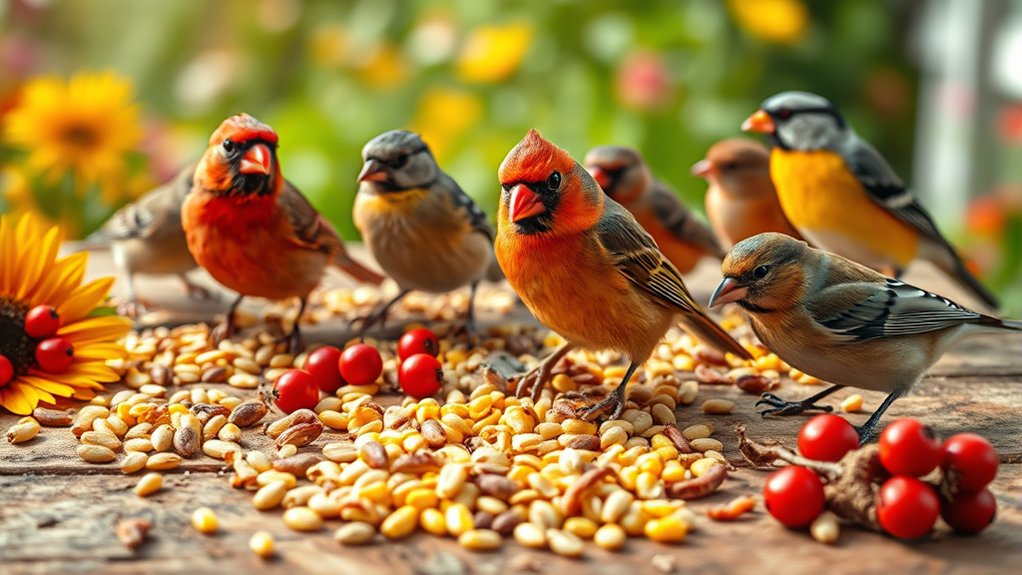
You’ll attract a variety of birds by offering seeds like millet and corn, fresh fruits such as berries and apples, and chopped vegetables like carrots or kale. Don’t forget high-energy nuts like peanuts and mealworms for protein.
Suet provides essential fats during colder months, while nectar keeps hummingbirds fueled in warmer weather. Safe human foods like plain oatmeal and cooked rice can also help. Investigate these options to support birds through migration and nesting seasons.
Key Takeaways
- Seeds and grains like millet, corn, and wheat attract many bird species. They also support migration and nesting energy needs.
- Fresh fruits such as berries, apples, and grapes provide essential vitamins, hydration, and fiber for birds year-round.
- Nuts including peanuts, walnuts, and almonds offer high-energy fats and proteins. These are crucial for migration and nest building.
- Insects and mealworms supply vital protein that supports growth, muscle development, and overall bird health.
- Suet and fat-rich foods help birds stay warm in cold weather. They also attract woodpeckers, chickadees, and nuthatches.
Seeds That Attract a Variety of Birds

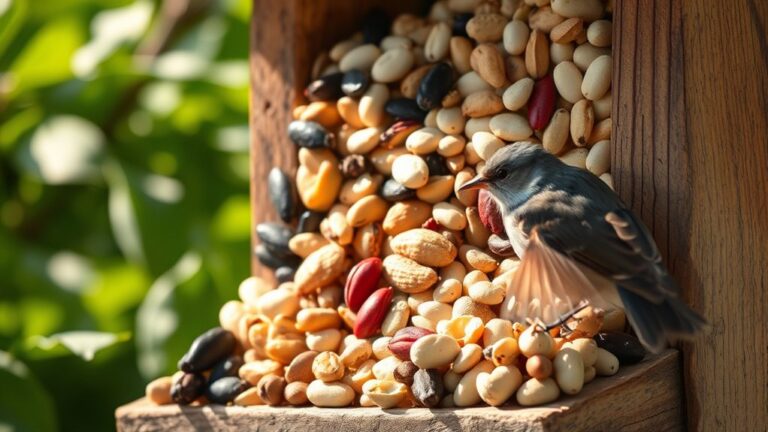
While many foods can attract birds, seeds stand out as a top choice because they appeal to a wide range of species. When you offer seeds, you’re tapping into natural feeding habits influenced by bird migration patterns.
Birds on the move seek reliable energy sources, and seeds provide the nutrients they need to fuel long journeys. You’ll notice that different species prefer specific types of seeds depending on their nesting site preferences and local habitat.
For example, birds nesting in dense shrubs might favor smaller seeds they can easily carry back to their young. Meanwhile, those in open areas often choose larger seeds. By selecting a variety of seeds, you accommodate the diverse needs of birds passing through or settling nearby.
This thoughtful approach not only supports their survival during migration but also encourages birds to establish feeding routines around your space, enhancing your chances to observe a vibrant bird community year-round.
Grains Birds Eat and Why They Matter
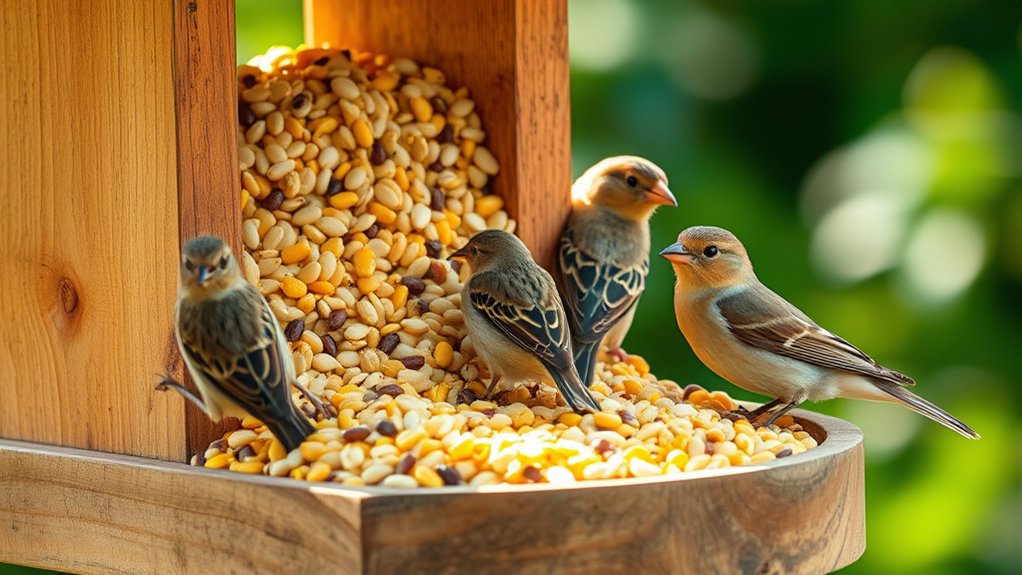
Because grains provide essential nutrients and energy, they play a crucial role in many birds’ diets. When you offer grains like millet, corn, and wheat, you support birds during critical times such as migration. These grains fuel their long journeys, helping them maintain the energy needed for bird migration patterns.
You’ll notice migratory birds often seek out grain-rich areas to refuel, making your feeding spot especially important.
Grains also contribute to nest building behaviors. Some birds use grains as a food source to sustain themselves while gathering materials and constructing nests.
Moreover, leftover grains can attract insects, which some birds collect as protein for their young during nesting season.
Fruits Birds Love to Snack On
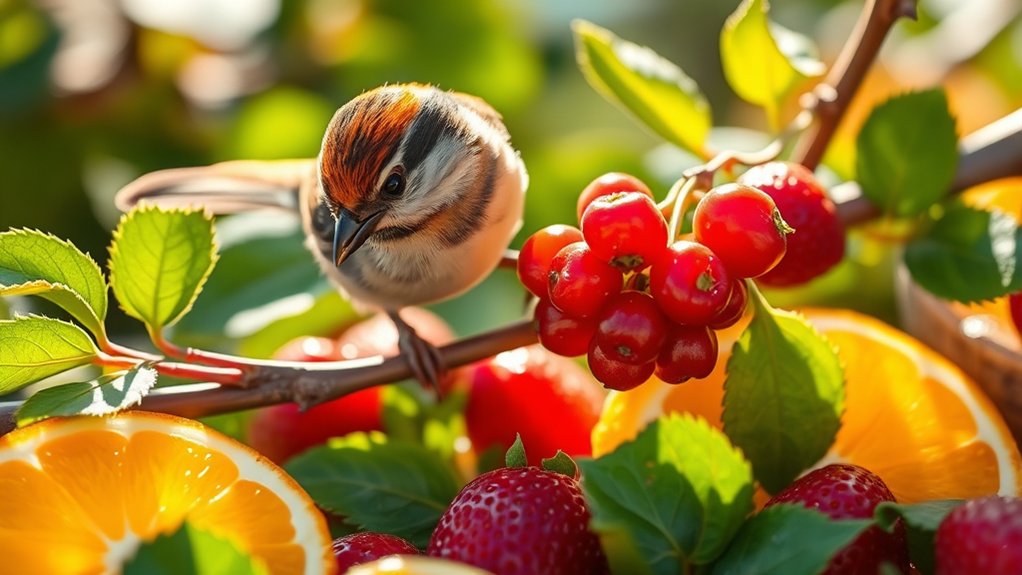
You’ll find birds especially drawn to fruits like berries, apples, and grapes. Offering seasonal fruits not only attracts more birds but also provides them with essential nutrients. So, let’s take a closer look at which fruits make the best snacks for your feathered visitors.
Popular Fruit Choices
What fruits do birds find most irresistible? Understanding bird migration patterns and nesting site selection helps you offer fruits they crave during feeding and resting stops. Popular fruit choices provide essential nutrients and energy for their journeys.
Here’s a quick look:
| Fruit | Why Birds Love It |
|---|---|
| Berries | High in antioxidants and sugar |
| Apples | Offer hydration and fiber |
| Grapes | Easy to eat, rich in vitamins |
Seasonal Fruit Benefits
When seasons change, so do the fruits that birds enthusiastically snack on, each offering unique benefits that support their health and energy. You’ll notice that a seasonal fruit variety naturally emerges as fruit ripening cycles progress throughout the year.
This variety ensures birds get a balanced mix of nutrients, from vitamins to antioxidants, helping them thrive. By providing fruits aligned with these natural cycles, you’re catering to birds’ evolving dietary needs while encouraging their natural foraging behavior.
For example, summer brings juicy berries packed with hydration, while fall offers apples rich in fiber. Understanding these seasonal fruit benefits allows you to attract a diverse range of birds and support their well-being year-round.
Vegetables Birds Like to Eat
Although birds enjoy a variety of foods, vegetables provide essential nutrients that help keep them healthy and energetic. When you offer vegetables like peas, corn, and leafy greens, you support birds during critical times such as migration and nesting.
These nutrients fuel their long journeys during bird migration patterns and give them the strength to build nests and care for their young. You’ll notice that birds like robins and finches particularly enjoy fresh veggies, which supplement their diet with vitamins and minerals.
To attract them, try offering chopped carrots, cucumbers, or even kale in your backyard feeder. Just make sure to provide fresh, pesticide-free vegetables to keep birds safe and healthy.
Nuts: High-Energy Foods for Birds
You’ll want to offer nuts because they pack a powerful nutritional punch. They give birds the energy they need to stay active throughout the day. Popular varieties like peanuts, walnuts, and almonds are favorites among many bird species. So, let’s take a closer look at why these high-energy foods are so beneficial and find out which nuts birds prefer the most.
Nutritional Benefits Of Nuts
Because nuts are packed with healthy fats, proteins, and essential vitamins, they provide birds with a critical energy boost, especially during colder months or migration. If you offer nuts to birds, you’re helping them fuel long flights and maintain their nesting habits.
Here are three key nutritional benefits nuts provide:
- Energy Dense: Nuts supply concentrated calories, which are essential for birds during migration when energy demands skyrocket.
- Protein Rich: Proteins support muscle repair and feather growth, both important for sustaining nesting habits.
- Vitamin Source: Nuts contain vitamins like E and B-complex that boost immunity and overall health.
Popular Nut Varieties
Nuts offer a variety of benefits to birds, but not all nuts are created equal regarding feeding your feathered friends. Popular nut varieties like almonds, walnuts, and peanuts provide high-energy fuel essential for bird migration patterns. This helps birds sustain long flights.
You’ll find that offering shelled nuts makes it easier for birds to access the nutrients, especially during nesting habits when energy demands rise. Hazelnuts and pecans also rank high, supplying crucial fats and proteins.
However, avoid salted or flavored nuts, as they can harm birds. By choosing the right nut types, you support both migratory and resident birds during critical times. Providing a mix ensures you attract a variety of species, enriching your backyard’s wildlife diversity year-round.
Insects: Essential Protein for Birds
Although birds enjoy a variety of foods, insects provide them with essential protein that supports their growth, energy, and overall health. You’ll notice birds actively hunting insects, drawn by their movement and nutritional value.
Understanding insect behavior helps you create a bird-friendly environment, encouraging natural feeding habits. Preserving insect habitats, like leaving leaf litter or planting native flowers, guarantees a steady insect supply for birds year-round.
Here are three key reasons insects are indispensable for birds:
- High Protein Content: Insects offer a rich protein source, imperative for muscle development and feather growth.
- Energy Boost: Their fat and nutrient composition fuels birds during migration and breeding seasons.
- Natural Pest Control: Birds eating insects help keep harmful pest populations in check, benefiting your garden’s ecosystem.
Mealworms: Protein Boosters for Birds
You’ll find mealworms are a fantastic protein booster that helps birds stay healthy and energetic. It’s really easy to offer them—just scatter a few on a platform feeder or mix them with other foods. Birds like bluebirds, wrens, and chickadees especially love this nutritious treat.
Nutritional Benefits Explained
When you offer mealworms to birds, you provide them with a rich source of protein that supports their energy and growth. This is especially important during bird migration and nesting habits when they need extra nourishment. Mealworms are easy to digest and packed with essential nutrients that help birds stay active and healthy.
Here are three key nutritional benefits of mealworms for birds:
1. High Protein Content
Supports muscle development and energy, which is vital during long migrations.
2. Rich in Fat
Provides concentrated energy, helping birds maintain stamina and warmth.
3. Essential Vitamins and Minerals
Aid in feather growth and overall health, which supports nesting success.
How To Serve
Since mealworms are such a valuable protein source, serving them properly can attract a variety of birds to your feeder. You can offer mealworms live, dried, or freeze-dried, but live ones are especially appealing during bird migration when birds need extra energy for long flights.
Place them in shallow dishes or special feeders designed for mealworms to keep them accessible and clean. During nest building season, mealworms provide essential protein that helps birds raise healthy chicks.
Remember to keep the feeding area tidy to prevent mold and pests. By offering mealworms at the right times and in the right way, you’ll support birds’ nutritional needs while encouraging repeat visits.
This simple step helps birds thrive through migration and nesting periods.
Best Bird Species
Although many birds enjoy mealworms, certain species especially benefit from their high protein content. You’ll notice these birds often align with specific bird migration patterns and nesting habits that demand extra energy.
Here are three species that thrive on mealworms:
- Bluebirds Their nesting habits require intense feeding of hatchlings, so mealworms provide essential protein for growth.
- Wrens Active during migration and breeding seasons, they rely on mealworms to fuel their energy needs.
- Chickadees These birds need protein to maintain energy during migration and to support their nesting activities.
Suet and Fat Foods for Winter Bird Feeding
Because cold weather demands more energy, suet and fat-rich foods provide birds with essential calories to stay warm during winter. When you offer suet cakes or fat balls, you help birds replenish energy lost during migration or while maintaining their body heat. These high-fat foods are especially important as many species adjust their nesting habits in colder months, focusing on survival rather than reproduction.
You’ll notice woodpeckers, chickadees, and nuthatches enthusiastically feeding on suet because it mimics the insects and larvae they naturally seek. Adding seeds or nuts to the suet can attract a wider variety of birds. Place suet feeders in sheltered areas to protect them from rain or snow, ensuring the food remains accessible.
Nectar: A Sweet Treat for Hummingbirds and Orioles
While suet and fat-rich foods keep many birds fueled through the cold months, nectar offers a different kind of energy boost that’s perfect for hummingbirds and orioles. You can attract these vibrant birds by providing a sweet nectar solution, which supports hummingbird hydration and complements oriole habitat selection preferences.
Here’s how to make the most of nectar feeding:
- Prepare a simple nectar mix: Combine four parts water with one part white granulated sugar. Avoid honey or artificial sweeteners to keep birds healthy.
- Keep feeders clean: Regularly wash feeders to prevent mold and bacteria, ensuring hummingbird hydration stays safe.
- Place feeders strategically: Position oriole feeders near flowering trees or shrubs, matching oriole habitat selection for better attraction.
Safe Human Foods to Feed Backyard Birds
If you want to attract backyard birds beyond traditional birdseed, you can safely offer certain human foods that provide extra nutrition and variety. Birds benefit from foods like unsalted peanuts, chopped fruits (such as apples and berries), and cooked rice. These options support their energy needs during bird migration and help them prepare for nesting habits.
Avoid salty, sugary, or processed foods, as they can harm birds. You can also offer small amounts of plain oatmeal and scrambled eggs, which supply proteins essential during breeding seasons. Remember to keep feeding areas clean to prevent disease, especially when birds gather while migrating or nesting.
Frequently Asked Questions
How Do Feeding Times Affect Bird Visitation in My Backyard?
Your feeding schedule directly impacts bird visitation in your backyard. Birds quickly learn when food is available, so consistent feeding times encourage them to visit regularly.
If you feed at the same times daily, birds will rely on your feeder as a dependable food source, increasing visits. Irregular or unpredictable feeding can confuse birds, reducing their visits.
Sticking to a routine helps build trust and keeps your backyard lively with feathered guests.
What Types of Feeders Are Best for Different Bird Species?
Think of feeders as tailored invitations. Each species responds to different seed preferences and feeder material options. Tube feeders, with their sturdy plastic or metal, attract finches and chickadees who love nyjer and sunflower seeds.
Platform feeders suit ground feeders like doves and juncos, offering mixed seeds openly. Suet feeders, often metal cages, appeal to woodpeckers and nuthatches craving high-energy suet. Choose feeders wisely to match your backyard’s feathered guests.
Can Feeding Birds Year-Round Cause Dependency Issues?
Feeding birds year-round can sometimes lead to dependency issues, especially if your bird diet diversity is limited. If you provide the same food constantly, birds might rely too much on your feeders and neglect natural foraging.
Seasonal feeding effects matter. You should adjust what you offer based on the time of year to encourage natural behaviors. By varying food types and reducing feeding during abundant seasons, you help birds stay independent and healthy.
How Should I Clean Bird Feeders to Prevent Diseases?
Did you know that 50% of bird feeder-related illnesses come from poor cleaning routines? To prevent disease, you should clean your feeders every two weeks with a solution of one part bleach to nine parts water.
Rinse thoroughly and let them dry completely before refilling. Regular cleaning routines help stop mold, bacteria, and viruses from spreading, keeping your feathered friends safe and healthy while they visit your yard.
What Are Signs of Bird Malnutrition Despite Feeding?
You’ll notice bird health symptoms like dull feathers, lethargy, and weight loss if birds suffer nutritional deficiencies despite feeding. Birds might also show weak or deformed beaks and claws.
They could have trouble flying or perching. If you spot these signs, it means their diet isn’t balanced, so you’ll want to adjust the food you provide to improve their overall health and energy levels.
Conclusion
Now that you know the top 10 foods birds love, why not make your backyard their favorite stop? Offering seeds, fruits, nuts, or even mealworms not only helps birds thrive but brings nature’s beauty right to your window.
Think about it. What better way to connect with the outdoors than by feeding these feathered friends? So, grab some suet or nectar and watch your garden come alive with vibrant bird visitors all year round.
By providing the top 10 foods birds like to eat, you’ll create a welcoming haven that attracts a variety of beautiful birds right to your backyard.