How to Grow Green Onions in 10 Steps
If you’ve ever tried growing green onions at home, you know it’s not always as easy as it looks. Many people struggle with getting them to thrive, whether it’s due to poor soil, lack of sunlight, or pests. You’re not alone—growing green onions can be tricky, but with the right steps, you’ll have fresh, flavorful greens ready to harvest in no time.
To grow green onions in 10 steps, choose a bunching variety, then pick a sunny spot with at least 6 hours of light.
Prepare loose, compost-rich soil with good drainage, and plant seeds or sets 1/4 inch deep. Water to keep soil evenly moist, thin seedlings to 1–2 inches apart, and feed lightly every few weeks.
Watch for pests, harvest at 6–8 inches, and trim for regrowth. Keep going to learn the finer details.
Key Takeaways
- Choose quick-growing green onion varieties or sets, and plant them 1/4 inch deep with proper spacing.
- Grow them in full sun with loose, well-draining soil amended with compost and a pH of 6.0 to 7.0.
- Keep soil evenly moist, feed lightly every few weeks, and thin seedlings for healthy growth.
- Watch for pests like onion maggots and aphids, and protect plants with organic controls and companion planting.
- Harvest at 6 to 8 inches tall, then trim carefully to encourage regrowth and extend the harvest.
Pick the Right Green Onion Variety
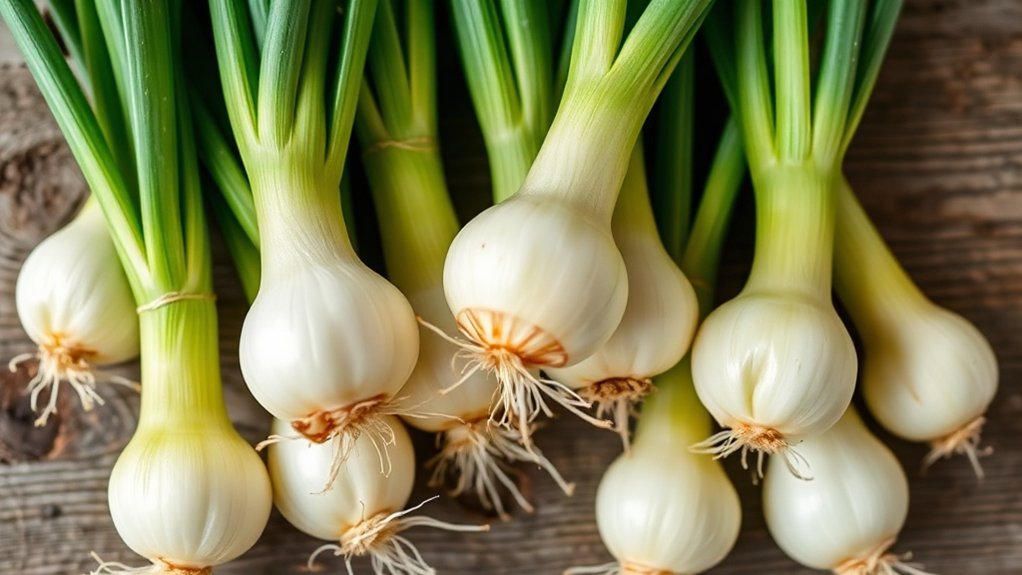
Choosing the right green onion variety can make growing them easier and more productive. When you handle variety selection carefully, you’ll match your harvest goals with the plants you grow.
Some types form slender, mild stalks that suit salads and quick garnishes, while others offer stronger flavor profiles for soups and stir-fries. If you want fast results, pick bunching onions, since they don’t need to form large bulbs before you harvest the greens.
For a longer harvest window, choose varieties known for steady regrowth after cutting. You can also mix a few types to compare texture, taste, and growth habit.
Check seed packets or plant labels for days to maturity, mature size, and notes on flavor profiles so you know what to expect. By choosing a variety that fits your cooking style and timeline, you’ll set yourself up for healthier plants and better yields right from the start.
Choose a Sunny Growing Spot
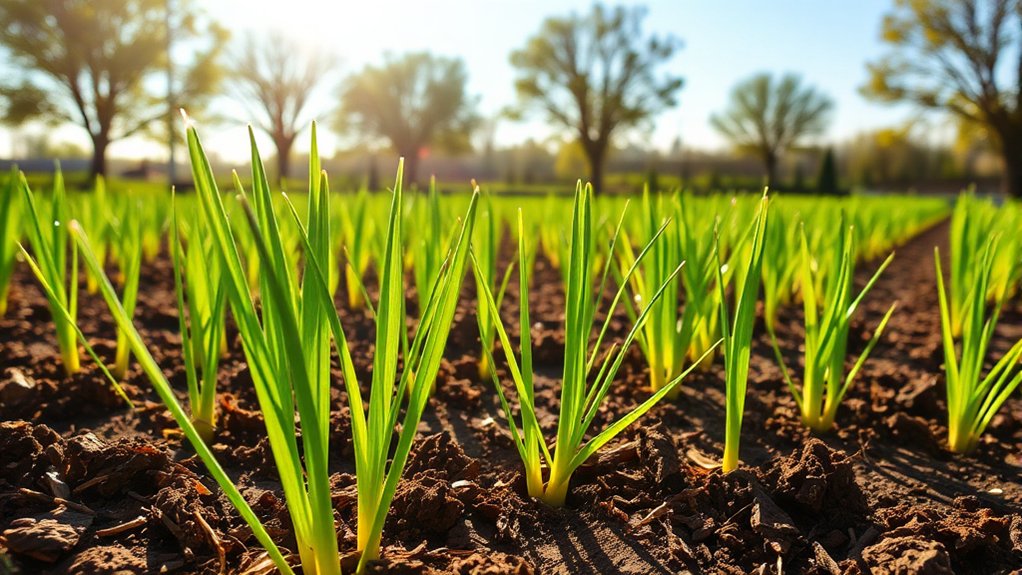
Green onions grow best when you give them plenty of sun, so pick a spot that gets at least 6 hours of direct light each day. Watch how sunlight moves across your yard, patio, or balcony before you choose the planting location. A bright, open area helps the stalks stay sturdy and encourages fast, even growth.
If nearby trees, fences, or buildings cast shade for part of the day, move to a sunnier spot. You can also use containers, which let you adjust sun exposure as seasons change. Keep the area away from places that stay dark for long periods, since green onions won’t perform as well there.
The best site is one where you can easily check on your plants, water them, and harvest them without hassle. Good light makes every other step easier, so don’t rush this choice.
Prepare Soil for Healthy Growth

Start with loose, well-draining soil so your green onions can grow strong without sitting in water. You’ll get the best results by working in compost or other organic matter to boost fertility and improve texture.
Aim for a soil pH between 6.0 and 7.0, since that range helps roots absorb nutrients efficiently. If your soil feels heavy, add sand or fine bark for drainage improvement.
Mix amendments into the top 6 to 8 inches, then level the bed for even moisture.
| Soil Task | Why It Helps |
|---|---|
| Add compost | Builds organic matter |
| Check soil pH | Keeps growth in range |
| Loosen compacted soil | Improves root spread |
| Balance nutrients | Supports steady leaf growth |
A light layer of compost also helps maintain nutrient balance without overfeeding. Test your soil before planting, then adjust it carefully.
Clean, well-prepared soil gives your green onions a healthier start and a milder, more consistent flavor.
Plant Green Onions From Seeds or Sets
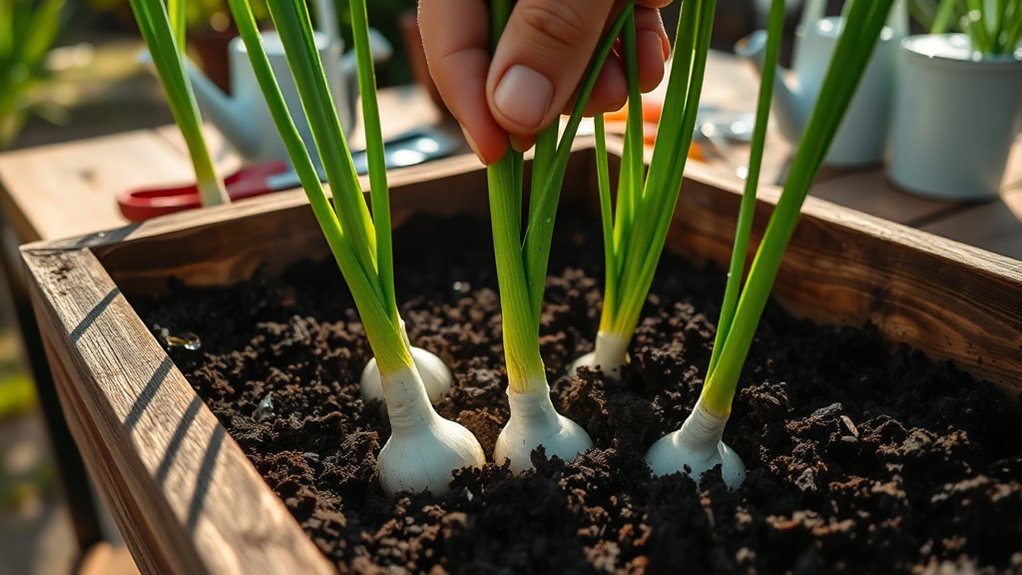
With your soil ready, you can plant green onions from seeds or sets. If you choose seeds, sow them directly in shallow rows and keep the planting depth about 1/4 inch. Space them lightly so each sprout has room to develop.
Seed germination usually takes one to two weeks, so be patient and keep the bed labeled. If you want faster results, use sets or young transplants. Push each set into the soil so the white base sits just below the surface, then firm the soil around it.
Leave about 2 inches between plants and 6 inches between rows for easy harvesting. You can also plant in containers if space is limited. Choose healthy, firm sets and discard any soft or damaged ones.
After planting, check that the tops stand upright and the roots make good contact with the soil.
Water Green Onions Properly
You should water green onions regularly so the soil stays evenly moist, but not soggy. It’s important to check the water level often and add just enough to keep the roots covered without drowning them.
Keeping a steady watering schedule really helps your onions grow strong and healthy. That way, they get just what they need to thrive without any risk of overwatering.
Watering Frequency
Keep the soil evenly moist, but don’t let it stay soggy, because green onions do best with steady water rather than wet roots. Check soil moisture with your finger every few days, and water whenever the top inch feels dry.
In warm, sunny weather, you’ll usually need to water more often; in cool or cloudy conditions, you can stretch the time between waterings. Use gentle watering techniques so you don’t wash away soil or expose roots.
Water at the base of the plants, and give enough so the moisture reaches the root zone. If you grow them in containers, you may need to water a bit more often because pots dry out faster.
Consistent watering helps the greens stay crisp, tender, and productive.
Water Level Tips
Aim for a moisture level that stays evenly damp, not saturated, so the roots can breathe and grow well. You should keep the water just high enough to cover the roots, but not the white bulb base, when you regrow green onions in a jar or shallow container.
Check the level daily and top it off as needed, since evaporation can lower it quickly. Good drainage importance matters if you plant them in soil, because soggy roots rot fast. Add water slowly and stop once the mix feels moist, not muddy.
If your setup dries out too quickly, improve moisture retention with a deeper medium or a tray beneath the pot. Clean water and steady levels help you grow crisp, healthy green tops.
Feed Green Onions for Steady Growth
For steady, healthy growth, feed green onions lightly with a balanced liquid fertilizer every 2 to 4 weeks, especially if they’re growing in pots or depleted soil. Choose fertilizer types that support a clean nutrient balance, so you boost leaves without overdoing nitrogen.
If you prefer organic options, diluted fish emulsion or compost tea can work well and keep your plants productive. Skip heavy doses; green onions need gentle growth boosters, not strong feeds that can burn roots or leave soft, weak tops.
- Mix fertilizer at half strength before applying.
- Water the soil first, then feed.
- Repeat only when new green growth slows.
You can also top-dress with a little worm castings if your mix looks tired. Keep the schedule simple, and you’ll help your onions stay bright, crisp, and steadily productive throughout the season.
Thin and Space Seedlings
Once your green onion seedlings sprout, make sure to give each one enough room to grow by spacing them apart. When they’re a few inches tall, go ahead and thin them out so the strongest plants can keep developing. Just pull the extra seedlings gently, and don’t forget to water the ones you leave right after—that helps them recover nicely.
Seedling Spacing Basics
When your green onion seedlings start crowding each other, thin them early so the strongest plants have room to grow. Keep each seedling at a steady seedling depth so roots anchor well and shoots rise evenly. If you’re using companion planting, leave enough space for nearby herbs or carrots to share light and nutrients without squeezing your onions.
- Aim for a tidy row with balanced gaps.
- Remove weak seedlings gently to reduce root disturbance.
- Recheck spacing after rain, since soil can settle and crowd plants again.
You want airflow, easy watering, and room for each bulb to swell. Good spacing helps you grow straighter, healthier onions with less competition below the soil.
When To Thin
Thin your green onions as soon as the seedlings are a few inches tall and you can see which ones are strongest. At this stage, crowding starts to slow growth, so act before the plants tangle roots or compete too hard for light.
Use simple thinning techniques: snip weaker seedlings at the soil line or gently pull extras if the soil is loose. Aim for ideal spacing so each remaining onion has room to develop a firm stem and healthy leaves.
If you wait too long, the seedlings can become difficult to separate cleanly. Check the row often, and thin in small passes instead of all at once if needed. This keeps your bed balanced and helps the strongest plants grow steadily.
Thinning Care Tips
After thinning, keep the soil lightly moist so the remaining seedlings recover quickly and settle into their space. You’ll help them bounce back faster by avoiding deep soaking, which can compact roots. Use gentle thinning techniques: snip extras at soil level instead of pulling, so you don’t disturb nearby plants.
Check your row for ideal spacing, leaving about 1 to 2 inches between green onions for steady bulb and stalk growth.
- Water lightly after thinning.
- Mulch thinly to hold moisture.
- Watch for crowded spots and remove stragglers.
Give seedlings bright light and good airflow, and feed them with a diluted organic fertilizer if growth stalls. With steady care, you’ll keep your patch uniform, healthy, and ready for bigger harvests.
Protect Green Onions From Pests
To keep green onions healthy, you should watch for pests like onion maggots, aphids, and thrips before they spread. Check the leaves and soil often, especially after rain or warm spells, so you can catch damage early.
Watch green onions closely for pests like onion maggots, aphids, and thrips, especially after rain or warm spells.
If you spot pests, use organic pest control like neem oil, insecticidal soap, or a strong water spray to knock them back without harsh chemicals. You can also reduce problems with companion planting. Try planting carrots, lettuce, or marigolds nearby to confuse pests and support a balanced garden.
Keep weeds down, since they give insects a place to hide. Rotate your planting spots each season so pests don’t build up in the same bed. Healthy soil and steady watering also help your green onions resist stress, which makes them less appealing to troublemakers.
With regular inspection and quick action, you’ll protect your crop and keep it growing strong.
Harvest Green Onions at the Right Time
You can start harvesting green onions once the stems look thick enough and have reached a good, usable size. Just cut them a little above the base—this way, you leave enough room for regrowth. By trimming at the right height, you’ll be able to keep picking fresh onions again and again. It’s a simple way to enjoy your green onions over a longer period!
Harvesting Size Signs
Green onions are ready to harvest when the stems reach about 6 to 8 inches tall and look thick enough to use. You’ll notice the leaves stand upright, stay bright green, and feel firm rather than flimsy. Check the clump regularly so you can catch ideal timing before the tops become tough.
Good harvesting techniques help you judge size without guessing.
- Look for slender bulbs that’ve started to swell slightly.
- Choose stems with even color and no yellowing.
- Harvest when several plants match the same size.
If your onions meet these signs, they’re likely tender and flavorful. You don’t need to wait for huge stalks; size and freshness matter more than age. Pick what’s ready, and let the smaller ones keep growing.
Best Cutting Height
Cut green onions when the leaves reach about 6 to 8 inches tall, and snip just above the white base so the plant can keep growing. That height gives you the best length for tender flavor without wasting usable leaves. Use clean scissors or a sharp knife, and make each cut straight and neat.
| Height | What to look for | Result |
|---|---|---|
| 4-5 in | Too short | Mild yield |
| 6-8 in | Ideal target | Best flavor |
| 9+ in | Older leaves | Stronger texture |
These cutting techniques help you harvest evenly and avoid bruising the stalks. If you wait too long, the tops can get tougher and less pleasant. Check your patch often, and cut only what you need for fresh meals.
Regrowth After Trimming
After you trim green onions at the right height, they’ll usually send up fresh growth from the base and be ready for another harvest soon. You can speed recovery by keeping the soil evenly moist and placing the pot or bed where it gets strong light. Use clean scissors for smooth cuts, and leave enough stem so the plant can keep photosynthesizing.
Follow these regrowth tips to help each plant rebound quickly:
- Water lightly after trimming techniques to reduce stress.
- Feed sparingly with a balanced fertilizer every few weeks.
- Harvest only the outer leaves first so the center keeps growing.
Watch for firm, bright green shoots, then trim again when they reach your preferred length. With steady care, you’ll get repeated harvests without weakening the plant.
Extend Your Green Onion Harvest
To keep your green onion harvest going, snip only the outer stalks and leave the center growth intact so the plant keeps producing. Harvest in the morning, when stems stay crisp and hydrated, and cut just above the white base to encourage quick regrowth.
Water consistently, mulch lightly, and feed with a balanced fertilizer every few weeks so new shoots stay vigorous. You can also stretch production by planting in waves; start a fresh row every two to three weeks for a steady supply.
Choose a sunny bed or container, and use companion planting with carrots or lettuce to save space and reduce pests. After one bed slows down, use seasonal rotation to move onions to a different spot next cycle, which helps limit disease and soil depletion.
Watch for thick, crowded clumps, divide them, and replant the healthiest sections. With these habits, you’ll keep harvesting tender green onions for far longer than one crop.
Frequently Asked Questions
Can Green Onions Grow Indoors Year-Round?
Yes, you can grow green onions indoors all year long with ease. You’ll need bright light, a sunny windowsill or grow light, and regular watering for healthy indoor gardening.
Use pots with drainage and fresh soil, or regrow them in water for quick harvests. With steady care, you can enjoy year-round cultivation and snip fresh green tops whenever you want.
They’ll keep producing if you trim them often.
How Long Do Green Onion Seeds Take to Sprout?
Green onion seeds usually take 7 to 14 days to sprout, though you might see them in as little as 5 days under ideal conditions. You’ll get faster seed germination if you keep the soil warm, moist, and well-drained.
Don’t let it dry out, and give the seeds plenty of light once they emerge. With steady care, you’ll help them sprout evenly and grow strong.
Are Green Onions Safe for Pets to Eat?
No, you shouldn’t let your pet eat green onions. They’re unsafe for dogs and cats because green onion toxicity can damage red blood cells and hurt pet health.
If your pet nibbles any, you’ll want to contact your vet right away. Better safe than sorry, so keep green onions out of reach and choose pet-friendly treats instead.
A little caution now can prevent a big problem later.
Can I Regrow Green Onions From Kitchen Scraps?
Yes, you can regrow green onions from kitchen scraps easily. You’ll just need the white root ends, a glass of water, and a sunny windowsill.
Place the roots in water, change it every few days, and watch new green tops grow. These regrowing techniques work best when you trim the leaves often and keep the roots moist.
Soon, you’ll have fresh onions ready for cooking from scraps you’d otherwise toss.
What Containers Work Best for Growing Green Onions?
Shallow pots work best for green onions. You’ll do well with container types like window boxes, nursery trays, or small buckets, as long as they have drainage needs covered with holes below.
Green onions only need about 6 inches of depth, and 80% of growers say easy drainage prevents rot. You can even use recycled food containers if you add holes.
Keep soil loose, and you’ll harvest crisp stalks fast.
Conclusion
Growing green onions is simple, but it can feel a little like tending a small green promise. If you give them sun, water, and room to thrive, they’ll reward you again and again.
Like a little garden of your own Garden of Eden, each harvest reminds you that patience and care pay off. Keep planting, keep trimming, and keep enjoying fresh flavor from your yard, windowsill, or garden bed season after season.
With these steps, growing green onions becomes a rewarding routine that brings fresh taste right to your fingertips.