How Do Robins Eat and What Do They Eat
If you’ve ever tried attracting robins to your garden or simply wanted to understand their behavior, you’re not alone. Many people struggle with knowing what robins eat and how they find their food. Understanding their feeding habits can make a big difference in creating a bird-friendly space that truly supports them.
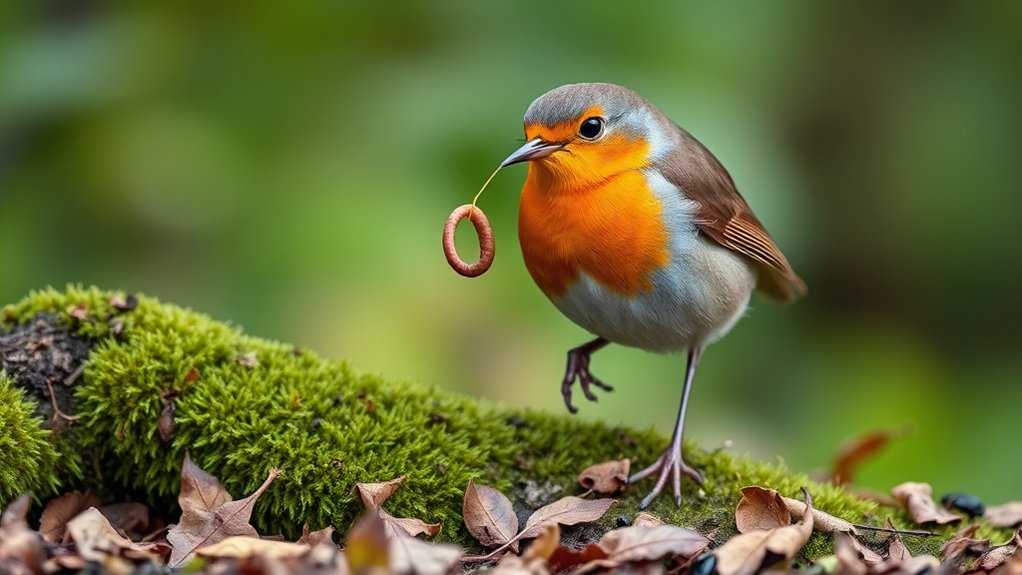
You’ll notice robins use their small, sharp beaks to catch insects, worms, and berries with quick, precise pecks. They mostly forage on the ground, hopping and digging in moist soil for protein-rich worms in spring and summer.
As seasons change, they shift to eating more berries and fruits for energy. This varied diet supports their health, energy, and survival during nesting and migration.
Keep exploring to find out what makes their feeding habits truly unique.
Key Takeaways
- Robins use their small beaks to catch insects, worms, and berries, and to gather nesting materials.
- They forage mainly on the ground, hopping and pecking quickly to capture prey like earthworms and insects.
- Their diet shifts seasonally. Insects dominate in spring and summer, while berries and fruits increase in fall and winter.
- Fruits provide essential vitamins, antioxidants, and hydration, especially during migration and dry periods.
- Robins feed frequently in small meals, peaking in early morning and late afternoon. They rely mostly on natural food sources.
How Do Robins Use Their Beaks to Catch and Eat Food?
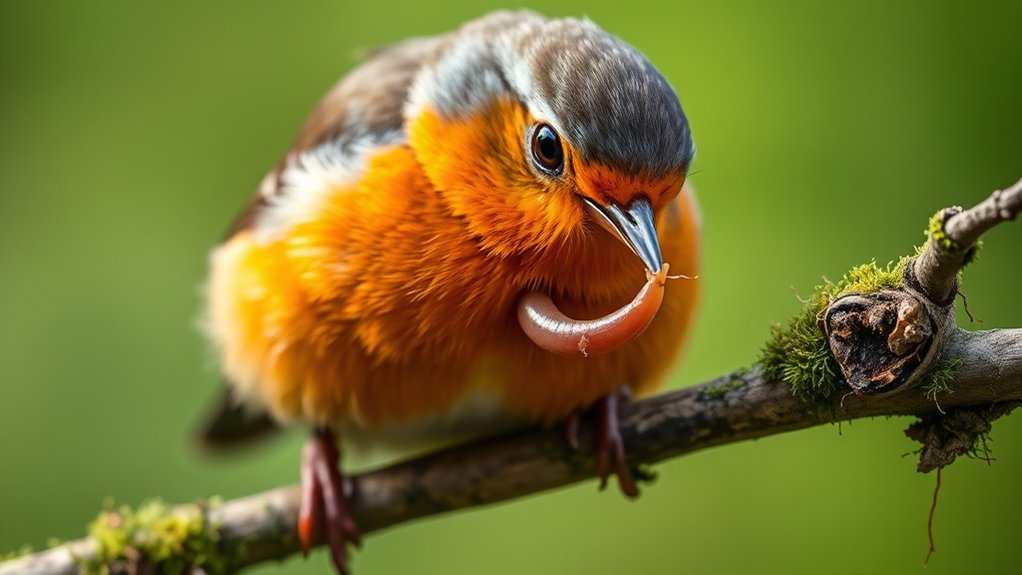
Although robins have small beaks, they use them skillfully to catch and eat a variety of foods. When you watch a robin, you’ll notice how its beak helps it gather insects, worms, and berries efficiently.
This beak isn’t just for feeding; it plays a vital role during nest building, too. You’ll see robins using their beaks to carry soft materials like grass and twigs, carefully arranging them to create a secure home for their eggs.
As you follow robins through their migration patterns, you’ll realize how important their beaks are for survival across different environments. Their beaks adapt to varied diets during migration, allowing them to eat what’s available, from insects to fruits.
How Do Robins Hunt and Catch Food on the Ground?
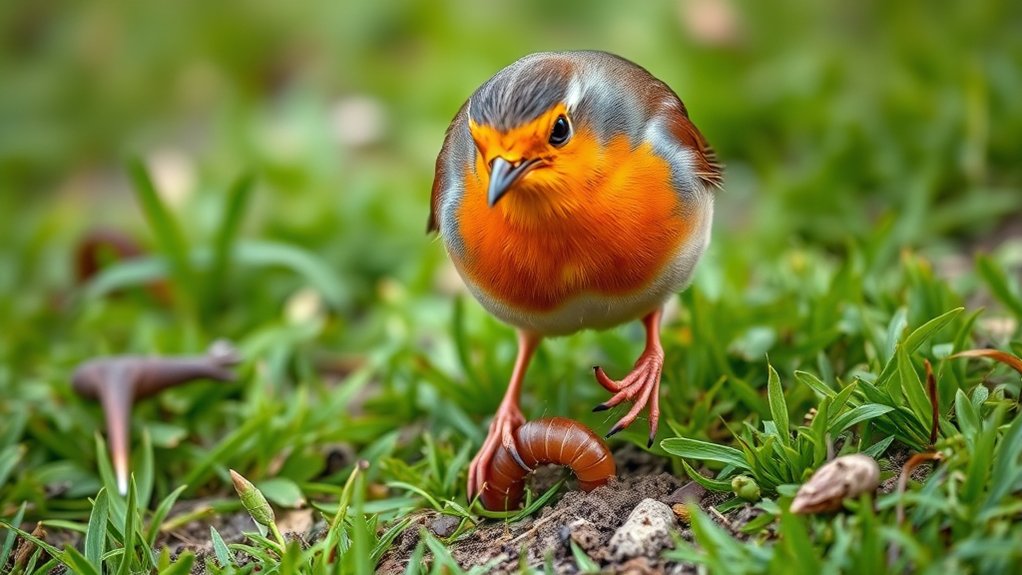
When robins search for food on the ground, they rely on keen eyesight and quick movements to spot and catch their prey. You’ll notice robins hopping around lawns or gardens, pausing to scan for insects, worms, or small invertebrates. Once they spot movement beneath the soil or leaf litter, they swiftly strike with their beaks, pulling their prey from the ground.
This efficient hunting supports their energy needs, especially during nest building when they require extra protein to feed their chicks. During migration patterns, robins adjust their foraging behavior, exploiting different ground food sources depending on the region and season.
You’ll see them adapt to new environments, hunting on the ground in both familiar and unfamiliar areas. Their ability to hunt and catch food on the ground ensures they maintain strength and stamina throughout their migratory journeys and breeding periods.
What Does a Robin’s Diet Include Throughout the Year?
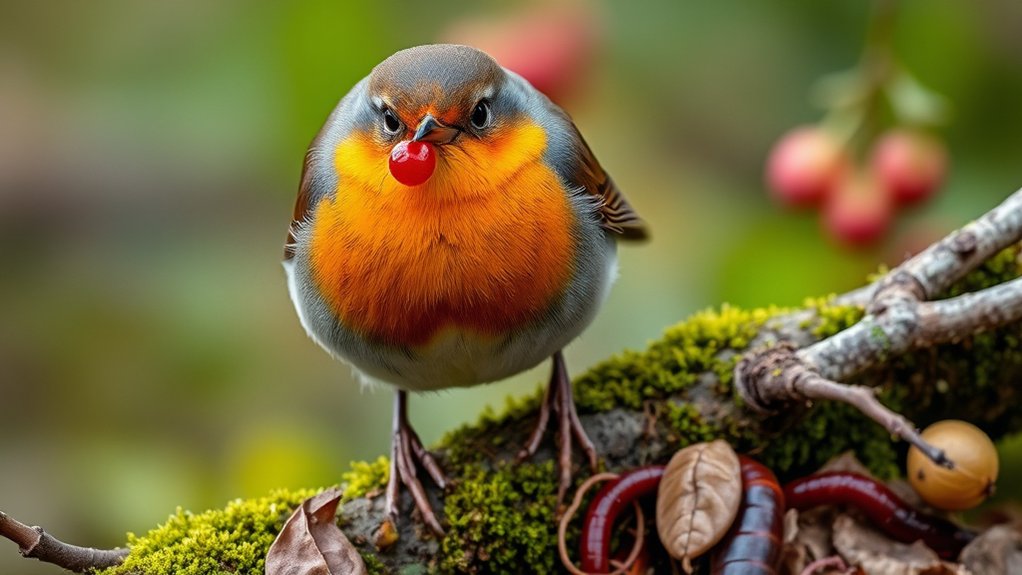
Because robins need to adapt to changing food availability, their diet varies considerably throughout the year. You’ll notice their feeding habits shift with their migration patterns and nesting behavior.
Robins adjust their diets seasonally, aligning feeding habits with migration and nesting cycles.
During spring and summer, robins focus on high-protein foods to fuel nesting and raising chicks. In contrast, fall and winter diets lean more on energy-rich fruits and berries to survive colder months.
Here’s what a robin’s diet includes throughout the year:
- Spring/Summer: Earthworms, insects, and other invertebrates dominate to support nesting and chick development.
- Fall: A mix of insects and a growing intake of berries and fruits as insects become scarce.
- Winter: Mostly berries, fruits, and seeds, since insects are limited and robins rely on stored energy.
How Does Seasonal Change Affect a Robin’s Diet?
Seasonal changes play a major role in shaping a robin’s diet, influencing what food sources are available and how they meet their nutritional needs. In spring, as robins focus on nest building habits, they rely heavily on protein-rich insects and worms to fuel their energy demands. You’ll notice they actively forage for these during warmer months when prey is abundant.
As summer fades, their diet gradually shifts to include more fruits and berries, which become plentiful and provide essential nutrients.
When fall arrives, robins adjust their feeding to prepare for migration patterns or winter survival, depending on their location. Some robins migrate southward, seeking warmer climates with better food availability, while others stay put, relying heavily on available fruits.
Understanding these seasonal shifts helps you appreciate how robins adapt their diets dynamically, balancing their nutritional intake with environmental changes and life cycle stages like nesting and migration.
Why Are Worms and Insects Vital to the Robin’s Diet?
You’ll see that worms and insects pack a powerful nutritional punch for robins. They offer essential proteins that robins need every day. These little creatures fuel their energy, helping them stay active and healthy throughout the day. So, when you think about it, it makes perfect sense why robins rely on them so much in their diet.
Nutritional Benefits of Worms
Why do worms and insects play such a crucial role in a robin’s diet? Worms provide essential nutrients that support robins’ energy needs and overall health. This is especially true during breeding seasons when their habitat preferences and mating behaviors demand extra stamina. When you watch a robin eat worms, you’re seeing more than just feeding; you’re witnessing a key survival strategy.
Worms offer robins:
- Rich sources of protein and minerals to fuel active mating behaviors
- Indispensable nutrients that adapt to robins’ habitat preferences and seasonal changes
- Easily digestible energy to maintain strength during nesting and raising chicks
Insects as Protein Sources
Alongside worms, insects make up a major part of a robin’s diet, providing a rich supply of protein and nutrients. You’ll notice that robins actively hunt for beetles, caterpillars, and ants, especially during breeding season when their energy needs spike.
These insects are crucial for supporting robins’ nesting habits, as they fuel the female’s egg production and help feed hungry chicks. Without this protein boost, nestlings wouldn’t develop properly.
Plus, the availability of insects influences robins’ song patterns; well-nourished males sing more vigorously to defend territories and attract mates. So, when you watch robins foraging, keep in mind that insects aren’t just random snacks. They’re essential building blocks for survival and reproduction, tightly linked to how these birds thrive and communicate.
Role in Energy Supply
Because robins rely on constant energy to stay active and maintain their body functions, worms and insects play an essential role in their diet. These small creatures provide the quick fuel robins need to thrive, especially given their habitat preferences for areas rich in soil life, like gardens and woodlands.
Their nesting behaviors also demand high energy, as robins expend a lot of effort building nests and feeding chicks. Without worms and insects, robins would struggle to meet these energy demands.
Here’s why they’re indispensable:
- Worms offer an easily digestible source of carbohydrates and proteins.
- Insects supply essential fats that support daily activity.
- Both support the robin’s metabolism during breeding and migration.
You’ll see how these foods sustain robins in their natural routines.
Do Robins Eat Fruits and Berries?
You’ll notice robins often enjoy fruits like apples and cherries, especially when berries are in season. They tend to go for different berries throughout the year—blueberries in summer and holly berries in winter, for example. These fruits give robins important nutrients that help keep them active and healthy.
Common Fruits Consumed
How often do robins snack on fruits and berries? Quite often, especially when insects are scarce. You’ll notice that robins’ nesting habits and migratory patterns influence their fruit consumption.
During migration or nesting seasons, they rely more on these sweet treats for energy and nutrients. Here are some common fruits robins love:
- Berries: Blueberries, blackberries, and raspberries provide quick energy.
- Cherries: When available, robins enjoy the juicy flesh.
- Grapes: Small, ripe grapes are easy for robins to swallow and digest.
Seasonal Berry Preferences
Although robins primarily feed on insects during warmer months, they switch to fruits and berries when these become more abundant in certain seasons. You’ll notice that during fall and winter, robins favor berries like holly, juniper, and elderberry, adapting their diet based on what’s available in their habitat preferences.
This shift helps them survive when insects are scarce. If you observe their migration patterns, robins often travel to areas rich in fruit-bearing shrubs and trees, ensuring a steady food supply.
Nutritional Benefits From Fruits
Because fruits and berries provide essential nutrients, robins rely on them especially when insects are less available. You’ll notice robins frequently munch on these natural treats, benefiting their energy and overall health. Their urban adaptation means they often find fruits in gardens or parks, supplementing their diet year-round.
During nesting, the extra energy from fruits supports both adults and growing chicks.
Here’s why fruits are crucial for robins:
- Supply vitamins and antioxidants that boost immunity
- Offer sugars for quick energy during breeding and migration
- Provide hydration, especially in dry urban environments
How Do Feeding Habits Impact Robin Health and Energy?
When robins consume a balanced diet rich in insects, fruits, and worms, they maintain the energy needed for daily activities like foraging and migration. This energy supports robins’ nesting behavior, ensuring they can build and defend nests effectively.
Their vocal communication also depends on good health, as strong calls help attract mates and warn rivals. Poor feeding habits lead to fatigue, making robins less active and vulnerable to predators.
| Food Type | Energy Provided | Impact on Health |
|---|---|---|
| Insects | High | Boosts muscle strength |
| Fruits | Moderate | Provides essential vitamins |
| Worms | High | Supports digestion |
| Seeds | Low | Limited energy source |
| Berries | Moderate | Enhances immune system |
You’ll see robins thrive when their feeding habits support their energetic lifestyle and social behaviors.
How to Attract Robins With the Right Food in Your Garden
Robins rely on specific foods to fuel their active lives, so offering the right options in your garden can invite these birds to visit regularly. During robins’ migration and especially when they’re nesting, they need energy-rich, accessible food sources. To attract robins effectively, focus on providing natural and nutritious choices.
Try adding these to your garden:
- Mealworms and earthworms: These protein-packed treats mimic what robins naturally hunt.
- Berries and small fruits: Robins love elderberries, mulberries, and currants, which provide essential sugars.
- Soft fruits like chopped apples or pears: These are easy for robins to eat and digest.
How Robin Feeding Habits Differ From Other Backyard Birds
You’ll notice robins have some pretty unique foraging habits compared to other backyard birds. For one, they often hop along the ground, searching for worms. It’s kind of their thing.
Unlike many birds that go for seeds, robins prefer foods like earthworms and berries. So, if you see them pecking around your garden, that’s probably what they’re after.
If you pay attention to when they feed, you’ll start to get a sense of their feeding patterns. That way, you can catch them when they’re most active in your yard.
Unique Foraging Techniques
Although many backyard birds hop and peck at seeds, robins stand out with their distinctive foraging style. You’ll notice robins use their keen eyesight to spot worms and insects just beneath the soil’s surface. Unlike others who rely mostly on seeds, robins actively dig and pull prey from the ground.
Their unique techniques often tie into their mating rituals and nest building behaviors, ensuring they gather enough nourishment swiftly.
Here’s what makes their foraging unique:
They tilt their heads to locate prey underground.
They use a quick, precise peck to capture worms.
They rarely feed while flying, preferring to forage on the ground.
Preferred Food Types
While many backyard birds focus primarily on seeds and berries, robins prefer a diet rich in protein, especially worms and insects. Unlike finches or chickadees that thrive on seeds, robins’ habitat preferences lead them to lawns and gardens where earthworms and insects are abundant.
This protein-heavy diet supports their active nesting behaviors, helping them build strong bodies for raising chicks. You’ll notice robins hunting on moist soil rather than at feeders, which suits their ground-foraging style. Their preference for live prey distinguishes them from other birds that rely on plant-based foods.
Understanding these differences helps you appreciate why robins frequent certain environments and how their feeding habits tie directly to where they nest and thrive in your backyard.
Feeding Frequency Patterns
Because robins rely heavily on protein-rich foods like worms and insects, they feed more frequently throughout the day compared to seed-eating backyard birds. You’ll notice robins hopping around actively, searching for fresh meals to support their energy needs, especially during nest building when they require extra nutrition.
Their feeding patterns also shift with migration patterns, as they prepare for long journeys or recover afterward.
Here’s how robin feeding habits differ from other backyard birds:
- They eat smaller meals but more often to maintain high energy levels.
- Their feeding peaks during early morning and late afternoon, aligning with insect activity.
- Unlike seed eaters, robins rarely rely on feeders, preferring natural food sources.
Understanding these patterns helps you appreciate robins’ unique dietary needs.
What Makes Robins’ Feeding Behavior Unique Among Backyard Birds?
When you watch robins hunt for food, you’ll notice they use a unique combination of keen eyesight and quick movements to spot and capture prey. Unlike many backyard birds that rely primarily on seeds or stationary feeding, robins actively forage on the ground, hopping and darting to catch insects and worms.
Robins combine sharp eyesight and swift movements to actively forage for insects and worms on the ground.
Their feeding behavior ties closely to their robin nesting and migration habits. During breeding season, they increase food intake to support nestlings, often doubling their feeding efforts. This need for energy influences their choice of nutrient-rich prey and frequent foraging trips.
Furthermore, robins’ migration habits mean they adjust their diet seasonally, consuming more berries and fruits when insects are scarce. You’ll find their feeding strategy is a dynamic balance between meeting immediate energy needs and preparing for long migratory flights.
This adaptability in feeding sets robins apart, making their behavior both efficient and distinctive among backyard birds.
Frequently Asked Questions
How Do Robins Feed Their Chicks?
You’ll notice robins feed their chicks by bringing them worms and insects directly to the nest. During nest building, they choose safe spots to protect their young from predators.
As migration patterns shift with seasons, robins time their breeding so the chicks hatch when food is abundant. You’ll see the parents tirelessly hunt nearby, making sure their chicks get enough nutrition to grow strong before migration begins.
What Time of Day Do Robins Usually Eat?
You’ll find robins eating mostly at dawn and dusk, when the world feels painted in soft, golden light. These times suit their nesting habits perfectly, allowing them to gather food efficiently for their chicks.
Robins’ migration patterns also influence their eating schedule, as they fuel up during early mornings before long flights. So, if you catch a robin pecking just as the sun rises or sets, you’re witnessing a timeless rhythm shaped by nature.
Do Robins Store Food for Later?
No, robins don’t store food for later. Instead, you’ll notice they focus on eating fresh meals throughout the day.
Their nesting habits demand constant energy, so they’re busy foraging nearby. Plus, robins’ territorial behavior means they defend their feeding grounds actively, which discourages hoarding food.
You’ll see them dart around, catching worms or insects on the spot rather than saving a stash for another time.
How Do Robins Drink Water?
When robins drink water, you’d think they’re sipping from nature’s finest crystal fountains, so gentle and precise they barely make a ripple. They dip their beaks quickly into shallow water, then tilt their heads back to swallow.
Amid their bird song and busy nesting habits, you’ll often see them pause by streams or puddles, invigorating themselves with delicate sips that keep their energy up for caring for their young.
Can Robins Eat Human Food Safely?
You shouldn’t feed robins human food regularly because it can harm them. While robins mainly eat insects and berries, some human foods lack the nutrients they need.
Occasionally, small amounts of unsalted bread or fruit won’t hurt, but avoid processed or sugary items. To keep robins healthy, it’s best to let them find natural insects and berries. These provide the essential diet robins rely on for energy and growth.
Conclusion
Now that you know how robins delicately wield their beaks like tiny tools and savor nature’s hidden treasures, you can appreciate their daily dance of survival. Watching them hunt for earth’s secret threads and seasonal delights reveals a graceful rhythm, essential for their spirited song.
By offering the right garden treats, you invite these feathered artists to paint your yard with life and energy. This turns your space into a gentle stage for their timeless performance, showing just how robins eat and what they eat in the most enchanting way.