What to Feed Birds: Best 3 Foods for Feathered Friends
If you’ve ever tried to attract birds to your backyard, you know it’s not always easy to find the right food that keeps them coming back. You’re not alone—many people struggle to choose the best options that nourish their feathered friends while attracting a variety of species.
The good news is, with the right foods, you can create a welcoming environment that supports birds’ health and happiness.
To attract and nourish backyard birds, offer black oil sunflower seeds, suet cakes, and millet or mealworms. Black oil sunflower seeds appeal to many species and provide essential fats and protein.
Suet cakes supply high-energy fats, especially important in winter.
Millet and mealworms offer crucial nutrients for ground feeders and insectivores, supporting feather health and growth.
Using these foods together creates a balanced diet that brings diverse birds to your yard. You’ll find even more helpful tips ahead.
Key Takeaways
- Nyjer seeds attract small finches and are ideal in colder months for energy and warmth.
- Black oil sunflower seeds appeal to many birds, offering essential fats, protein, and easy-to-crack shells.
- Suet cakes provide high-energy fats crucial for bird survival during winter.
- Millet is perfect for ground-feeders like sparrows and doves, especially in spring and summer.
- Combining seeds, suet, and mealworms ensures a balanced diet that attracts diverse bird species year-round.
Top 3 Bird Foods to Attract and Nourish Backyard Birds
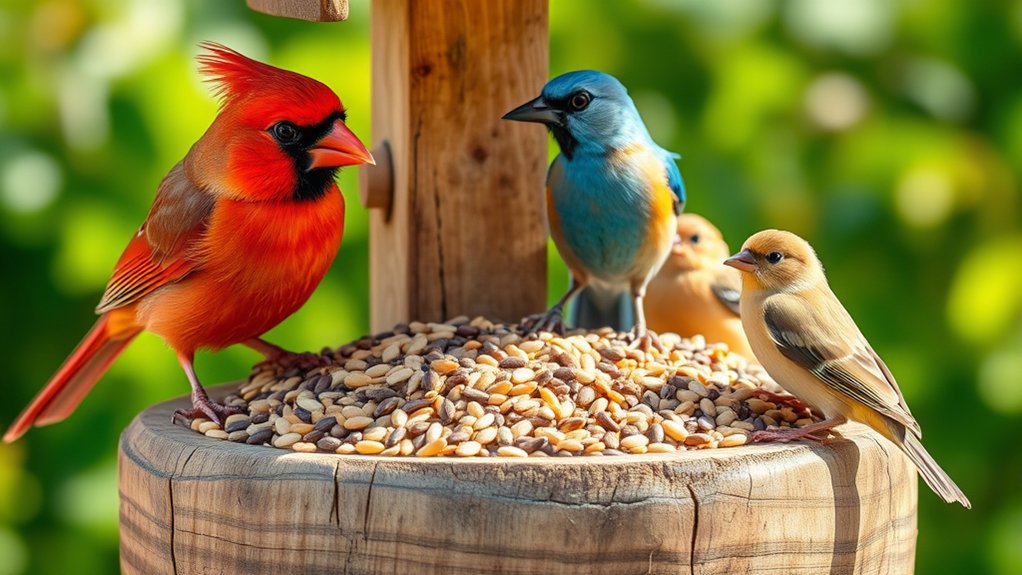
When you want to attract a variety of backyard birds, choosing the right foods makes all the difference. Start with nyjer seeds, which small finches love, especially during colder months when their energy needs spike.
Next, try offering suet cakes. These provide essential fats that help birds stay warm in winter, aligning perfectly with seasonal food preferences.
Finally, millet is a great choice for ground-feeding birds like sparrows and doves, especially in spring and summer when they’re most active.
Why Black Oil Sunflower Seeds Are a Favorite Bird Food
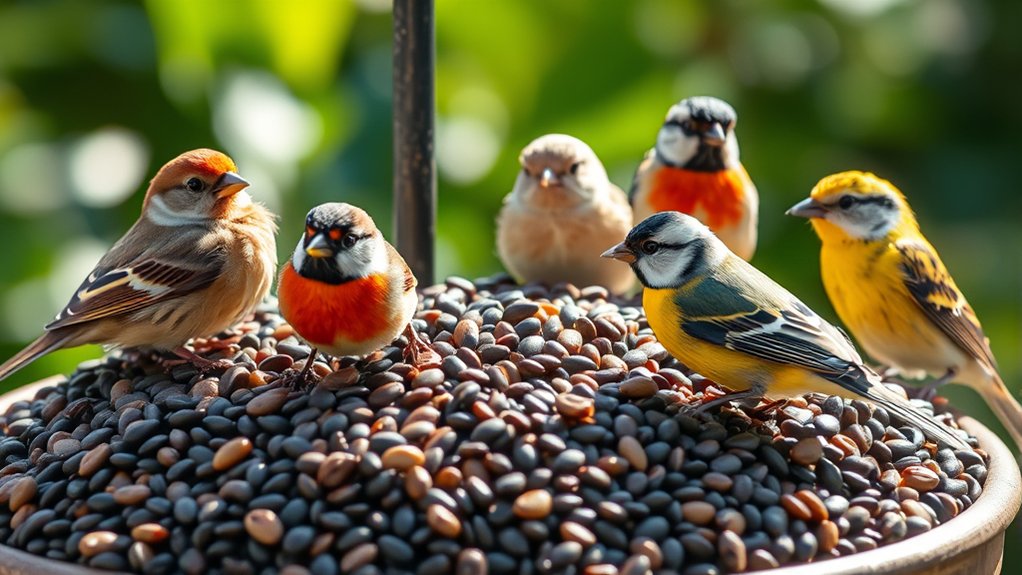
Although many bird foods attract different species, black oil sunflower seeds stand out for their wide appeal and high nutritional value. These seeds are a top choice among various seed types because their thin shells make them easy for most birds to crack open.
You’ll find that black oil sunflower seeds meet diverse bird dietary needs, providing essential fats, protein, and vitamins that support energy and feather health.
When you offer these seeds, you’re catering to a broad range of backyard birds, from cardinals to chickadees, because they’re both nutritious and accessible. Unlike larger seeds, their size suits small and medium birds alike.
Plus, their high oil content fuels birds during cold months, aiding survival.
In short, black oil sunflower seeds are a versatile, nutrient-packed option that fits seamlessly into most bird feeding routines. Choosing the right seed types like these helps you support the health and happiness of your feathered visitors.
How Suet and Mealworms Enhance Bird Food Nutrition
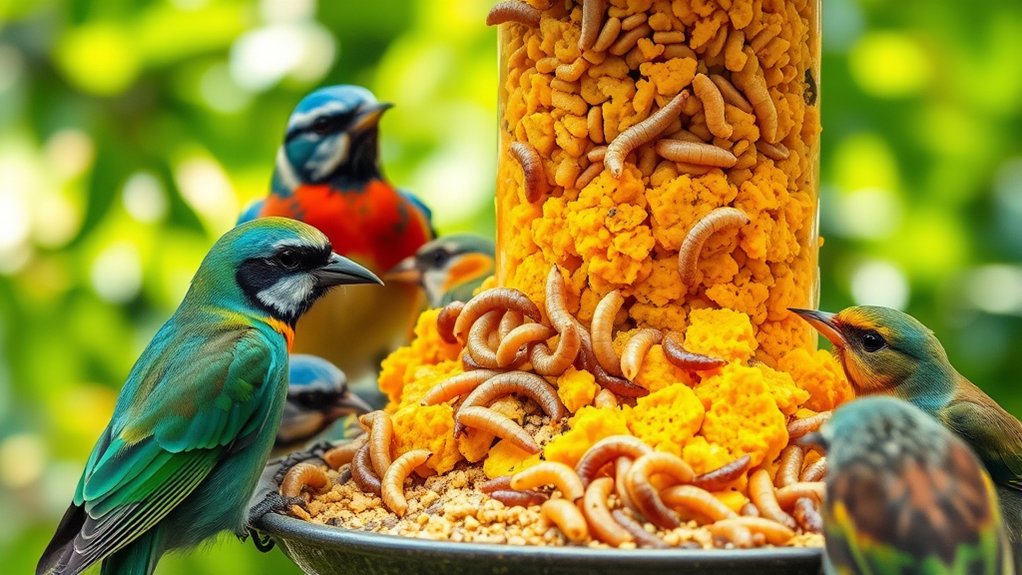
Black oil sunflower seeds provide excellent nutrition, but adding suet and mealworms can boost your bird feeding efforts even more. Suet offers a high-energy fat source that’s especially valuable during colder months when birds need extra calories to maintain body heat.
Mealworms supply easily digestible protein, essential for muscle development and feather growth. Both suet and mealworms improve bird digestion by supplying nutrients in forms that birds can efficiently process and absorb. This improves nutrient absorption, supporting overall health and cruciality.
When you include suet and mealworms alongside seeds, you create a balanced diet that meets diverse nutritional needs. This combination attracts a wider variety of species, from insectivores to seed-eaters, enriching your backyard birdwatching experience.
Frequently Asked Questions
Can I Feed Birds Leftover Bread or Crackers?
You can feed birds leftover bread or crackers occasionally, but bread safety is important since too much can harm them by causing malnutrition or digestive issues. Avoid moldy bread and never give birds large amounts.
Instead of crackers, consider healthier alternatives like unsalted nuts, seeds, or oats. These provide better nutrition and keep birds healthy.
How Often Should I Clean Bird Feeders?
You should clean bird feeders at least once every two weeks to keep them safe and inviting. During wet or cold seasons, increase cleaning frequency to prevent mold and bacteria buildup.
Seasonal cleaning is essential to protect birds from disease. Regular feeder maintenance includes scrubbing with warm, soapy water and rinsing thoroughly.
Staying consistent guarantees your feathered friends enjoy healthy meals and helps you spot any damage early for repairs.
Are There Any Foods Harmful to Birds?
Yes, some foods are harmful to birds and can disrupt their bird diet. You should avoid feeding them chocolate, avocado, caffeine, and alcohol, as these are toxic foods to birds.
Also, salty, sugary, or processed foods can cause health problems. Stick to natural, bird-safe options to keep your feathered friends healthy and happy.
What Time of Day Is Best to Feed Birds?
Feeding birds in the early morning is like opening the gates to a bustling market just as the sun rises. Everyone’s enthusiastic and ready. During bird migration, this timing helps them fuel up for their long journey.
Seasonal feeding also matters. In colder months, birds need more energy, so morning and late afternoon feedings work best. You’ll see your feathered friends thrive when you feed them at these times, keeping their daily rhythms in tune.
Can Feeding Birds Affect Their Natural Foraging Behavior?
Yes, feeding birds can affect their natural foraging behavior if you’re not careful. When you provide easy food sources, birds might rely less on their natural foraging skills, which can alter their feeding habits.
To help them maintain those instincts, offer food sparingly and choose natural options that mimic what they’d find in the wild. This way, you support their health without disrupting their natural routines.
Conclusion
When it comes to feeding your feathered friends, remember, “You are what you eat.” Offering black oil sunflower seeds, suet, and mealworms gives birds the energy and nutrients they need to thrive.
These top three foods attract a variety of species, making your backyard a lively haven. So, stock up and enjoy the vibrant birdlife that comes with providing quality nutrition. Your birds will thank you with their songs and visits when you feed birds the best foods.