How to Increase Vegetable Garden Production: 5 Tips
If you’ve ever felt frustrated watching your vegetable garden produce less than you hoped, you’re not alone. Many people struggle to get the most out of their garden space, especially when it comes to maximizing yield and keeping plants healthy. How to Increase Vegetable Garden Production.
The good news is that with a few simple strategies, you can boost your garden’s productivity and enjoy a bountiful harvest all season long.
Boost your vegetable garden’s production by testing and improving your soil with compost, then planting high-yield crops like bush beans, cherry tomatoes, spinach, and scallions.
Water deeply so roots grow down, and mulch to hold moisture longer.
Feed plants regularly with the right fertilizer or compost tea, but don’t overdo it.
Harvest often at usable size so plants keep producing.
With a few smart tweaks, you’ll get a bigger, longer-lasting harvest and more ways to maximize every square foot.
Key Takeaways
- Test and improve soil with compost and organic matter to boost structure, nutrients, and root growth.
- Choose high-yield, compact vegetables and use fast growers between slower crops to maximize space.
- Water deeply and consistently. Then mulch to retain moisture and support healthy roots.
- Feed crops regularly with the right fertilizer or compost tea, but avoid overfertilizing.
- Harvest frequently at a usable size to stimulate more production and reduce pest problems.
Improve Soil for Bigger Harvests
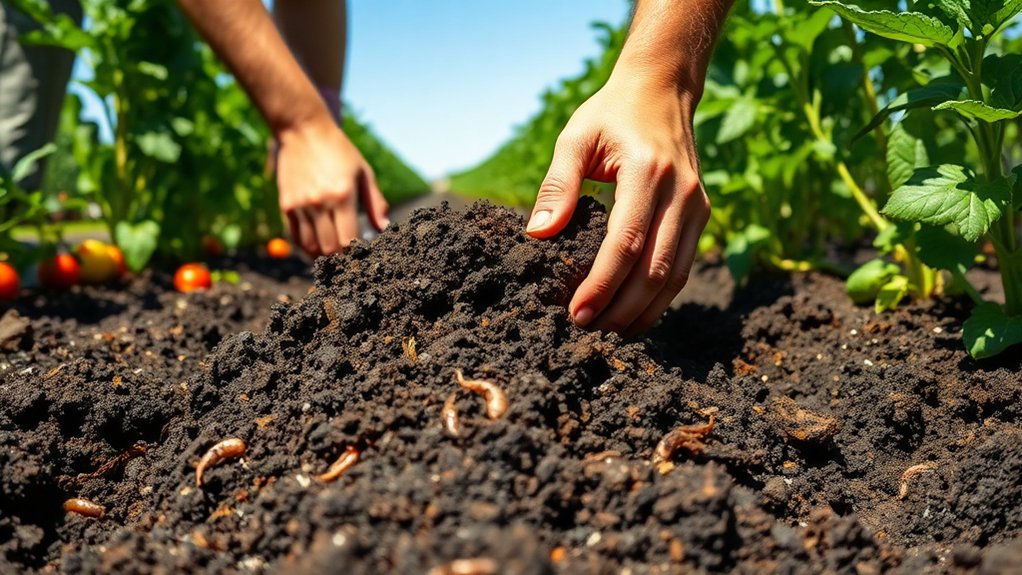
Healthy soil sets the stage for a bigger, more productive garden. You can boost your harvest by testing your soil first, then correcting what it lacks with targeted soil amendments.
Add compost to improve structure, feed microbes, and help roots spread easily. The compost benefits include better moisture retention, steadier nutrient release, and looser soil that drains well after heavy rain.
Compost improves soil structure, feeds microbes, and helps roots spread, while retaining moisture and draining excess water.
Work organic matter into the top layer before planting, and refresh it during the season with a thin mulch. If your soil feels heavy and compacted, loosen it gently so air and water move through it.
If it’s sandy, add more organic material to hold nutrients longer. Avoid overfertilizing, because too much nitrogen can push leafy growth instead of fruit.
When you build rich, balanced soil, your vegetables grow stronger, resist stress, and produce more.
Choose High-Yield Vegetables for Your Space

A smart way to boost harvests is to grow vegetables that give you the most food for the space you have. Choose crops that produce steadily, like bush beans, cherry tomatoes, lettuce, radishes, and zucchini, so you get repeated picking from a small bed.
You can also tuck in fast growers such as spinach and scallions between slower crops to keep every inch working. Focus on varieties bred for compact growth or heavy yield, since they’ll fit better in tight plots and containers.
Plan crop rotation so you don’t exhaust the same soil area with the same family year after year. Use companion planting to pair vegetables that support each other and help you pack more into the garden without crowding.
When you match plant size, growth habit, and harvest rate to your space, you’ll collect more food with less wasted ground and make your garden far more productive.
Water Deeply and Mulch

Watering deeply encourages roots to grow downward, which makes your vegetables more resilient and productive. You should soak the soil slowly so moisture reaches the root zone, then let the top inch dry before watering again. This routine helps you avoid shallow roots and supports steadier harvests.
Good drainage techniques matter too, because soggy beds can stunt growth and invite disease. Add a 2- to 3-inch layer of mulch around plants to improve moisture retention, block weeds, and keep soil temperatures even.
| Action | Benefit |
|---|---|
| Water slowly | Reaches deep roots |
| Check soil first | Prevents waste |
| Add mulch | Holds moisture |
| Improve drainage | Protects roots |
| Reapply mulch | Keeps beds steady |
When you mulch after watering, you trap that valuable moisture longer, so your plants stay less stressed during hot spells.
Feed Plants on a Regular Schedule
Once your beds are holding moisture well, the next step is steady feeding. You should give vegetables a regular boost so they can grow fast and stay productive. Match fertilizer types to the crop: leafy greens usually want more nitrogen, while fruiting plants need a balanced blend or one with extra phosphorus and potassium.
Read the label, then apply only the amount it recommends. A simple feeding schedule keeps you consistent and prevents stress from feast or-famine nutrition. You can use compost tea, fish emulsion, or granular organic fertilizer, depending on how quickly you want results.
Feed heavy feeders more often during active growth, and back off when plants slow down. Water after feeding so nutrients move into the root zone. Keep notes on what you use and when, so you can fine-tune your routine each season. This habit helps your garden use space efficiently and supports strong, healthy plants all year.
Harvest Often to Keep Plants Producing
Keep picking vegetables as soon as they reach usable size, because frequent harvests signal the plant to keep producing. You’ll get more beans, zucchini, cucumbers, and leafy greens when you check beds every day or two.
Cut, twist, or snip fruit cleanly so you don’t damage stems or nearby flowers. If you leave overripe produce on the plant, it slows new growth and can attract pests, so harvest often and inspect leaves at the same time.
Harvest often and cut cleanly to protect stems, encourage new growth, and keep pests from settling in.
That quick walk-through helps with pest management because you spot damage early and remove trouble before it spreads. It also supports crop rotation planning, since you’ll notice which crops finish early and which keep yielding.
Use a basket or bucket to keep harvests neat, and pick in the cool morning for the best flavor and texture. Regular harvests keep plants focused on making more food instead of setting seed.
Frequently Asked Questions
How Do I Protect Vegetables From Pests Without Using Chemicals?
You can protect your vegetables by using natural pest deterrents and organic pest barriers. You should hand-pick bugs, spray plants with neem or साबुन solutions, and cover beds with row covers or fine netting.
You can also plant marigolds, basil, or nasturtiums nearby to confuse pests. Keep your garden clean, remove damaged leaves, and water at the soil line so you don’t attract insects with wet foliage.
Which Companion Plants Improve Vegetable Growth and Flavor?
Basil boosts beans, borage brightens berries, and marigolds make many vegetables grow stronger and taste better. You’ll get the best results with smart herb pairings, like basil with tomatoes, dill with cabbage, and chives with carrots.
Keep plant spacing generous so roots don’t compete and air moves well. Try nasturtiums near squash, and you’ll often see healthier plants, richer flavor, and fewer pest problems, too.
When Is the Best Time to Start Seeds Indoors?
You should start seeds indoors about 6 to 8 weeks before your last expected frost date. For some crops, like peppers and tomatoes, you’ll want even more time.
Use seed starting mixes and provide strong indoor lighting so seedlings don’t stretch. Check each plant’s packet for timing, since different vegetables need different schedules.
If you start too early, plants can outgrow their containers before transplanting.
How Can I Extend My Growing Season With Simple Covers?
You can extend your growing season with simple covers by draping row covers over hoops to trap warmth and block frost. For example, if you plant lettuce in October, a lightweight cover can keep it producing weeks longer.
You’ll protect tender crops, reduce wind stress, and gain season extension without much hassle. Just anchor the edges well, vent on sunny days, and remove covers before hot weather arrives.
What Tools Help Speed up Planting and Maintenance?
You can speed up planting and upkeep with the right planting tools and maintenance equipment. Use a dibber or seed planter to make quick, even holes, then a hand trowel for fast transplanting.
A hoe and stirrup hoe help you weed in less time, while pruners and gloves keep you efficient and protected. You’ll save effort with a watering wand, kneeling pad, and wheelbarrow for hauling supplies around your garden.
Conclusion
With a little care, your garden can burst like a fireworks show at harvest time. Feed the soil, pick the right crops, water deep, mulch well, and keep harvesting so plants stay in the game.
These five tips can turn tired beds into green gold and help you grow more food from every square foot. Stay consistent, and you’ll watch your vegetable garden pay you back season after season. Increasing vegetable garden production has never been easier!