Best Flowers for Full Sun: 7 Top Picks
Struggling to find flowers that thrive in full sun without wilting or fading? You’re not alone. Many gardeners face the challenge of picking plants that can handle intense sunlight and heat while still adding vibrant color to their outdoor spaces.
Luckily, there are plenty of tough, beautiful options that love soaking up those rays.
For the best flowers for full sun, choose tough, colorful bloomers that get 6 to 8 hours of direct light. Lantana, black-eyed Sun sans, coneflowers, zinnias, and salvia all handle heat well and bring long-lasting color.
You can also add blanket flowers and ornamental grasses for extra resilience and texture.
Pick well-draining soil, water deeply, and match plants to your conditions so your sunny garden stays bright and healthy all season long, with even more top picks ahead.
Key Takeaways
- Full-sun flowers need 6-8 hours of direct sunlight, plus well-draining soil and sturdy, heat-tolerant foliage.
- Lantana thrives in intense sun and dry spells, offering bright blooms and strong pest resistance.
- Black-Eyed Susans bloom from midsummer to fall and tolerate heat, drought, and poor soil.
- Coneflowers, zinnias, and salvia add long-lasting color while attracting pollinators in hot, sunny beds.
- Improve planting success with compost, mulch, morning watering, and deep watering for stronger roots.
What to Look for in Full-Sun Flowers
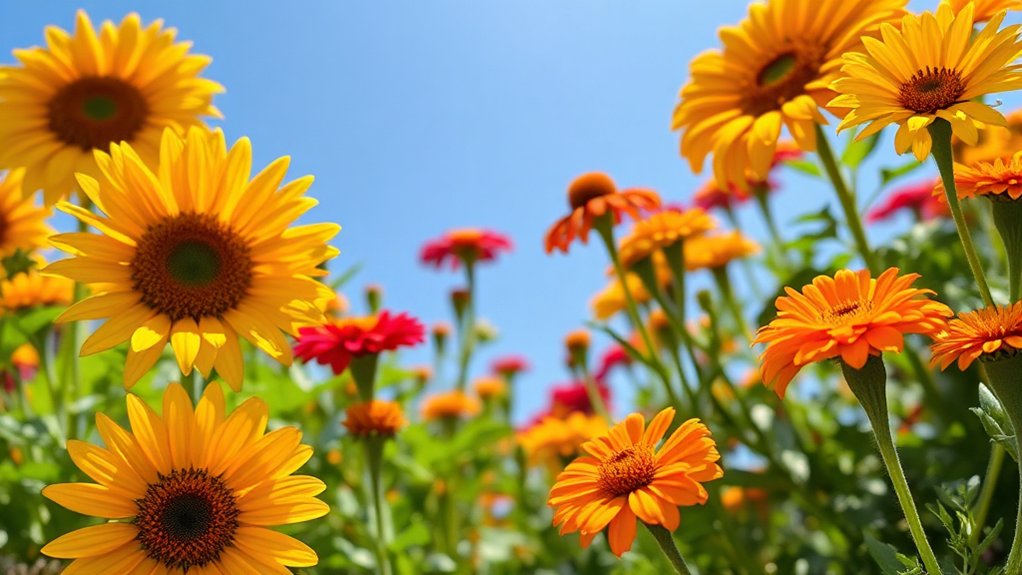
When you’re choosing flowers for full sun, look for plants that can handle at least six to eight hours of direct light each day without wilting or fading. You should check flower characteristics like sturdy stems, thick or slightly waxy leaves, and compact growth, because these traits often help plants resist heat and dry spells.
Prioritize roots that establish quickly and foliage that stays healthy after midday exposure. You’ll also want to read plant tags for seasonal blooms so your garden stays colorful through the warm months, not just for a short burst in spring.
Pick varieties with good disease resistance, since strong sun can stress weak plants faster. If your soil drains well and you water deeply, these flowers usually perform better and need less rescue care.
Lantana: Bright Color for Hot, Sunny Beds
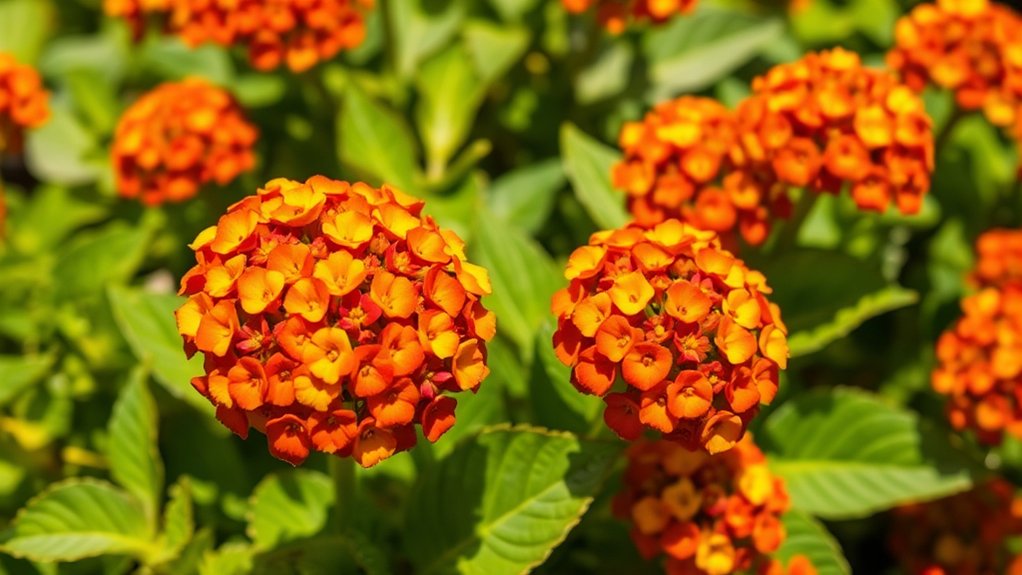
Lantana brings a burst of color to hot, sunny beds with clusters of small blooms that keep showing up through the heat. You can count on this tough plant when your garden gets intense afternoon sun and dry spells. It thrives in well-drained soil, and you’ll get the best results if you water it regularly while it gets established.
After that, lantana handles heat well and keeps blooming with little fuss.
Choose from many lantana varieties, including compact types for borders and spreading forms for filling open spaces. You’ll also appreciate its strong pest resistance, which helps you spend less time dealing with damage and more time enjoying the flowers.
Deadhead spent clusters if you want more blooms, or let the plant grow naturally for a looser, easy-care look. In containers or garden beds, lantana adds steady color and works beautifully when you want reliable summer performance.
Black-Eyed Susans: Classic Full-Sun Flowers
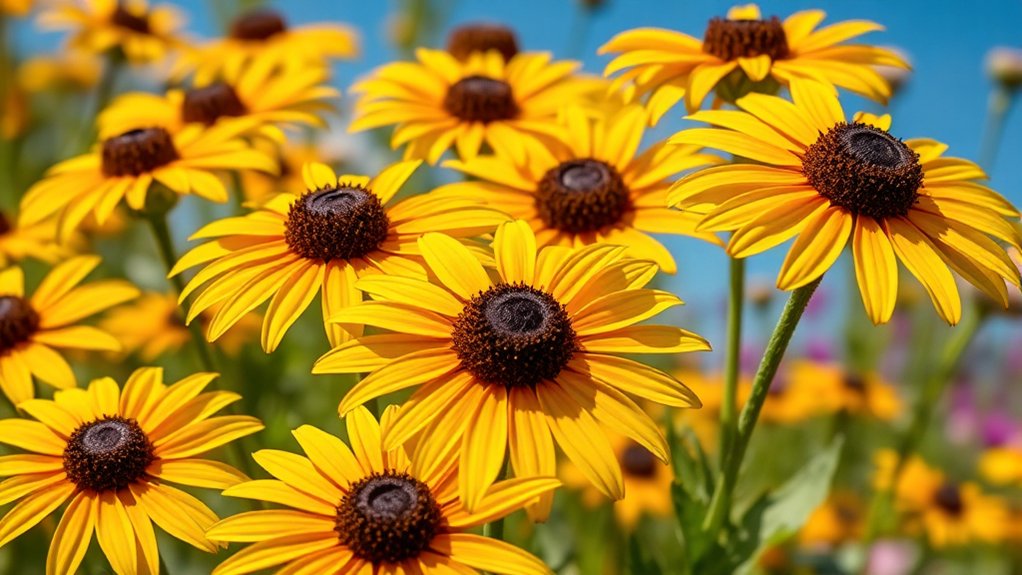
Black-eyed Susans bring cheerful, golden blooms to full-sun gardens from midsummer into fall. You’ll love how these tough perennials brighten borders with bold dark centers and easy charm.
Black-eyed Susans light up full-sun gardens with cheerful golden blooms and charming dark centers.
They handle heat, dry spells, and poor soil, so you can enjoy reliable color without babying them. Their black-eyed benefits include long bloom time, low maintenance, and a natural, meadow-like look that feels welcoming.
- You create instant warmth with every sunny flower.
- You invite a steady sense of joy as blooms return.
- You gain confidence growing something resilient and forgiving.
- You pair them with sturdy garden companions like salvia or ornamental grasses for a balanced display.
Plant them in a spot with at least six hours of sun, and deadhead spent flowers to keep the show going. With their bright faces and dependable nature, black-eyed Susans make your garden feel cheerful, grounded, and beautifully alive.
Coneflowers: Pollinator-Friendly Summer Bloomers
Coneflowers bring bright, daisy-like blooms that’ll draw bees, butterflies, and other pollinators straight to your garden. You’ll love how they keep blooming through the summer heat with minimal fuss.
If you want lasting color in full sun, these tough flowers are a smart pick. They really make your garden come alive all season long!
Pollinator Magnet Blooms
If you want a summer bloomer that keeps working hard in hot, sunny spots, coneflowers are a standout choice. You’ll attract bees, butterflies, and other visitors with blooms that feed your garden and support pollinator habitats.
- You give hungry pollinators easy access to nectar sources.
- You enjoy sturdy stems that hold flowers upright in wind and heat.
- You see long-lasting color that stays inviting for weeks.
- You create a lively scene that feels full of movement and life.
Plant coneflowers in full sun, and you’ll help your yard buzz with activity. Their daisy-like petals and central cones make landing simple, so pollinators return again and again. Keep them deadheaded, and they’ll keep blooming with cheerful energy.
Heat-Loving Garden Color
For bright, dependable color that handles summer heat without fuss, coneflowers are hard to beat. You can plant them in full sun and expect sturdy stems, daisy-like blooms, and nonstop pollinator traffic. Their raised cones feed bees and butterflies, while seed heads later attract finches, extending garden value beyond bloom time.
Choose heat resistant varieties if your summers run long and hot. They’ll keep delivering summer color with minimal watering once established. Deadhead spent flowers to encourage more blooms, or leave a few for wildlife and winter interest.
Coneflowers also mix well with ornamental grasses, black-eyed Susans, and salvia, giving your bed a layered, natural look that stays vibrant through the hottest weeks.
Zinnias: Fast-Growing Flowers for Full Sun
Zinnias thrive in full sun and reward you with bold, cheerful blooms in a surprisingly short time. When you want quick color, these easy annuals deliver. You can choose from many zinnia varieties to match your style, from compact bedding types to tall, cutting-ready plants.
Good zinnia care starts with well-drained soil, plenty of water at planting, and a sunny spot that stays bright all day. You’ll feel instant joy as the first buds open. You can fill bare beds fast with vivid color.
Well-drained soil, plenty of water, and full sun help zinnias burst into vivid color fast.
You’ll attract pollinators that make the garden feel alive. Plus, you can cut stems often and still enjoy more blooms. Deadhead spent flowers to keep new ones coming, and avoid crowded spacing so air moves freely.
With a little attention, zinnias give you a lively, confident display that turns hot, empty spaces into something you’ll be proud to show off.
Salvia: Long-Blooming Spikes for Sunny Spots
Salvia brings elegant, vertical color to full-sun gardens with flower spikes that keep going for weeks. You’ll find many salvia varieties, from compact types for borders to taller selections that light up beds and containers. Their tubular blooms attract hummingbirds and bees, adding lively motion to your space.
Give salvia a sunny site with well-drained soil, and it’ll reward you with strong stems and steady flowering. Good salvia care starts with moderate watering. Once established, it handles heat and brief dry spells well. Deadhead spent spikes to encourage repeat blooms, and trim plants lightly if they get leggy.
Because salvia resists many common garden problems, you can enjoy a low-fuss display all season. Pair it with other heat-loving flowers for a bold, long-lasting show that stays bright even during hot afternoons.
How to Pick the Right Full-Sun Flowers for Your Garden
When you’re picking the right full-sun flowers, it’s important to match each plant’s sunlight needs with how much direct light your garden actually gets each day. Also, take a look at your soil and drainage because flowers that don’t like soggy roots won’t do well in wet areas. And if your garden tends to get hot and dry, you’ll want to go for blooms that can handle the heat and drought.
Sunlight Exposure Needs
When you choose full-sun flowers, start by matching each plant’s light needs to the brightest spots in your garden. “Full sun” usually means at least six hours of direct sunlight a day. Track sunlight duration through the day, not just at noon, because trees, fences, and seasonal variations can change exposure fast.
You’ll get better blooms when you place each flower where it can truly thrive.
- Watch morning and afternoon light.
- Notice shifting shade from summer to fall.
- Choose spots that stay bright on most days.
- Recheck exposure after nearby plants grow.
If a bed loses light early, move sun-loving flowers to a better location. Careful matching helps you avoid disappointment and enjoy stronger color, fuller growth, and more reliable flowering.
Soil And Drainage
After you’ve matched flowers to full sun, focus on soil that drains well, because even sun-loving plants can struggle in soggy ground. Check your soil composition before you plant. Sandy or loamy soil usually works best, while heavy clay can hold too much water around roots.
You can improve poor beds by mixing in compost to loosen texture and help water move through. If your site stays damp, add drainage solutions such as raised beds, mounded rows, or gravel beneath planting areas. Also, avoid packing soil too tightly when you plant, since compacted ground slows runoff.
Choose flowers that fit your existing soil instead of fighting it, and you’ll give them a stronger start and healthier roots from day one.
Heat And Drought Tolerance
Even in full sun, not every flower handles heat and dry spells the same way. So look for varieties that can take both without wilting or slowing down. You’ll save time, water, and frustration when you choose blooms with strong heat resistance and smart drought strategies.
Check labels for tough performers, then match them to your space:
- Coneflowers for bright, lasting color
- Blanket flowers that shrug off scorching afternoons
- Lantana for fearless, nonstop blooms
- Zinnias that keep cheering through dry stretches
Give new plants deep watering early, then let roots search lower for moisture. Mulch helps lock in cool soil, and morning watering reduces stress.
When you pick resilient flowers, your garden stays vivid, even when summer feels relentless.
Frequently Asked Questions
Which Full-Sun Flowers Bloom Longest in Containers?
You’ll get the longest bloom in containers from lantana, geraniums, calibrachoa, verbena, and petunias. These full-sun favorites handle container gardening well and keep blooming with regular deadheading and feeding.
Choose compact varieties, water deeply, and let soil dry slightly between drinks to encourage steady bloom cycles. If you want nonstop color, mix a few types so one picks up when another slows.
Can Full-Sun Flowers Survive Drought Without Daily Watering?
Yes, you can grow many full-sun flowers without daily watering if you choose tough, established varieties. You’ll get better drought resilience by mulching, watering deeply, and spacing plants properly. These habits help roots grow down and reduce stress, supporting water conservation in your garden.
Still, newly planted flowers need more attention at first. Once they’re established, many sun lovers can handle dry spells and still bloom well.
Do Full-Sun Flowers Attract Butterflies and Bees?
Yes, you’ll often attract butterflies and bees with full-sun flowers. You can choose pollinator friendly varieties like coneflowers, zinnias, and salvia to keep your garden buzzing.
Plant in clusters, add native blooms, and avoid pesticides for better results. These garden design tips help you create a bright, lively space that supports pollinators all season.
With the right mix, you’ll enjoy more color, movement, and visits from helpful insects.
Which Full-Sun Flowers Are Safe for Pets?
You can choose pet friendly options like sunflowers, snapdragons, zinnias, and marigolds, but always check flower toxicity before planting. You’ll want to avoid lilies, daffodils, foxglove, and oleander, since they’re dangerous if pets chew them.
If you’re unsure, you can verify each plant with your vet or a trusted poison-control source. That way, you’ll keep your sunny garden bright, safe, and enjoyable for curious cats and dogs alike.
When Should I Plant Full-Sun Flowers for Best Results?
You should plant full-sun flowers after your last frost, when soil warms and days lengthen. For best results, watch seasonal timing, check local weather, and start seeds or set transplants at the right stage.
You can sow, space, and water with care; you can mulch, monitor, and feed as needed. These planting tips help roots establish fast, reduce stress, and boost blooms all season.
Conclusion
When you plant the right full-sun flowers, your garden can glow like a painted sunrise. Lantana, black-eyed Susans, coneflowers, zinnias, and salvia bring waves of color, motion, and life to even the hottest beds.
Choose blooms that match your soil, space, and watering routine, and you’ll create a bright, buzzing retreat that feels alive all season long. With a little planning, you can turn harsh sunlight into your garden’s best feature.
By selecting the best flowers for full sun, you’ll ensure your garden thrives and shines beautifully throughout the season.