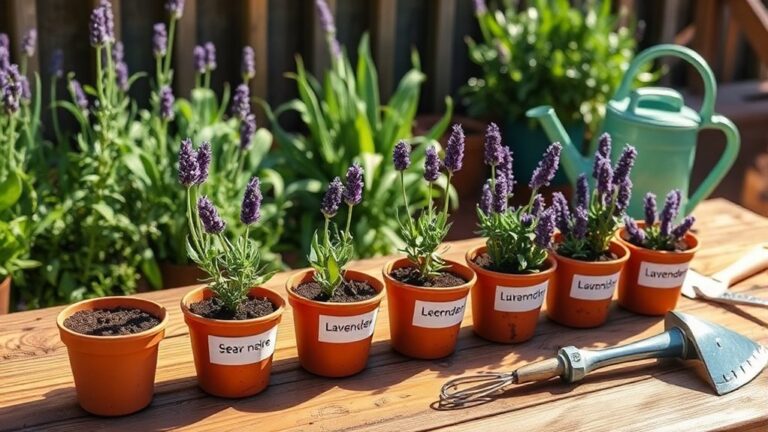
Garden Seating Area Ideas for Designing Yours
Creating a cozy garden seating area ideas that feels perfect can be tricky. You’re not alone if you’ve struggled to find the right spot or the best pieces to bring your outdoor vision to life. Many people want a space that’s both beautiful and functional but don’t know where to start.
Start by choosing a spot with good shade, pleasant views, and less wind or noise, then measure the area so chairs, tables, and walkways fit comfortably.
Pick seating that suits your style, from rustic benches to sleek modular pieces, and soften it with cushions, rugs, and shade.
Add privacy with plants or screens, and use string lights or lanterns for evening use.
If your space is small, smart layouts can make it feel bigger, and there’s more to discover.
Key Takeaways
- Choose a seating location with shade, good views, privacy, and protection from wind and noise.
- Measure the space carefully and plan flexible layouts with enough room for movement and conversation.
- Pick comfortable seating that suits the style, such as benches, modern chairs, cushions, and side tables.
- Add plants, trellises, or privacy screens to soften edges and create a more secluded atmosphere.
- Use outdoor lighting, rugs, umbrellas, or pergolas to make the seating area inviting and usable longer.
Choose the Best Garden Seating Spot
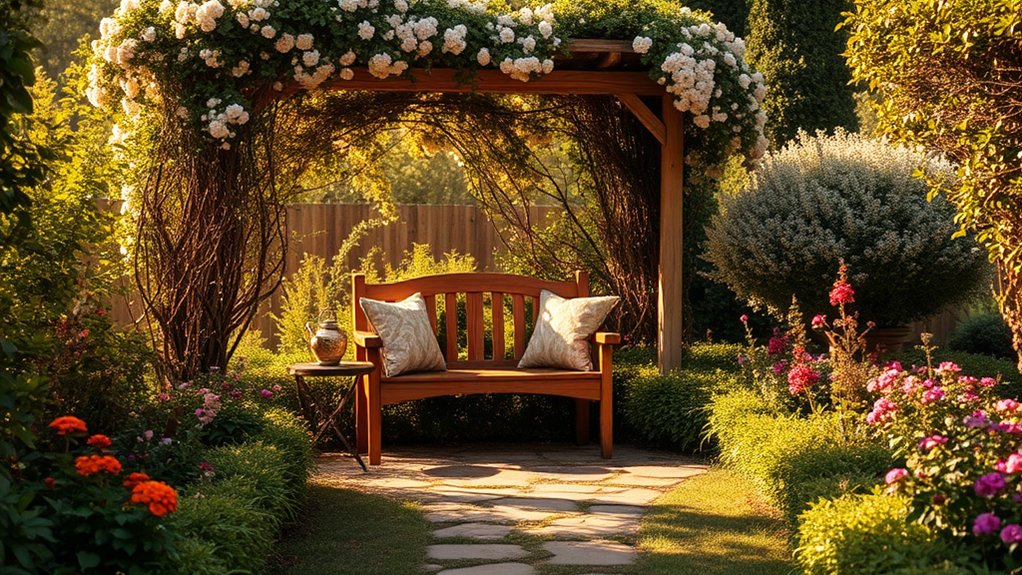
Where should you place your garden seating so it feels inviting and useful? Start by watching how you use your yard throughout the day. You’ll want a spot that suits your habits, whether you like morning coffee, quiet reading, or evening chats.
Look for shady spots that stay cool in hot weather, especially near trees, fences, or pergolas. If you enjoy warmth and light, try sunny nooks that catch gentle afternoon rays. Check for nearby views, because your seat should face something pleasant, like flowers, water, or a favorite path.
Also notice wind, privacy, and noise; a protected corner often feels more relaxing. Choose a place with firm ground and easy access so you can move in and out comfortably. When you match the location to your routines and comfort, you’ll create a seating area that feels natural, welcoming, and ready to use every day.
Plan the Size and Layout
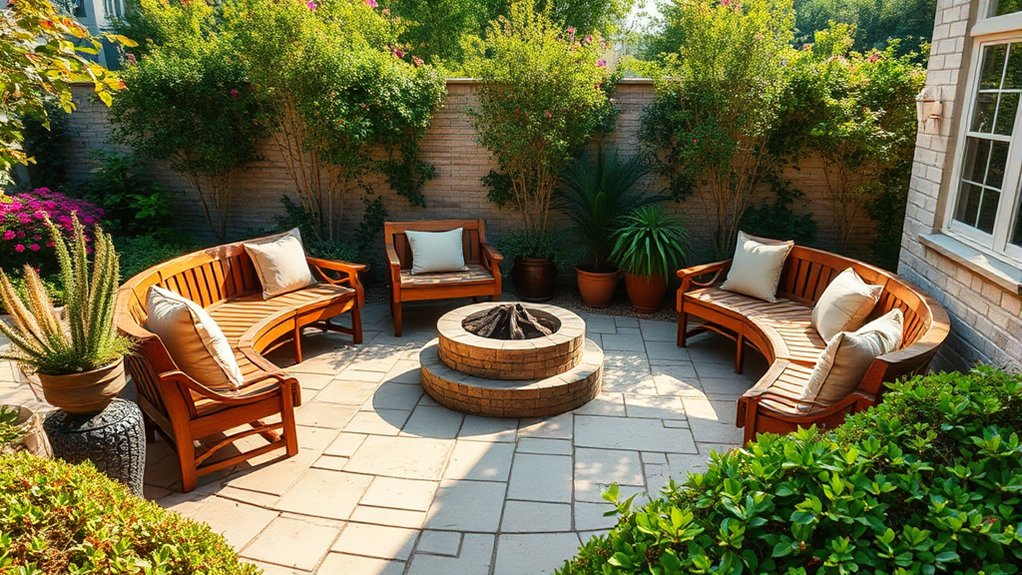
Once you’ve picked the right spot, the next step is sizing the seating area so it fits your yard and how you want to use it. Measure the space carefully, then map out seating dimensions that leave enough room to move comfortably. If you want a table, make sure chairs can pull back without hitting walls, plants, or paths.
Think about how you’ll divide the area into functional zones. You might keep one section for sitting and another for serving drinks, placing each zone where traffic won’t interfere. In a smaller garden, a compact corner layout can work well, while a larger yard may support a broader arrangement that feels open but defined.
Use chalk, string, or garden hose to outline the footprint before you commit. This lets you test scale, check flow, and adjust the layout until it feels balanced, practical, and easy to enjoy every day.
Pick a Seating Style for Your Garden

Now that the layout is set, choose a seating style that matches how you want the space to feel and function. You might prefer rustic benches for a relaxed, timeless look, or modern chairs for a cleaner, sharper mood.
If you love flexibility, mix garden tables with modular seating arrangements so you can host dinners or quiet coffee breaks.
| Style | Best for |
|---|---|
| Rustic benches | Casual gatherings |
| Modern chairs | Sleek, compact spaces |
| Lounge cushions | Soft, laid-back seating |
Look for eco-friendly options like reclaimed wood or recycled frames, and use color coordination to tie everything together. Add outdoor rugs to define the area and make it feel finished.
If your spot sits near a fire pit, choose weather-resistant fabrics that handle heat, damp evenings, and regular use. With the right mix, your garden seating will feel inviting, practical, and distinctly yours.
Create Privacy With Plants and Screens
You can create a cozy, secluded garden seating area by layering plant borders that soften the edges and block outside views. It’s a great way to make the space feel more private and inviting.
Then, add some decorative privacy screens to define the area and give it a bit of style. These screens not only look nice but also help set the mood.
For even more coverage, try training climbing vines on trellises. This makes your seating spot feel lush and tucked away, like your own little hideaway.
Layered Plant Borders
Layered plant borders can turn an open garden seating area into a sheltered retreat without making it feel boxed in. You can build privacy by stacking plant height from low edging plants to mid-level shrubs and taller backdrop layers.
Mix colorful blooms with foliage for seasonal interest, and add texture variety through grasses, ferns, and broad leaves. Choose fragrant plants near seating so each breeze feels inviting.
Native species support wildlife attraction, while low maintenance options keep care simple. If your space is small, use container gardens to extend the border and shift plants where you need cover most.
In shadier spots, shade plants soften the edges and keep the area calm, green, and comfortable.
Decorative Privacy Screens
Decorative privacy screens add a stylish way to block views while keeping your garden seating area open and inviting. You can use panels in wood, metal, or woven bamboo to define the space without making it feel closed in.
Choose designs that double as decorative art, so the screen adds beauty as well as function. If you prefer a softer look, mix screens with potted shrubs or tall grasses.
Natural materials help your seating area feel calm and grounded, especially when they echo nearby paths, furniture, or planters. Place screens where you need coverage from neighbors, wind, or busy corners, then leave gaps for light and airflow.
With the right layout, you’ll create privacy, comfort, and a polished garden retreat.
Climbing Vines And Trellises
Climbing vines and trellises can turn a simple seating area into a lush, living privacy barrier. You can use vertical gardening to make the most of tight spaces, choosing vine varieties like jasmine, clematis, or honeysuckle for fragrance and coverage.
Match trellis designs to your style, from sleek metal panels to rustic wood lattice, and plan color combinations that echo nearby flowers or furniture. For interest, mix evergreen foliage with seasonal blooms so your screen changes through the year.
You’ll also invite wildlife attraction, including bees and birds, which adds life to the setting. Keep vines tidy with simple maintenance tips: prune often, tie stems gently, and check supports.
Add shade options by training growth where the afternoon sun hits hardest.
Add Comfort With Cushions and Shade
A few well-chosen cushions can turn hard seating into a spot you actually want to linger in, and a bit of shade makes that comfort last through the hottest part of the day. You can refresh the whole area by mixing cushion colors that echo your flowers, pots, or lawn edging, so the seating feels intentional.
If your space gets strong sun, look at shade options like umbrellas, a sail canopy, or a pergola cover to soften glare without closing off the garden. Place the shade so it follows the afternoon sun, and you’ll get more use from the area.
Add a small side table nearby for drinks, books, or tea, then layer in a throw for cooler evenings. When you balance softness and shelter, your seating area feels inviting, relaxed, and ready for everyday use.
Choose Materials for Style and Durability
When you choose materials for a garden seating area, aim for pieces that look good and can handle sun, rain, and regular use. Start with wood selection that suits your climate, like teak, cedar, or treated hardwoods. Then compare weather resistance against your upkeep goals.
If you prefer a sharper look, examine metal finishes that resist rust and blend with your plants and paths. You can also use eco-friendly options such as recycled composite boards or responsibly sourced timber for a greener setup.
Keep color coordination in mind so chairs, tables, and planters feel unified, but don’t be afraid of style mixing when you want contrast. Add texture variety with woven, smooth, and matte surfaces to keep the space interesting.
Finally, follow simple maintenance tips: clean surfaces regularly, seal wood when needed, and inspect joints so your seating stays sturdy and inviting for years.
Add Lighting for Evening Use
You can make your garden seating area feel warm and inviting after dark by hanging string lights overhead. They add a lovely, soft glow that instantly sets the mood. Solar pathway lamps are great too—they help guide guests safely along walkways without any fuss. And don’t forget lanterns on the tables; they bring a cozy, intimate touch to your space. Altogether, these lighting choices create a spot you’ll want to hang out in well into the evening.
String Lights Overhead
String lights overhead instantly make a garden seating area feel warmer and more usable after dark. You can stretch them across pergolas, fence lines, or posts to frame the space without cluttering it.
Choose string light arrangements that suit your layout, then adjust height and spacing to create soft, inviting ambient lighting effects. Keep the bulbs slightly above head level for comfort. Use warm white light for a relaxed mood.
Mix straight runs and gentle drapes for visual balance. Anchor cords securely so wind won’t shift them. Pair dimmable options with cozy seating for flexibility.
With thoughtful placement, you’ll turn ordinary evenings into a calm, stylish retreat.
Solar Pathway Lamps
Solar pathway lamps add practical light and a soft glow that makes it easier to move through your garden seating area after dark. You can line them along paths, borders, or steps to guide movement and define the space without harsh glare.
Because they run on solar energy, you won’t need wiring or extra electricity, and they’ll charge during the day on their own. Choose low-profile designs for subtle ambient lighting that complements plants and furniture instead of overpowering them.
For the best effect, place lamps where they’ll catch direct sun and space them evenly for a balanced look. You’ll enjoy safer footing, a calmer atmosphere, and a garden that feels welcoming well into the evening.
Lanterns On Tables
Lanterns on tables bring focused, inviting light to your garden seating area, making evening conversations and meals feel warm and easy. You can choose lantern styles that match your garden’s mood, from rustic metal to glass-and-wood designs, then position them for balanced glow. Smart table placement keeps light useful without crowding plates or drinks.
Center one lantern on a round table for symmetry. Group two small lanterns on a long table for layered light. Use battery or solar candles for safe, low-maintenance ambiance. Pick weather-resistant finishes to handle moisture and wind. Mix heights to add depth and visual interest.
With the right lanterns, you’ll extend your seating area’s comfort well past sunset.
Make a Small Garden Seating Area Work
Even a compact patio or corner of the yard can feel inviting if you plan it with purpose. Choose a slim bench, folding chairs, or built-in ledges so you keep circulation open and still create cozy nooks for reading or quiet coffee. Use one focal piece, like a small table or planter, to anchor the space without crowding it.
Keep your palette light and consistent; fewer materials make the area feel larger. Add vertical interest with wall planters, trellises, or a narrow shelf instead of bulky accessories. You can layer seasonal decor in simple ways, such as cushions, a throw, or a potted accent plant, then swap them out as the weather changes.
Good lighting matters too, but keep it subtle and compact. Finally, leave a little breathing room around each piece so the area feels intentional, comfortable, and easy to enjoy every day.
Design a Garden Seating Area for Entertaining
To design a garden seating area for entertaining, you’ll want a flexible layout that lets guests gather, mingle, and move around easily. Think about arranging chairs and benches so you can shift the setup for small chats or larger groups without crowding the space.
You might also want to add some social lighting—string lights, lanterns, or soft pathway lights work great. That way, your seating area feels warm and welcoming even after dark.
Flexible Seating Layouts
When you’re designing a garden seating area for entertaining, flexible layouts let you adapt the space to different group sizes and occasions. Choose modular furniture that you can shift into intimate corners or open up for larger gatherings. Favor versatile configurations, so benches, chairs, and small tables work alongside without crowding pathways.
Arrange seating in a loose circle to encourage conversation. Keep one section open for standing guests and mingling. Use lightweight pieces you can move quickly.
Create an L-shape for relaxed, efficient use of space. Add a side table nearby for drinks and serving platters.
Social Lighting Ideas
Soft lighting helps your garden seating area feel welcoming the moment guests arrive. You can layer ambient lighting with lanterns, string lights, and low path fixtures to guide movement and soften shadows. Choose warm bulbs so conversations feel relaxed, not harsh.
Place lights near tables, benches, and focal plants to create depth and encourage guests to linger. If you host often, add dimmers or solar options so you can adjust the mood for dinner, drinks, or late-night chats.
You can also weave in festive decor like glowing candles, illuminated planters, or fairy lights wrapped around trellises. Keep the arrangement balanced, so the space feels inviting without glare. With thoughtful lighting, you’ll turn your garden into a social spot that works beautifully after sunset.
Keep Your Seating Area Easy to Maintain
Choose materials and furniture that make upkeep simple, so you can spend more time enjoying your garden seating area and less time cleaning it. Pick weather-resistant furniture with cushions you can remove, wash, and store quickly.
Choose weather-resistant seating and washable cushions to keep your garden area low-maintenance and easy to enjoy.
Hardwearing finishes, sealed wood, and powder-coated metal stand up well to rain and sun, while smooth surfaces wipe clean in seconds. Surround the space with low maintenance plants that stay tidy, need little pruning, and won’t drop constant debris. Keep pathways clear, and you’ll reduce dirt tracking onto seats.
- Use gravel or paving for easy sweeping
- Add planters with drip irrigation
- Store throws in a bench box
- Choose stain-resistant outdoor fabrics
- Trim edges regularly to keep lines crisp
If you’re planning storage, make it discreet and nearby. A slim cabinet, wall hook, or hidden bin keeps tools handy without crowding the area. With a few smart choices, you’ll create a calm, polished retreat that stays inviting all season.
Frequently Asked Questions
How Do I Add a Fire Pit to a Garden Seating Area?
You can add a fire pit by choosing the right spot, checking local rules, and leaving safe clearance around it. Pick fire pit styles that fit your garden, then arrange seating in a circle or U-shape so everyone feels included.
Use nonflammable flooring, keep the pit level, and add storage for wood or tools. Finish with lighting and cushions so you’ve got a cozy, practical gathering spot.
What Colors Work Best for Outdoor Garden Furniture?
You’ll find outdoor garden furniture looks best in timeless neutrals like taupe, charcoal, cream, and warm gray. These shades suit most color trends and let plants steal the show.
If you want more energy, add muted greens, navy, or terracotta through cushions or accents. Your material choices matter too: teak, metal, and wicker all pair well with soft, natural tones and won’t overwhelm your garden’s calm, inviting style.
How Can I Make Seating Safe for Children and Pets?
You can make seating safer by choosing child-friendly materials with smooth edges, stable frames, and non-toxic finishes. Keep furniture low and sturdy so kids can’t tip it easily. Avoid sharp corners or pinch points.
Use pet-safe designs with washable cushions, slip-resistant bases, and weatherproof fabrics. Anchor lightweight pieces, store cushions when you’re not using them, and leave enough space for pets and children to move around safely.
What Permits Might I Need for a Garden Seating Project?
You’ll usually need to check permits before you build, because red tape can spring up like weeds. You may need approval for zoning regulations, local ordinances, setbacks, drainage, lighting, or structures like decks, pergolas, and retaining walls.
If you’re adding electricity or plumbing, you’ll likely need extra permits too. Contact your local planning office early, so you don’t waste time or money on changes later.
How Do I Protect Outdoor Furniture During Winter?
You can protect outdoor furniture during winter by cleaning it, letting it dry, and storing it in a shed, garage, or basement if possible. Use furniture covers that fit snugly and keep out moisture, dirt, and snow.
If you can’t move pieces indoors, raise them off the ground and secure covers tightly. Check them occasionally for trapped condensation. Choose winter storage that stays dry, cool, and well ventilated.
Conclusion
You might think a garden seating area is just a place to sit, but it ends up doing more: it invites you to slow down, linger, and notice what you usually rush past. When you choose the right spot, add comfort, and keep it simple, your garden works harder than ever, quietly of course.
Ironically, the most rewarding designs don’t shout for attention; they give you room to breathe, then let the garden do the talking. That’s the charm of a well-designed garden seating area—it blends in while drawing you in.