How Do You Feed Birds Simply
If you’ve ever tried feeding birds but felt overwhelmed by all the choices and advice out there, you’re not alone. Many people struggle with finding the right way to attract and care for local birds without making a mess or attracting unwanted visitors.
The good news is, feeding birds simply doesn’t have to be complicated.
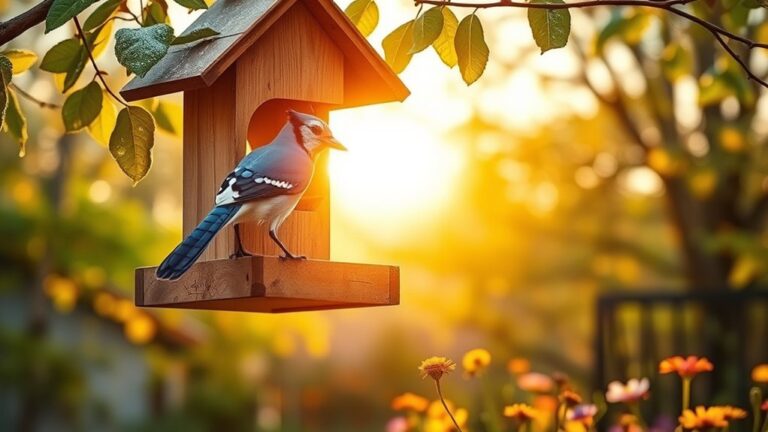
To feed birds simply, choose a sturdy feeder that suits local birds and place it near trees or shrubs for safety. Offer fresh, preferred seeds like sunflower or nyjer, and keep feeders clean by washing them every two weeks.
Provide water nearby, and avoid spots too close to windows or where predators lurk.
Regularly refill the feeder to attract different species all year. If you want to attract even more birds and keep them safe, there’s plenty more to investigate.
Key Takeaways
- Choose a sturdy, easy-to-clean feeder and place it near trees or shrubs to provide safety and comfort for birds.
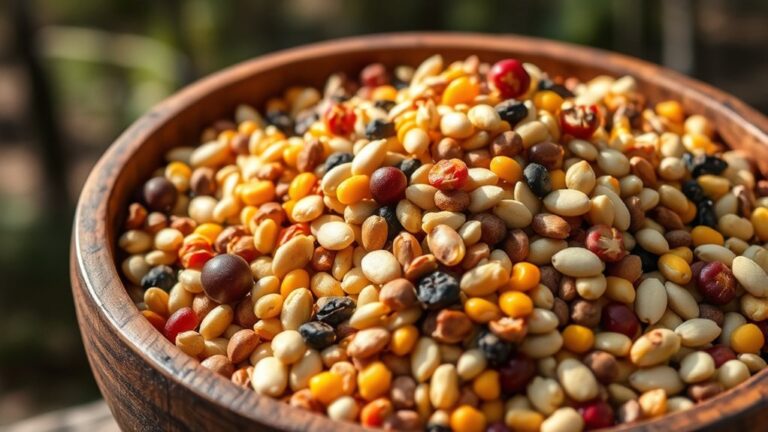
- Offer fresh, local birdseed like black oil sunflower seeds and avoid fillers that birds often reject.
- Keep feeders clean by washing every two weeks and removing wet or moldy seeds promptly to prevent disease.
- Provide fresh water nearby in a shallow birdbath to attract and support birds’ drinking and bathing needs.
- Place feeders at varying heights and accessible locations to accommodate different bird species and encourage visits.
Basic Supplies for Feeding Birds
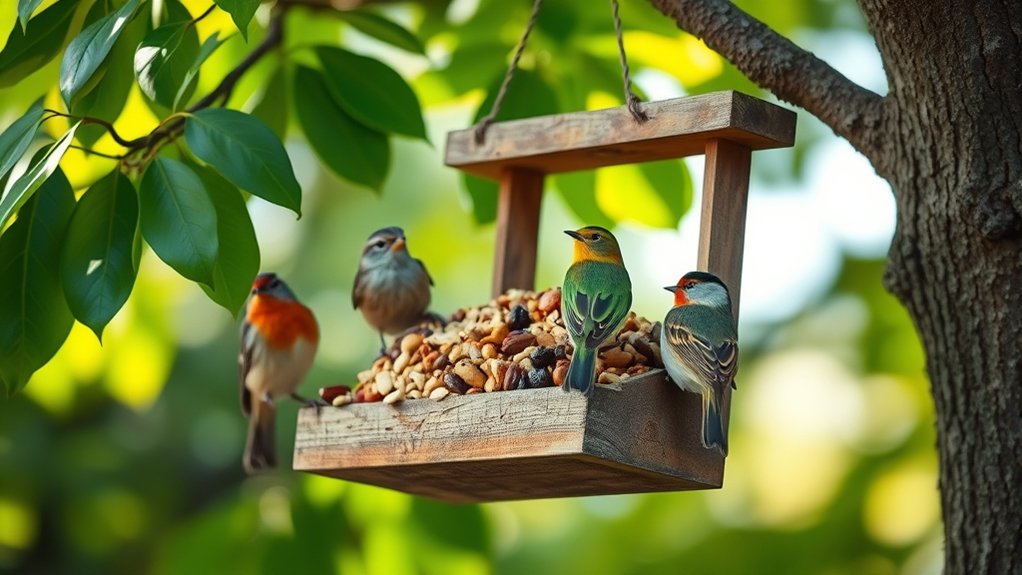
Before you begin feeding birds, you’ll need a few basic supplies to get started. First, consider the bird habitat around your home to choose the best spot for your feeder. Place it near natural nesting sites like trees or shrubs, as birds feel safer when they can quickly retreat to familiar cover.
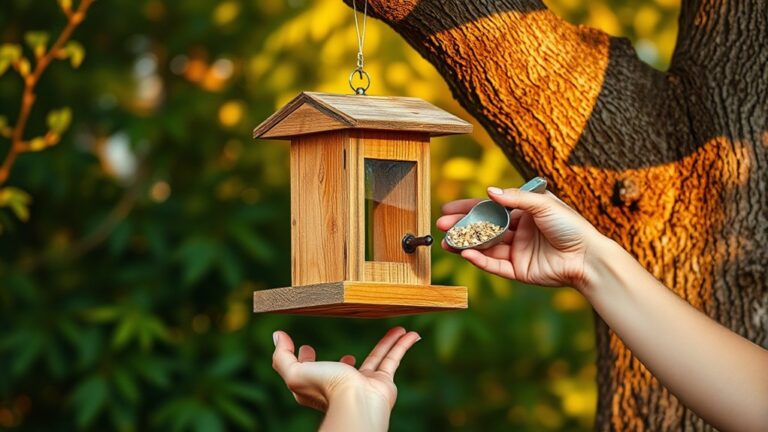
A sturdy bird feeder is essential. Opt for one that suits the types of birds common in your area and is easy to clean. You’ll also want a platform or tray feeder if you prefer ground-feeding birds.
Don’t forget a water source, such as a birdbath, which complements feeding and encourages birds to visit regularly. Finally, a supply of birdseed storage containers helps keep your food fresh and accessible.
How to Choose the Right Bird Food
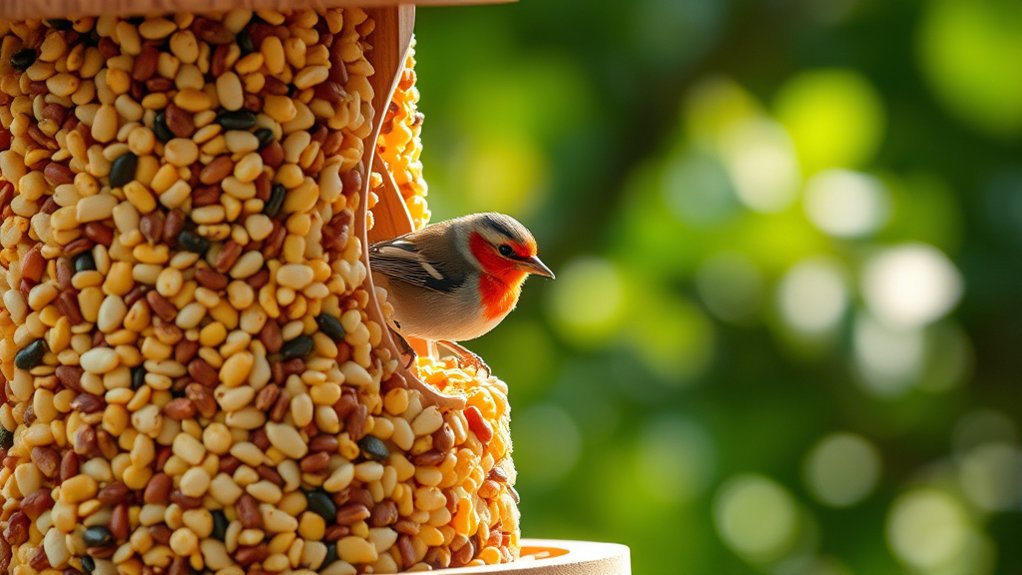
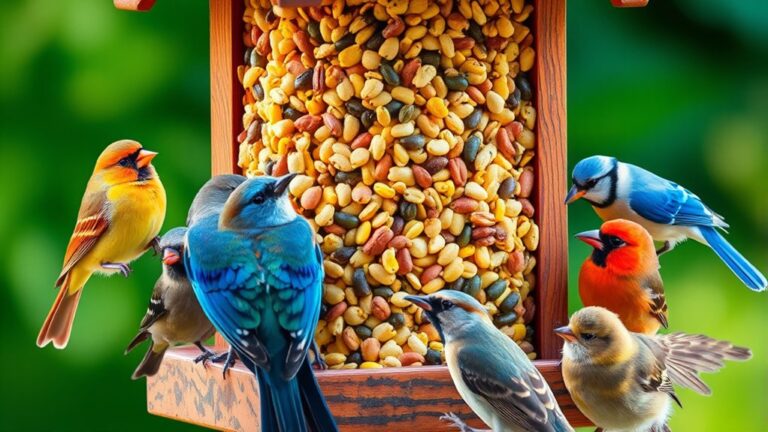
How do you know which bird food will attract the most visitors to your feeder? Start by considering the types of birds that live in your area and those passing through during bird migration. Different species prefer different foods, so offering a variety guarantees you cater to more birds. For example, black oil sunflower seeds attract many songbirds, while nyjer seeds are favorites of finches.
During nesting season, birds focus on nest building and need high-protein foods like suet or mealworms to support their energy demands. You can include these to help birds thrive while they raise their young.
Avoid fillers like milo or wheat that most birds tend to dismiss. Also, steer clear of spoiled or moldy food, which can harm birds. By choosing fresh, appropriate seed mixes tailored to local bird preferences and seasonal needs, you’ll enjoy a lively, diverse group of feathered visitors year-round.
How to Place Bird Feeders for Best Results

To get the best results, you’ll want to place your bird feeders in spots that are safe from predators and easy for birds to access. You know, places where birds can feel comfortable stopping by without worrying about threats.
Ideal locations include areas with nearby cover like trees or shrubs. This way, birds feel secure while they’re feeding. It’s kind of like having a safe little hideout nearby.
Also, keep feeders visible but protected. That way, your feathered visitors can come and go comfortably without feeling exposed. It makes all the difference in attracting more birds to your feeder!
Ideal Feeder Locations
Although placing a bird feeder might seem straightforward, choosing the right location can make a big difference in attracting and keeping birds safe. To get the best results, place feeders near natural cover like trees or shrubs, which provide shelter and resting spots.
During bird migration, feeders close to these areas can offer much-needed energy stops. Also, consider nesting behaviors; situating feeders away from busy human activity helps nesting birds feel secure.
You’ll want to avoid placing feeders too close to windows to prevent collisions. Ideally, position feeders where you can easily observe them but won’t disturb the birds.
Safety From Predators
Where should you place your bird feeders to keep feathered visitors safe from predators? Position feeders away from dense shrubs or places where cats and other predators can hide. Providing clear lines of sight allows birds to spot threats early, enhancing their safety.
Maintain a distance of at least 10 feet from launching points like fences or trees to prevent predators from easily jumping onto feeders. Incorporate nest protection by avoiding feeder placements near nesting sites to reduce disturbance and vulnerability.
Use predator awareness to evaluate your surroundings regularly, ensuring that feeders remain in safe locations. By thoughtfully placing feeders, you create a secure environment that supports birds’ natural behaviors while minimizing risks, making your backyard a safe haven for your feathered friends.
Accessibility For Birds
How can you guarantee your bird feeders are easy for birds to reach and enjoy? Start by placing feeders where birds naturally travel, especially along their bird migration routes. Position feeders near trees or shrubs to offer quick shelter and perching spots, but keep them far enough from branches to prevent predators from sneaking up.
During nest building season, birds look for safe, accessible feeding spots to gather energy. Make sure feeders are at varying heights to accommodate different species and avoid overcrowding. Keep feeders clean and filled consistently to encourage regular visits.
How Often to Refill Bird Feeders
You’ll want to refill your bird feeders regularly to keep the food fresh and inviting. How often you need to do this really depends on a few things, like how many birds come to visit and the time of year. For instance, during the colder months, you’ll probably need to refill more often since birds rely on feeders more heavily. So, let’s take a look at the ideal refill schedule and how you can adjust it throughout the year.
Ideal Refill Frequency
Although the refill frequency depends on factors like feeder size and bird activity, keeping your feeders consistently stocked guarantees birds have reliable access to food. You’ll want to observe bird behavior closely. Busy feeders might need refilling every day, while less active ones can last several days.
Practicing good feeding etiquette means not letting feeders run empty, which can discourage regular visitors.
To determine your ideal refill schedule, consider:
- How quickly seed disappears during peak feeding times
- Weather conditions influencing bird activity
- The number and types of birds visiting your feeder
Seasonal Feeding Adjustments
When seasons change, your feeding routine should adjust to meet birds’ shifting needs and activity levels. During seasonal migration, many birds pass through quickly, so you’ll want to refill feeders more frequently to support their energy demands.
In spring and early summer, nesting behavior increases, meaning adult birds need more food to feed their young. This means topping off feeders often to guarantee a constant supply.
Conversely, in colder months, birds rely heavily on feeders for survival, so daily refills might be necessary in harsh weather. Pay attention to weather patterns and local bird activity to decide when to refill.
How to Keep Bird Feeders Clean and Safe
Since bird feeders attract various wildlife, keeping them clean and safe is essential to protect both the birds and your local environment. During bird migration and nesting habits, birds are especially vulnerable to diseases, so maintaining hygiene is critical. You can easily keep your feeders safe by following these simple steps:
Clean feeders every two weeks with a solution of one part bleach to nine parts water. Just make sure to rinse thoroughly to avoid harmful residue.
Remove wet or moldy seeds promptly to prevent the spread of fungi and bacteria.
Place feeders in areas where they won’t collect standing water or droppings. This helps reduce contamination risks.
How to Attract Different Types of Birds
If you want to attract a variety of birds, start by choosing seeds that match their tastes. For example, finches love sunflower seeds, while sparrows prefer millet.
Also, don’t forget to provide fresh water sources. Birds need water not just for drinking but for bathing too.
Choosing Bird-Friendly Seeds
How do you choose the best seeds to attract a variety of birds to your feeder? Start by selecting seed mixtures that appeal to the birds in your area. Different birds prefer different seeds, so a good mix guarantees you’ll see a diverse crowd. You can also use bird attractants to make your feeder more irresistible.
Consider these tips:
- Offer black oil sunflower seeds, a favorite for many species.
- Include nyjer seeds to attract finches and smaller birds.
- Add millet in your seed mixtures to bring in sparrows and doves.
Providing Water Sources
Where can birds find water in your yard? Providing a clean, accessible water source is essential to attract birds year-round. A shallow birdbath or a small, moving water feature encourages birds to drink and bathe, which helps keep their feathers in top shape for flight and insulation.
You’ll notice more bird song as they feel safe and refreshed near water. During nest building, birds need water for softening mud and staying hydrated, so placing water near shrubs or trees offers convenience and protection.
Make sure to change the water frequently to prevent mosquitoes and algae growth. By offering fresh water, you’ll invite a variety of species, enriching your yard’s ecosystem and filling it with delightful bird song.
How to Feed Birds All Year Long
Although feeding birds can be rewarding any time of year, adjusting your approach for each season helps keep them healthy and attracted to your yard. During spring, focus on providing high-protein foods like mealworms to support nest building and feeding hatchlings.
Feeding birds year-round is rewarding—seasonal foods keep them healthy and visiting your yard.
In summer, offer fruits and seeds to help birds replenish energy after long flights during bird migration. As fall arrives, switch to high-fat seeds like sunflower and safflower to prepare birds for colder months.
Here’s a simple seasonal feeding guide:
- Spring: Protein-rich foods for nest building and young birds
- Summer: Fresh fruits and mixed seeds
- Fall/Winter: High-fat seeds for energy and warmth
Keeping Pests and Squirrels Away From Your Bird Feeders
Since squirrels and pests can quickly deconsume your birdseed and deter birds from visiting, you’ll want to take steps to keep them at bay. Start by choosing feeders with squirrel-proof designs or place feeders on poles with baffles to block climbing.
Regular birdhouse maintenance also helps; clean out nesting boxes to prevent pests from settling in. Proper nest box placement matters too. Position boxes away from easy squirrel access points and avoid placing feeders too close to trees or structures that squirrels can jump from.
You can also try using seed blends less attractive to pests but still loved by birds. Keep the area under feeders clean by sweeping up spilled seed, reducing ground feeding that attracts unwanted animals.
Finally, consider using natural deterrents like hot pepper birdseed, which birds ignore but pests dislike. By combining these tactics, you’ll create a welcoming environment for birds while minimizing the disturbance from squirrels and other pests.
Using Natural Foods and Plants to Feed Birds
Keeping pests away from your feeders helps maintain a peaceful feeding spot. But you can also attract birds by incorporating natural foods and plants into your yard. Using native plants provides birds with familiar food sources and shelter.
These plants support local ecosystems and require less maintenance, too. Seasonal berries offer a natural, nutritious snack that birds love throughout the year. By planting shrubs and trees that produce berries, you create a reliable food source.
Here are some simple ways to use natural foods and plants:
- Grow native plants like coneflowers, sunflowers, and milkweed to attract different bird species.
- Plant berry-producing shrubs such as elderberry, dogwood, or serviceberry to provide seasonal berries.
- Scatter unsalted nuts and seeds on the ground to mimic natural foraging.
How to Observe and Enjoy Birds While Feeding Them
When you feed birds, you create a unique opportunity to observe their behaviors and appreciate their beauty up close. Take a moment to watch how each bird approaches the feeder, noticing their unique feather patterns and movements. You’ll soon recognize different species by their colors and shapes.
Feeding birds invites you to notice their unique patterns and movements, revealing the beauty of diverse species.
Listen carefully to the bird song around you; these melodies add a rich soundtrack to your experience and can help you identify who’s visiting.
To enjoy this fully, position yourself quietly nearby with minimal movement to avoid startling the birds. Use binoculars if you want a closer look without disturbing them.
Keep a notebook or use a bird identification app to jot down or match the patterns and songs you encounter. Over time, you’ll develop a deeper connection with your local birds, making feeding time not just about nourishment but a rewarding nature-watching adventure.
Frequently Asked Questions
Can Feeding Birds Affect Their Natural Foraging Behavior?
Yes, feeding birds can affect their natural foraging behavior. When you provide easy food sources, birds might develop dependency formation, relying less on their natural skills.
This can lead to habitat disruption, as they may congregate unnaturally or neglect their usual feeding grounds. To minimize this, you should offer food occasionally and focus on native seeds that complement their diet, helping them maintain their natural habits while still enjoying your support.
What Is the Best Time of Day to Feed Birds?
The best time to feed birds is like catching the sunrise in a jar: early morning. During this golden hour, bird migration patterns bring hungry travelers seeking nectar or seed feeding spots to refuel.
Morning meals help them fuel long flights or daily adventures. Evening feeding works too but can disrupt their rest. So, set your feeder at dawn, and watch nature’s orchestra of chirps and flutters begin its daily symphony.
Are There Any Health Risks to Humans From Feeding Birds?
Yes, you can face health risks from feeding birds if you’re not careful. Bird disease can spread through droppings, feathers, or contaminated feeders, posing a risk during human contact.
To protect yourself, always wash your hands thoroughly after handling bird feeders or touching birds. Avoid direct contact with sick or dead birds, and keep feeders clean to minimize the chance of disease transmission between birds and humans.
How Can I Identify Bird Species Visiting My Feeder?
You can spot your feathered visitors like a detective decoding nature’s secrets. Listen closely to bird song identification; it’s like their unique signature in the air.
Watch their nesting habits. Some prefer tall trees, others cozy shrubs. Use a field guide or app to match colors and shapes.
Soon, you’ll recognize each species visiting your feeder, turning your backyard into a lively, avian symphony you’ll enthusiastically anticipate every day.
Should I Feed Birds During Extreme Weather Conditions?
Yes, you should feed birds during extreme weather conditions because wild bird diets become limited, and they need extra energy to survive cold or hot spells. Increase your feeding frequency to guarantee they have constant access to food.
Offering high-energy foods like seeds and suet helps them stay strong. Just remember to keep feeders clean to prevent disease, and adjust feeding as weather improves to match their natural foraging habits.
Conclusion
Feeding birds is like tending a small, magical garden where every seed you scatter invites a fluttering guest. Just as a gardener nurtures plants with care, you’ll nourish these feathered friends with simple supplies and thoughtful spots.
Keep your feeders clean and filled, and watch your backyard come alive year-round. With patience and kindness, you’ll create a peaceful haven where nature’s little messengers bring joy and life to your everyday world.
By feeding birds simply, you invite a bit of magic and wonder right outside your window, making every day a little brighter.