What Does a Bird Typically Eat?
If you’ve ever tried to attract birds to your garden or feed them at home, you know how tricky it can be to figure out the best food to offer. You’re not alone—many people struggle with understanding what birds really eat and how to meet their nutritional needs throughout the year.
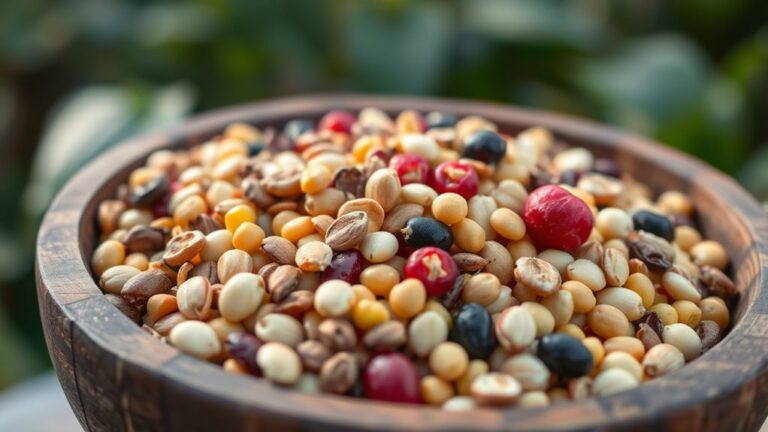
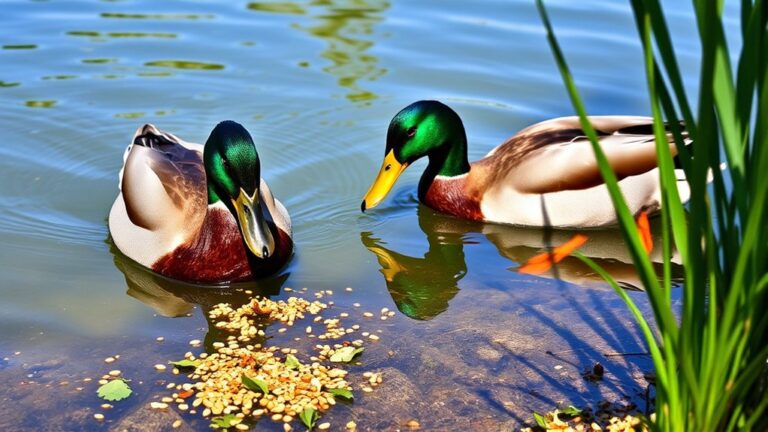
You’ll find birds eat a mix of seeds, fruits, insects, and small animals to meet their changing needs throughout the year. They switch to protein-rich insects in warmer months and rely on energy-packed seeds and fruits in colder seasons. Some birds even favor nectar and sap when available.
These dietary shifts help them survive, grow, and reproduce successfully. Uncovering how these foods support bird health and behavior reveals even more about their fascinating lives.
Key Takeaways
- Birds mainly eat seeds, insects, and fruits. They adjust their diet seasonally to get the right nutrition and energy.
- Insects provide vital protein and nutrients, especially during breeding and migration periods.
- Seeds, nuts, and fruits supply fats, carbohydrates, vitamins, and hydration essential for survival and reproduction.
- Birds adapt their feeding habits and beak structures to use available food sources efficiently.
- Essential nutrients like vitamins, proteins, and minerals support growth, health, and successful breeding.
What Are the Most Common Foods Birds Eat?

Although bird species vary widely, many of them share common dietary staples like seeds, insects, and fruits. When you observe birds during bird migration, you’ll notice they often need high-energy foods to fuel their long journeys.
Birds rely on seeds, insects, and fruits, especially high-energy foods during migration.
Insects provide a rich protein source, especially crucial during breeding seasons when birds are busy nest building and need extra nutrients. Fruits offer essential vitamins and hydration, helping birds stay healthy and active.
You might also see birds adjusting their diet based on seasonal availability, feeding on insects in spring and summer, then switching to seeds and fruits in fall and winter. Understanding these common foods helps you appreciate how birds survive and thrive across different environments.
Whether you’re feeding backyard birds or studying their behavior, knowing what they typically eat gives you insight into their daily lives and survival strategies.
How Seeds and Nuts Shape Bird Diets

You’ll find that seeds pack a powerful nutritional punch. They offer birds essential fats and proteins. Nuts like acorns and walnuts also play a key role, especially for species that can crack their hard shells. And it’s interesting how the availability of these foods changes with the seasons. This shift influences birds’ eating habits throughout the year.
Nutritional Value of Seeds
How do seeds and nuts influence what birds eat every day? Seeds provide essential nutrients like fats, proteins, and carbohydrates that fuel birds during migration patterns, supplying the energy they need for long flights.
You’ll notice that birds adjust their diets seasonally, relying heavily on seeds to build fat reserves before they head south. During nesting habits, seeds play a crucial role too. They offer the nutrients necessary for egg production and chick development.
When you watch birds foraging, you’re seeing them balance their intake to support both survival and reproduction. Understanding the nutritional value of seeds helps you appreciate how these tiny powerhouses affect birds’ health and behavior throughout the year.
Seeds aren’t just food; they’re indispensable for sustaining life cycles in the wild.
Popular Nuts Among Birds
Seeds offer birds essential energy, but nuts also play a big role in shaping their diets. When you watch birds, you’ll see how popular nuts help them thrive, especially in urban nesting areas where food options can be limited.
Nuts provide vital fats and proteins that are indispensable for migratory patterns demanding high energy reserves. Here are four nuts commonly favored by birds:
- Peanuts – easy to crack and rich in energy.
- Walnuts – packed with healthy fats.
- Almonds – offer essential nutrients and crunch.
- Hazelnuts – provide a dense, nutritious snack.
Seasonal Seed Availability
When do birds adapt their diets to the changing seasons? You’ll notice that as seasons shift, birds rely heavily on seasonal seed availability to meet their nutritional needs.
During spring and summer, seeds and nuts become essential, especially when birds are focused on nesting habits and raising their young. The surge in energy demand pushes them to seek out nutrient-rich seeds.
In the fall, many birds prepare for migration by fattening up on abundant seeds and nuts, fueling their long journeys. If you observe closely, you’ll see how birds switch from insects in warmer months to seeds in colder ones, aligning their diet with what’s accessible.
Understanding this pattern helps you appreciate how seeds and nuts shape bird diets throughout the year.
Why Insects Are Essential in Bird Diets
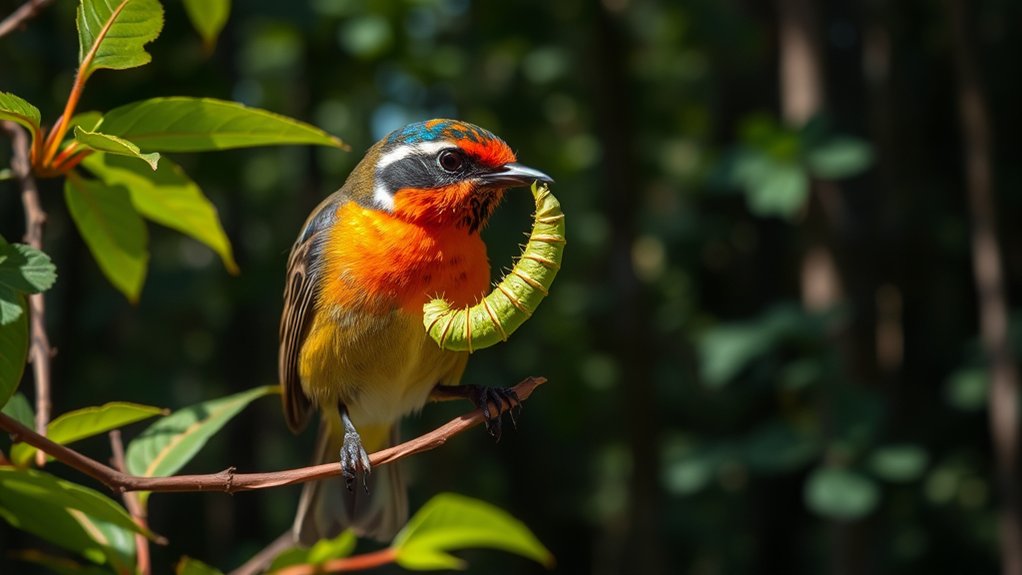
Because insects provide a rich source of protein and essential nutrients, they play a crucial role in a bird’s diet. You’ll notice birds rely heavily on insects during bird migration, needing extra energy for long flights. When it comes to nesting habits, insect consumption spikes as parents feed their young protein-rich meals to support rapid growth.
Insects provide vital protein and energy, especially during migration and feeding growing nestlings.
Here’s why insects are so essential:
- Energy-packed fuel Insects supply the calories birds need for endurance during migration.
- Protein for growth Nestlings require protein to develop feathers and muscles quickly.
- Vitamin and mineral boost Insects offer nutrients like calcium and iron, critical for healthy bones and blood.
- Varied diet Eating insects helps birds adapt to seasonal food availability, ensuring balanced nutrition year-round.
Which Fruits and Berries Do Birds Eat?
Curious about which fruits and berries birds prefer? You’ll find that many birds enjoy a variety of sweet treats like blueberries, raspberries, blackberries, and cherries. These fruits provide essential nutrients and energy, especially during times when insects are scarce.
As you observe birds, you might notice that their choice of fruits can influence mating behaviors. Vibrant berries often attract mates by signaling a rich food source nearby. Moreover, certain fruits support nesting habits by offering antioxidants that boost the health of both adults and chicks.
For example, cedar berries and elderberries are favorites among species that build nests in dense shrubs. These fruits provide easy access to food without leaving their young unattended. When you plant bird-friendly fruiting bushes, you encourage natural behaviors that support their survival and reproduction.
How Small Animals Supplement Bird Diets
Though fruits and berries provide essential nutrients, many birds rely on small animals to meet their protein needs. You’ll notice that during bird migration and nesting habits, protein becomes vital for energy and chick development.
Birds hunt or forage for insects like beetles and caterpillars, which provide a quick protein source. They also eat spiders, offering both nutrition and ease of capture. Small amphibians such as frogs are especially important for larger bird species. Worms, rich in nutrients, are commonly found in soil.
As you observe birds during nesting, you’ll see parents actively hunt these small animals to feed their young. Protein intake supports the rapid growth of chicks and helps adults maintain stamina during long migrations.
How Birds’ Diets Change With Seasons and Habitat
You’ll notice that birds adjust what they eat as the seasons change. They switch to whatever food is most available at the time. And it’s not just the seasons that matter—their habitat plays a big role too. Different environments offer different feeding options. So, understanding these shifts really helps you see how adaptable birds are.
Seasonal Dietary Variations
As the seasons shift, birds adjust their diets to match the changing availability of food in their habitats. You’ll notice that during migration patterns, birds often increase their intake of high-energy foods like berries and seeds to fuel long flights.
In spring, when nesting behaviors kick in, they focus more on protein-rich insects to feed their young. Here’s what you can expect throughout the year:
- Spring: Insects and worms dominate the menu.
- Summer: A mix of fruits, seeds, and insects.
- Fall: Berries and nuts become essential for fat reserves.
- Winter: Seeds and hardy fruits help them survive scarce conditions.
Habitat Influences on Feeding
When birds move between habitats, their diets shift to match the available food sources and seasonal changes. You’ll notice that habitat diversity plays an essential role in what birds eat.
For example, a bird living in a forest might feed on insects and berries, while the same species in a wetland might rely more on aquatic plants and small fish. Birds develop feeding adaptations to exploit these different food sources efficiently.
You’ll see changes in beak shape, hunting techniques, and digestive processes that help them thrive across habitats. So, as seasons change and habitats vary, birds adjust their diets to survive.
Understanding these shifts helps you appreciate how adaptable and resourceful birds truly are in finding the nutrients they need.
Why Some Birds Prefer Nectar and Sap
Why do some birds go straight for nectar and sap instead of seeds or insects? It’s because nectar feeding and sap consumption offer unique benefits that suit certain birds perfectly. When you observe these birds, notice how they:
Some birds prefer nectar and sap because these sweet, energy-rich foods perfectly match their unique needs.
- Hover or perch near flowers to sip sweet nectar, getting quick energy.
- Use specialized beaks or tongues to access deep nectar or sap.
- Exploit tree wounds or insect holes to lap up nutrient-rich sap.
- Thrive in environments where seeds or insects might be scarce but flowers and sap flow are abundant.
This preference isn’t random; nectar and sap provide high sugar content, which fuels fast metabolism and flight. Birds like hummingbirds and some woodpeckers have evolved to depend on these liquid diets, making them key players in pollination and tree health.
When you see a bird sipping from a flower or a sap well, you’re witnessing a finely tuned feeding strategy that supports their survival and energy needs.
How Birds Adjust Their Diets When Food Is Scarce
Birds that rely on nectar and sap have adapted to take advantage of these energy-rich resources, but what happens when those sources dry up? When food becomes scarce, you’ll notice many birds adjust their diets quickly.
For instance, some nectar feeders switch to insects or small fruits to meet their nutritional needs. Bird migration patterns also play an essential role; many species travel to areas with more abundant food, ensuring survival during lean times.
You might also observe changes in nesting material preferences, as birds gather different plant fibers or soft materials that are easier to find when typical supplies dwindle. These shifts help conserve energy and protect offspring.
Key Nutrients Birds Need for Good Health
You need to know which vitamins keep birds healthy and active, like vitamin A and D. Protein plays a huge role in their growth and energy, so it’s important to include good sources. And don’t forget minerals—they’re critical for strong bones and overall health.
Essential Vitamins For Birds
Although a balanced diet is essential, making sure your feathered friend gets the necessary vitamins is key to keeping them healthy and energetic. Vitamins affect everything from vibrant feather colors to successful nesting habits.
You’ll want to focus on these essential vitamins:
- Vitamin A – Supports healthy skin and bright feathers.
- Vitamin D – Vital for calcium absorption, which helps build strong bones and eggshells.
- Vitamin E – Acts as an antioxidant, protecting cells and boosting immunity.
- B Vitamins – Help with metabolism and energy production, keeping your bird active.
Protein Sources And Benefits
Vitamins play an essential role in your bird’s health, but proteins provide the building blocks for growth, repair, and overall vitality. During bird migration, your feathered friends rely heavily on protein-rich foods like insects, seeds, and small invertebrates to fuel their long journeys.
Proteins support muscle strength and energy, which are indispensable for these demanding flights. When it comes to nesting behavior, protein intake becomes even more necessary. Birds need extra protein to build strong eggshells and support their chicks’ rapid growth.
Offering a variety of protein sources ensures your bird maintains excellent health and stamina throughout these critical life stages. By understanding these needs, you can better appreciate how protein supports survival and reproductive success in birds.
Minerals Critical To Health
While proteins build strong muscles and energy reserves, minerals play an equally significant role in maintaining your bird’s overall health. These minerals support essential functions like feather maintenance and nest building. They help ensure your bird stays healthy and active. Here are four critical minerals your bird needs:
- Calcium – strengthens bones and eggshells, essential for nest building.
- Iron – supports oxygen transport in the blood, boosting energy levels.
- Magnesium – aids muscle function and feather growth.
- Zinc – promotes immune health and helps repair feathers.
How Knowing Bird Diets Helps Conservation and Birdwatching
Understanding what birds eat gives you powerful insights that support both conservation efforts and birdwatching experiences. When you know a bird’s diet, you can better understand its migratory patterns and how urban feeding impacts its health and behavior.
Knowing a bird’s diet reveals key insights into migration and the effects of urban feeding.
For example, recognizing that some birds rely heavily on natural food sources during migration helps you advocate for preserving those habitats. You’ll also spot how urban feeding can alter diets, sometimes causing nutritional imbalances or dependency on human-provided food.
This knowledge lets you make smarter choices when feeding birds in your backyard, promoting their health and natural behaviors. Conservationists use diet information to design effective protection plans, ensuring birds have access to critical food sources.
As a birdwatcher, understanding diets enriches your experience, helping you predict where and when certain species will appear. So, knowing what birds eat isn’t just interesting, it’s essential for supporting their survival and enjoying their presence in the wild.
Frequently Asked Questions
How Do Birds Find Food in Urban Environments?
You’ll notice birds use urban foraging to find food, adapting their bird feeding habits to city life. They search parks, gardens, and even trash bins, spotting crumbs or seeds people drop.
You’ll see them pecking at bird feeders or snatching insects from plants. Their keen eyesight and quick reflexes help them exploit these urban resources efficiently, showing how flexible and resourceful their feeding habits can be in a busy environment.
Do Birds Share Food With Each Other?
You’ll often see birds practicing mutual feeding, like tiny chefs passing secret recipes. Food sharing isn’t just about survival; it’s a dance of trust and connection.
When a parent bird feeds its chick or mates exchange morsels, they’re weaving bonds that keep their flock strong. So yes, birds do share food, using it as a language of love and cooperation that helps them thrive together in their world.
How Do Baby Birds Get Fed?
You’ll see that baby birds get fed through their parents’ attentive nesting behavior. The adult birds use specific feeding techniques, like regurgitating food directly into their chicks’ mouths or bringing small insects and worms to the nest. This guarantees the babies get proper nutrition while they’re too weak to hunt.
You’ll notice parents constantly returning to the nest, showing how feeding techniques and nesting behavior work together to keep the young safe and well-fed.
Can Birds Eat Human Food Safely?
Think of bird feeding like offering a menu to a picky diner. You can’t just toss any human food their way because their dietary preferences differ greatly from yours. While some fruits, nuts, and cooked grains are safe, many human foods like chocolate, caffeine, or salty snacks can harm birds.
How Does Bird Diet Affect Their Migration Patterns?
Your bird’s diet directly influences its migration patterns because dietary variations affect energy levels and digestion efficiency. When birds consume nutrient-rich foods, their bird digestion processes extract more energy, fueling long flights.
If their diet lacks essential nutrients, their stamina drops, and migration may be shorter or delayed. You’ll notice that birds adjust what they eat seasonally to optimize digestion and energy, ensuring they complete their journeys successfully.
Conclusion
You might think birds survive on a simple diet of seeds or worms, but their meals are surprisingly complex. They nibble nuts, slurp nectar, and even snack on tiny animals. Talk about picky eaters!
When food runs low, they cleverly adapt, proving they’re smarter than we give them credit for. So next time you toss bread crumbs, remember: birds deserve more than your leftovers. They’ve got a gourmet lifestyle you’d envy!
Understanding what does a bird typically eat helps us appreciate their diverse and smart feeding habits even more.