What Ingredients Are in Bird Food?
Finding the perfect bird food can feel overwhelming, especially with so many options claiming to be the best. You’re not alone—many bird lovers struggle to figure out which ingredients truly benefit their feathered visitors. Choosing the right mix is key to keeping birds healthy and happy all year round.
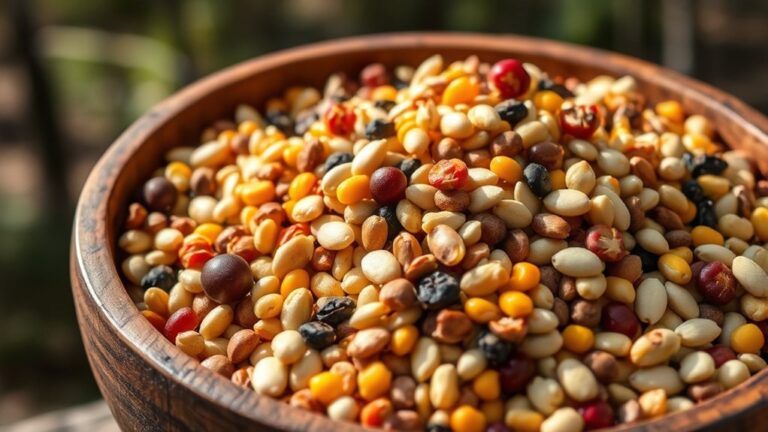
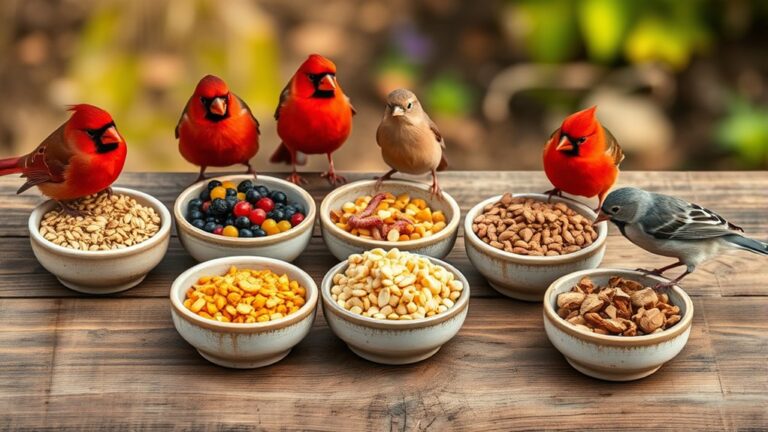
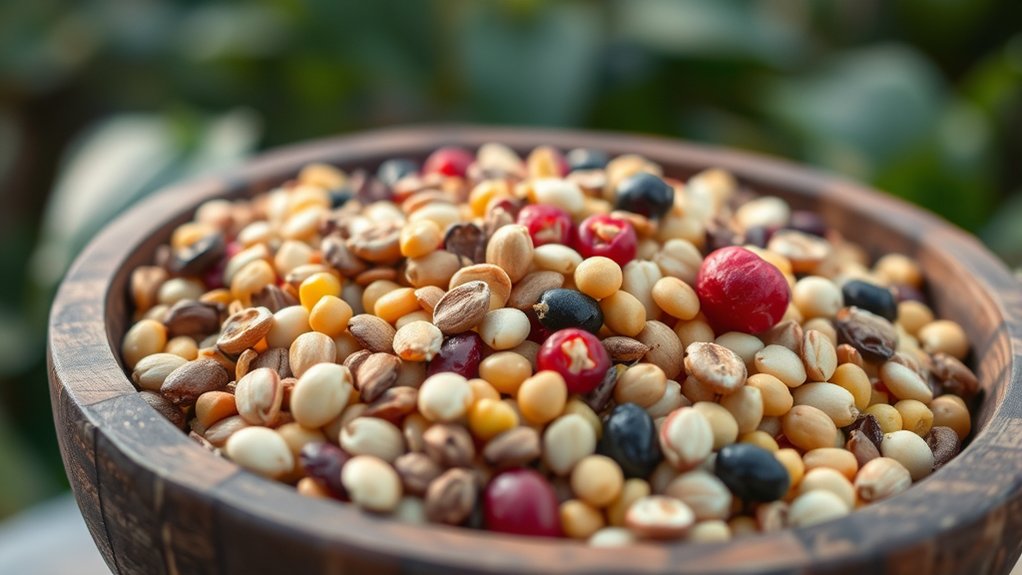
Bird food contains a mix of seeds, grains, nuts, dried fruits, and sometimes insects to meet different birds’ dietary needs. You’ll find energy-rich carbs, healthy fats, and proteins that support growth, migration, and daily activity.
Vitamins and minerals are often added to boost immunity and overall health.
Different ingredients cater to species and seasonal demands, ensuring birds stay healthy year-round. Keep exploring to find out how to pick the best blends for your feathered visitors.
Key Takeaways
- Bird food typically contains seeds, grains, nuts, dried fruits, and insects to meet diverse dietary needs.
- Carbohydrates from seeds and grains provide essential energy for flying, foraging, and maintaining body heat.
- Proteins and healthy fats from nuts and legumes support muscle growth, energy, and bone health.
- Vitamins, minerals, antioxidants, and preservatives enhance nutrition, immunity, and shelf life of bird food.
- Ingredient types vary by bird species and season, matching natural diets and supporting migration or nesting.
Main Types of Ingredients in Bird Food
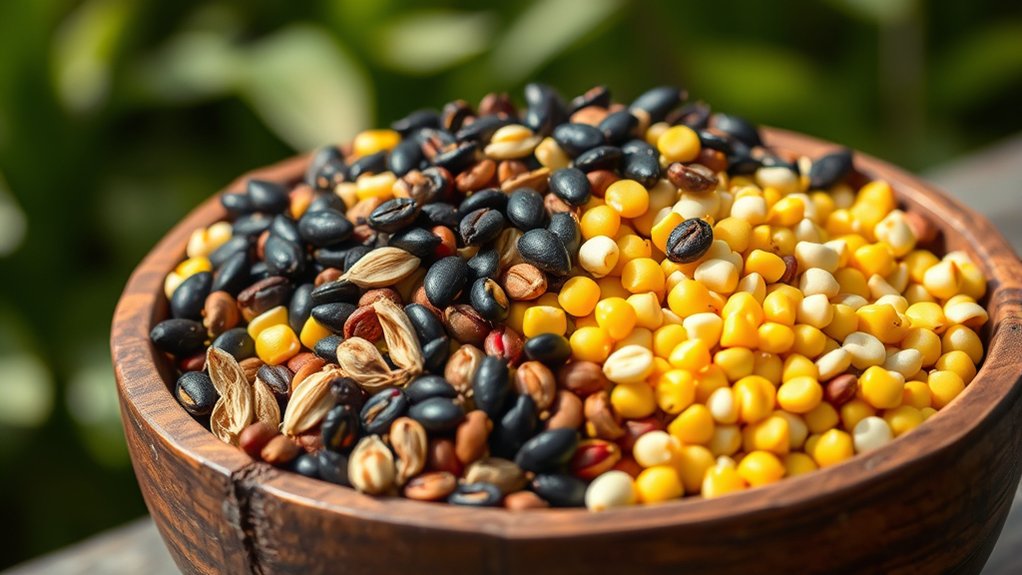
When you choose bird food, understanding its main ingredients helps you pick the best option for your feathered friends. Bird food typically contains a mix of seeds, grains, nuts, fruits, and sometimes insects. Each ingredient supports different needs, especially during critical times like bird migration and nest building.
During migration, birds require high-energy foods to fuel their long journeys, so ingredients rich in fats and proteins are essential. For nest building, birds often need nutrients that support feather growth and egg production, which come from protein-rich sources like insects or nuts.
You’ll also find blends with vitamins and minerals that keep birds healthy year-round. By knowing these ingredients, you can tailor your bird food to support their natural behaviors and seasonal demands. Choosing the right mix guarantees your backyard visitors stay strong, healthy, and ready for whatever nature asks of them, from migration flights to raising their young.
Why Seeds and Grains Are Essential in Bird Food
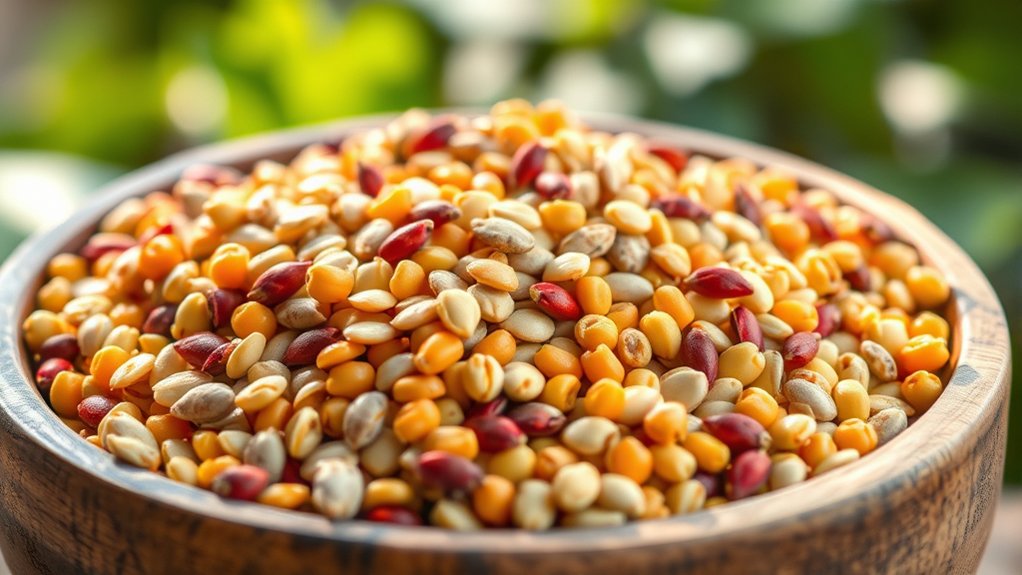
You’ll find seeds and grains are packed with essential nutrients that keep birds healthy and active. For example, common grains like millet and oats provide crucial carbohydrates. These give birds the energy they need every day. When you understand these ingredients, it’s easier to pick the best mix for your feathered friends.
Nutritional Benefits of Seeds
Why do seeds and grains hold such a pivotal place in bird diets? They provide essential nutrients that fuel bird migration and improve feather coloration, which is critical for survival and mating. Seeds are rich in fats, proteins, and vitamins.
These nutrients give birds the energy and nourishment they need for long flights and vibrant plumage.
| Nutrient | Benefit | Example Effect |
|---|---|---|
| Fats | High energy source | Sustains long migration |
| Proteins | Builds muscle and feathers | Improves feather coloration |
| Vitamins (A, E) | Supports immune health | Boosts overall vitality |
Common Grains in Mixes
Seeds provide birds with essential nutrients, but grains also play a significant role in their diet. When you include common grains like millet, corn, and oats in bird food mixes, you support their overall health and survival.
These grains supply vital vitamins and minerals that influence feather coloration factors, helping birds maintain vibrant, healthy plumage. Furthermore, grains contribute to energy reserves that are key during bird migration patterns, where long flights demand extra stamina.
Energy Provided by Carbohydrates
Although birds get nutrients from many sources, carbohydrates in seeds and grains provide the crucial energy they need daily. When you feed birds with these ingredients, you support their high bird metabolism, which demands quick and efficient energy release.
Carbohydrates break down into glucose through carbohydrate digestion, fueling essential activities like flying, foraging, and maintaining body heat. Without enough carbohydrates, birds can become lethargic or struggle to maintain energy levels.
Seeds and grains are packed with starches and sugars that digest rapidly, making them an efficient energy source. So, when choosing bird food, prioritize mixes rich in these carbohydrates to help birds stay active and healthy throughout the day.
Your careful selection directly impacts their vitality and overall well-being.
How Nuts and Legumes Boost Bird Nutrition
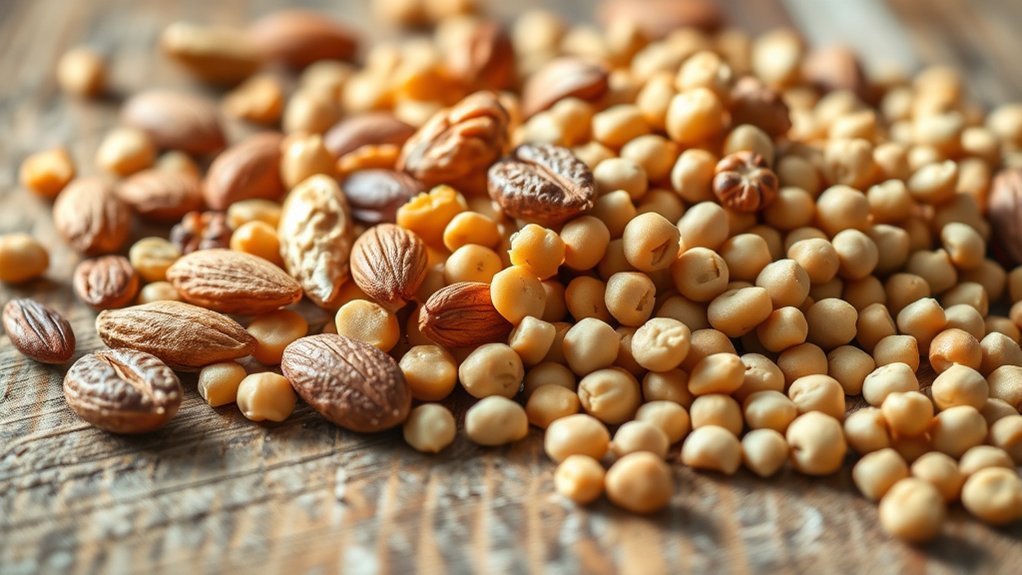
Because nuts and legumes are packed with essential nutrients, they play a crucial role in boosting bird nutrition. When you include these ingredients in bird food, you’re providing birds with the protein, fats, and minerals they need for critical activities like bird migration and nest building. These nutrients help birds stay energized and healthy throughout their demanding journeys and construction efforts.
Here’s how nuts and legumes benefit birds:
- Supply high-quality protein to support muscle repair and growth.
- Offer healthy fats that provide long-lasting energy for migration.
- Contain essential minerals like calcium and magnesium, indispensable for strong bones and effective nest building.
- Deliver fiber that aids digestion and nutrient absorption.
The Role of Dried Fruits in Bird Food Mixes
When you add dried fruits to bird food mixes, you introduce natural sweetness and essential nutrients that many birds crave. Dried fruits like raisins, cranberries, and apricots provide energy through natural sugars while also supplying vitamins and fiber. These ingredients make bird food varieties more appealing and diverse, encouraging birds to eat a balanced diet.
You’ll find that dried fruits complement seeds and nuts by adding texture and flavor variety. Their chewy consistency contrasts with crunchy components, keeping birds interested and satisfied. Plus, dried fruits are easy to store and have a long shelf life, making them a practical choice for both commercial mixes and homemade blends.
Including dried fruits in bird food varieties helps mimic the natural diet of many wild birds, which often consume berries and fruits in the wild. By incorporating these tasty ingredients, you support birds’ dietary needs and enhance their overall health and enjoyment.
Why Vitamins and Minerals Matter for Bird Health
You should know that vitamins are super important for your bird’s immune system and energy levels. Plus, minerals like calcium and iron are crucial—they help with bone strength and oxygen transport. When you understand these nutrients, it’s easier to pick the best food to keep your bird healthy and happy.
Essential Vitamins Overview
Vitamins and minerals play an essential role in keeping your bird healthy and active. They support fundamental functions like energy production, immune defense, and tissue repair. Without adequate vitamins, your bird can struggle during migration or show dull feather coloration.
Here are four key vitamins you should know about:
- Vitamin A supports vision, skin, and mucous membranes. It’s indispensable for overall health.
- Vitamin D helps calcium absorption, which is necessary for strong bones and eggshell quality.
- Vitamin E acts as an antioxidant, protecting cells from damage during stressful events like migration.
- B Vitamins boost energy metabolism and nervous system function.
Providing a balanced diet rich in these vitamins ensures your bird stays vibrant and ready for natural behaviors like migration and molting.
Role of Key Minerals
Minerals work alongside vitamins to keep your bird healthy and strong. They play a vital role in enhancing feather coloration, making your bird’s plumage vibrant and attractive. Proper mineral intake also supports nesting behavior, making certain your bird builds safe and sturdy nests.
Without these key minerals, your feathered friend might struggle with dull feathers or poor reproductive habits.
| Mineral | Benefit to Your Bird |
|---|---|
| Calcium | Strong bones, eggshell quality |
| Iron | Healthy blood, bright feathers |
| Zinc | Immune function, nesting drive |
Including these minerals in your bird food makes sure your pet stays lively and active. You’ll notice the difference in their appearance and behavior, helping them thrive in every season.
How Protein Supports Different Bird Species
Although protein needs vary among bird species, it plays an essential role in their growth, feather development, and overall health. When you consider bird migration and nesting habits, protein becomes even more critical. Migratory birds require extra protein to fuel long flights, while nesting birds need it to support egg production and chick growth.
Here’s how protein supports different bird species:
- Energy for Migration: Protein helps rebuild muscles and maintain stamina for long-distance flights.
- Feather Growth: Birds need protein to develop strong, vibrant feathers essential for insulation and flight.
- Reproductive Health: Adequate protein boosts egg quality and chick survival rates during nesting.
- Immune Function: Protein strengthens the immune system, helping birds resist diseases in various environments.
Common Additives and Preservatives in Bird Food
You’ll often find additives in bird food that improve flavor, texture, or nutrition to keep your feathered friends interested and healthy. These little extras make mealtime more enjoyable for your birds. Preservatives are also common in bird food. They help extend the shelf life and prevent spoilage, so the food stays fresh longer. Knowing what these ingredients do can really help you pick the best options for your birds.
Typical Additives Explained
Because bird food must stay fresh and nutritious, manufacturers include various additives and preservatives to protect it from spoilage and contamination. These additives also support birds during critical times like migration and nesting when they need extra energy and nutrients.
Here are four common additives you’ll find in bird food:
- Vitamins – Boost immune systems and aid recovery during migration.
- Minerals – Support eggshell formation and overall health during nesting.
- Antioxidants – Prevent nutrient breakdown, keeping food fresh longer.
- Flavor Enhancers – Encourage consumption, especially during demanding periods.
Common Preservatives Used
Along with vitamins, minerals, antioxidants, and flavor enhancers, preservatives play a key role in keeping bird food safe and nutritious. You’ll often find common preservatives like vitamin E (tocopherols) and vitamin C, which naturally prevent spoilage and rancidity. These help maintain freshness, especially important during bird migration when food might be stored longer.
Synthetic preservatives, such as BHA or BHT, are less common but still used to extend shelf life. Since birds’ nesting habits demand reliable food sources, these preservatives guarantee the food remains stable without harmful effects.
When you select bird food, knowing these preservatives protect nutrient quality lets you provide safe, reliable nourishment that supports birds throughout their seasonal movements and breeding cycles.
How Bird Food Ingredients Vary by Species and Diet
Although all birds need balanced nutrition, their food ingredients vary widely depending on species and diet. You’ll notice that bird migration and nesting habits influence what they need to eat at different times of the year. For example, migratory birds require high-energy seeds and fats to fuel their long journeys. Birds focused on nesting might need more protein for raising chicks.
Bird nutrition varies with species, migration, and nesting, influencing their dietary needs throughout the year.
Here’s how ingredients shift based on species and diet:
- Seed-eating birds prefer a mix of sunflower seeds, millet, and safflower for energy.
- Insectivores rely on mealworms and other protein-rich ingredients.
- Fruit-eaters thrive on dried fruits and nuts added to their diet.
- Nectar feeders need sugar-rich ingredients like dried fruit or specialized nectar powders.
Understanding these variations helps you provide the right nutrition tailored to each bird’s lifestyle and habits.
What to Look For When Reading Bird Food Labels
Knowing how bird food ingredients vary by species and diet helps you make smarter choices when shopping for bird feed. When reading labels, focus first on the primary ingredients. Seeds like sunflower, millet, and cracked corn provide essential energy, especially during bird migration when birds need extra fuel.
Look for foods rich in protein and fat that support nest building and overall health. Avoid fillers like colored pellets or excessive fillers that may offer little nutritional value. Check if the label mentions added vitamins or minerals, which can be vital during breeding seasons.
Also, consider the specific bird species you want to attract; some mixes cater to songbirds, while others are better for finches or woodpeckers. Finally, watch for freshness. Stale ingredients lose nutritional benefits.
How Homemade Bird Food Ingredients Compare to Store-Bought
When you make bird food at home, you can control exactly which ingredients go into the mix, tailoring it to the needs of your local bird species. Homemade bird food lets you cater to specific bird dietary preferences, ensuring they get the nutrients they need without fillers or preservatives often found in store-bought blends.
Here’s how homemade and store-bought options compare:
- Ingredient Control – You choose fresh, natural ingredients, avoiding unwanted additives.
- Customization – You can adjust recipes seasonally or based on bird activity.
- Food Presentation Techniques – Homemade mixes allow creative presentation, like layering or mixing textures to attract different birds.
- Cost and Convenience – Store-bought is ready to use but might not fit all dietary needs or local species.
Frequently Asked Questions
How Should Bird Food Be Stored to Maintain Freshness?
You should store bird food in airtight storage containers to keep seed varieties fresh and prevent moisture or pests from getting in. Make sure the containers are clean and dry before adding the seeds.
Keep them in a cool, dark place away from direct sunlight and humidity. Regularly check the seed varieties for any signs of mold or spoilage. And try to avoid buying more than you can use within a few months to maintain freshness.
Can Birds Develop Allergies to Certain Bird Food Ingredients?
Yes, birds can develop bird food allergies, just like humans. If you notice your feathered friend scratching, sneezing, or showing feather loss, it might be an allergic reaction.
You should watch for toxic ingredients to avoid, such as chocolate or avocado, which can harm birds. Always choose high-quality bird food and introduce new ingredients gradually to spot any sensitivities.
Consulting a vet helps you keep your bird safe and healthy.
How Often Should I Change the Bird Food to Prevent Spoilage?
You should change bird food every one to two weeks to prevent spoilage and maintain freshness. Bird food shelf life varies depending on storage conditions, but old or damp seed can harbor mold or bacteria.
Watch for signs of spoiled bird food like a rancid smell, discoloration, or clumping. Regularly cleaning the feeder and storing food in a cool, dry place helps keep it fresh and safe for your birds.
Are There Any Toxic Ingredients to Avoid in Bird Food?
You wouldn’t want to feed your bird something that’s like a dark cloud over its bright wings. Yes, you should avoid toxic additives and harmful preservatives in bird food, as they can cause illness or even be fatal.
Stay clear of foods with artificial colors, flavors, or excessive salt. Always choose natural, fresh ingredients to keep your feathered friend healthy and vibrant, so it can soar freely and joyfully.
What Is the Best Way to Introduce New Bird Food to Pet Birds?
To introduce new bird food, start by mixing it gradually with their current diet. This helps them adjust to different bird flavor profiles without stress.
Focus on seed variety importance by offering small amounts of various seeds to spark their curiosity. Observe their reactions and slowly increase the new food ratio over a week or two.
This gentle changeover encourages your pet birds to investigate and accept new flavors comfortably.
Conclusion
When choosing bird food, remember: it’s not just about seeds and nuts but a balanced mix of vitamins, minerals, and sometimes a sprinkle of dried fruits. Think of it like a colorful mosaic—each ingredient plays an essential part in your bird’s health and happiness.
By understanding what’s inside, you’re not just feeding them; you’re nourishing their spirit. So, next time you pick a bag, look closer and feed smarter with the right ingredients in bird food!