Is Feeding Ducks Bread Bad and How to Feed Them Safely
Feeding ducks bread might seem like a harmless way to connect with nature, but if you’ve ever wondered whether it’s actually good for them, you’re not alone. Many people struggle with wanting to help ducks without realizing that some common feeding habits can do more harm than good.
So, what’s the best way to feed ducks safely while keeping them healthy and their environment clean?
Feeding ducks bread is bad because it lacks nutrients and can cause health problems like malnutrition and “angel wing.” It also pollutes water and attracts pests, harming the environment. Is Feeding Ducks Bread Bad.
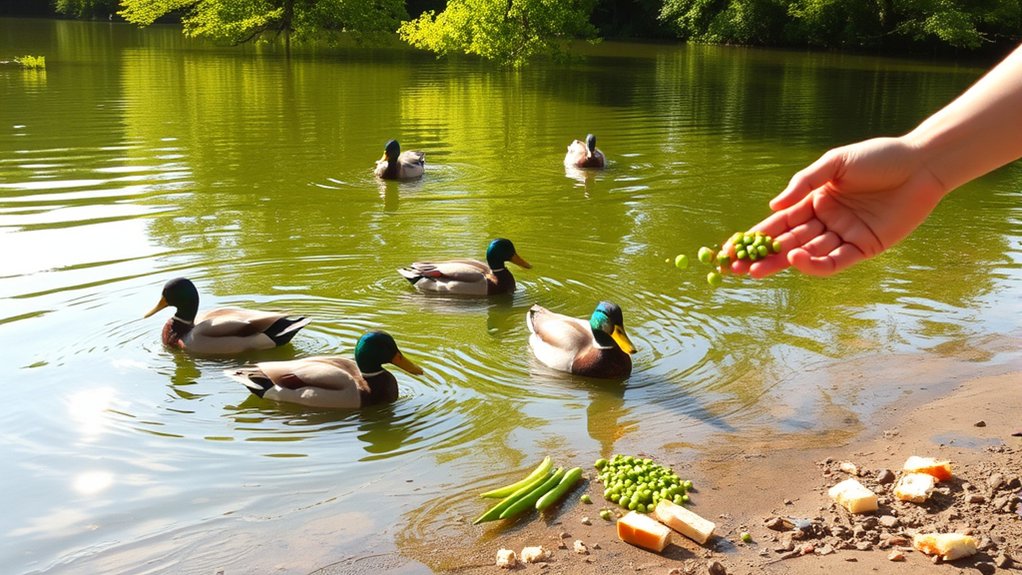
Instead, you should feed ducks healthy options like cracked corn, oats, or chopped veggies, and only in small amounts at quiet, open spots away from nesting areas.
Following these simple steps helps keep ducks healthy and their habitat clean. Keep exploring to find out how you can make a bigger difference.
Key Takeaways
- Feeding ducks bread is harmful because it offers poor nutrition and can cause malnutrition, health issues, and disrupt their natural foraging habits.
- When bread decomposes, it pollutes water, promotes harmful algae blooms, and attracts pests, which damages aquatic ecosystems.
- Overfeeding bread leads to overcrowding, stress, the spread of disease, and interferes with ducks’ natural behaviors and reproductive success.
- To feed ducks safely, offer small amounts of natural foods like cracked corn, oats, and vegetables. Avoid moldy or processed items.
- Support habitat health by feeding responsibly, maintaining water quality, minimizing human disturbance, and encouraging ducks to forage naturally.
Why Feeding Ducks Bread Harms Their Health
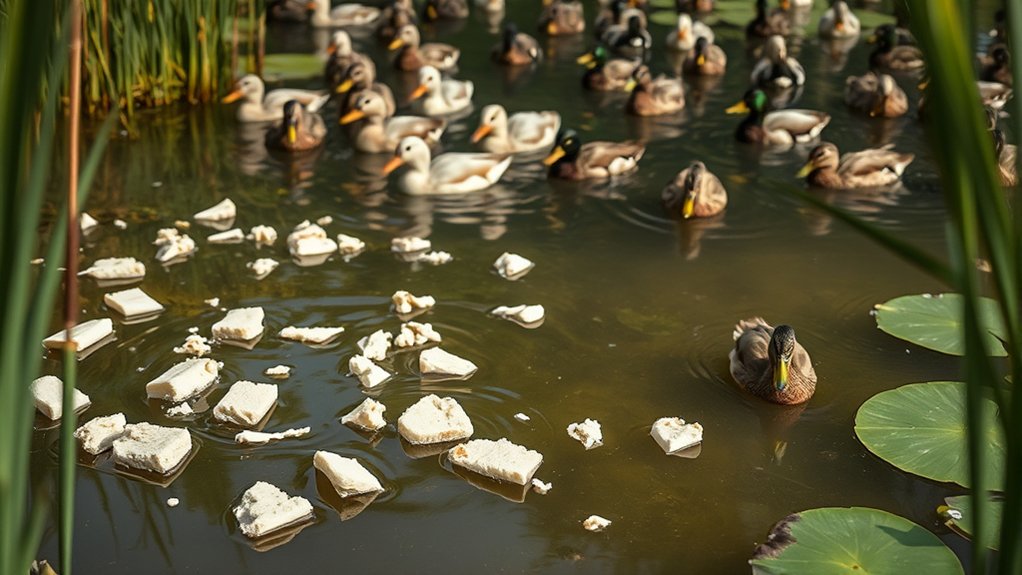
Although it might seem harmless, feeding ducks bread can seriously harm their health. When you feed ducks bread, you disrupt their natural feeding habits. Ducks are meant to forage for a variety of foods like plants, insects, and small fish, which provide the nutritional balance they need.
Bread, especially white bread, offers little to no nutritional value and fills their stomachs without nourishing them. Feeding habits shaped by bread lead ducks to rely on human handouts, reducing their instinct to seek natural food sources.
This dependency can cause malnutrition and weaken their immune systems. You might notice ducks becoming lethargic or unhealthy after frequent bread feeding. Furthermore, uneaten bread can pollute water environments, harming not only ducks but other wildlife too.
How Feeding Bread Affects Duck Nutrition and Growth
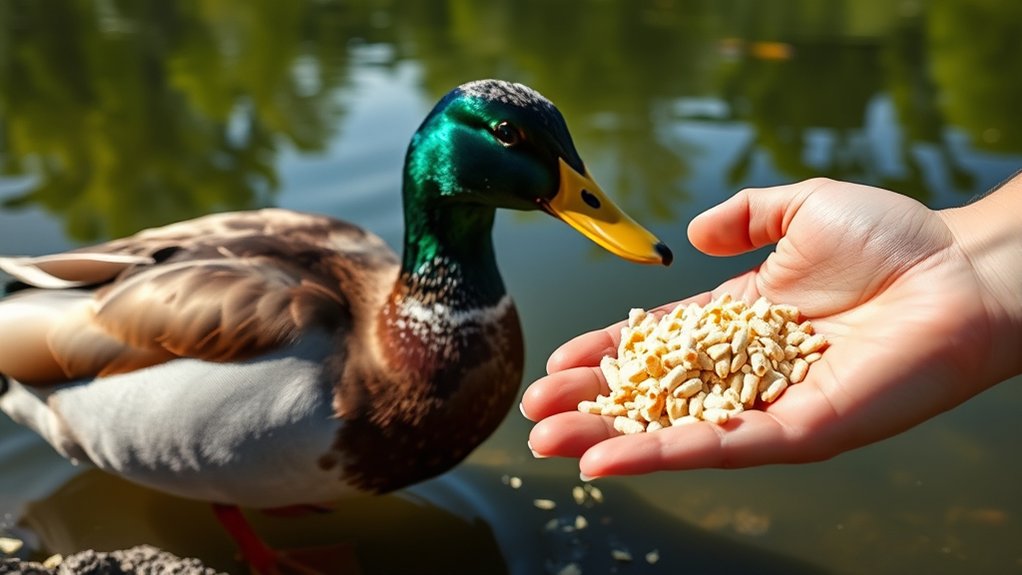
Understanding how bread affects duck nutrition and growth helps explain why it’s harmful beyond just disrupting their feeding habits. When you feed ducks bread, you’re giving them food that lacks essential nutrients they need for healthy development. Bread is high in carbohydrates but low in proteins, vitamins, and minerals, leading to nutrient deficiency.
Over time, ducks relying on bread can suffer from weakened immune systems and poor feather quality. This nutrient imbalance can cause growth impairment, especially in young ducks. Without the right nutrients, their bones and muscles don’t develop properly, making them more vulnerable to disease and injury.
You might notice ducks that appear smaller or less active because their bodies aren’t getting what they need. Instead of bread, offering nutrient-rich foods like cracked corn, oats, or duck pellets supports their growth and overall health, helping you care for ducks responsibly.
How Feeding Bread Harms the Environment
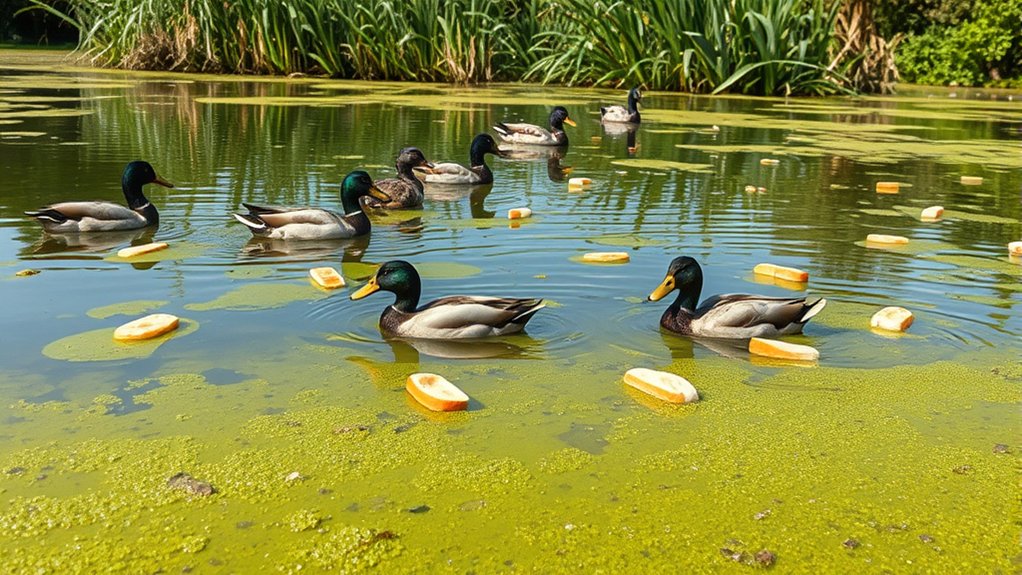
When you toss bread into ponds or lakes, it doesn’t just affect the ducks. It disrupts the entire ecosystem. Bread decomposes quickly, leading to excess nutrients in the water that fuel harmful algae blooms.
These blooms reduce oxygen levels, threatening aquatic life and upsetting the balance you want to protect. Also, uneaten bread attracts pests, which can disturb local wildlife and spread disease.
To support wildlife conservation and eco-friendly practices, avoid feeding bread and choose natural, nutrient-rich foods instead.
| Environmental Impact | Cause | Eco Friendly Solution |
|---|---|---|
| Algae Blooms | Excess nutrients from bread | Limit feeding; use natural feeds |
| Oxygen Depletion | Decomposing bread | Maintain clean water sources |
| Pest Attraction | Leftover bread | Remove uneaten food promptly |
| Wildlife Behavior Changes | Unnatural food sources | Promote natural foraging |
| Water Quality Decline | Bread residues | Encourage eco friendly practices |
Signs Ducks Suffer From Feeding Bread
You might notice ducks having health problems like swollen joints or struggling to swim after eating bread. It’s pretty common for them to show these signs when their diet isn’t right.
Sometimes, you’ll also see changes in how they act—maybe they become more aggressive or just seem really tired and sluggish. These behavioral shifts can be a big clue that the bread is doing more harm than good.
Health Issues Indicators
Although feeding bread to ducks may seem harmless, it can lead to several health problems that you should watch for. When you engage in health monitoring, keep an eye out for signs like swollen joints, lethargy, or unusual feather loss. These often indicate nutritional deficiencies caused by bread’s low nutrient content.
Bread can also cause a condition called “angel wing,” where wing feathers grow abnormally, impairing flight. Furthermore, leftover bread can pollute water, encouraging bacteria and mold growth, which increases disease risk.
To support disease prevention, avoid feeding bread and instead offer appropriate foods like cracked corn or duck pellets. By recognizing these health issues indicators early, you’ll help protect ducks from the harmful effects of improper feeding and promote their overall well-being.
Behavioral Changes Observed
Since bread lacks essential nutrients, ducks often show noticeable changes in behavior after consuming it. You might see shifts in their feeding habits, like aggressive begging or refusing natural foods. These behavioral shifts signal that the ducks aren’t getting the nourishment they need. Watching for these signs helps you understand when bread feeding is harmful.
| Behavioral Change | Description | Impact on Ducks |
|---|---|---|
| Aggressive Begging | Ducks crowd and push others | Stress and competition |
| Refusal of Natural Food | Ignoring insects or plants | Nutritional deficiencies |
| Lethargy | Reduced movement and activity | Weakness and vulnerability |
| Overcrowding | Clustering near food sources | Disease spread risk |
| Increased Dependency | Reliance on human-provided food | Loss of survival skills |
Pay close attention to these shifts to protect duck health.
What to Feed Ducks Instead of Bread
If you want to feed ducks something better than bread, try healthy options like cracked corn, oats, or birdseed. These are easy to find and much better for them. You can also make safe homemade treats using simple ingredients like chopped vegetables or cooked rice. These choices give ducks the nutrients they need without harming their health. So next time you visit the pond, skip the bread and go for something that really helps them thrive!
Healthy Duck Food Options
When you want to feed ducks without harming their health, choosing nutritious alternatives to bread is essential. During duck migration, providing healthy food supports their energy needs and respects natural feeding etiquette.
Avoid disrupting their foraging habits by offering natural, safe options.
| Healthy Duck Food | Benefits |
|---|---|
| Cracked corn | High energy, easy to digest |
| Oats (uncooked) | Fiber-rich, supports digestion |
| Chopped lettuce | Provides hydration, nutrients |
| Peas (thawed) | Protein, vitamins |
| Birdseed mix | Balanced nutrients |
Feeding these foods helps ducks stay healthy and encourages natural behaviors. Remember, always feed in moderation and avoid overfeeding to maintain their well-being during migration and throughout the year.
Safe Homemade Duck Treats
Choosing healthy foods like cracked corn or peas is a great start, but you can also prepare simple homemade treats that ducks will enjoy and benefit from. When feeding ducks, especially during duck migration seasons, it’s important to respect feeding regulations to protect their health and environment.
Here are four safe homemade duck treats you can make:
- Chopped lettuce and spinach, rich in nutrients and easy to digest.
- Unsalted oats, which provide energy without harmful additives.
- Cooked rice or pasta, plain and soft, great for filling.
- Finely chopped vegetables like carrots or peas to add vitamins and variety.
How to Feed Ducks Safely and Avoid Overcrowding
Although feeding ducks can be a fun and rewarding experience, you need to do it carefully to keep both the birds and their environment safe. When visiting urban parks, follow proper feeding etiquette by offering only appropriate foods in small amounts.
Feeding ducks can be enjoyable, but always offer suitable foods in small amounts to protect birds and their habitat.
Avoid tossing large quantities at once, as this can attract too many ducks and lead to overcrowding. Overcrowding stresses the birds, increases disease risk, and damages the habitat.
To feed ducks safely, scatter food gently over the water or on the grass to prevent competition and aggression. Try to feed in different spots to spread out the birds and reduce crowding.
Also, avoid feeding near nesting areas or where ducks gather in large groups. By respecting feeding etiquette in urban parks and controlling portions, you help maintain a healthy environment for ducks and ensure your feeding experience stays enjoyable and safe for everyone involved.
Where and When to Feed Ducks Safely
To feed ducks safely, you need to pick the right places and times. Choosing spots where ducks naturally gather helps maintain good feeding etiquette, preventing overcrowding and stress. Also, consider seasonal considerations; feeding during breeding or molting seasons can disrupt their natural behaviors.
Here are four tips to guide you:
- Feed ducks at quiet, open areas like ponds or lakes where they can easily swim away.
- Avoid feeding early in the morning or late at night to respect their natural routines.
- Choose calm weather days to reduce stress on ducks and ensure your feeding is safe.
- Be mindful of seasonal changes. Limit feeding during sensitive times like nesting season to protect their health.
Common Mistakes When Feeding Ducks Bread
While feeding ducks bread might seem harmless, many people make mistakes that can harm the birds and their environment. One common error is ignoring proper feeding etiquette, such as overfeeding or tossing large amounts of bread at once. This disrupts the ducks’ natural diet and can lead to health issues.
Another frequent mistake comes from misconceptions about the duck diet. Many believe bread is nutritious for ducks, but it actually offers little nutritional value.
| Mistake | Impact on Ducks | How to Avoid It |
|---|---|---|
| Overfeeding Bread | Causes malnutrition | Feed small portions |
| Feeding Moldy Bread | Leads to illness | Always offer fresh food |
| Ignoring Natural Diet | Disrupts ecosystem | Provide healthier options |
How to Encourage Natural Foraging in Ducks
If you want to encourage natural foraging in ducks, a good place to start is by offering them natural food options like seeds and aquatic plants instead of processed snacks. This way, they get to eat what they would normally find in the wild.
Another thing that really helps is creating duck-friendly habitats. Make sure there’s plenty of water and lots of vegetation around so the ducks can explore and find their own food easily.
Also, it’s a good idea to limit the amount of human food you give them. Sticking to natural foods keeps their diet healthy and balanced, which is better for their overall well-being.
Provide Natural Food Options
Although feeding ducks bread might seem easy, encouraging them to forage naturally benefits their health and the environment. To support wildlife conservation and improve urban feeding practices, you can provide natural food options that help ducks get the nutrients they need without harming local ecosystems.
Try these tips:
- Offer chopped vegetables like peas, corn, or lettuce.
- Scatter birdseed or oats on the water surface.
- Plant native aquatic plants near feeding areas.
- Avoid processed foods that disrupt ducks’ diets.
Create Duck-Friendly Habitats
Encouraging ducks to forage naturally goes beyond offering healthy food. It involves shaping their environment to support their habits. You can create duck-friendly habitats by planting native aquatic plants and grasses that provide natural food and shelter.
Avoid artificial nesting structures because they can disrupt local ecosystems and attract predators. Instead, improve natural nesting areas by preserving reeds and shrubs near water bodies.
Keep an eye on water pollution since contaminated water harms ducks and reduces available food sources. Prevent runoff by minimizing chemicals and litter near ponds or lakes.
Limit Human Food Offerings
Why should you limit feeding ducks human food? When you feed ducks in urban parks, sticking to proper feeding etiquette helps protect their health and encourages natural foraging habits. Human food, especially bread, offers little nutritional value and can disrupt their diet.
Instead, you want to support their instinct to find natural food sources.
Here’s how to encourage natural foraging while practicing good feeding etiquette:
- Avoid giving bread or processed snacks to ducks.
- Offer natural foods like grains, peas, or duck pellets in small amounts.
- Allow ducks to search for insects, plants, and aquatic life on their own.
- Teach others about the importance of these habits to maintain healthy urban park ecosystems.
Tips to Enjoy Ducks Without Harming Them or Their Habitat
When you feed ducks, you play a key role in their health and the environment around them. Practicing good feeding etiquette helps you enjoy bird interaction without causing harm. Always choose safe, natural foods like cracked corn, oats, or duck pellets instead of bread.
Avoid overfeeding to prevent water pollution and overdependence on humans. Feed ducks in moderation and scatter food on the water’s surface to mimic their natural foraging behavior. Keep a respectful distance to avoid stressing the birds and disturbing their habitat.
Never feed ducks near nesting sites or in crowded areas to minimize disruption. After feeding, clean up any leftover food or trash to protect the environment. By following these tips, you’ll support healthy ducks and maintain a balanced ecosystem, ensuring your visits remain enjoyable and responsible.
Frequently Asked Questions
Can Feeding Ducks Bread Cause Allergic Reactions in Humans Nearby?
Feeding ducks bread rarely causes allergy risk or human reactions for most people nearby. However, if you’re sensitive to mold or dust, leftover bread can trigger allergies because it often molds quickly in damp environments.
You should avoid throwing large amounts to prevent airborne mold spores, which might cause mild human reactions like sneezing or itching. Staying cautious helps reduce any potential allergy risk when feeding ducks near you.
Are There Specific Duck Species That Prefer Bread Over Natural Food?
No specific duck species prefer bread over their natural diet. Ducks’ feeding habits revolve around aquatic plants, insects, and small fish, which form their ideal duck diet.
While some ducks might nibble on bread if it’s offered, it’s not their natural choice. You should focus on providing foods that align with their natural feeding habits to keep ducks healthy and support their nutritional needs properly.
How Does Bread Feeding Affect Duck Migration Patterns?
Oh sure, feed ducks bread, and watch them skip their grand migratory adventure like it’s a canceled vacation. The impact on migration is real. Ducks relying on bread can develop altered flight patterns, becoming lazier and less inclined to travel long distances.
You’re basically turning these majestic travelers into couch potatoes who prefer park snacks over natural instincts. This disrupts their survival skills and throws off the entire ecosystem’s balance. Not exactly the legacy you want to leave.
Is It Legal to Feed Ducks Bread in Public Parks?
Whether you can feed ducks bread in public parks depends on local legal regulations and feeding restrictions. Many parks have rules against feeding bread because it can harm ducks and pollute water.
Before you toss bread, check the specific regulations in your area to avoid fines or penalties. Instead, you can choose approved foods like cracked corn or oats, which are safer and often allowed under these feeding restrictions.
Can Feeding Ducks Bread Influence Their Mating Behaviors?
Feeding ducks bread can disrupt their healthy diet and cause behavioral changes that influence their mating behaviors. When you offer bread, you’re encouraging poor nutrition, which weakens their health and reduces their attractiveness to mates.
You’re also promoting dependency, which shifts their natural instincts and social interactions. To support healthy mating behaviors, you should feed ducks appropriate foods like cracked corn or oats, helping them stay strong and behave naturally.
Conclusion
Feeding ducks bread might seem harmless, but it can lead to malnutrition and environmental harm. You wouldn’t want to give them empty calories!
Did you know that over 90% of bread given to ducks goes uneaten and pollutes waterways? Instead, try offering healthier options like peas or corn, and feed them in moderation.
By making small changes, you’ll help ducks stay healthy and their habitats thrive. Feeding ducks bread is common, but choosing better foods lets you enjoy nature responsibly.