What Is a Mallard Duck and How Can You Identify It?
If you’ve ever tried to spot or identify ducks in the wild, you’re not alone—many people struggle to tell different species apart. It can be tricky, especially with so many waterfowl sharing similar habitats. That’s why understanding key features of the mallard duck can make your birdwatching experience much more enjoyable.
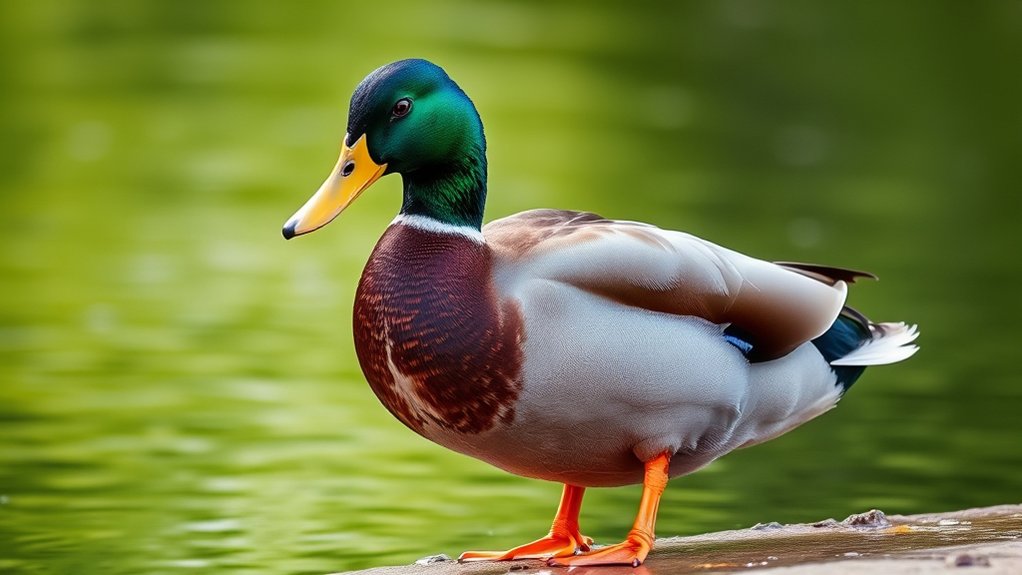
A mallard duck is a common waterfowl found in ponds, rivers, wetlands, and urban parks across North America, Europe, and Asia. You can identify males by their glossy green heads, bright yellow bills, and chestnut-brown chests.
Females have camouflaging mottled brown feathers and orange bills with dark marks. Both show a bright blue wing patch during flight.
Mallards dabble for food in the water and are active throughout the year. Keep exploring to uncover their unique behaviors and importance.
Key Takeaways
- Mallard ducks are common waterfowl found in North America, Europe, and Asia. They thrive in wetlands and urban parks.
- Male mallards have a glossy green head, yellow bill, white neck ring, chestnut-brown chest, and gray body.
- Female mallards display mottled brown feathers and an orange bill with dark markings for camouflage.
- Both sexes feature a bright blue wing speculum edged in white, visible during flight.
- Mallards are active year-round, vocalize distinctly, and exhibit behaviors like dabbling and group foraging.
What Is a Mallard Duck and Where Are They Found?
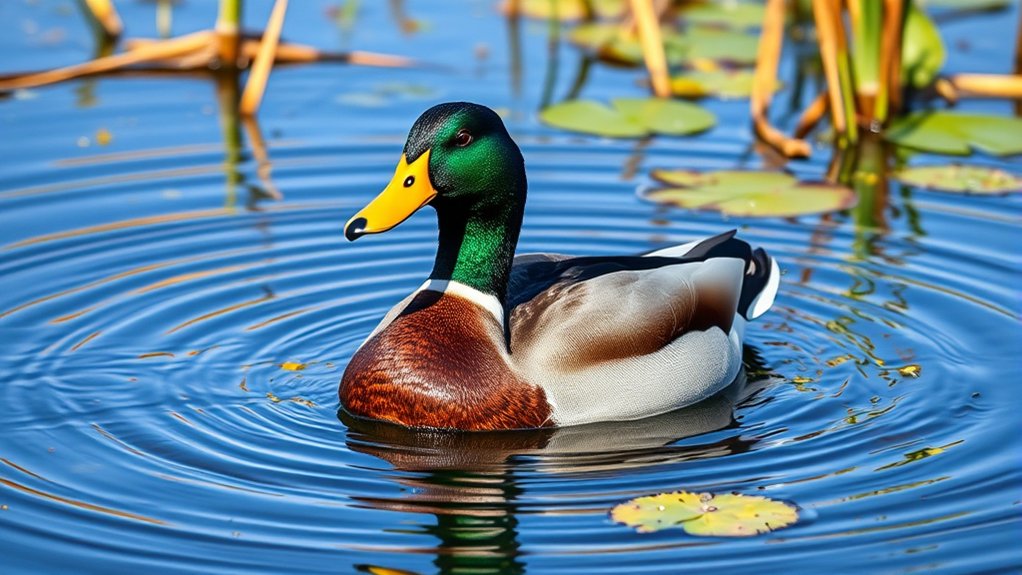
What makes the mallard duck so recognizable? You’ll spot them easily thanks to their widespread presence and familiar shape. Mallards are one of the most common ducks across North America, Europe, and parts of Asia. They thrive in wetlands, ponds, rivers, and even urban parks, adapting well to many environments.
When observing their diet habits, you’ll notice they’re omnivores, feeding on aquatic plants, insects, and small fish, which helps them survive in diverse habitats. Their nesting behavior is just as interesting; mallards usually nest on the ground near water, often hidden among tall grasses or shrubs to protect their eggs. You might even find their nests in unexpected urban spots.
Understanding where mallards live and how they feed and nest gives you a clearer picture of this adaptable and widespread duck species, making it easier to identify and appreciate them in the wild.
How to Recognize a Male Mallard Duck
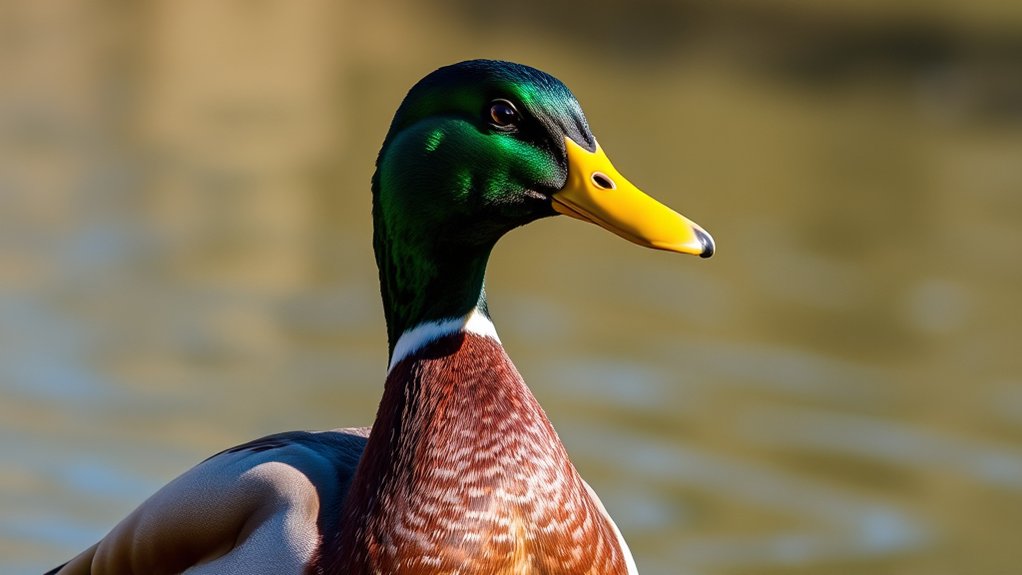
Although male mallards share the general shape of their species, their vibrant coloring makes them stand out easily. You’ll notice their glossy green heads, bright yellow bills, and striking white neck rings, which contrast sharply with their chestnut-brown chests and gray bodies.
Male mallards stand out with glossy green heads, bright yellow bills, and bold white neck rings against chestnut and gray feathers.
These vivid colors help you quickly identify a male, especially during the breeding season when their plumage is at its brightest.
When observing their behavior, keep in mind that their mallard diet primarily consists of aquatic plants, insects, and small fish. They forage by dabbling at water surfaces.
During mallard migration, males often travel in mixed flocks, showing off their distinctive coloring even from a distance. This combination of unique plumage and typical behaviors makes recognizing a male mallard straightforward, whether you’re spotting them in urban parks or natural wetlands.
Pay attention to these features, and you’ll easily distinguish the male mallard from others.
How to Spot Female Mallard Ducks
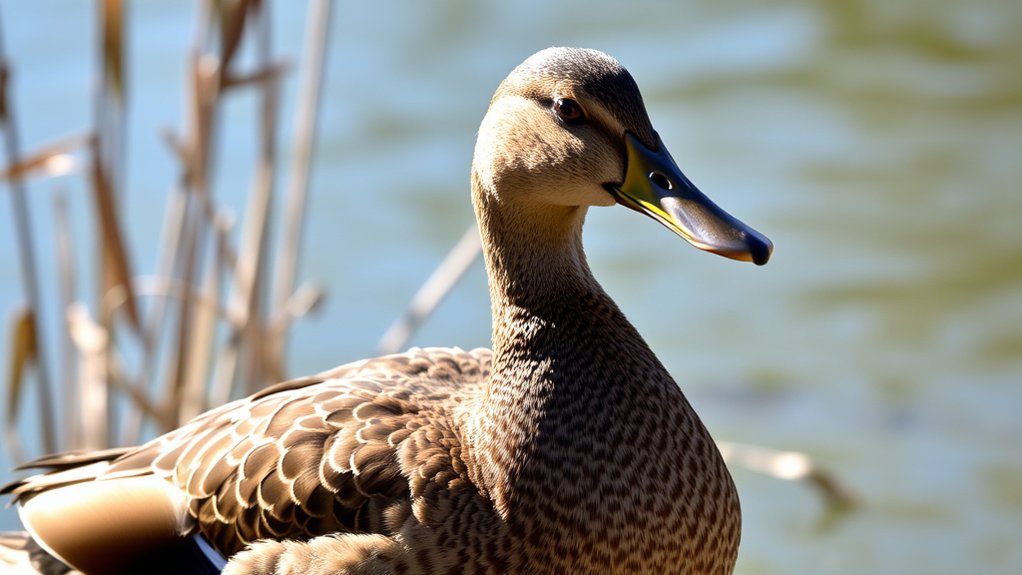
To spot a female Mallard, you’ll want to pay attention to her coloring and behavior. Unlike the flashy males, she has mottled brown feathers that help her blend right into her surroundings. You might also notice that she moves cautiously and tends to be pretty protective, especially when it’s nesting season.
Female Mallard Coloring
How can you tell a female mallard apart from her more colorful male counterpart? Female mallards have mottled brown and tan feathers that provide excellent camouflage, especially during nesting.
Their coloring might seem dull compared to the vibrant green head and bright plumage of males, but it’s perfectly suited for feather maintenance and protection. These earthy tones help females blend into their surroundings while they incubate eggs and care for ducklings.
You’ll notice a subtle, darker eye stripe and an orange bill with dark markings, distinguishing them from males. This natural coloring supports their nesting habits by keeping them hidden from predators.
Behavioral Traits of Females
Recognizing a female mallard goes beyond her coloring; her behavior offers key clues as well. You’ll notice she’s deeply involved in nest building, carefully selecting hidden spots near water.
During mating rituals, she’s more reserved compared to males, often signaling readiness through subtle movements. Watch how she tends to stay close to her ducklings, showcasing strong maternal instincts. Here’s how to spot her behavior:
- Focus on nest-building activities in concealed areas.
- Observe her quiet, deliberate mating responses.
- Note her protective behavior around young ducklings.
- See how she often forages alone or in small groups.
- Watch for her tendency to avoid loud displays males perform.
Colors and Markings That Make Mallards Stand Out
Although mallards might seem ordinary at first glance, their vibrant colors and distinctive markings quickly catch your eye once you know what to look for. Male mallards flaunt a glossy green head, a stark white collar, and a chestnut-brown chest, making them unmistakable.
Females, though more subdued, display a mottled brown pattern that provides excellent camouflage. Both sexes sport a bright blue speculum on their wings, edged in white, which flashes vividly during flight, especially noticeable during mallard migration.
These colors aren’t just for show. They reflect the mallard diet, rich in aquatic plants and insects, which helps maintain feather vibrancy. You’ll also notice the males’ yellow bills contrasting with the females’ orange ones marked with black.
How to Tell Mallards Apart From Similar Species
When you spot a duck with a glossy green head and bright blue wing patches, you might assume it’s a mallard, but several similar species share these features. To tell mallards apart, pay attention to subtle differences influenced by migration patterns and breeding behaviors. For example, some species migrate at different times or prefer distinct breeding habitats.
Here’s how to distinguish mallards from look-alikes:
- Check the bill color; mallard males usually have yellow bills, unlike some relatives with darker bills.
- Notice the size and shape of the speculum (the blue wing patch bordered by white).
- Observe the tail feathers; mallards have a distinctive curled central tail feather.
- Compare vocalizations during breeding season, as calls vary distinctly among species.
- Consider your location and timing, since migration patterns affect which species you might encounter.
When and Where Are Mallards Most Active?
Since mallards are highly adaptable, you’ll find them active throughout the year in a variety of habitats, from urban parks to rural wetlands. They’re most active during early mornings and late afternoons when they forage for food.
Understanding mallard migration helps too. During colder months, many mallards move south to find open water and abundant food, returning north in spring to breed. You’ll notice their mallard diet habits shift with the seasons; in warmer months, they favor aquatic plants and insects, while in winter, they rely more on grains and seeds.
Mallards also frequent ponds, lakes, rivers, and marshes, preferring locations that offer both food and shelter. If you want to spot them, visit these habitats during dawn or dusk when they’re busy feeding or socializing. Their flexibility in activity times and locations makes mallards one of the most commonly seen ducks throughout the year.
How Do Mallard Ducks Behave in the Wild?
If you watch closely, you’ll notice mallard ducks display a variety of social behaviors in the wild, from intricate courtship displays to coordinated group foraging. Their mating rituals are especially fascinating; males perform head-bobbing, wing-flapping, and vocal calls to attract females.
Once paired, females focus on nesting habits, selecting concealed spots near water to lay eggs safely.
You’ll also observe these common behaviors:
- Foraging in groups to find aquatic plants, insects, and small fish
- Preening to maintain their waterproof feathers
- Flying in V-shaped formations during migration
- Establishing territories during breeding season
- Engaging in playful interactions, especially among juveniles
What Sounds Do Mallard Ducks Make?
Alongside their striking behaviors, mallard ducks communicate through a variety of sounds that help them interact with each other. You’ll often hear the familiar loud quack, mainly from the females, which serves as a call to keep the group together during activities like feeding or resting.
Males produce softer, raspier sounds, especially during courtship. During mallard migration, these vocalizations become essential, allowing ducks to stay coordinated while flying in large flocks over long distances.
When foraging, their sounds can alert others to good feeding spots or warn of nearby danger, reflecting their mallard diet that includes aquatic plants, insects, and small fish. Understanding these sounds gives you insight into their social dynamics and survival strategies.
Next time you spot mallards, listen closely. You’ll notice how their calls vary depending on the situation, whether it’s during migration, feeding, or signaling alerts within their group.
Why Are Mallard Ducks Important to Ecosystems?
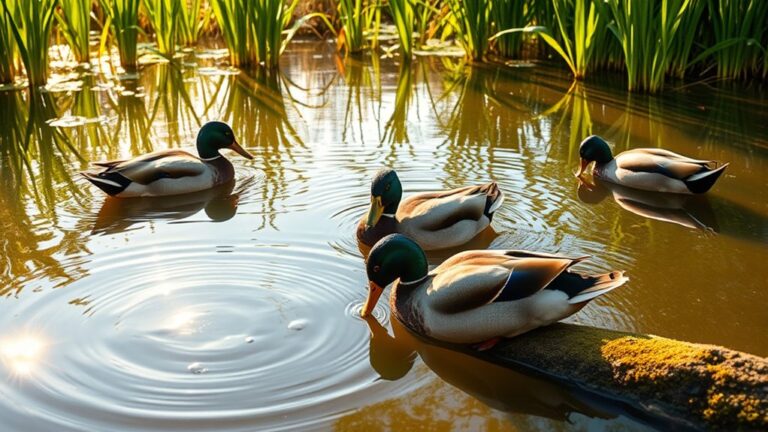
Though mallard ducks may seem like just common waterfowl, they play an essential role in maintaining healthy ecosystems. You’ll find them not only in natural wetlands but also thriving in urban habitats, where they contribute greatly to biodiversity. Their migratory patterns help connect ecosystems across regions, spreading nutrients and supporting various species.
Mallard ducks thrive from wetlands to cities, linking ecosystems and boosting biodiversity through their migrations.
Here’s why mallards matter to ecosystems:
- Control insect and aquatic plant populations by feeding on them
- Serve as prey for predators, supporting food web balance
- Aid seed dispersal through their droppings, promoting plant growth
- Help maintain water quality by stirring sediments while foraging
- Act as indicators of environmental health due to their sensitivity to pollution
Tips for Watching and Photographing Mallards
When you watch or photograph mallards, patience and a quiet approach will greatly increase your chances of capturing their natural behavior. Start by visiting decorative ponds or urban parks early in the morning when ducks are most active. Use a telephoto lens to avoid disturbing them, and wear neutral colors to blend into the surroundings. Avoid sudden movements and loud noises.
Here’s a quick guide to help you prepare:
| Tip | Reason |
|---|---|
| Visit at dawn | Best lighting and active ducks |
| Use a telephoto lens | Capture details without disturbance |
| Wear neutral clothing | Blend in with natural settings |
| Stay still and quiet | Prevent scaring the ducks away |
With these tips, you’ll enjoy watching mallards thrive and get stunning photos that highlight their vibrant colors and behaviors in natural settings.
Frequently Asked Questions
What Do Mallard Ducks Eat in Urban Environments?
In urban environments, mallard ducks eat a variety of foods thanks to their dietary adaptations. You’ll see them engaging in urban foraging, munching on bread crumbs, discarded snacks, insects, and plants.
They’re pretty adaptable, taking advantage of whatever’s available in parks, ponds, and waterways. If you feed them, remember to offer healthy options like grains or vegetables instead of bread, which isn’t good for their health.
How Long Do Mallard Ducks Live in the Wild?
In the wild, mallard ducks typically live around 5 to 10 years. If you observe their duck habitat closely, you’ll see that mallard behavior, like foraging and avoiding predators, directly affects their lifespan.
Harsh conditions or threats in their environment can shorten it, while a safe, resource-rich habitat helps them thrive longer. So, how long a mallard lives really depends on where it settles and how well it adapts to its surroundings.
Can Mallard Ducks Hybridize With Other Duck Species?
Yes, mallard ducks can hybridize with other duck species, despite concerns you might have about preserving pure breeds. This hybridization actually plays a role in maintaining genetic diversity among waterfowl.
While some worry it could dilute species traits, it helps create more adaptable populations. So, instead of fearing crossbreeding, you can appreciate how it contributes to the dynamic genetic landscape of ducks in the wild and urban environments alike.
Are Mallard Ducks Migratory Birds?
Yes, mallard ducks are migratory birds. When you observe mallard migration, you’ll notice they travel seasonally to find suitable duck habitat preferences.
They often move from colder northern regions to warmer southern areas during winter. You’ll find them in wetlands, ponds, and lakes that provide food and shelter.
Understanding their migration patterns helps you appreciate how they adapt to changing environments. It also guarantees you spot them in the right habitats throughout the year.
How Do Mallard Ducks Care for Their Ducklings?
You’ll notice mallard ducks show strong parental behaviors to guarantee duckling development. The mother leads her ducklings to water shortly after hatching, teaching them to find food and stay safe.
She stays close, protecting them from predators and keeping them warm. You can see how she guides their growth with constant attention, helping the ducklings develop essential survival skills during their early days.
Conclusion
Now that you know how to spot a mallard duck, you’re ready to appreciate their splash of color and lively quacks in the wild. Watching them isn’t just fun; it’s a little window into nature’s storybook, where each feather tells a tale.
So next time you see a mallard, pause and take it in. After all, these vibrant birds are more than just ducks—they’re the lively heartbeat of ponds and parks everywhere. Seeing a mallard duck up close is truly a special experience.