How to Grow Lettuce in 10 Steps
Growing fresh, crisp lettuce at home sounds great, but many people struggle with knowing where to start or how to keep their plants thriving. You’re not alone if you’ve tried and ended up with wilted leaves or patchy growth. The good news is, with a few simple steps, you can enjoy a steady supply of homegrown lettuce. How to Grow Lettuce.
Choose lettuce varieties that fit your climate, like romaine or butterhead, then plant in a spot with 4 to 6 hours of sun and light afternoon shade.
Loosen soil 6 to 8 inches deep, add compost, and keep the pH near 6.0 to 7.0. Sow seeds or set seedlings, water at the base, feed lightly, and watch for pests.
Harvest outer leaves early, and keep planting small batches to stretch the season, with a few helpful details ahead.
Key Takeaways
- Choose lettuce varieties suited to your climate, flavor preference, and harvest goals, including cold-tolerant types for cooler seasons.
- Prepare soil by loosening it 6 to 8 inches deep, adding compost, and keeping pH between 6.0 and 7.0.
- Plant seeds or seedlings with proper spacing, then thin early for stronger growth and better airflow.
- Keep soil consistently moist, feed lightly every 2 to 3 weeks, and watch for pests like aphids, slugs, and caterpillars.
- Harvest outer leaves or whole heads when mature, and sow in small batches every 2 to 3 weeks for continuous production.
Choose the Best Lettuce Varieties
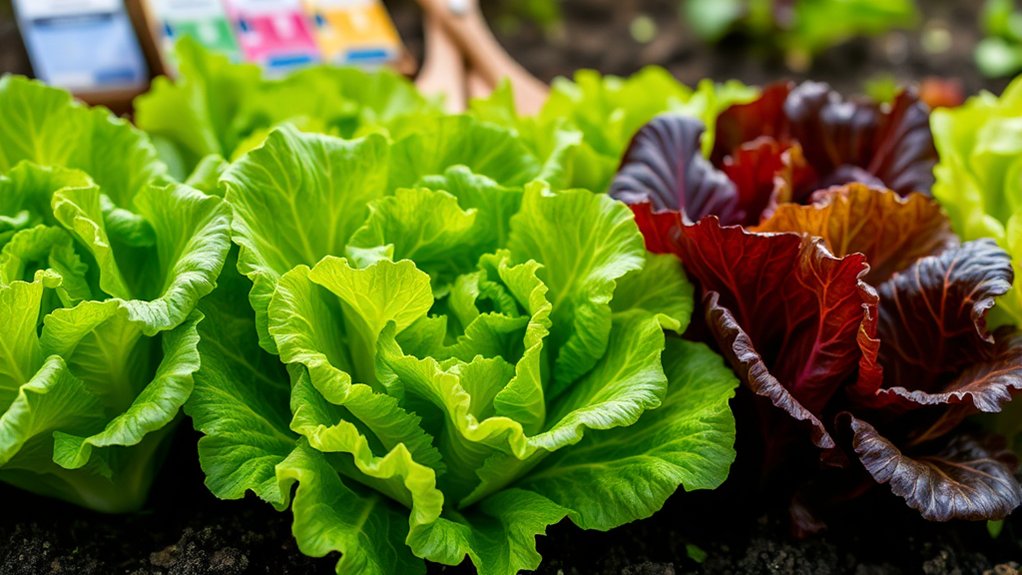
To choose the best lettuce varieties, start with the growing conditions you have and the flavors you want. You can match your goals with heirloom varieties for unusual colors and textures, or pick reliable leafy types if you want fast, tender harvests.
Choose lettuce varieties by your growing conditions and flavor goals, from heirlooms to reliable leafy types.
If you like crisp salads, try romaine options that hold their shape well. For a softer, richer bite, consider butterhead choices that form loose, buttery heads.
Many lettuce seeds are quick growing, so you can enjoy harvests in a few weeks and keep sowing for a steady supply. If your season stays cool, choose cold tolerant varieties that resist bolting longer and keep producing quality leaves.
You can also mix several types in one planting to compare taste, texture, and maturity. Choosing a range of varieties helps you build a harvest that fits your kitchen and keeps your garden productive through changing weather.
Pick a Sunny Spot for Lettuce

Pick a spot where your lettuce gets about 4 to 6 hours of sun each day. Too much heat can make it bolt, so you want to avoid that. Morning sun is best because it warms the plants gently and dries the dew off the leaves.
If your garden gets harsh afternoon sun, you can use a little shade to keep the lettuce cool and crisp. That way, your lettuce stays happy and fresh.
Ideal Sunlight Levels
Lettuce grows best in a spot that gets full sun for much of the day, though it can handle light shade in hotter climates. You should aim for about six hours of direct light each day, because that level supports steady growth and crisp leaves.
If your garden gets strong heat, choose a place with some afternoon relief, since lettuce’s shade tolerance helps prevent stress when temperatures climb. Watch the light duration across the season, too, because nearby trees, fences, or taller crops can change exposure as the sun shifts.
When you match sunlight to your space, you’ll help lettuce stay tender instead of bolting early. Good light also improves color, flavor, and overall plant vigor, so plan your bed with care.
Morning Versus Afternoon Sun
Morning sun is especially helpful for lettuce because it gives plants bright light without the harsher heat of late afternoon. You’ll get steadier growth when your bed receives direct morning rays and afternoon shade. That balance helps leaves stay tender, crisp, and less likely to bolt.
Watch how the light changes across your yard, then choose a spot with clear east exposure. Here’s a quick guide:
| Time | Effect |
|---|---|
| 6–9 a.m. | Best morning benefits |
| 9–11 a.m. | Good growth light |
| 11–2 p.m. | Check heat buildup |
| 2–5 p.m. | Common afternoon drawbacks |
| Evening | Cooler recovery |
If you only have one choice, favor morning sun and protect lettuce from intense western heat.
Prepare Soil for Lettuce
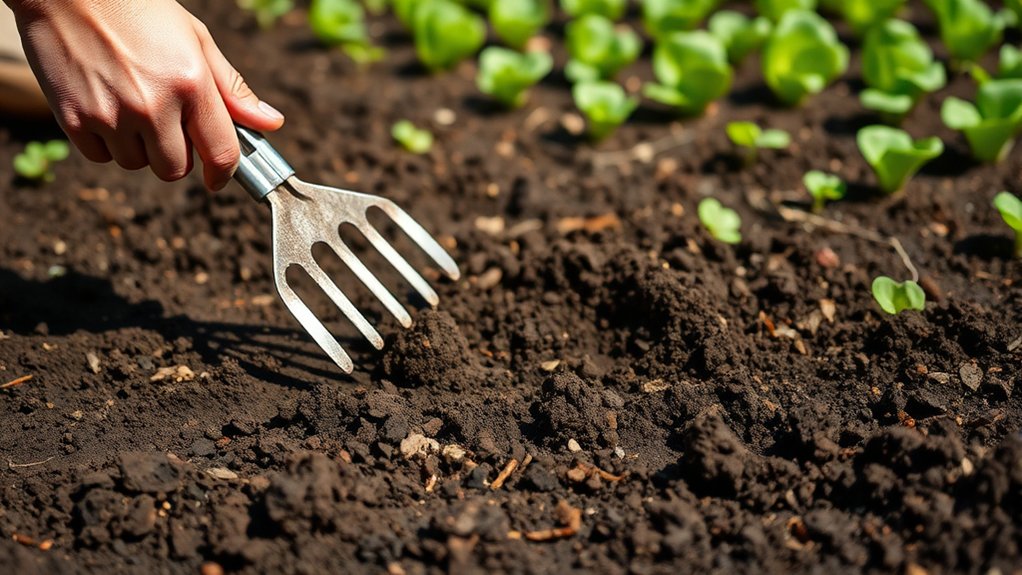
Before you plant, loosen the soil to a depth of about 6 to 8 inches and remove rocks, roots, and other debris that could block healthy growth. Then mix in compost or well-rotted manure to improve texture and support a steady nutrient balance.
Lettuce grows best in loose, fertile soil that drains well but still holds some moisture. Check the soil pH, and aim for a slightly acidic to neutral range, around 6.0 to 7.0, so your plants can absorb nutrients efficiently.
If your soil is heavy clay, work in organic matter to lighten it and prevent compaction. If it’s sandy, add compost to help it retain water. Rake the surface smooth and level so moisture spreads evenly.
Good soil preparation helps roots develop quickly, keeps leaves tender, and gives you a stronger, healthier crop with less stress later.
Plant Lettuce Seeds or Seedlings
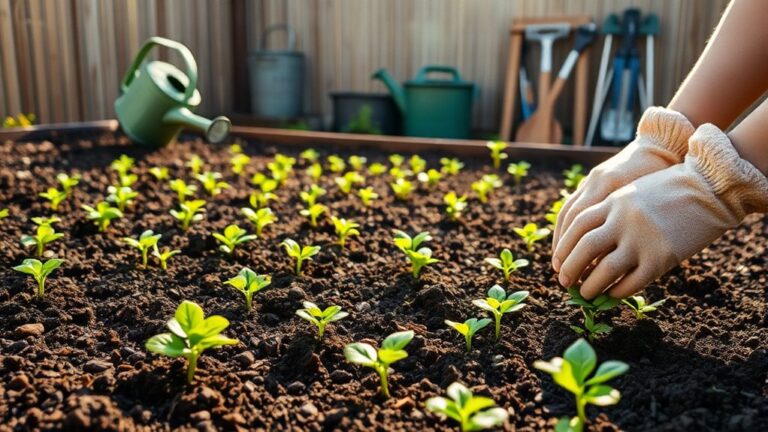
Start by choosing quality lettuce seeds or healthy seedlings to give your plants a strong start. If you’re transplanting seedlings, be gentle with them and place them in the soil carefully to avoid damaging the roots. Make sure to give each plant enough space so it can grow well and get plenty of airflow.
Choose Quality Seeds
Choose quality lettuce seeds or healthy seedlings to give your garden the strongest start. You’ll want to inspect packets for crop variety, harvest time, and reliable seed sourcing. Fresh seeds usually sprout better, so check seed longevity dates before you buy. If you’re choosing seedlings, look for compact growth and rich green leaves.
- Pick varieties suited to your climate
- Choose seeds from trusted suppliers
- Check expiration or test dates
- Select seedlings with firm stems
- Avoid plants with yellowing leaves
You’ll save time and frustration when you start with dependable stock. Strong genetics help your lettuce form crisp heads or tender leaves, and good sourcing reduces the chance of weak germination. Keep your selection simple, healthy, and suited to your space, and you’ll set up a productive harvest.
Transplant Seedlings Gently
Once you’ve picked strong seeds or healthy seedlings, plant them in loose, moist soil and handle the roots carefully so you don’t stress the young plants. If you’re moving starts from trays, loosen each root ball with your fingers and set it at the same depth it grew before.
Press the soil lightly around the stem so it stands firm, then water at the base to help it settle. Good seedling care means shielding tender leaves from harsh sun for a day or two while they recover.
Use a calm transplant technique, and don’t yank or bend the stems. Keep the soil evenly damp, but never soggy, so roots can spread quickly and the lettuce can keep growing without setback.
Space Plants Properly
Give each lettuce plant enough room to grow without crowding its neighbors. When you plant lettuce seeds or seedlings, follow spacing techniques that match the variety and your harvest goals. Looseleaf types can sit closer together, while heads need extra breathing room for crisp, full growth.
Use a ruler or your finger to mark spots, then thin seedlings early so the strongest ones stay.
- Picture neat rows under cool spring light
- Leave open paths for air to move
- Pair lettuce with companion planting herbs
- Keep soil visible between young plants
- Imagine a tidy bed ready for picking
Good spacing helps leaves dry faster after watering, reduces disease, and makes harvesting easier. If you’re sowing densely for baby greens, plan to cut often before plants compete too much.
Water Lettuce the Right Way
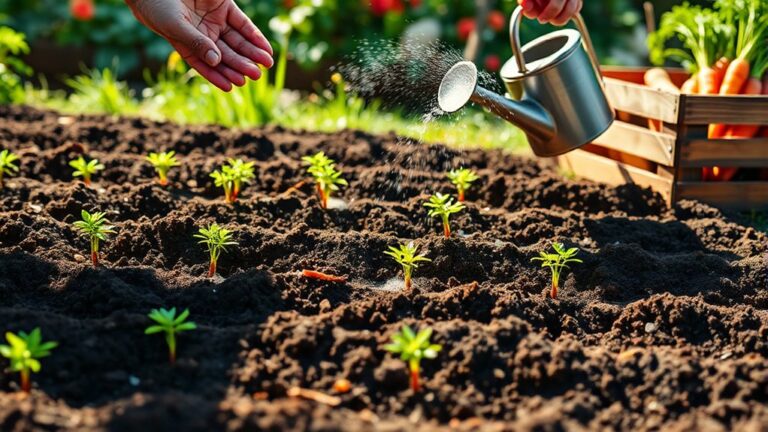
Water lettuce consistently so the soil stays evenly moist, but never soggy. Check the top inch of soil with your finger, and adjust your water frequency based on weather, container size, and sun exposure.
Keep lettuce soil evenly moist, checking the top inch and watering more often in warm, sunny conditions.
In hot, windy conditions, you may need to water more often. In cool, cloudy weather, you can wait longer. Water at the base of the plants, not over the leaves, to reduce disease risk and keep foliage dry.
Morning watering works best because it gives roots time to absorb moisture before evening cool-down. If you mulch lightly with straw or compost, you’ll improve moisture retention and reduce how fast the soil dries out.
Use a gentle stream so you don’t disturb shallow roots or wash soil away. Consistent watering helps lettuce stay crisp, sweet, and productive, while irregular watering can make leaves tough or bitter.
Keep the soil evenly moist from planting until harvest for the best results.
Thin Lettuce Seedlings Early
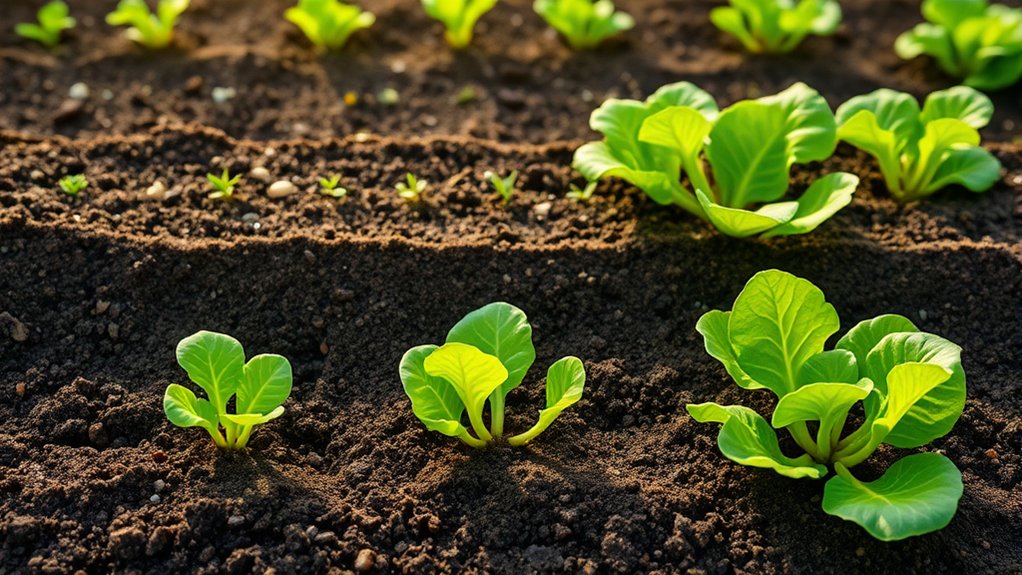
Thin your lettuce seedlings early to give the strongest plants plenty of room to grow. This way, they’ll get enough air and light. If you wait too long, the crowded seedlings might stay small and weak.
A good rule of thumb is to thin them when they’ve formed their first true leaves. That’s usually the best time to do it!
Why Early Thinning Matters
Even young lettuce seedlings need breathing room, so thinning early helps them grow into crisp, healthy heads instead of crowded, weak plants. You protect seedling health by reducing nutrient competition and giving each plant better growth spacing.
That extra room supports root development, improves light exposure, and steadies moisture balance in the soil. Stronger plants show better plant vigor and often gain pest resistance because air moves more freely around them.
- Spaced seedlings stretch less
- Roots spread without tangling
- Leaves catch more light
- Soil stays evenly moist
- Plants stay sturdier overall
When you thin early, you’re not wasting plants, you’re investing in a better harvest. Each remaining lettuce plant can focus energy on forming tender leaves instead of fighting nearby neighbors.
Best Time To Thin
Once your lettuce seedlings have their first true leaves and are a few inches tall, it’s time to thin them so they don’t crowd each other out. Thin them early, while roots are still small, so you can disturb the soil less and protect the strongest plants.
Use the best thinning techniques by snipping extra seedlings at soil level with clean scissors instead of pulling them. That keeps nearby roots steady and reduces damage.
Aim for ideal seedling spacing based on the variety you’re growing, usually 6 to 12 inches apart. If you leave the right plants, they’ll get better airflow, stronger leaves, and more even growth.
Water lightly after thinning to settle the soil and help the remaining lettuce recover quickly.
Feed Lettuce for Steady Growth
Because lettuce grows quickly, it benefits from light, steady feeding rather than heavy doses of fertilizer. You’ll keep growth tender and even when you favor a gentle nutrient balance. Mix in compost or use diluted organic fertilizers every two to three weeks, especially after harvest cuts.
Water first, then feed, so roots can take up nutrients without stress.
Top-dress seedlings with a thin layer of compost.
Apply fish emulsion at half strength.
Side-dress rows with aged manure tea.
Pause feeding during cool, cloudy spells.
Rinse leaves after foliar sprays.
Watch the plants, not the calendar. If leaves stay pale, increase feeding slightly; if they grow too fast or taste bitter, back off. In containers, nutrients wash out faster, so feed more often but lightly.
With this steady approach, you’ll grow crisp, flavorful lettuce that keeps producing.
Stop Common Lettuce Pests
A few common pests can quickly damage lettuce, so check plants often and act fast at the first sign of trouble. Use pest monitoring every few days to catch aphids, slugs, and caterpillars before they spread.
Encourage natural predators like ladybugs and lacewings, and add companion planting with herbs such as dill or chives to confuse pests. Protect young plants with physical barriers, including row cover or fine mesh, and place insect traps near beds to reduce pressure.
If you spot soft-bodied insects, spray neem oil in the evening, following label directions. You can also use organic repellents, but reapply after rain.
Keep weeds down, remove damaged leaves, and practice crop rotation each season so pests don’t build up in the soil. With steady attention, you’ll keep lettuce healthy and limit damage without harsh chemicals.
Harvest Lettuce at the Right Time
Watch your lettuce closely so you can harvest it at peak flavor and tenderness. Aim for ideal timing by checking leaf size, texture, and color every few days. When outer leaves reach usable size, you can start picking. If you wait too long, the plant may turn bitter or send up a flower stalk.
Use simple harvesting techniques: cut loose leaves with clean scissors, or slice the whole head at the base if it’s mature.
Choose cool morning hours for crisp leaves. Pick outer leaves first for a steady supply. Harvest romaine when hearts feel firm. Cut butterhead before it loosens. Remove damaged leaves right away.
Handle your lettuce gently so you don’t bruise it. Rinse it briefly in cool water, then dry it well before storing or serving. If you harvest at the right stage, you’ll enjoy sweeter, tender greens with better texture and color every time.
Extend Your Lettuce Harvest
To keep lettuce producing for longer, harvest it in a way that lets the plant keep growing. Pick outer leaves first and leave the center intact so the plant can keep pushing new growth.
Pick outer lettuce leaves first and leave the center growing for a longer harvest.
If you grow looseleaf or cut-and-come-again types, snip leaves a few inches above the crown and return in a week or so for another cut. Water consistently after harvest because stressed plants bolt sooner and turn bitter.
You can also extend your lettuce season by sowing small batches every two to three weeks instead of planting all at once. Use shade cloth or a spot with morning sun and afternoon shade when temperatures rise.
Mulch helps keep roots cool and moist. Practice crop rotation to reduce disease and keep soil healthy, and try companion planting with radishes, carrots, or herbs to make better use of space.
When you combine careful harvesting with steady care, you’ll enjoy crisp lettuce for much longer.
Frequently Asked Questions
How Long Can Lettuce Seeds Stay Viable?
Lettuce seeds can stay viable for about 3 to 6 years, sometimes longer if you store them well. You’ll get the best results from cool, dry seed storage in an airtight container.
For better germination, use fresh seeds, keep soil evenly moist, and sow them shallowly. If seeds are older, try a few extra germination tips like soaking briefly or planting more densely to improve your odds.
Can Lettuce Grow Indoors Year-Round?
Yes, you can grow lettuce indoors year-round. Like a tiny green factory on your windowsill, it keeps producing when you give it indoor lighting and temperature control.
You’ll get the best results at 60–70°F, with 12–16 hours of light daily. Use shallow containers, moist soil, and quick harvests.
I’ve seen a salad bowl refill itself twice in one month from a single indoor setup.
Which Lettuce Varieties Taste Sweetest?
You’ll usually find the sweetest lettuce varieties in butterhead types like Bibb and Boston, plus looseleaf lettuces such as red and green oakleaf. They’ve got a mild, buttery sweetness that beats bitter romaine or crisp iceberg in a flavor profile comparison.
If you want extra sweetness, harvest young leaves and grow them in cool weather, since heat can make lettuce taste sharper and less pleasant.
Is Lettuce Safe to Regrow From Scraps?
Yes, you can safely regrow lettuce from scraps if you use clean, fresh bases and change the water often. You’ll get the best results with loose-leaf scrap varieties since they respond well to regrowing techniques.
Keep the scrap in shallow water, meet its water needs, and later move it to soil with light nutrients. Don’t expect full heads, but you can harvest tender new leaves quickly.
How Do I Store Harvested Lettuce Longer?
Store your harvested lettuce by cooling it fast, drying it well, and sealing it in the fridge. You can use harvesting techniques that avoid bruising, like cutting in the morning. Then choose storage methods such as wrapping leaves in paper towels and placing them in a breathable bag.
Don’t wash it until you’re ready to eat it, and keep it away from fruit that gives off ethylene.
Conclusion
With a little care, you’ll guide your lettuce from tiny seeds to crisp, leafy bowls of green. Choose the right varieties, give them sunshine, rich soil, and steady water, and you’ll keep growth moving along smoothly.
Stay ahead of pests, feed lightly, and harvest before the leaves get too bold. If you want more to enjoy, sow again and again, so your garden keeps offering fresh, tender greens well into the season.
By following these tips, you’ll master how to grow lettuce and enjoy a continuous supply of delicious, homegrown leaves all season long.