What Good Foods Can You Feed Ducks?
Feeding ducks can be tricky, especially when you want to make sure they get the right nutrients without harming their health or the environment. You’re not alone—many people struggle with finding good foods that ducks actually need and enjoy. That’s why knowing what good foods you can feed ducks is so important for keeping them healthy and happy.
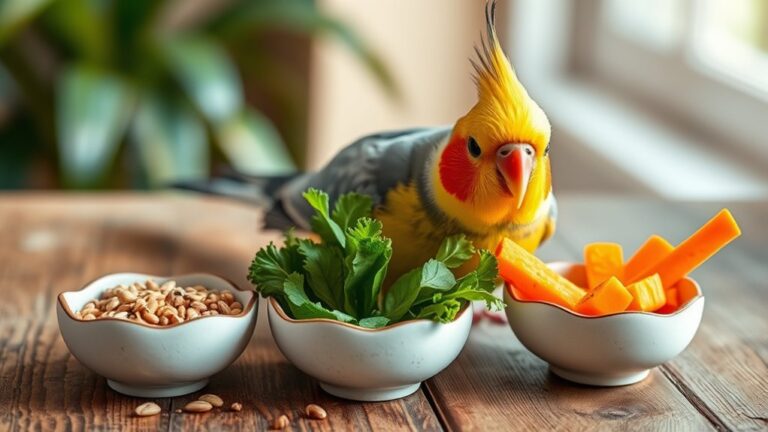
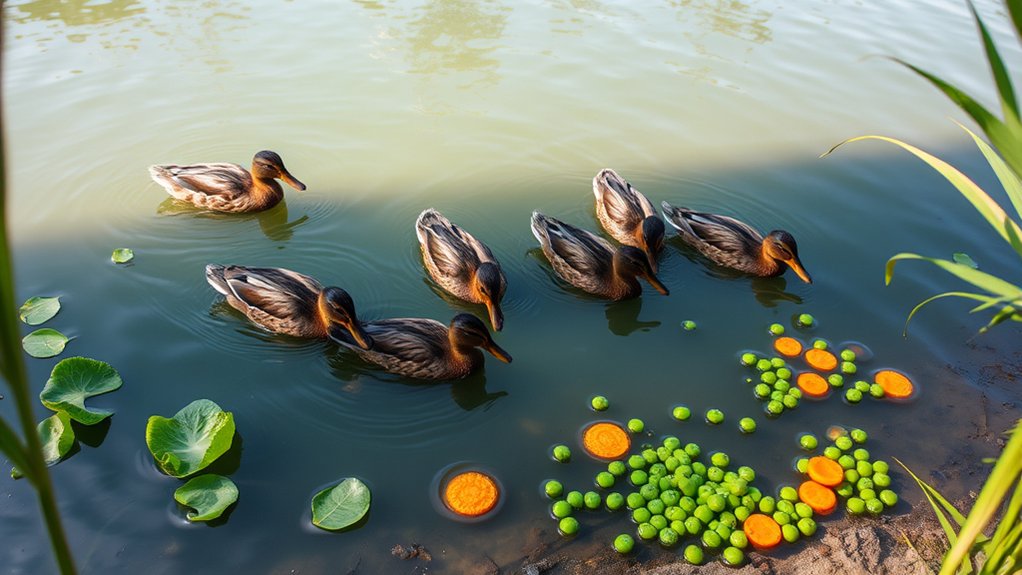
You can feed ducks nutritious foods like leafy greens such as kale and spinach along with grains like cracked corn and oats. Small amounts of peas, beans, and safe protein sources like mealworms or cooked eggs support their health and growth.
Avoid bread, processed, or salty snacks that harm ducks and their habitats. Offering these healthy options helps keep ducks strong and ecosystems safe. Keep exploring to find the best ways to prepare and share these foods responsibly.
Key Takeaways
- Feed ducks nutrient-rich foods like leafy greens, peas, cooked eggs, and mealworms for essential vitamins and proteins.
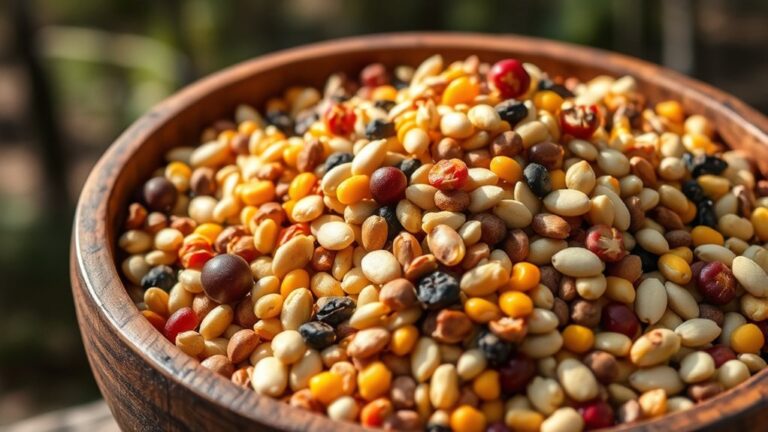
- Offer safe grains and seeds such as cracked corn, oats, barley, and unsalted sunflower seeds in moderation.
- Provide fruits like seedless apples, blueberries, and halved grapes as occasional hydrating and energy-boosting treats.
- Avoid processed foods, bread, and junk food to prevent malnutrition, obesity, and environmental harm.
- Spread food evenly and feed small portions to support natural foraging and protect water quality and ecosystems.
Why Bread Is Bad for Ducks
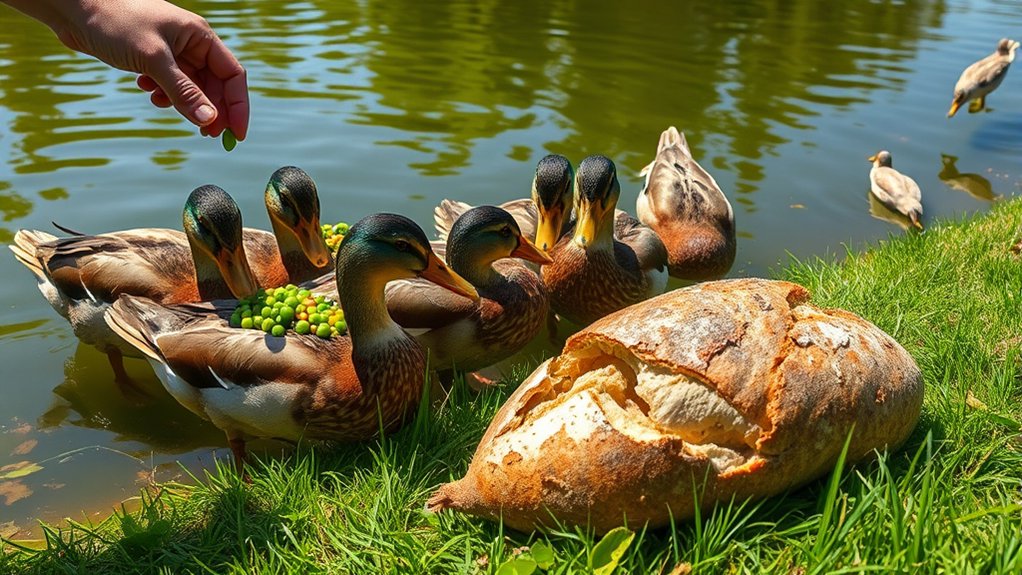
Although it might seem harmless, feeding bread to ducks can actually harm their health. When you offer bread, you’re not providing the nutrients ducks need, which can weaken them during critical times like duck migration.
Feeding bread to ducks can harm their health by depriving them of essential nutrients during migration.
Bread fills their stomachs but lacks essential vitamins and minerals, making it harder for them to build energy reserves for long flights. Furthermore, uneaten bread rots in water, polluting waterfowl habitats and encouraging harmful algae growth.
This damages the ecosystems ducks rely on for food and shelter. Overfeeding bread can also lead to “angel wing,” a deformity caused by poor nutrition that affects ducks’ ability to fly, disrupting their natural migratory patterns.
Next time you want to feed ducks, think about their health and survival, especially during migration season. Providing the right food helps protect both duck populations and the delicate waterfowl habitats they depend on.
What Nutrients Do Ducks Need to Stay Healthy?
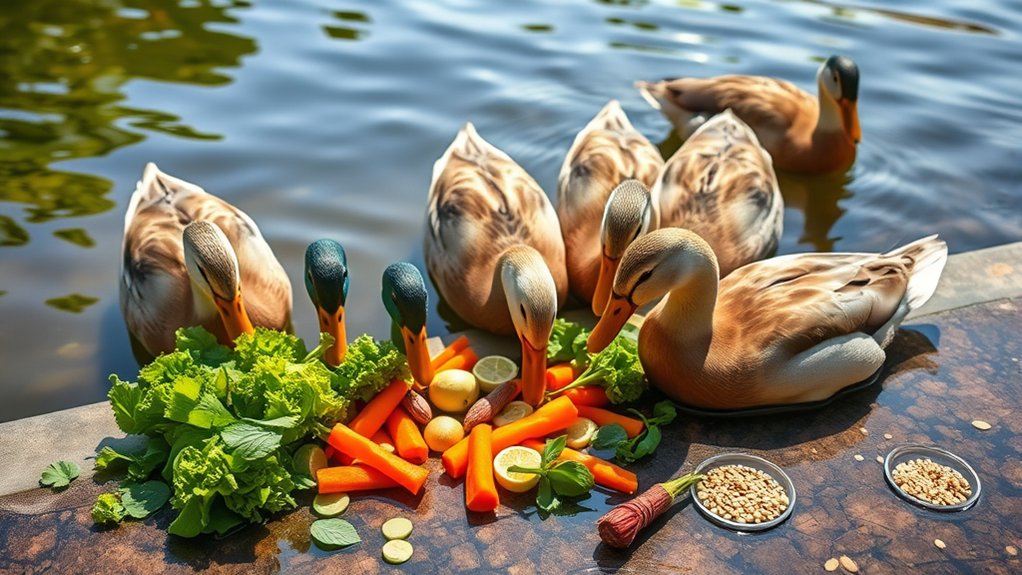
You’ll want to make sure your ducks get essential vitamins like A, D, and E to keep them healthy. Protein is important too—it supports their growth and gives them the energy they need. So, let’s take a closer look at the best sources of these crucial nutrients for your feathered friends.
Essential Vitamins For Ducks
When you feed ducks, it’s important to include essential vitamins that keep them healthy and active. Vitamins like A, D, and E play crucial roles in supporting their immune system, vision, and bone health.
These nutrients are especially vital during duck migration when waterfowl habitats change and demand more energy and resilience. Vitamin A helps maintain their feathers and skin, which protects them against harsh weather.
Vitamin D supports calcium absorption, strengthening bones for long flights. Vitamin E acts as an antioxidant, protecting cells from damage. By providing ducks with foods rich in these vitamins, like leafy greens, aquatic plants, and small insects, you help ensure they thrive in their natural environments.
Offering balanced nutrition supports their survival during migration and in diverse waterfowl habitats.
Key Protein Sources
Since protein plays a vital role in building strong muscles and supporting overall growth, feeding ducks with the right protein sources is essential for their health. Understanding duck behavior helps you align feeding schedules with their natural foraging times, ensuring they absorb nutrients efficiently.
You can offer these key protein sources:
- Mealworms, which are high in protein and loved by ducks.
- Cooked eggs, a great supplement providing essential amino acids.
- Peas and beans, plant-based proteins that support muscle development.
- Duck pellets, formulated to meet their nutritional needs precisely.
Why Avoid Feeding Ducks Processed and Junk Foods
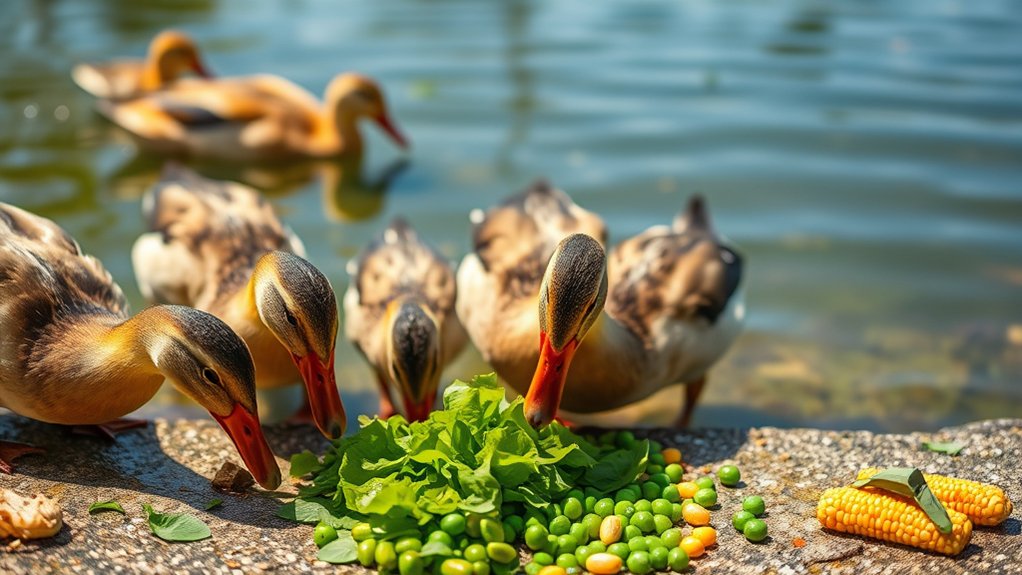
You might think feeding ducks processed or junk foods is harmless, but it can actually cause serious health problems for them. These foods don’t have the nutrients ducks need, so they can end up malnourished or even sick.
On top of that, leftover junk food doesn’t just disappear—it pollutes their environment. This pollution harms not only the ducks but also their natural habitat. So, it’s really best to avoid giving them these kinds of foods.
Health Risks For Ducks
Why should you avoid feeding ducks processed and junk foods? These foods can seriously harm their health and disrupt natural duck behavior. When ducks consume unhealthy snacks, their nesting habits and overall wellbeing suffer.
Here are four key health risks you should consider:
- Malnutrition: Processed foods lack essential nutrients ducks need for strong feathers and healthy eggs.
- Obesity: Junk food is high in calories, causing ducks to gain weight, which affects their mobility.
- Digestive Issues: Artificial ingredients can upset their digestive systems, leading to illness.
- Dependency: Feeding ducks unhealthy foods changes their natural foraging behavior, making them reliant on humans.
Environmental Impact Concerns
Beyond the health risks to ducks, feeding them processed and junk foods also creates significant environmental problems. When you toss these unhealthy items, uneaten food often accumulates and pollutes local waterways.
This pollution disrupts natural habitats, harming aquatic plants and animals, and undermining habitat preservation efforts. Moreover, leftover junk food attracts pests and invasive species that threaten native wildlife.
By feeding ducks inappropriate foods, you unintentionally interfere with wildlife conservation goals aimed at maintaining balanced ecosystems. To support healthy habitats and protect duck populations, it’s essential you avoid processed and junk foods.
Instead, stick to natural, duck-friendly options that won’t harm the environment or disrupt delicate ecosystems. Your mindful choices help preserve the natural world for ducks and other wildlife alike.
Nutritional Deficiencies Issues
Although feeding ducks processed and junk foods might seem harmless, these items often lack the essential nutrients ducks need to stay healthy. When you offer such foods, you risk causing nutritional deficiencies that harm their well-being. To follow proper feeding etiquette and avoid negative behavioral impacts, keep these points in mind:
- Processed foods are high in salt and sugar, which can cause dehydration and organ damage.
- Junk foods offer little protein or vitamins, leading to weakened immune systems.
- Poor nutrition can alter natural foraging behavior, making ducks dependent on handouts.
- Unhealthy diets increase the risk of deformities and reduced lifespan.
Safe Grains and Seeds to Feed Ducks
When you choose grains and seeds to feed ducks, it’s important to pick options that provide proper nutrition without harming them. Ducks enjoy a variety of safe grains like cracked corn, oats, barley, and wheat. These options support their natural foraging behavior and offer essential nutrients.
Sunflower seeds (unsalted and shelled) are also a great choice, packed with healthy fats and protein. Understanding duck behavior helps you feed them responsibly. They tend to eat small amounts frequently, so scatter grains and seeds in moderation to avoid overfeeding.
Practicing proper feeding etiquette means avoiding processed or salted seeds, which can be harmful. Also, don’t throw large piles in one spot; instead, spread food out to prevent aggressive competition and guarantee all ducks have access.
Healthy Vegetables Ducks Can Eat
You can boost a duck’s diet with nutrient-rich greens like kale and spinach. These leafy veggies are packed with vitamins that ducks love. Plus, safe root vegetables like carrots make great treats too. They’re crunchy and fun for ducks to nibble on. So, let’s take a closer look at which veggies are best for keeping your ducks healthy and happy.
Nutrient-Rich Greens
Since ducks thrive on a varied diet, including nutrient-rich greens is essential to keep them healthy and energetic. You want to focus on leafy vegetable varieties that provide vitamins, minerals, and fiber. These greens support digestion and boost immunity.
Here are four nutrient-rich greens you can feed ducks:
- Kale, packed with vitamins A, C, and K.
- Spinach, rich in iron and antioxidants.
- Romaine lettuce, hydrating and easy to digest.
- Swiss chard, offers magnesium and potassium.
Make sure to wash these leafy vegetable varieties thoroughly to remove pesticides. Chop them into manageable pieces so ducks can eat easily. Avoid feeding iceberg lettuce, as it lacks nutrients. By including these nutrient-rich greens, you’ll help your ducks stay vibrant and strong.
Safe Root Vegetables
How can you add variety and nutrition to your ducks’ diet? Including safe root vegetables is a smart choice. Ducks enjoy vegetables like carrots, beets, and turnips, which provide essential vitamins and minerals.
You should always chop these into small, manageable pieces to prevent choking. Seasonal feeding tips suggest offering root vegetables mainly in cooler months when natural food sources are scarce. This supports your ducks without disrupting wild habitat preservation.
Best Fruits to Feed Ducks Safely
Although ducks enjoy a variety of foods, choosing the right fruits guarantees their health and happiness. As ducks prepare for migration or settle in waterfowl habitats, providing safe fruits supports their nutrition without harming their digestive systems. Here are the best fruits you can feed ducks safely:
- Apples (remove seeds) Rich in vitamins and easy to digest.
- Berries (blueberries, strawberries) Packed with antioxidants and natural sugars.
- Grapes (cut in halves) Hydrating and a good source of energy.
- Melon (seedless pieces) Invigorating and gentle on their stomachs.
Avoid fruits high in acidity or with toxic seeds. Feeding ducks these safe fruits in moderation complements their natural diet and helps them thrive during migration or in their habitats. Remember, always offer fruits in small, manageable pieces to prevent choking and maintain a balanced diet aligned with their natural feeding habits.
Safe Protein Foods for Ducks
When you provide ducks with safe protein foods, you help support their growth, feather development, and overall health. Protein is essential, especially during duck migration when their energy demands increase considerably. Offering sources like mealworms, cooked eggs, or peas gives them the nutrients they need without harming waterfowl habitats. These protein options mimic the insects and plants ducks naturally find in ponds and wetlands.
You should avoid processed or salty items, as they can disrupt the delicate balance of waterfowl habitats and negatively affect duck health. By feeding safe protein foods, you contribute to their ability to thrive during migration and settle comfortably in their environments.
Preparing Safe Duck Food for Outdoor Feeding
Since ducks rely on natural foods, you should prepare their outdoor meals by selecting ingredients that closely resemble what they find in the wild. Understanding their feeding habitats helps you mimic their natural diet, supporting healthy duck behavior. Avoid processed or harmful foods that disrupt their natural instincts or cause health problems.
Feeding ducks natural foods that mirror their wild diet promotes healthy behavior and prevents health issues.
When preparing safe duck food for outdoor feeding, focus on these key points:
- Use whole grains like cracked corn or oats, similar to seeds they forage.
- Include leafy greens such as lettuce or spinach, reflecting aquatic plants in their feeding habitats.
- Add small amounts of peas or corn to replicate natural vegetable intake.
- Avoid bread or processed snacks that can disrupt duck behavior and health.
Where to Find Commercial Duck Feed Options
Wondering where you can find reliable commercial duck feed options? Start by checking local farm supply stores or pet shops, as they often carry specialized duck pellets formulated to support wildlife conservation efforts. These feeds provide balanced nutrition that helps maintain healthy duck populations in your area.
You can also explore online retailers, which offer a wide range of commercial duck feed brands with detailed ingredient lists. This makes it easier for you to choose the best option.
When feeding ducks, remember that proper feeding etiquette is essential. Using commercial feed helps prevent harm caused by unsuitable human foods and supports local ecosystems.
Avoid handouts like bread or processed snacks, which can disrupt natural behaviors and cause pollution. By purchasing appropriate commercial feed and following feeding etiquette, you contribute positively to wildlife conservation while enjoying the rewarding experience of feeding ducks responsibly.
Tips for Feeding Ducks Without Causing Pollution
Although feeding ducks can be a fun and rewarding activity, you need to be mindful of how your actions impact the environment. Improper feeding can lead to water pollution and disrupt bird migration patterns. To feed ducks responsibly, follow these tips:
- Feed ducks only small portions of approved foods to prevent leftover waste that pollutes water.
- Avoid bread and processed snacks, as they cause water quality issues and harm ducks’ health.
- Choose natural feeding spots away from nesting areas to protect migrating birds and reduce habitat disturbance.
- Clean up any spilled food to support water conservation efforts and keep ponds clean.
Frequently Asked Questions
Can I Feed Ducks Food Scraps From My Kitchen?
You can feed ducks kitchen scraps, but you need to be careful. Avoid anything salty, sugary, or processed, as it can harm their health. Focus on scraps like vegetable peels, grains, or small amounts of cooked rice for better nutritional balance.
How Often Should I Feed Wild Ducks?
Think of feeding wild ducks like tending a garden. You wouldn’t flood it daily or plants would wither. You should feed ducks sparingly, about once or twice a week, to maintain nutritional balance.
Overfeeding disrupts their natural foraging and health. By keeping feeding frequency low, you help ducks stay strong and independent, just like a gardener nurturing growth without overwatering.
Your thoughtful care supports their wild rhythm.
Is It Safe to Feed Ducks in Urban Parks?
Yes, you can feed ducks in urban parks, but you should always follow feeding etiquette and urban park rules. Avoid overfeeding or giving them harmful foods like bread, which can damage their health and the environment.
Stick to approved foods and feed in moderation to prevent overcrowding and pollution. Check local regulations because some parks may restrict feeding to protect wildlife and maintain a clean, safe habitat for everyone.
Can Feeding Ducks Affect Their Migration Patterns?
Yes, feeding ducks can affect their migration patterns. When you regularly feed ducks, you risk causing habitat disruption by making them rely on human-provided food instead of natural sources. This can lead to altered migration, where ducks stay longer in one area or skip migration altogether.
To protect their natural behaviors, it’s best to minimize feeding and let ducks find their own food in their natural habitat.
What Should I Do if a Duck Appears Sick After Eating?
If you spot a duck wobbling or looking dull after eating, act quickly to protect its health. Imagine its bright eyes dimming. That’s a sign to reduce feeding frequency and stop giving questionable food.
Contact a wildlife rehabilitator or vet who specializes in ducks for advice. Keep the area clean and don’t feed the duck until you’re sure it’s well. Your care can make a big difference in its recovery.
Conclusion
Feeding ducks healthy foods is key to their well-being. Did you know that feeding ducks bread can cause malnutrition and even death? Instead, stick to safe grains, veggies, and protein-rich options to keep them thriving.
Avoid processed junk food to prevent pollution and health issues. By choosing nutritious snacks and commercial duck feed, you’re helping ducks stay healthy while protecting their environment. So next time you feed ducks, think quality over quantity. It really makes a difference when you feed ducks good foods!