10 Healthy Foods Good for Ducks
Feeding ducks can be trickier than it seems, and if you’re like many people, you want to make sure you’re giving them the best without harming their health or environment. You’re not alone—lots of duck lovers struggle with knowing what’s truly good for these feathered friends. That’s why understanding which foods are healthy and safe is so important.
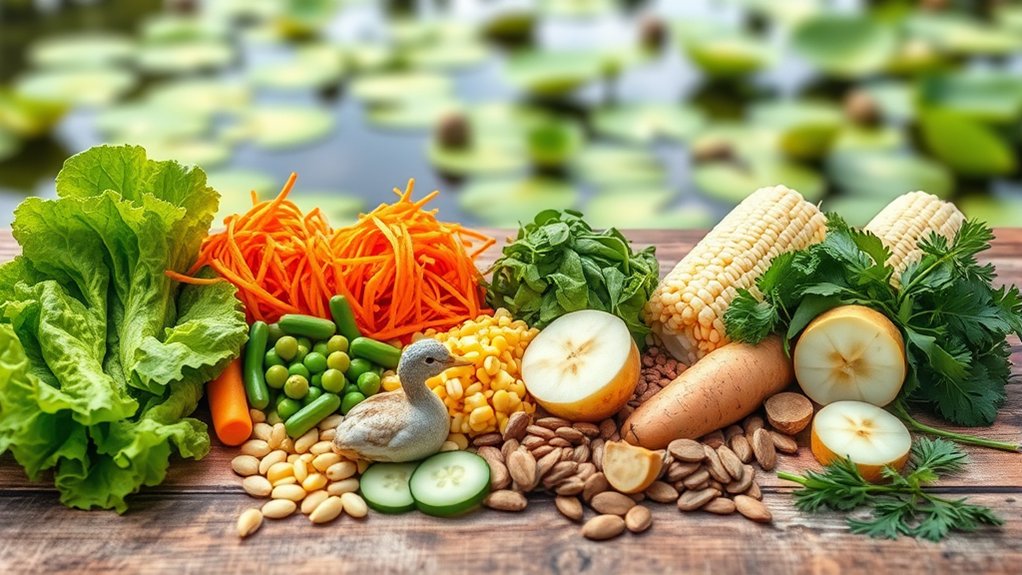
You should avoid feeding ducks bread since it lacks nutrients and harms their health and habitat. Instead, offer wholesome foods like leafy greens (kale, spinach, romaine), fresh vegetables (peas, corn, cucumbers), and fruits (apples, berries, melon) in moderation.
Whole grains like oats and barley provide energy, while protein-rich treats such as insects, seeds, and small fish support their strength. Including safe aquatic plants like duckweed helps keep their environment balanced.
Learn how to create a balanced, eco-friendly meal plan for your feathered friends.
Key Takeaways
- Offer natural foods like cracked corn, oats, and birdseed instead of bread. This provides essential nutrients and helps protect water quality.
- Fresh vegetables such as peas, corn, cucumbers, kale, spinach, and romaine lettuce support feather health and overall well-being.
- Safe fruits like seedless apples, grapes, berries, and melon supply vitamins, antioxidants, and hydration in moderation.
- Protein-rich options including insects, small fish, aquatic plants, and seeds promote muscle strength, immune function, and energy.
- Aquatic plants like duckweed, water lilies, and pondweed provide vitamins while supporting habitat health and ecosystem balance.
Why Bread Is Bad for Ducks
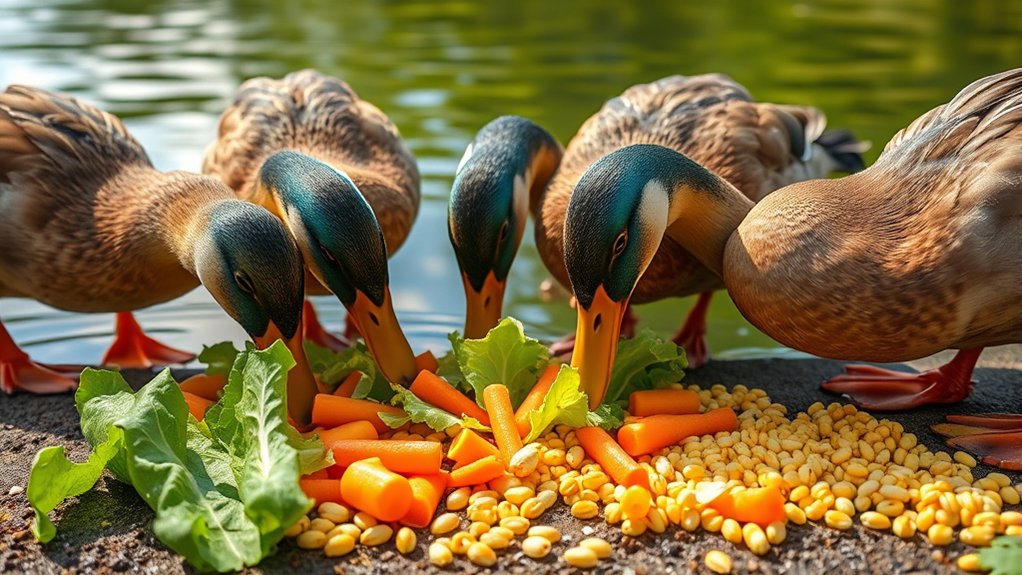
Although it might seem harmless to toss bread to ducks, it actually does more harm than good. You might not realize the bread dangers lurking behind this common practice. Bread lacks the essential nutrients ducks need and can fill them up, leaving little room for healthier food.
Feeding bread to ducks seems harmless but deprives them of essential nutrients and healthy food.
When ducks eat too much bread, they risk malnutrition because it doesn’t meet their dietary needs. Duck dietary restrictions mean they require specific nutrients found in natural food sources like aquatic plants, insects, and grains.
Feeding them bread disrupts their natural diet and can lead to health problems such as obesity, weakened immune systems, and even a condition called “angel wing,” which affects wing development.
Besides, leftover bread pollutes water, fostering harmful bacteria growth and attracting pests. So, next time you visit a pond, resist the urge to feed bread to ducks. Instead, focus on healthier alternatives that support their well-being and natural diet.
Fresh Vegetables Ducks Love to Eat
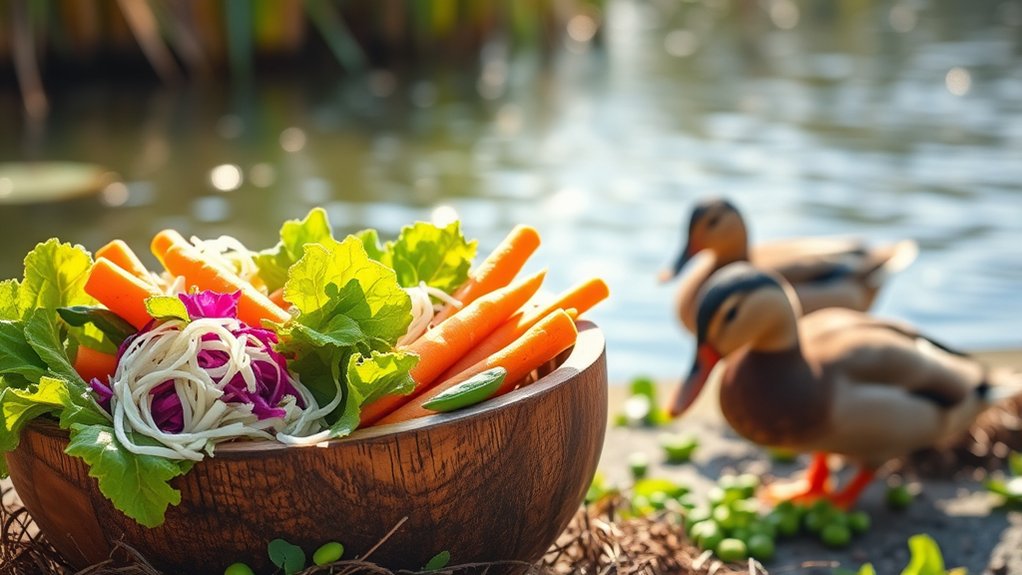
Ducks enjoy a variety of fresh vegetables that provide essential nutrients and keep them healthy. When you offer veggies like peas, corn, and cucumbers, you’re supporting their duck feather maintenance. These foods supply vitamins and minerals that strengthen feathers, helping ducks stay waterproof and insulated.
Fresh vegetables also improve their energy levels, which directly impacts their swimming behavior. Well-nourished ducks swim more actively and with greater agility, showing off their natural vitality.
You can chop vegetables into small, manageable pieces to make eating easier and reduce waste. Avoid starchy or processed veggies, as they don’t offer the same benefits.
Remember, fresh vegetables should complement a balanced diet rather than replace natural foraging. By providing these nutrient-rich vegetables, you’re helping ducks maintain their plumage and enjoy healthy, energetic swimming sessions.
This simple step boosts their overall well-being and supports natural behaviors.
Leafy Greens That Keep Ducks Healthy
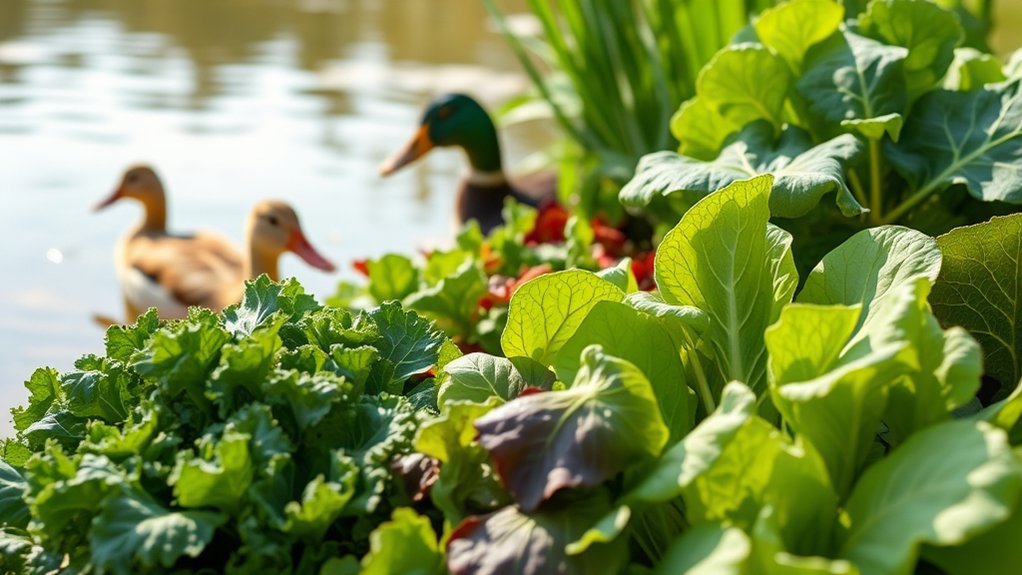
You’ll want to offer your ducks leafy greens like kale, spinach, and romaine lettuce to keep them healthy. These greens are packed with essential nutrients that help support digestion and overall well-being. So, let’s take a closer look at how each one benefits your feathered friends.
Nutritional Benefits of Kale
Why choose kale as a staple in your ducks’ diet? Kale offers powerful antioxidants that help protect their cells from damage and boost overall health. Including kale regularly supports your ducks’ immune system, keeping them resilient against illnesses.
Its fiber content promotes healthy digestion, helping maintain regular bowel movements and preventing digestive issues. You’ll also find that kale provides essential vitamins like A, C, and K, which contribute to strong bones and vibrant feathers.
Feeding your ducks kale ensures they get nutrient-dense greens that support energy and vitality. By adding kale to their meals, you’re giving them a natural, wholesome boost that promotes long-term wellness without relying on processed foods. Kale truly stands out as a smart, nutritious choice for your ducks’ diet.
Spinach for Digestive Health
Building on the benefits of kale, spinach also plays an essential role in supporting your ducks’ digestive health. Rich in fiber and essential nutrients, spinach aids digestion and helps maintain a healthy gut.
When you include spinach in their diet, you not only support their digestive system but also encourage proper hydration. Remember, ducks’ water needs increase when they consume leafy greens like spinach, so always provide fresh water nearby. Proper hydration complements the fiber content, preventing digestive issues.
Furthermore, spinach contributes to duck feather health by supplying vitamins like A and K, which support strong, vibrant feathers. By feeding your ducks spinach regularly, you’re promoting both their internal health and their beautiful plumage, making it a smart, nutritious choice in their diet.
Romaine Lettuce Advantages
Although romaine lettuce might seem simple, it offers impressive health benefits for your ducks. This leafy green is one of the ducks’ favorite snacks, providing essential nutrients without added calories. When you include romaine in their diet, you’re supporting their overall well-being, especially during changing seasons.
Here are four key advantages of feeding romaine lettuce to your ducks:
- Rich in vitamins A and K, boosting immune health.
- High water content helps keep ducks hydrated.
- Contains fiber that aids digestion and keeps their gut healthy.
- Low in oxalates, making it safer than some other leafy greens.
For seasonal feeding tips, offer romaine fresh and avoid wilting leaves to maximize its benefits.
The Best Fruits to Feed Ducks Safely
You’ll want to pick fruits that give ducks the vitamins and minerals they need to stay healthy. It’s important to know which fruits are safe for them and how to feed them the right way. So, let’s take a look at some popular fruits that ducks like and the best ways to offer these tasty treats.
Nutritional Benefits of Fruits
Why should you include fruits in a duck’s diet? Fruit varieties bring essential nutrients that boost ducks’ health naturally. Their high water content keeps ducks hydrated, especially during warm days. You’ll find that fruits offer a rich source of vitamins and antioxidants, which support immune function and feather quality.
Here are four key nutritional benefits of feeding fruits to ducks:
- Vitamins A and C promote eye health and bolster immunity.
- Natural sugars provide quick energy without harmful additives.
- Fiber aids digestion and keeps the digestive tract healthy.
- Antioxidants help protect cells from damage and promote longevity.
Including a variety of fruits guarantees ducks get a balanced mix of these nutrients for overall wellness.
Safe Fruit Feeding Tips
How can you safely incorporate fruits into a duck’s diet? First, always wash fruits thoroughly to remove pesticides and cut them into small, manageable pieces to prevent choking.
Avoid fruits high in sugar or pits, as these can harm ducks during bird migration when they need ideal nutrition. Feed fruits in moderation to support feather grooming without disrupting their natural diet.
Offering fruits occasionally ensures ducks maintain energy and stay healthy without overfeeding. Remember, wild ducks rely primarily on natural foods, so fruits should complement, not replace, their regular intake.
Popular Fruits Ducks Enjoy
Although ducks enjoy a variety of fruits, some options stand out as both tasty and safe for their health. When you feed ducks, especially during bird migration seasons, choosing the right fruits supports their energy needs while protecting waterfowl habitats.
Here are four popular fruits ducks enjoy:
- Apples (cut into small pieces, seeds removed)
- Grapes (halved to prevent choking)
- Berries (blueberries, strawberries, raspberries)
- Melon (seedless chunks of cantaloupe or watermelon)
These fruits provide essential nutrients and hydration, helping ducks stay strong as they travel or settle in waterfowl habitats. Avoid feeding ducks citrus or overly sugary fruits to maintain their well-being.
Whole Grains That Are Good for Ducks
When you feed ducks whole grains, you provide them with essential nutrients that support their energy and overall health. Whole grains like oats, barley, and brown rice supply complex carbohydrates that fuel duck swimming and other daily activities. These grains also contain fiber, which aids digestion and keeps ducks feeling full longer.
Including whole grains in their diet promotes strong feathers, making feather grooming more effective and ensuring ducks stay warm and buoyant in the water.
You can offer these grains by mixing them with water or scattering them near ponds to encourage natural foraging behavior. Avoid processed grains or those with added salts and sugars, as these can harm ducks.
Protein-Rich Foods Ducks Need for Strength
You’ll want to give ducks some key protein sources like insects, peas, and mealworms to keep them strong. Protein is great for muscle development and overall health, so it helps ducks stay active and full of energy. Now, let’s take a look at the best high-protein foods you can offer to boost their strength.
Essential Protein Sources
Ducks need several high-quality protein sources to build strong muscles and stay energetic. These proteins support their bird migration and nesting habits, which demand extra strength and stamina. You can provide ducks with the right nutrients by focusing on these essential protein sources:
- Insects like beetles, dragonflies, and aquatic larvae offer excellent protein.
- Small fish such as minnows supply crucial amino acids.
- Aquatic plants like duckweed contain moderate protein.
- Grains and seeds, including corn, wheat, and sunflower seeds, add balanced nutrition.
Benefits of High Protein
Three key benefits of high-protein foods make them essential for duck strength and significance. First, protein supports muscle development, which is vital as ducks navigate feeding wild habitats that demand physical endurance.
Second, protein boosts immune function, helping ducks resist diseases common in crowded or contaminated environments. Finally, protein-rich diets fuel energy reserves necessary for long-distance duck migration patterns, ensuring they complete these strenuous journeys successfully.
When you provide or encourage protein sources like insects, aquatic plants, and small fish, you improve ducks’ overall health and vitality. Understanding these benefits helps you support wild ducks effectively, especially during critical migration periods when their strength and stamina are tested the most.
Feeding wild habitats with high-protein foods directly contributes to sustaining healthy duck populations.
Seeds, Nuts, and Treats Ducks Can Have in Moderation
Although seeds, nuts, and certain treats can give ducks extra nutrients and enjoyment, it’s important to offer them sparingly. Overfeeding these items can cause health issues and unbalanced diets. When you choose seed varieties, stick to options like sunflower seeds and millet because they offer beneficial fats and proteins.
Offer seeds and nuts sparingly to ducks to ensure balanced nutrition and avoid health problems.
For nut options, unsalted and chopped peanuts or almonds work well, but only in small amounts to avoid choking hazards.
Here are four treats to give ducks in moderation:
- Sunflower seeds High in healthy fats and protein.
- Chopped unsalted nuts Peanuts or almonds add energy.
- Oats or barley Provide fiber and nutrients without fillers.
- Small bits of fruit Like berries or apple slices, but not citrus.
Aquatic Plants Ducks Can Safely Eat
Beyond seeds, nuts, and treats, aquatic plants offer a natural and nutritious food source for ducks. You’ll find that plants like duckweed, water lilies, and pondweed are safe for ducks to eat and provide essential vitamins and minerals.
These plants also support good water quality by helping filter pollutants and oxygenating the habitat, which benefits both ducks and other wildlife. When ducks feed on these plants, they contribute to habitat preservation by keeping aquatic vegetation in balance.
However, it’s important to guarantee these plants grow in clean, unpolluted water to avoid exposing ducks to harmful substances. By understanding the role of aquatic plants in a duck’s diet and their environment, you can appreciate how these natural foods support overall ecosystem health.
How to Feed Ducks Without Harming Their Habitat
If you want to feed ducks without damaging their habitat, you need to choose foods that support their health and avoid disrupting the ecosystem. Feeding ducks improperly can harm water quality and threaten habitat preservation. Here’s how to do it right:
Offer natural foods like cracked corn, oats, or birdseed instead of bread. Bread pollutes water and offers little nutrition.
Choose natural foods like cracked corn or oats over bread to protect ducks and their habitat.
Feed in moderation to prevent leftover food from decaying and harming water quality.
Avoid processed or salty foods because they can damage ducks’ health and upset the natural balance of their habitat.
Feed ducks away from nesting areas to minimize stress and protect fragile vegetation that’s important for habitat preservation.
Creating a Balanced Meal Plan for Pet Ducks
When you create a balanced meal plan for your pet ducks, you guarantee they get the nutrients they need to stay healthy and active. Understand their natural feeding habits by including a mix of grains, leafy greens, and protein sources like insects or peas.
Ducks require a variety of foods to support growth, feather health, and energy. Avoid relying solely on bread, which lacks essential nutrients and can harm their digestion.
Incorporate fresh vegetables such as lettuce and spinach, along with grains like corn and oats, to mimic their natural diet. You can also add occasional treats like mealworms to provide protein.
Frequently Asked Questions
How Often Should I Feed Wild Ducks in My Local Park?
You should feed wild ducks in your local park sparingly, ideally sticking to a consistent feeding schedule. Feeding them once or twice a week is enough, especially during colder months when natural food is scarce.
Seasonal feeding helps support their needs without making them dependent on you. Avoid daily feeding to encourage foraging. Remember, feeding schedules that respect nature’s cycles keep ducks healthy and thriving.
Can Ducks Eat Cooked Human Food Leftovers?
You shouldn’t feed ducks cooked human food leftovers. They’re about as useful to a duck as a screen door on a submarine! Your duck dietary choices need to prioritize food safety to keep them healthy.
Cooked leftovers often contain salt, spices, or oils that can harm ducks. Instead, stick to safe, natural foods to protect their well-being and avoid disrupting their natural feeding habits. Always think food safety first!
What Signs Indicate a Duck Is Malnourished?
You’ll notice a malnourished duck by its poor duck feather quality. They’ll look dull, brittle, or patchy.
Their waterfowl behavior also changes; they may seem lethargic, less social, or avoid swimming.
If you spot weight loss or a lack of energy, these are red flags too. Keep an eye on their feathers and activity levels to catch malnutrition early and help them stay healthy.
Are There Any Foods Toxic to Ducklings Specifically?
You’d think ducklings could eat anything, but some duckling toxins are surprisingly common foods. Toxic foods like chocolate, caffeine, and avocado can harm them seriously. Even onions and raw potatoes can cause trouble.
How Can I Safely Store Duck Food to Prevent Spoilage?
To prevent spoilage, you should store duck food in a cool, dry place away from moisture and direct sunlight. Use airtight containers to keep pests and humidity out. This helps with duck food storage and spoilage prevention.
Regularly check the food for mold or off smells, and rotate stock to use older food first. By following these steps, you’ll keep the food fresh and safe for your ducks to enjoy.
Conclusion
Feeding ducks isn’t just about tossing snacks; it’s about offering them a little love that helps them thrive. Instead of the usual bread, you can treat them to wholesome veggies, fresh fruits, and crunchy grains that keep their feathers shiny and spirits high.
By choosing the right foods and being mindful of their environment, you’re not just feeding ducks. You’re nurturing a beautiful balance in nature. So, go ahead and be their favorite chef with kindness by offering 10 healthy foods good for ducks!