How Are Birds Affected by Capsaicin?
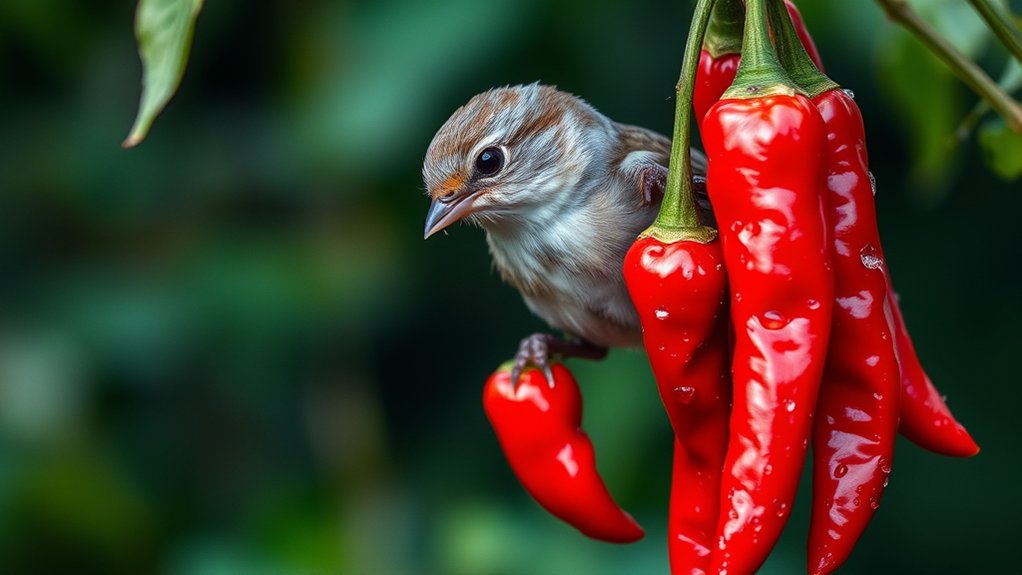
If you’ve ever wondered why birds seem unfazed by spicy foods while we humans struggle with the heat, you’re not alone. Many people find it fascinating—and sometimes confusing—that birds can eat chili peppers without any discomfort.
Understanding how birds handle capsaicin can give you new insights into their behavior and why they’re such effective seed dispersers.
You won’t see birds bothered by capsaicin because their bodies don’t register the spicy burn like mammals do. They lack receptors that trigger pain and have special enzymes and gut microbes to process it without harm.
This lets them eat chili peppers and spread seeds efficiently, helping plants grow.
Their tolerance also shapes their feeding habits and migration.
Keep exploring, and you’ll find out how this unique relationship benefits both birds and ecosystems.
Key Takeaways
- Birds lack receptors for capsaicin, so they do not experience its burning or pain sensations like mammals do.
- Their digestive systems and metabolism safely process capsaicin without irritation or harm.
- Capsaicin tolerance allows birds to eat spicy chili fruits, which helps with seed dispersal and plant reproduction.
- Birds’ feeding behavior avoids highly spicy seeds. This influences their habitat and migration patterns.
- Capsaicin-based repellents protect crops from mammals while allowing birds to continue natural seed dispersal.
Why Don’t Birds Feel the Burn From Capsaicin?
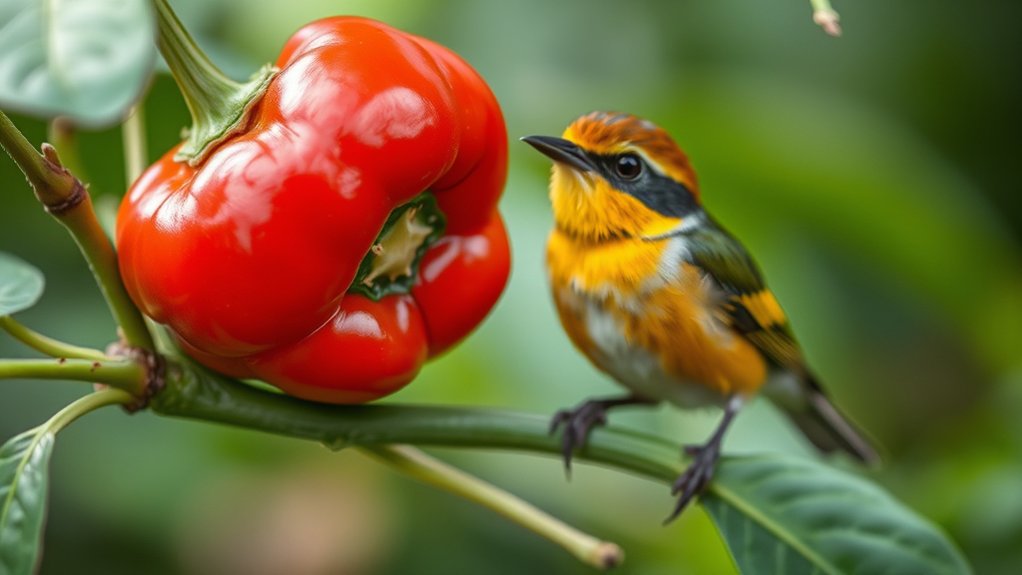
Although capsaicin causes a burning sensation in mammals, birds don’t feel the heat because their sensory receptors react differently. When you encounter capsaicin sensory signals, your nerve endings trigger a painful burning reaction. But birds lack the specific receptors that mammals have, so capsaicin doesn’t activate the same pain pathways. This difference means you won’t experience the burn if you’re a bird.
You might wonder why this matters. Birds play a vital role in spreading chili seeds, so their immunity to capsaicin helps plants reproduce without deterring these important dispersers. The lack of bird aversion to capsaicin ensures they eat the peppers without discomfort, unlike mammals who avoid them due to the burning sensation.
This evolutionary adaptation benefits both birds and chili plants, showing how nature balances defense and cooperation effectively. So, next time you see birds feasting on spicy peppers, remember it’s all about how their sensory system interprets capsaicin.
How Does Capsaicin Affect Mammals vs. Birds?
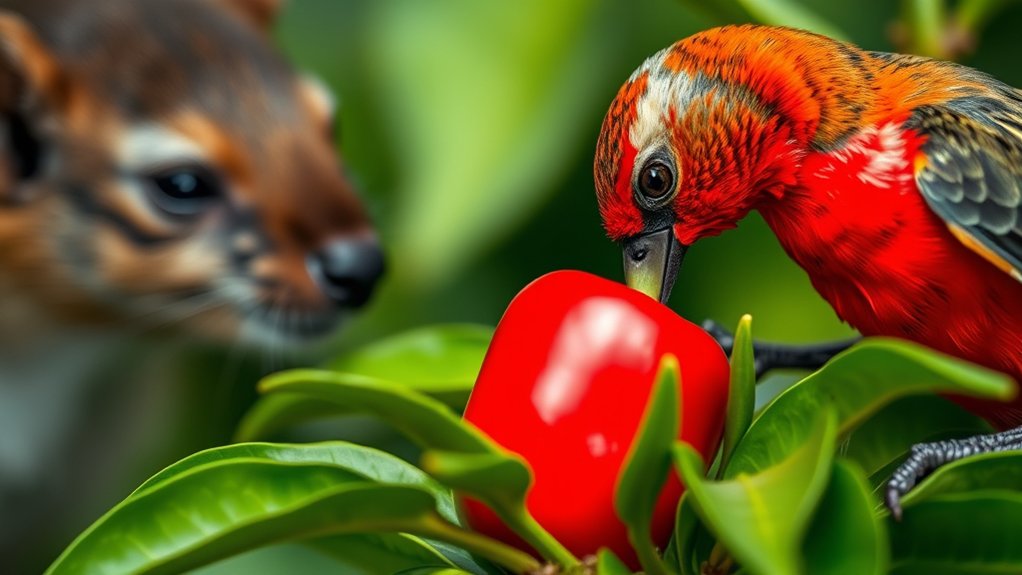
Understanding how capsaicin affects mammals compared to birds sheds light on why these animals respond so differently to spicy peppers. When you eat something spicy, capsaicin binds to receptors in your mouth that detect heat and pain, causing a burning sensation.
Capsaicin triggers a burning sensation in mammals by activating heat and pain receptors in the mouth.
For mammals, this reaction serves as a warning against potential capsaicin toxicity, deterring you from consuming large amounts that could be harmful.
Birds, on the other hand, have evolved a unique sensory adaptation. Their receptors don’t respond to capsaicin the way mammalian receptors do, so they don’t feel the burn. This difference means birds can eat spicy fruits without discomfort, allowing them to spread seeds of capsaicin-rich plants effectively.
While mammals avoid these fruits due to the pain, birds benefit from this evolutionary advantage. So, the contrast in capsaicin’s effect comes down to your nervous system’s sensitivity. Mammals feel the heat as a protective mechanism, whereas birds’ sensory adaptation lets them bypass it entirely.
Which Bird Species Are Most Tolerant to Capsaicin?
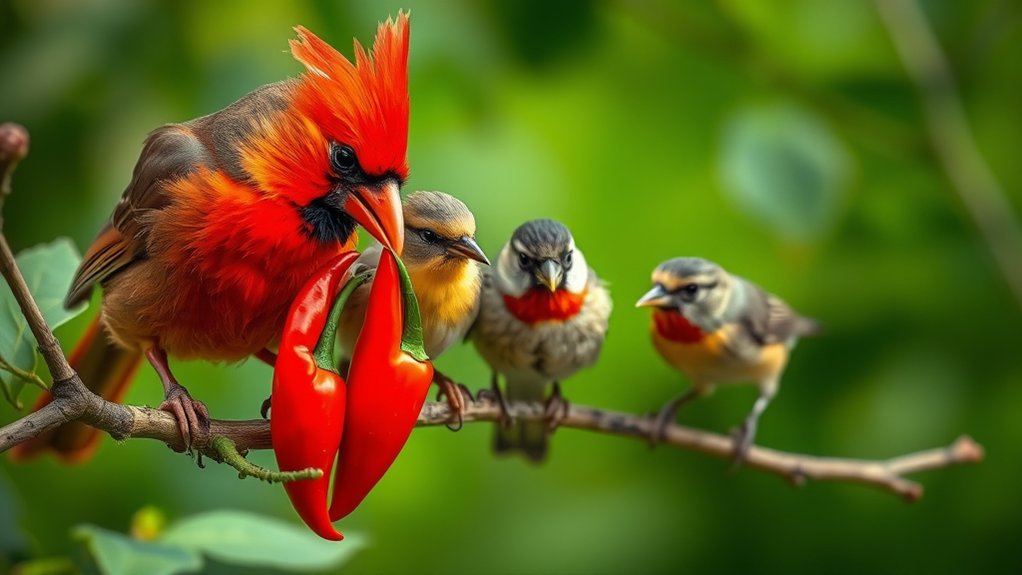
Since birds don’t feel the heat from capsaicin, some species have developed a remarkable tolerance that allows them to consume even the spiciest peppers without discomfort. You’ll find that species like the Northern Cardinal, Cedar Waxwing, and certain types of tanagers frequently eat capsaicin-rich fruits.
These birds benefit from this tolerance during bird migration since spicy fruits remain a reliable food source across diverse habitats. Their ability to digest capsaicin-containing foods supports energy needs on long journeys.
Additionally, nesting habits influence which species encounter capsaicin-rich plants. Birds that nest near pepper plants or in regions where spicy fruits are abundant tend to develop higher tolerance levels.
This tolerance helps them feed their young nutritious seeds and pulp without adverse effects. So, when you observe birds in such environments, you’re likely seeing species that have evolved to handle capsaicin, benefiting their survival and reproductive success.
How Does Capsaicin Influence Bird Feeding Behavior?
When birds encounter capsaicin in their environment, it directly shapes their feeding choices and habits. You’ll notice that birds tend to avoid seeds and fruits with high capsaicin levels. This influences their bird migration routes and nesting habits. Capsaicin acts as a deterrent, steering birds toward less spicy food sources that support their energy needs during migration or while nesting.
Here’s a quick look at how capsaicin affects bird feeding behavior:
| Behavior Aspect | Influence of Capsaicin | Impact on Birds |
|---|---|---|
| Food Selection | Avoids spicy seeds | Seeks milder fruits and seeds |
| Migration Routes | Changes due to food availability | Alters stopover locations |
| Nesting Habits | Chooses areas with low capsaicin plants | Ensures food access for chicks |
How Does Capsaicin Affect Bird Health and Digestion in the Wild?
You might be curious about how capsaicin affects a bird’s digestive system and overall health out in the wild. Well, unlike mammals, it doesn’t harm them. Birds actually process capsaicin differently.
Because of this, they often adapt their diets to include spicy peppers without any trouble. It’s pretty interesting because understanding these adaptations helps us see why capsaicin plays a unique role in their nutrition and survival.
Bird Digestive System Response
Although capsaicin causes a burning sensation in mammals, birds don’t experience this irritation because their digestive systems lack the receptors that detect it. When you observe birds consuming spicy peppers in the wild, you’ll notice they digest these without discomfort, allowing them to benefit from the fruit’s nutrients.
This ability supports their energy needs during bird migration, a demanding period requiring efficient digestion and nutrient absorption. Moreover, compounds in peppers may even influence feather coloration by providing antioxidants that contribute to vibrant plumage, important for attracting mates and signaling health.
Capsaicin’s Impact on Health
Since birds lack the receptors that make capsaicin irritating, this compound doesn’t harm their digestive health; instead, it can offer benefits like improved nutrient absorption and antioxidant intake. When birds consume capsaicin-containing fruits, these antioxidants may help protect cells during the stress of bird migration, supporting stamina and endurance.
Furthermore, capsaicin’s anti-inflammatory properties can contribute to better overall health, which may indirectly influence feather coloration by promoting vibrant, healthy plumage. You’ll find that these health benefits help birds maintain energy levels and resilience throughout their long journeys.
While capsaicin doesn’t directly change digestion, it supports physiological functions essential for survival in the wild, enhancing both their physical condition and visual signals like bright feather coloration during critical migratory periods.
Wild Birds’ Dietary Adaptations
How do wild birds manage to thrive on diets containing capsaicin without suffering adverse effects? You might be surprised to learn their bodies have evolved specific adaptations that help them digest spicy foods efficiently. Here’s how:
- Specialized digestive enzymes break down capsaicin, preventing irritation.
- Their gut microbiota supports detoxification, ensuring healthy digestion.
- Capsaicin doesn’t affect their sensory receptors, so they don’t experience the burning sensation you do.
- Nutrient absorption linked to capsaicin intake may influence feather coloration, enhancing mating displays.
Additionally, migration patterns can shift based on food availability, including capsaicin-rich fruits. These adaptations help wild birds maintain optimal health and vibrant plumage, all while steering through diverse environments. You can see how evolution finely tunes their physiology to use capsaicin to their advantage.
What Role Do Birds Play in Dispersing Chili Seeds?
When you watch birds eating chili peppers, you might not realize they’re helping spread the seeds far and wide. Birds play an essential role in seed dispersal, carrying chili seeds away from the parent plant as they eat. Unlike mammals, birds don’t digest the seeds, allowing them to pass through their digestive systems intact. This natural process helps chili plants colonize new areas, enhancing their survival and growth.
The ecological impact of bird-mediated seed dispersal goes beyond just spreading seeds. By moving seeds to diverse locations, birds contribute to genetic diversity and ecosystem resilience. Their movements help maintain healthy plant populations and support various wildlife that depend on chili plants for food and shelter.
When you think about the relationship between birds and chili plants, you see a perfect example of mutual benefit. Birds get food, and chili plants get help thriving across the landscape through effective seed dispersal.
Why Do Chili Plants Target Birds, Not Mammals?
Although mammals often enjoy fruits, chili plants specifically target birds because their digestive systems leave chili seeds unharmed. This selective approach is a clever example of chili plant defense. By deterring mammals with capsaicin’s heat, chili plants guarantee their seeds aren’t destroyed but instead dispersed efficiently by birds.
Chili plants cleverly use capsaicin to protect seeds by favoring birds for effective dispersal.
Here’s why birds are the preferred seed dispersers:
- Birds lack the receptors sensitive to capsaicin, so they’re unaffected by the chili’s heat.
- Their digestive tract passes seeds intact, allowing effective bird seed dispersal.
- Mammals chew seeds, damaging or destroying them, which reduces germination chances.
- Birds fly long distances, spreading seeds farther and enhancing chili plant survival.
How Does Bird Tolerance to Capsaicin Benefit Chili Plants?
Because birds don’t react to capsaicin’s heat, chili plants benefit by ensuring their seeds are spread without damage. When birds eat spicy peppers, they carry seeds far away during bird migration, helping chili plants colonize new areas. This natural seed dispersal improves genetic diversity and plant survival.
Also, birds’ nesting behaviors near chili plants create safe environments where seeds can germinate and grow.
Here’s how bird tolerance benefits chili plants:
| Benefit | Explanation |
|---|---|
| Long-distance dispersal | Birds migrate, spreading seeds over wide areas |
| Seed protection | Birds’ digestive systems don’t harm seeds |
| Safe germination spots | Nesting near plants aids seed growth |
| Reduced seed predation | Mammals avoid spicy fruits, lowering seed loss |
What Happens When Birds Eat Spicy Chili Peppers?
Birds play a key role in spreading chili seeds, but what actually happens inside their bodies when they eat spicy chili peppers? When you watch a bird nibble on a chili, its unique bird sensory adaptation kicks in, allowing it to tolerate capsaicin, the compound that makes peppers hot.
Here’s what unfolds inside:
- Capsaicin metabolism in birds differs from mammals; they don’t experience the burning sensation you do.
- Their sensory receptors don’t react strongly to capsaicin, so spicy peppers don’t cause irritation.
- Birds digest the chili fruit and pass the seeds intact, aiding in effective seed dispersal.
- This tolerance encourages birds to consume more chili peppers, benefiting both the bird’s diet and the plant’s reproduction.
How Do Farmers Use Birds’ Capsaicin Tolerance in Agriculture?
You can take advantage of birds’ unique tolerance to capsaicin to protect your crops without causing them any harm. Farmers often apply chili-based sprays to keep pesky animals away. The cool part is that while these sprays deter most pests, birds can still feed safely.
This natural method acts as a pest deterrent and helps boost crop yields by reducing damage from unwanted critters. It’s a smart, eco-friendly way to look after your plants while letting birds do their thing.
Bird-Resistant Crop Protection
How can farmers protect their crops without harming beneficial wildlife? You can use birds’ natural tolerance to capsaicin to your advantage. By understanding bird migration patterns and urban habitat adaptation, you can design crop protection strategies that respect bird behavior. Here’s how you can do it:
- Apply capsaicin-based repellents on crops vulnerable to mammalian pests but safe for birds.
- Monitor bird migration to time protective measures when birds are less active nearby.
- Use urban habitat adaptation insights to create buffer zones where birds can feed without damaging crops.
- Incorporate non-toxic barriers combined with capsaicin treatments to deter mammals while encouraging pollination by birds.
This balanced approach helps you protect your yields while maintaining healthy bird populations and biodiversity.
Natural Pest Deterrent
Since mammals find capsaicin irritating but birds don’t, farmers use this natural tolerance to protect crops without harming beneficial wildlife. You can apply capsaicin-based deterrents to crops, keeping mammals away while birds continue their essential roles, such as aiding in bird migration and nest building.
This strategy balances pest control and ecosystem health.
| Benefit | Application | Outcome |
|---|---|---|
| Mammal deterrent | Capsaicin spray | Reduced crop damage |
| Bird safety | Selective use | Supports bird migration |
| Eco-friendly | Natural ingredient | Limits chemical impact |
| Nest building aid | Safe crop zones | Encourages nesting |
| Pest control | Targeted application | Healthy crop growth |
Using birds’ capsaicin tolerance helps you protect crops while supporting natural bird behaviors.
Enhancing Crop Yield
Although managing pests is essential, farmers also focus on enhancing crop yield by leveraging birds’ natural tolerance to capsaicin. You can use this tolerance to benefit agriculture, as birds aren’t affected by capsaicin toxicity, unlike many mammals. Here’s how you might do it:
- Plant capsaicin-rich crops to repel mammals while attracting birds that aid in seed dispersal.
- Monitor bird migration patterns to time planting and harvesting for maximum natural pest control.
- Encourage bird populations that tolerate capsaicin to thrive, reducing reliance on chemical pesticides.
- Design crop layouts that optimize bird access, promoting natural pollination and reducing crop damage.
Frequently Asked Questions
Can Capsaicin Affect Bird Migration Patterns?
Capsaicin dispersal generally doesn’t affect bird migration patterns because birds aren’t sensitive to capsaicin like mammals are. You won’t see birds avoiding areas just because of capsaicin presence.
However, if capsaicin leads to significant bird habitat alteration, such as changes in plant composition or food availability, it could indirectly influence migration routes or timing. So, while capsaicin itself doesn’t disrupt migration, its impact on habitats might affect birds’ seasonal movements.
Do Baby Birds React Differently to Capsaicin Than Adults?
Imagine you’re tasting a fiery new dish for the first time. Baby birds show a stronger neophobia response to capsaicin than adults. Their senses are like cautious investigators, not yet fully adapted, so they react more intensely.
As they grow, sensory adaptation kicks in, calming their reaction. You’ll notice adults handle the spice better, having learned it’s not harmful, while babies remain wary, guarding themselves from unfamiliar heat.
Is Capsaicin Toxicity a Concern for Pet Birds?
You don’t need to worry much about capsaicin toxicity for pet birds since they generally show low capsaicin sensitivity. However, it’s important to respect bird dietary restrictions by avoiding spicy foods, as some birds might still experience mild irritation.
To keep your pet safe and healthy, stick to fresh fruits, vegetables, and bird-safe treats, steering clear of anything overly spicy or seasoned with capsaicin.
How Does Capsaicin Impact Bird Communication or Mating Calls?
Like a pebble causing ripples in a pond, capsaicin can subtly influence bird vocalization by irritating their respiratory tract. This irritation might alter the clarity or frequency of their mating calls, which are essential for attracting mates and establishing territory.
If their mating behavior depends heavily on vocal signals, any disruption could impact their success in finding partners. So, capsaicin exposure might indirectly affect their communication and reproductive outcomes.
Are There Any Natural Predators Deterred by Capsaicin in Birds?
You won’t find many natural predators deterred by capsaicin in birds since they don’t feel its heat. Instead, capsaicin helps birds with seed selection by allowing them to eat spicy fruits that mammals avoid.
This benefits their bird diet by reducing competition for those seeds. So, while capsaicin doesn’t directly protect birds from predators, it indirectly supports them by shaping their feeding habits and seed dispersal strategies.
Conclusion
You’ve uncovered how birds bravely bypass the burning bite of capsaicin, benefiting both themselves and the bold, bright chili plants. While mammals moan and move away, birds boldly bite and bring balance by spreading seeds far and wide.
This fascinating friendship fuels farmers’ fields and feeds ecosystems. So, next time you spot a spicy pepper, remember the remarkable resilience and role of birds in nature’s flavorful dance with capsaicin!