What Do Birds Eat and How to Feed Them
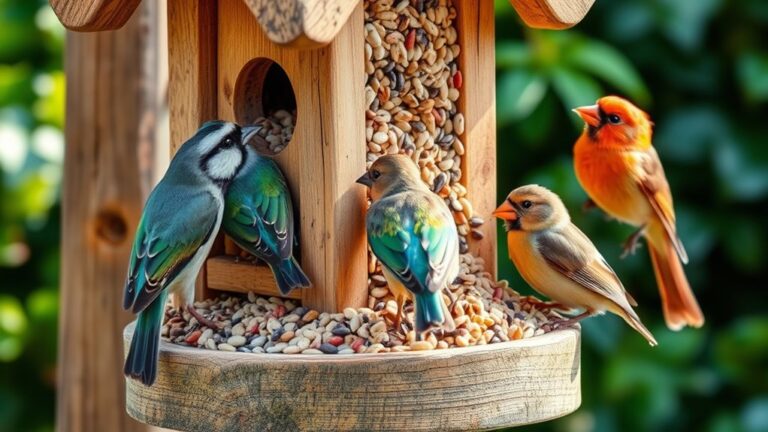
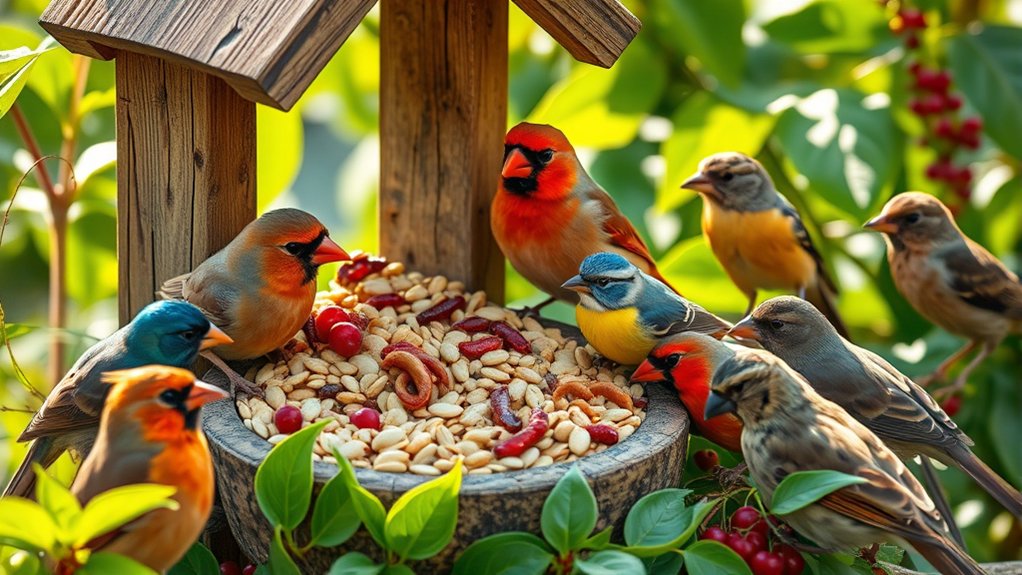
If you’ve ever wanted to attract a variety of birds to your yard but struggle with knowing what to feed them, you’re not alone. Many people find it tricky to choose the right foods that keep birds healthy and coming back.
Feeding birds correctly can make all the difference, whether you’re hoping to support local wildlife or simply enjoy watching colorful visitors.
You’ll want to match what birds naturally eat by offering seeds, nuts, insects, and fruits suited to the season. Feed early mornings and late afternoons, keep feeders clean, and avoid processed or salty foods that can harm birds.
Use appropriate feeders placed safely away from predators. Providing the right foods supports birds’ energy, breeding, and migration needs.
Stick with these basics, and you’ll find plenty more tips to help create a thriving, healthy environment for your local birds.
Key Takeaways
- Birds eat seeds, insects, fruits, and nectar. Their diets change seasonally to match food availability and migration needs.
- Provide varied seed types, nuts, insects, and fruits to attract different bird species. This helps support their nutritional needs.
- Feed birds early in the morning and late in the afternoon. Use clean feeders placed safely away from predators and urban hazards.
- Avoid bread, processed, salty, or toxic foods because they harm bird health and disrupt natural diets.
- Thoughtful feeding promotes biodiversity and supports ecosystems. It also helps us connect with nature and encourages conservation.
Common Bird Diet Types

Although birds vary widely in their eating habits, you’ll find that most fall into a few common diet types. When you observe birds during bird migration, you notice they shift their feeding strategies to suit available resources. Some mainly eat seeds and grains, while others prefer insects or nectar.
You’ll also spot birds that are opportunistic feeders, adjusting their diets depending on the environment.
When comparing urban vs rural feeding, you’ll see distinct differences. Urban birds often rely on human-provided food like bread or birdseed, while rural birds stick to natural sources such as insects, berries, and seeds.
Understanding these diet types helps you provide the right food if you want to attract specific bird species. Whether you’re in a city park or a countryside garden, knowing common bird diets ensures you support their needs effectively.
How Seasonal Changes Affect Bird Diets

As the seasons change, so do the foods birds rely on to survive and thrive. You’ll notice that migration patterns influence what birds eat. Many species head to warmer areas where food is abundant.
During spring and summer, nesting behaviors drive birds to seek protein-rich insects and caterpillars to feed their young. In contrast, fall and winter bring scarcity, pushing birds to switch to berries and other available fruits.
Here’s a quick look at seasonal dietary shifts:
| Season | Food Sources |
|---|---|
| Spring | Insects, caterpillars |
| Summer | Insects, nectar |
| Fall | Berries, fruits |
| Winter | Fruits, some seeds |
| Migration | Depends on stopover locations |
Understanding these patterns helps you provide the right food at the right time, supporting local bird populations through all seasons.
Seeds and Nuts as Bird Food
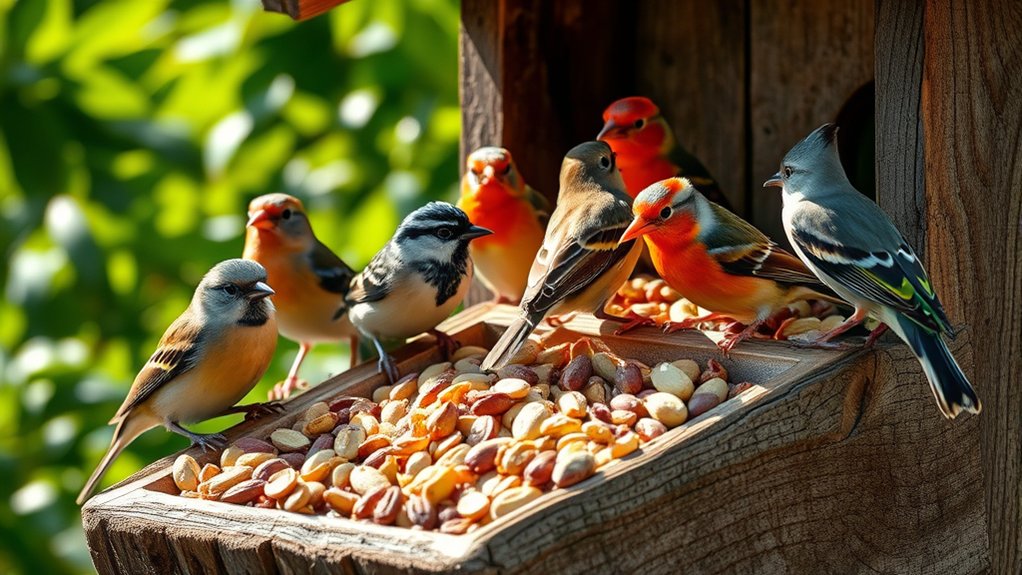
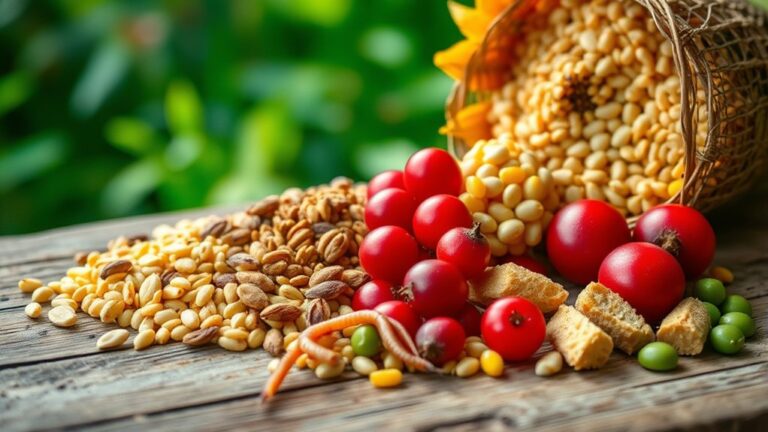
When you offer seeds and nuts, you provide birds with essential energy and nutrients that many species rely on year-round. Different seed varieties attract different birds: black oil sunflower seeds are a favorite for cardinals and finches, while millet appeals to sparrows and doves.
You can also try nyjer seeds to lure in goldfinches. Offering a mix of seed varieties guarantees you accommodate a range of birds.
Nut options are just as valuable, especially during colder months when birds need extra calories. Shelled peanuts, almonds, and walnuts are popular choices, but make sure nuts are unsalted and unflavored to keep birds healthy.
You can scatter these on platforms or use specialized feeders.
Why Many Birds Need Insects
Because insects provide essential proteins and nutrients, many birds depend on them for a balanced diet, especially during breeding and growth periods. You’ll find that insect diversity plays a vital role in meeting these birds’ nutritional needs. Different insects offer various vitamins, minerals, and amino acids that support strong feathers, muscle development, and overall health.
Insect diversity provides essential nutrients crucial for birds’ growth, health, and strong feathers.
When you observe birds feeding, you’ll notice they target a wide range of insects, from beetles to caterpillars, to guarantee they get a complete nutrient profile.
Bird digestion is well-adapted to break down insect exoskeletons efficiently, allowing birds to extract maximum nutrients. If you want to support birds in your area, providing habitats that encourage insect populations can be far more beneficial than just offering seeds.
Understanding why many birds need insects helps you create a bird-friendly environment that supports their natural diet and promotes healthy populations throughout the year.
Fruits and Berries That Attract Birds
If you want to attract a variety of birds to your yard, offering fruits and berries is a smart choice. Many bird species rely on these natural treats, especially during bird migration when they need extra energy.
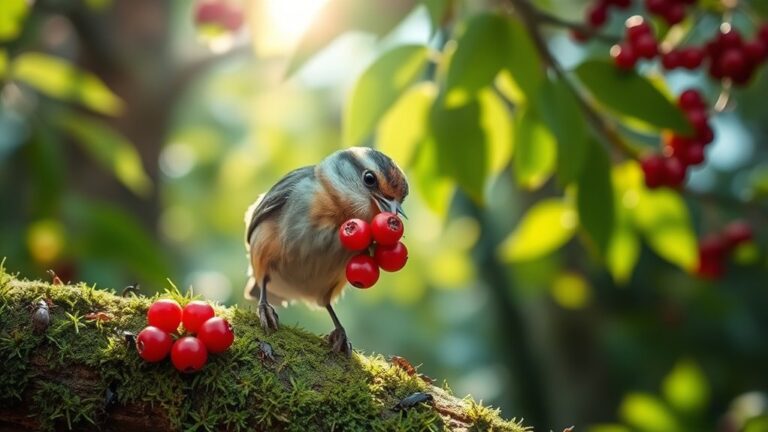
In an urban habitat, planting native berry-producing shrubs like serviceberries, elderberries, and dogwoods can provide a steady food source. These fruits are rich in nutrients and appeal to both resident and passing birds.
You can also supplement by placing fresh or dried fruits like apples, oranges, and raisins on feeders. Keep in mind that different birds are attracted to different types of berries, so a mix helps support diversity.
Providing fruits not only nourishes birds but also encourages them to stay longer in your area, enhancing your urban habitat’s liveliness. By understanding how fruits and berries fit into birds’ diets, especially during migration, you create a welcoming environment that supports their survival and your enjoyment.
Choosing Bird Food for Different Species
Although many birds share similar dietary needs, choosing the right food for different species can greatly boost your chances of attracting a diverse flock. During bird migration, species often seek high-energy foods like sunflower seeds and suet to fuel their long journeys.
You’ll find that seed-eating birds, such as finches and sparrows, prefer small seeds. Larger birds like cardinals enjoy bigger seeds and nuts. Understanding nesting habits is also key. Birds raising young need protein-rich foods like mealworms or insects to nourish their chicks.
When and How to Feed Wild Birds Safely
You’ll get the best results by feeding birds early in the morning and late afternoon—those are the times they’re most active. Just remember to keep your feeders clean and always use fresh food to keep the birds healthy. And don’t forget to change up your feeding routine with the seasons, especially when natural food is harder to find.
Best Feeding Times
Because wild birds rely on natural food sources throughout the day, feeding them at the right times can make a big difference in their health and safety. Early morning and late afternoon are ideal because birds are most active then, foraging for energy after resting or before settling in.
During bird migration, providing food at these times helps tired travelers refuel efficiently. Likewise, during nesting habits, parent birds need extra energy to feed their young, so timely feeding supports their demanding routine. Avoid feeding at night since most birds rest then.
Safe Feeding Practices
Feeding wild birds at the right times helps them stay healthy, but how you feed them matters just as much. To protect birds during critical periods like bird migration, keep feeders clean and place them in safe, quiet areas away from predators.
Avoid overcrowding by providing multiple feeding spots. Use fresh, uncontaminated food to support feather health, which is essential for insulation and flight. Clean feeders regularly to prevent mold and disease, which can harm birds.
Don’t feed birds processed or salty human food, as it disrupts their nutrition. Also, provide water for drinking and bathing, which helps maintain feather condition. By following these safe feeding practices, you’ll support birds effectively without risking their wellbeing during vulnerable times of the year.
Seasonal Feeding Tips
When is the best time to offer food to wild birds, and how can you do it safely throughout the year? Understanding migration patterns and nesting habits helps you provide the right support at the right time. During migration, birds need extra energy, so offering high-fat seeds like sunflower or suet is ideal.
In nesting season, focus on protein-rich foods such as mealworms to support growth. Avoid feeding when natural food is abundant to prevent dependence.
In fall and spring, boost energy for migrating birds with high-calorie foods. During nesting in spring and summer, offer protein to help chicks develop. Keep feeders clean year-round to prevent disease and protect birds’ health.
Setting Up Bird Feeders for Best Results
To attract the right birds, you’ll want to pick the feeder type that matches their eating habits. It really helps to place your feeders in safe, visible spots—this can make a big difference in how often birds come by. So, let’s take a look at some easy tips for choosing and positioning your feeders the right way.
Choosing Feeder Types
Although selecting the right bird feeder may seem simple, choosing the best type can greatly influence which birds visit your yard. Different species have unique feeding habits tied to their bird migration patterns and nesting behavior. Understanding these can help you attract a variety of birds year-round.
Consider these feeder types:
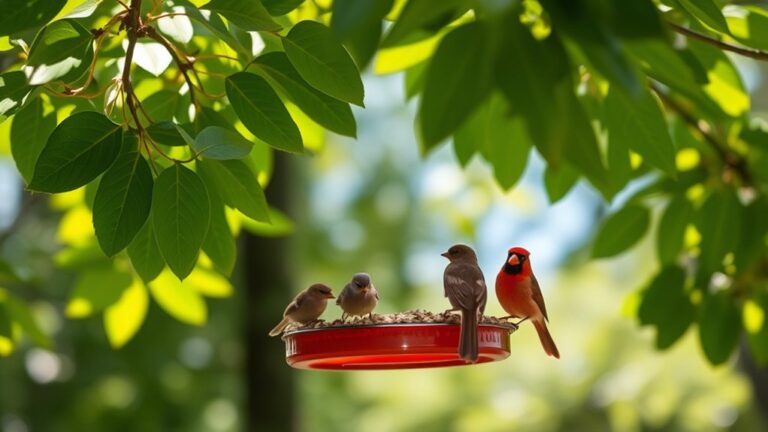
- Tube feeders: Ideal for small seed-eaters like finches; they mimic natural feeding and are great during migration seasons.
- Platform feeders: Open trays that attract ground-feeders and birds with diverse diets; perfect for observing nesting behavior nearby.
- Suet feeders: Offer high-energy food that appeals to insect-eaters and woodpeckers, especially during colder migration periods.
Selecting the right feeder guarantees you support local birds’ dietary needs while enjoying their presence throughout the seasons.
Placement Tips for Feeders
Placing your bird feeders thoughtfully can make all the difference in attracting a variety of birds and keeping them safe. Position feeders near natural cover like shrubs or trees to offer birds shelter from predators and harsh weather.
During bird migration, birds appreciate safe resting spots, so placing feeders along migratory paths can boost visits. Avoid locating feeders too close to windows to prevent collisions.
Also, consider nesting behavior. Keep feeders at least 10 feet from birdhouses to reduce competition and disturbance. Guarantee feeders are high enough to deter cats and other ground predators but accessible for refilling.
Foods to Avoid When Feeding Birds
When feeding birds, you should steer clear of certain foods that can harm their health or disrupt their natural diet. During bird migration and nesting behaviors, birds rely on specific nutrients to maintain energy and care for their young. Offering unsuitable foods can interfere with these critical stages.
Avoid these harmful items:
- Bread and processed foods: These lack essential nutrients and can fill birds up without nourishment, leading to malnutrition.
- Salty or sugary foods: Excess salt or sugar can cause dehydration and other health issues.
- Uncooked beans and raw potatoes: These contain toxins that are harmful or even fatal to birds.
How Feeding Birds Benefits Your Local Ecosystem
Feeding birds supports your local ecosystem by promoting biodiversity and helping maintain balanced food webs. When you provide food, you attract a variety of bird species, encouraging a diverse community that keeps insect populations in check and aids plant pollination. This diversity strengthens the ecosystem’s resilience.
In urban areas, feeding birds also helps them cope with challenges like urban noise, which can interfere with their communication and predator awareness. By offering reliable food sources, you reduce the time birds spend searching for food. This allows them to stay alert and better detect predators despite background noise.
Moreover, feeding birds fosters a connection between you and nature, encouraging conservation efforts in your neighborhood. When you support bird populations, you contribute to healthier ecosystems that benefit other wildlife and plants too. So, by feeding birds thoughtfully, you play an active role in sustaining your local environment.
Frequently Asked Questions
How Do Birds Digest Different Types of Food?
You’ll find bird digestion varies because of their dietary adaptations. When you watch birds eat seeds or insects, their digestive systems kick in differently.
Seeds need grinding in the gizzard, while insects are broken down faster in the stomach. You’ll notice some birds have longer intestines for plant-based diets, and others have shorter ones for meat.
Understanding these differences helps you appreciate how birds process various foods efficiently.
Can Feeding Birds Affect Their Migration Patterns?
Yes, feeding birds can affect their migration patterns. When you provide food during off-seasons, it may alter the natural migration triggers birds rely on, causing them to delay or skip migration.
Seasonal feeding can make birds depend on your offerings instead of searching for natural resources, potentially disrupting their instincts. While feeding helps birds survive harsh conditions, you should be mindful of timing and quantity to avoid unintended changes in their migratory behavior.
What Are the Best Times of Day to Feed Birds?
You’d think birds prefer a midnight snack, but actually, the best times to feed them are early morning and late afternoon. That’s when they’re most active, especially during bird nesting season when they need extra energy.
If you want to maximize your bird watching tips, try these times to catch lively activity without disturbing their rest. Feeding at the wrong times might leave you staring at an empty feeder, ironically, while the birds nap!
How Do Baby Birds Get Introduced to Solid Foods?
You’ll notice baby birds get introduced to solid foods gradually through nestling nutrition. Parent birds play a vital role here, with parental feeding roles involving bringing soft, easily digestible food like insects or softened seeds.
As you watch, you’ll see parents feed the chicks small solid bits, helping their digestive systems adjust. This slow shift guarantees the nestlings develop properly before fully eating solid foods on their own.
Do Birds Share Food With Other Animals?
Yes, birds sometimes share food with other animals, especially in urban bird diets where resources can be limited. When you practice proper bird feeding etiquette, you’ll notice birds dropping seeds or scraps that squirrels or smaller critters quickly grab.
While it’s natural, you should avoid overfeeding to prevent dependency or aggressive behavior. By offering appropriate food and respecting bird feeding etiquette, you support a balanced environment for both birds and urban wildlife.
Conclusion
Feeding birds is like opening a window to nature’s vibrant world right in your backyard. By knowing what to offer—seeds, nuts, fruits, or insects—you help nourish these feathered friends through changing seasons.
Just remember to avoid harmful foods and keep feeders clean. When you feed birds thoughtfully, you’re not just giving them a meal; you’re supporting your local ecosystem and inviting a lively, colorful chorus into your daily life of feeding birds.