Garden Border Ideas for a Clean Edge
Struggling to keep your garden edges neat and defined? You’re not alone. Many people find it challenging to create a clean garden edge that looks polished without spending hours on maintenance.
Whether you want a sharp border or a soft natural feel, finding the right materials can make all the difference. Garden Border Ideas.
For a clean garden edge, you can choose metal, brick, stone, wood, or plastic based on your style and upkeep needs. Metal gives you crisp lines, brick adds a classic finish, and stone creates a natural look.
Wood softens borders, while low plants can frame beds with a neat living edge.
Keep your border just above soil level, trim often, and pull weeds fast, and you’ll keep it sharp; there’s plenty more to investigate.
Key Takeaways
- Choose edging materials like metal, brick, stone, wood, or plastic based on your landscape style and maintenance needs.
- Metal and brick create the crispiest lines, while stone and wood add a softer, more natural finish.
- For paths and lawns, keep borders slightly above soil level to improve visibility and make trimming easier.
- Install borders carefully by marking the line, digging a shallow trench, and leveling or anchoring materials securely.
- Maintain clean edges by trimming regularly, removing weeds, and reshaping borders in spring and fall.
How to Choose the Best Garden Border Material

Choosing the best garden border material starts with thinking about how you want your landscape to look, how much upkeep you’re willing to do, and how durable the edging needs to be. You should compare border material types by matching them to your climate, soil movement, and planting style.
Metal works well if you want a crisp line, while wood can soften the edge and suit casual spaces. Plastic may save money, but it can warp faster in sun and frost.
Metal gives a crisp border, wood softens the edge, and plastic is affordable but less durable.
You’ll also want to think about installation time and how often you’ll need to reset or replace sections. Good border maintenance tips include checking for gaps after heavy rain, trimming grass before it creeps in, and cleaning buildup so the edge stays neat.
If you choose a material that fits your routine, you’ll spend less time fixing borders and more time enjoying a tidy, balanced garden.
Stone Garden Borders for a Natural Look
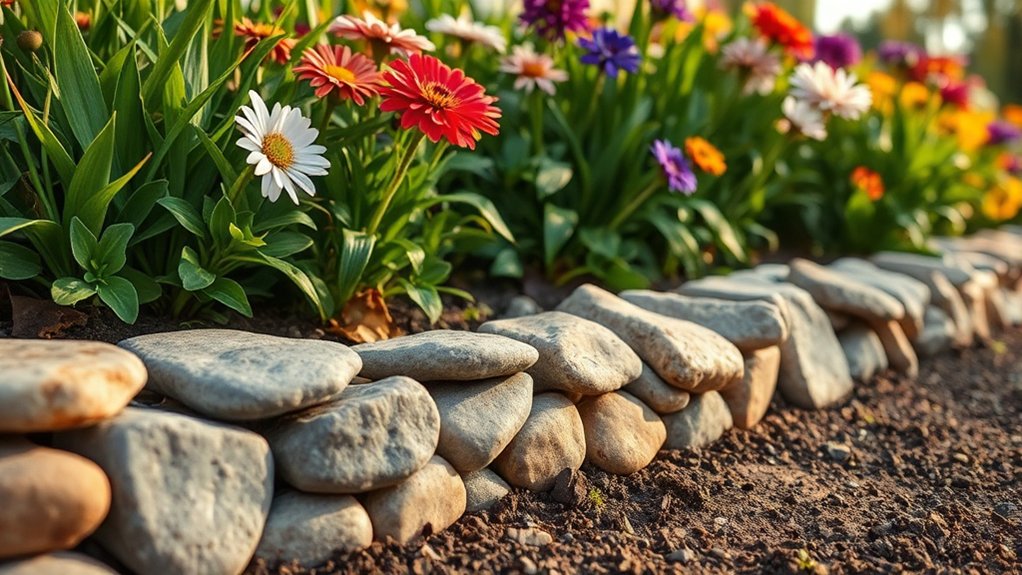
You can choose natural stone to give your garden border an earthy, timeless look. When you lay the stones, try to fit them tightly together and mix up their shapes and sizes—that way, you get a more organic edge. To make them blend seamlessly with your landscaping, match the colors and textures you already have in your beds and paths.
Choosing Natural Stone
Natural stone gives garden borders a timeless, organic feel that blends easily with plants, paths, and other landscape features. You can choose from many natural stone types, including slate, granite, limestone, and fieldstone, each with its own color, texture, and shape.
When you compare options, pay attention to stone durability so your border stands up to weather, mowing, and seasonal changes. Denser stones usually resist chips and fading better, while softer stones may suit low-traffic areas or accent beds.
You’ll also want pieces that match your garden’s style, whether you prefer rugged, irregular edges or smoother, more refined lines. By selecting stone that fits both your design and conditions, you create a border that looks natural and lasts for years.
Laying Stone Borders
Start by marking the border line with a hose, rope, or garden lime so you can see the final shape before you place any stone. Dig a shallow trench along the line, removing roots and loose soil so each rock sits firmly.
Add a thin layer of sand or gravel, then level it with a rake. Set the largest stones first, pressing them into the base and checking that their tops stay even.
Use smaller stones to fill gaps and lock the line in place. These stone border techniques help you create a natural edge that looks intentional and lasts.
For effective installation, tap each piece with a rubber mallet and backfill behind the border to reduce shifting over time.
Blending With Landscaping
Once your stone border is set, focus on how it fits the rest of the yard so it looks like it belongs there. Choose stones that echo the tones in your walkway, patio, or house trim, and keep blending colors soft and natural.
You can tuck low plants, grasses, or creeping thyme against the edge to blur hard lines and make the border feel rooted in the landscape. Use layering textures by pairing rough stone with leafy groundcovers, mulch, and taller shrubs behind it.
Vary stone sizes slightly so the border doesn’t look rigid. If your yard has curves, follow them. Repeat a few plant shapes or stone shades nearby, and you’ll create a clean edge that still feels relaxed, balanced, and organic.
Brick Edging for a Classic Finish

Brick edging gives your garden border a clean, timeless look that frames planting beds with structure and charm. You can choose brick color options that echo your home’s trim, patio, or walkways for a unified finish. Set each brick level with the soil, and you’ll create a neat line that keeps mulch in place and beds easy to maintain.
- Pick durable bricks that match your garden style.
- Follow simple brick installation tips: mark the line, dig a shallow trench, and pack the base firmly.
- Tap bricks into place so they stay even and secure.
You’ll appreciate how brick adds warmth and definition without looking harsh. It works well around flowers, shrubs, and vegetable beds, and it ages gracefully as your landscape matures. With careful placement, you get a border that feels classic, practical, and polished.
Metal Garden Borders for Crisp Lines
If you like the tidy look of brick but want an even slimmer profile, metal garden borders can give your beds sharp, clean lines with very little visual weight. You can choose among metal types like steel, aluminum, and corten, each with different durability and color tones.
Pick border finishes that match your hardscape, from matte black to rusted patina, so the edge feels intentional.
| Metal type | Look | Best use |
|---|---|---|
| Steel | Dark, sleek | Modern beds |
| Aluminum | Light, neat | Easy installs |
| Corten | Warm rust | Natural schemes |
| Galvanized | Bright, clean | Budget projects |
You’ll get crisp separation between lawn and planting without bulky trim. Install the edging slightly proud of the soil, and you’ll make mowing easier while keeping mulch in place.
Properly anchored, metal borders stay straight, resist weather, and keep your design looking precise year after year.
Wood and Timber Borders for Soft Edges
Wood and timber borders bring a softer, more natural finish to garden beds, especially when you want the edge to blend into planting rather than stand out. You can use natural wood to frame curving beds, cottage borders, or veggie patches with ease.
Choose timber finishes that suit your style, from smooth and modern to weathered and rustic appeal.
- Pick rot-resistant species for longer life.
- Set the boards slightly proud of soil level for a neat line.
- Reapply sealant or stain as part of simple maintenance tips.
You’ll get a border that feels warm and inviting without overpowering your plants. Timber also works well when you want a gentle shift between lawn and bed, and it’s easy to trim and replace if needed.
Keep the profile low, and you’ll maintain a tidy look while preserving that relaxed, natural effect.
Use Gravel or Mulch to Soften Border Transitions
Gravel or mulch can make a border feel softer by easing the change between lawn, beds, and hard edges. You can use a narrow strip to blur a sharp line and give your garden a more natural finish.
Choose gravel textures that match your style, from smooth pebbles to crushed stone, and keep the layer even so it looks intentional. If you prefer mulch, pick mulch colors that echo your plants, paving, or siding for a unified look.
Both materials help you frame paths and beds without adding bulky structure. You’ll also reduce splashing, hide minor irregularities, and make mowing or trimming easier along the edge. Keep the border width consistent, refresh it when it thins, and rake it clean so it stays crisp.
When you want a tidy change without hard contrast, gravel or mulch does the job well.
Garden Borders for Flower Beds
When you’re working on flower beds, it’s a good idea to start with clean bed edges. These help define the space and keep mulch or soil from spilling out. Using low border materials like brick, stone, or metal can add some structure without blocking your view of the flowers.
You might also want to try planting edge designs. They’re great for softening the line and blending the border naturally with your blooms. It’s an easy way to make everything look more cohesive and inviting.
Clean Bed Edges
Clean bed edges give your flower beds a crisp, finished look while also making maintenance easier. You can keep weeds from creeping in and stop grass from spilling over by trimming the line regularly. Use these garden maintenance tips to stay ahead of messy borders:
- Mark the edge with a hose or string.
- Cut a shallow trench with edging tools.
- Recut after rain or strong growth.
You’ll get sharper lines when you work in small sections and follow the same curve each time. Rake away loose soil so the border stays defined, and check it after mowing.
With steady care, your beds look intentional, and you spend less time fixing overgrowth. Clean edges also help your flowers stand out, making the whole garden feel orderly and polished.
Low Border Materials
Low border materials can give your flower beds a neat edge while adding texture and style. You can choose natural materials like stone, brick, or wood to frame blooms without blocking the view.
Flat rocks create a casual line, while short timber pieces add warmth and a rustic feel. If you want a budget-friendly approach, look for recycled options such as salvaged bricks, broken concrete, or reclaimed pavers.
These choices help you save money and reduce waste. Keep the border low enough to guide the eye, not overpower the plants. You’ll also find that simple materials are easier to install, move, and replace when your garden design changes.
With the right border, your beds look polished and grounded.
Planting Edge Designs
Planting edge designs soften the shift between your flower beds and the surrounding space while still defining the border. You can use low growers, mounding perennials, or clipped herbs to create a neat living frame that feels intentional.
Focus on plant selection that matches your climate, sun, and maintenance level, so the edge stays healthy and tidy. Try these design patterns:
- Repeat one compact species for a clean ribbon effect.
- Mix textures in alternating clumps for a softer look.
- Stagger heights to guide the eye without hiding blooms.
Keep spacing even, trim regularly, and refresh gaps with seasonal color. When you plan carefully, your border looks polished, cohesive, and easy to maintain.
Simple Borders for Paths and Lawns
Simple borders can instantly sharpen the look of paths and lawns, giving your garden a neat edge without much effort. You can use these simple fixes to guide pathway designs and define lawn borders with clean, easy lines.
Brick, stone, metal, gravel, and timber all work well, and each one helps you keep mowing tidy while stopping grass from spilling over.
| Border | Best use |
|---|---|
| Brick | Classic paths |
| Stone | Natural lawns |
| Metal | Tight curves |
| Gravel | Soft edging |
| Timber | Budget plots |
Choose a height that sits just above the soil, so you can see the line and trim around it fast. You’ll save time, keep edges crisp, and make the whole garden feel more organized without adding visual clutter.
Choose Garden Borders That Fit Your Style
How do you want your garden to feel, formal, rustic, modern, or relaxed? Your border should match that mood so the edge looks intentional, not forced. If you love clean lines, choose sleek metal, stone, or concrete for modern styles.
If you prefer warmth, brick, wood, or woven edging brings traditional aesthetics and softer charm. You can also mix materials to echo your home’s architecture and your planting style.
- Use crisp materials for a sharp, contemporary outline.
- Pick weathered or natural textures for a casual, lived-in look.
- Repeat colors from your house or patio for visual harmony.
Think about height, too. Low borders feel subtle, while taller ones create stronger definition. When you choose edging that suits your taste, you make every bed feel like part of one clear design.
Your garden doesn’t need a trendy border; it needs one that feels like you.
How to Keep Garden Edges Neat Year-Round
Even the best-looking border needs a little upkeep to stay sharp through every season. You can keep your garden edges neat by trimming them regularly, pulling weeds before they spread, and checking for soil or mulch that’s creeping over the line.
A quick weekly walk-through helps you spot problems early, so you won’t face a bigger cleanup later. In spring and fall, schedule seasonal maintenance to reshape the edge, refresh mulch, and remove dead growth that makes borders look messy.
Use a half-moon edger or sharp spade for crisp lines, then sweep away loose debris so the boundary stays visible. During dry spells, water carefully to avoid runoff that softens edges, and after heavy rain, reset any displaced material.
With steady border upkeep, you’ll protect the shape you created and keep your beds looking polished all year long, without turning garden care into a chore.
Frequently Asked Questions
How Deep Should I Install a Garden Border?
You should install your garden border about 4 to 6 inches deep for most edging materials, though heavier borders may need 8 inches or more. You’ll get better stability if you dig a trench that matches the border’s height and packs tightly around it.
For best results, follow these installation tips: level the base, check alignment often, and backfill firmly. Proper border depth keeps your edge neat and long-lasting.
Can I Combine Two Border Materials in One Garden?
Yes, you can mix two border materials in one garden, like pairing instruments in a duet. You’ll want border material combinations that complement each other and match your garden’s style.
Think about height, texture, and color so the shift feels intentional. Also, weigh aesthetic considerations against durability and maintenance. For example, stone and metal can create a modern look, while wood and brick feel warmer and more traditional.
What Tools Make Border Installation Easier?
You’ll make border installation easier with a half-moon edger, flat spade, rubber mallet, tape measure, string line, and landscape shears. These tools help you mark straight lines, cut soil cleanly, and set border materials accurately.
Good installation techniques also include a hand tamper and level, so you can keep each section stable and even. If you’re working with stone or metal, gloves and a safety mask can help too.
How Do I Edge Around Curved Flower Beds?
You’ll edge curved flower beds by snapping a flexible hose or rope along the curved design, then cut just outside it with a half-moon edger or spade. Work in short sections, keeping your line smooth and consistent.
Remove excess soil, then shape the edge by hand for a clean finish. If you want extra definition, install flexible edging that follows the curve without creating sharp breaks or awkward bends.
Are Garden Borders Safe for Pets and Children?
Yes, you can make garden borders safe for pets and children when you choose them like a soft fence around a cherished home. You should favor pet-friendly materials such as smooth stone, untreated wood, or flexible rubber edging, and avoid sharp metal or broken concrete.
You can also plant child-safe plants along the border. Keep borders low, stable, and free of loose pieces so you’ll reduce risks and worries.
Conclusion
The right garden border can tie your whole space together like a frame around a painting. Whether you pick stone, brick, metal, or wood, you’ll give your beds, paths, and lawns a cleaner edge and a more polished look.
Choose a style that suits your garden and keep it maintained, and your borders will stay sharp through every season. A neat edge doesn’t just define your garden; it helps your whole yard shine with garden border ideas for a clean edge.