10 Best Plants for Privacy Along Fences
Creating privacy along your fence can feel like a challenge, especially when you want something that looks great and grows quickly. You’re not alone—many people struggle to find the perfect plants that provide both screening and style without too much hassle.
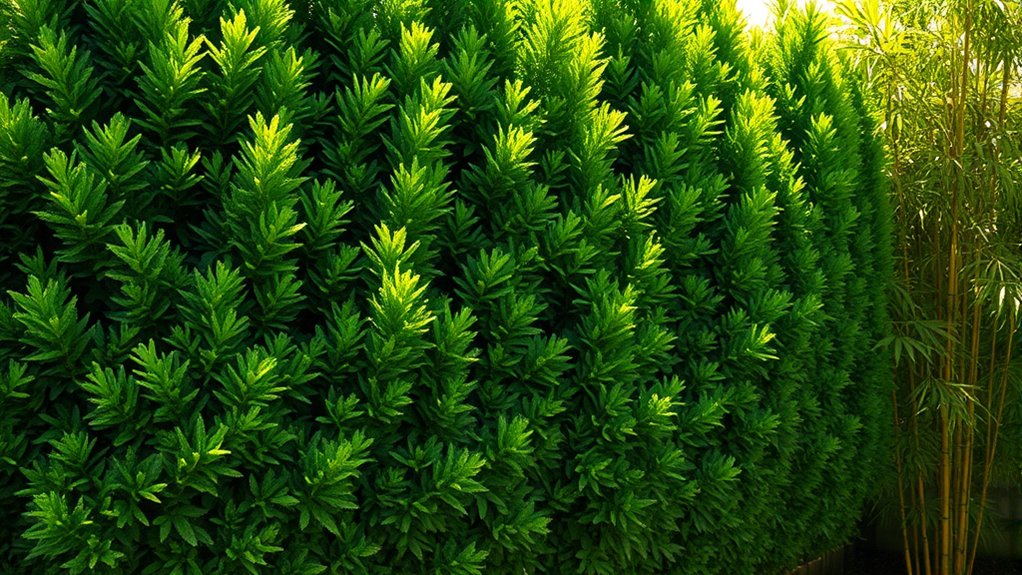
Plants for privacy along fences, you can’t go wrong with arborvitae, holly, and bamboo for quick evergreen screening. Add privet or Leyland cypress if you want fast growth, and choose boxwood or laurel for a neat, low-maintenance look.
In sunnier spots, try oleander or juniper; in partial shade, camellia or hydrangea work well.
For narrow spaces, use columnar arborvitae, Italian cypress, or sky pencil holly, and you’ll find even better options below.
Key Takeaways
- Choose privacy plants based on fence length, available space, soil type, and your local climate for the best long-term results.
- For full sun, arborvitae, bamboo, oleander, and pampas grass provide fast, dense screening along fences.
- In partial shade, camellias, holly, arborvitae, and hydrangeas offer attractive, layered privacy cover.
- Fast-growing hedge options include privet, Leyland cypress, arborvitae, and bamboo for quicker fence coverage.
- For narrow or low-maintenance spaces, use columnar arborvitae, Sky Pencil holly, Italian cypress, boxwood, or clumping bamboo.
How to Choose the Right Privacy Plant
Choosing the right privacy plant starts with matching the plant to your space and goals. You should measure the fence line, note how much room you have, and decide how tall you want the screen to grow. Plant height matters because a short shrub won’t hide a view, while an oversized plant can crowd walkways or neighboring beds.
Check the soil type before you buy, since clay, sand, or loam each drains and holds nutrients differently. You’ll also want to think about maintenance, because some plants need regular pruning to stay dense and neat.
Choose species that fit your climate and can handle the conditions along your fence. If you want faster coverage, look for plants that fill in quickly. If you prefer a tidy look, pick forms that respond well to shaping.
When you match the plant to your site, you get stronger growth and better privacy.
Best Privacy Plants for Full Sun
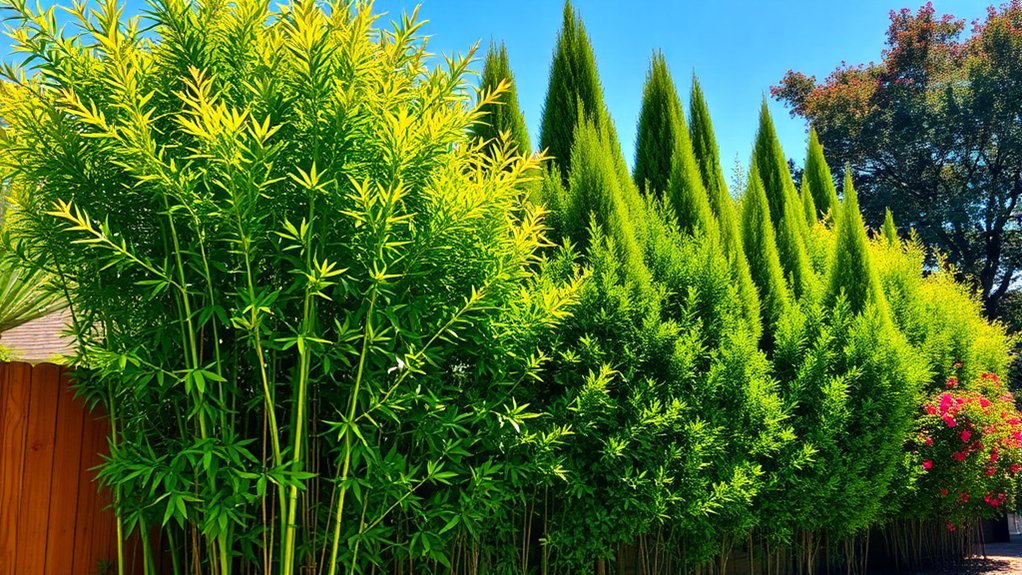
- Arborvitae: You get year-round coverage and a tight habit.
- Oleander: You enjoy fast growth and bright blooms in hot areas.
- Bamboo: You create a tall, narrow barrier quickly.
- Pampas grass: You add height, motion, and durable texture.
Mix heights for better coverage, and trim as needed to keep the line even. With the right full-sun choices, you’ll turn an exposed fence into a living wall that looks good and shields your yard.
Best Privacy Plants for Partial Shade
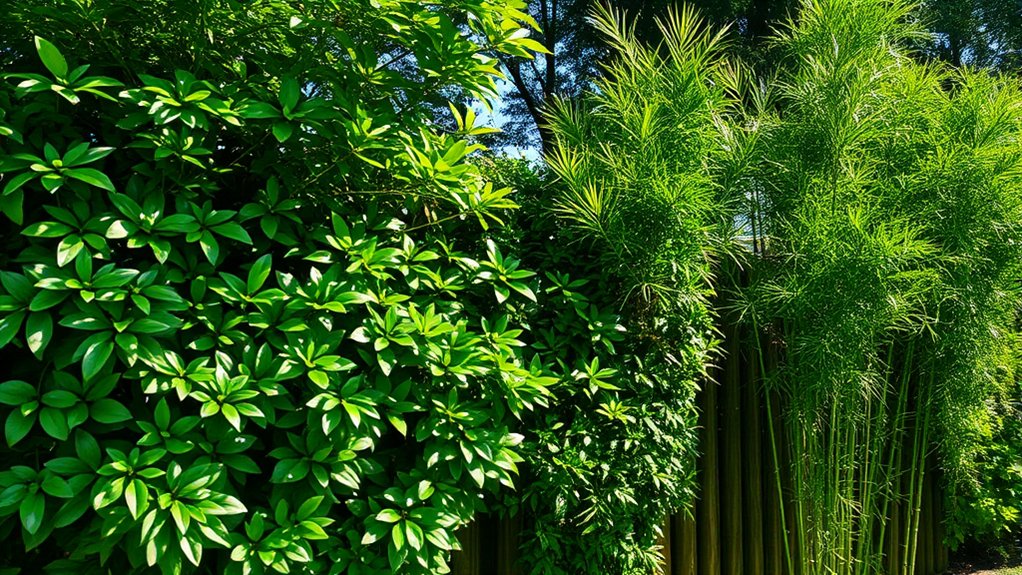
If your fence line gets sun only part of the day, you still have plenty of strong privacy options. For partial shade, choose plants that stay dense without needing full sun. Camellias can give you glossy leaves and seasonal blooms, while holly varieties offer year-round cover and handle dappled light well.
If you want softer texture, use arborvitae in brighter shade or skip laurels in cooler spots. Hydrangeas also work as shade tolerant options when you want a fuller, layered look near a fence. For a more natural screen, consider bamboo clumps in containers or ferns beneath taller shrubs.
You can mix low light favorites with evergreen shrubs to build privacy at different heights. Check soil moisture, because shaded borders often stay damp longer, and space plants so they get airflow and room to fill out. That way, you create a dependable screen that looks good through the seasons.
Fast-Growing Privacy Hedges
If you want privacy fast, go for hedges that grow quickly and fill in your fence line sooner than slower shrubs. You’ll want to pick options that offer dense, leafy coverage so you get a solid screen without waiting forever. With the right plant choice, you’ll turn an open space into a sheltered border in no time.
Rapid Growth Choices
When you need privacy quickly, fast-growing hedges can give your fence line a green screen in just a few seasons. You can pick plants that stretch upward fast and still handle trimming, so your yard feels sheltered sooner.
For quick privacy solutions, choose types suited to your sun, soil, and space. If you want fast growing trees nearby, keep them far enough from the fence to avoid crowding.
- Privet: tough, quick, and easy to shape.
- Arborvitae: reliable height with steady growth.
- Bamboo: fast, but control it well.
- Leyland cypress: rapid coverage for larger runs.
Water deeply, mulch well, and prune lightly. Soon, you’ll enjoy a cleaner boundary with less waiting.
Dense Screen Options
For a privacy hedge that does more than grow fast, look for plants that fill out thickly from top to bottom. You want shrubs that branch low, keep leaves close, and resist bare gaps as they mature.
Arborvitae, holly, and privet can give you dense foliage quickly when you plant them in full sun and water them well during the first season. Space each one correctly, so they don’t compete and thin out.
If you need extra seclusion near a busy street, choose varieties with stiff stems and year-round leaves to create a better sound barrier. Prune lightly to encourage side growth, but avoid overcutting the tops.
With the right care, you’ll build a screen that looks polished and stays effective.
Flowering Shrubs for Fence Privacy
Flowering shrubs can really transform your fence into a beautiful privacy screen that softens those hard lines and blocks unwanted views. When you pick the right varieties, you’ll get dense growth that creates a fuller, lush hedge. It feels both secure and inviting.
And here’s the best part—these shrubs don’t just provide privacy. Their seasonal colors add a splash of curb appeal, making your privacy planting look great throughout the year. So, you get both function and beauty in one go!
Blooming Privacy Screens
If you want a fence line that does more than block views, blooming shrubs can give you privacy and seasonal color at the same time. You’ll enjoy privacy screen benefits while choosing flowering plant varieties that match your climate and fence height.
- Lilac offers fragrant spring blooms and a cheerful backdrop.
- Viburnum adds clusters of flowers, then lush summer foliage.
- Rose of Sharon brings long-lasting blossoms that draw pollinators.
- Hydrangea gives you bold flowers and soft texture along borders.
Place shrubs where they get enough sun, water them deeply, and prune lightly after flowering. You’ll create a lively boundary that feels welcoming, not closed off. Blooming screens soften hard fence lines and keep your yard attractive through the seasons.
Dense Flowering Hedges
Dense flowering hedges give you a thicker, more dependable privacy barrier than scattered shrubs, while still bringing color and texture to your fence line. You can choose flowering varieties that grow tightly together, so they block views and soften hard fence lines at the same time.
Plant them in a staggered row, and you’ll fill gaps faster while encouraging fuller growth. Prune lightly each year to keep the hedge dense without sacrificing blooms. Many shrubs respond well to regular shaping, which helps you maintain height and width for privacy.
If you pick species with seasonal blooms, you’ll also enjoy a living screen that feels lush and cared for. With the right spacing, watering, and pruning, your hedge can stay attractive, effective, and easy to manage.
Seasonal Color Appeal
Seasonal blooms can turn a privacy hedge into a standout feature, giving you color through spring, summer, or fall while still screening your fence. You’ll get more than a barrier; you’ll enjoy changing texture and lasting interest. Choose shrubs that stagger bloom times so your fence never looks flat.
- Spring bloomers like lilac add fragrance and early color.
- Summer shrubs such as hydrangea deliver bold clusters and steady coverage.
- Fall stars like abelia keep the display going with seasonal blooms.
- Evergreen types with vibrant foliage hold structure after flowers fade.
Mixing these shrubs helps you balance privacy with curb appeal. You can layer heights, extend bloom seasons, and keep your fence attractive all year.
Evergreen Privacy Plants for Year-Round Cover
Evergreen privacy plants give you reliable screening all year, keeping your fence line covered even when deciduous shrubs go bare. You can choose dense shrubs like arborvitae, holly, or boxwood to build a living wall that blocks views and softens hard fence lines. Their steady foliage adds winter interest, so your yard still feels finished in cold months.
Mix different leaf shapes and shades to create texture diversity, which keeps the planting from looking flat or monotonous. Place taller evergreens at the back and stagger shorter ones in front if you want layered privacy without crowding the space. Water them deeply during establishment, mulch to hold moisture, and prune lightly to preserve their natural form.
When you match the right species to your climate and spacing, you’ll get dependable cover, lower maintenance, and a fence border that looks polished in every season, especially during windy months.
Climbing Vines for Fence Coverage
Climbing vines can turn a plain fence into a lush privacy screen, especially when you need coverage without taking up much ground space. You can train them with trellises, wire, or lattice, using smart vertical gardening techniques to guide growth where you want it.
Pick climbing vine varieties that suit your climate, fence material, and light levels, then prune regularly so they stay dense and healthy.
- Clematis gives you colorful blooms and layered foliage.
- Honeysuckle adds fragrance and quick coverage.
- Star jasmine offers glossy leaves and a tidy look.
- Climbing hydrangea builds heavy, textured screening over time.
You’ll get the best results by tying young stems gently and checking that the fence can support mature weight. With the right vine, you can create privacy that feels softer and more natural than a solid wall, while still keeping your yard open and inviting.
Best Privacy Plants for Narrow Fence Lines
If your fence line is too narrow for wide shrubs, you can still build solid privacy with plants that stay slim and upright. Choose narrow space options like columnar arborvitae, Italian cypress, or Sky Pencil holly to create a living screen without crowding paths or foundations.
You can also layer bamboo in contained planters if you want quick height and a modern look. For softer texture, try slender ornamental grasses or upright boxwood cultivars spaced tightly along the fence. These vertical growth strategies help you maximize screening while keeping the bed easy to move through.
Place each plant where it gets enough sun and air, then train growth upward with selective pruning so the line stays neat. Mix evergreen structure with seasonal interest, and you’ll turn a tight strip of ground into a private, polished border that works year-round.
Low-Maintenance Privacy Plants
If you’re looking for privacy without all the constant upkeep, easy-care evergreens are a great choice. They hold their shape and provide coverage all year long, so you don’t have to worry about gaps or bare spots.
You can also go for drought-tolerant screening plants. These guys handle dry spells like champs and need way less watering once they’re established.
When you combine these two options, you get a reliable fence line that stays looking good with very little effort on your part.
Easy-Care Evergreen Choices
For a privacy screen that stays attractive with far less upkeep, evergreen plants are often the best place to start. You can choose shrubs and trees that hold their color year-round, trim neatly, and fill gaps fast.
- Arborvitae gives you a tall, dense wall with minimal pruning.
- Holly adds glossy leaves and handles both sun and low light options.
- Boxwood works well for formal borders and even container gardening near patios.
- Laurel grows quickly and creates a thick, polished screen.
Pick varieties suited to your fence line, then plant them with enough space to mature. With occasional shaping and basic care, you’ll keep your privacy strong without constant work.
Drought-Tolerant Screening Plants
When you want privacy without constant watering, drought-tolerant plants can be a smart next step. You can line your fence with tough shrubs, grasses, or narrow evergreens that handle heat and dry soil well.
Look for drought resistant varieties like juniper, oleander, rosemary, and bamboo clumping types if they suit your climate. These plants grow dense enough to block views while asking for little once established.
You’ll save water, reduce upkeep, and still get year-round screening in many regions. For a cleaner landscape, pair them with gravel or mulch and choose xeriscaping options that match your yard’s sun exposure.
With the right spacing, you’ll create a reliable green barrier that stays attractive through dry spells and won’t demand constant attention or extra irrigation.
Tall Privacy Plants for Small Yards
Tall privacy plants can give you the screening you want without overwhelming a small yard, especially when you choose narrow, upright varieties that grow high instead of wide. You’ll get the best results by matching height, root space, and maintenance to your fence line.
Use compact verticals to save room, and rely on layered planting to soften the look without stealing square footage.
- Arborvitae: This classic hedge stays dense and slim, so you can block views fast.
- Columnar holly: You’ll get evergreen color and a tidy shape that fits tight spaces.
- Bamboo clumps: Choose noninvasive types for quick height and a modern feel.
- Italian cypress: Its narrow form creates dramatic screening with almost no spread.
Plant them a few feet apart, water deeply while they establish, and prune lightly to keep the line clean.
Frequently Asked Questions
How Do I Prepare Soil for Privacy Plants?
Start by testing your soil so you know its pH, drainage, and nutrient requirements. Then clear weeds, rocks, and debris, and loosen the ground to about 12 inches deep. Mix in compost or aged manure to improve texture and fertility.
If the test shows deficiencies, add the right amendments. Water the area lightly, then let it settle before planting. Good prep helps your privacy plants root faster and grow stronger.
When Is the Best Time to Plant Fence Privacy Shrubs?
You should plant fence privacy shrubs in early spring or early fall, when temperatures are mild and roots can settle in before stress hits. These seasonal considerations help you get the best start and support ideal planting.
If you live in a hot climate, fall often works best because cooler weather and regular rain reduce watering needs. In colder areas, spring lets plants establish before winter arrives.
How Often Should Privacy Plants Be Watered?
You should water privacy plants often enough to keep the soil evenly moist, but not soggy. New plants usually need deep watering two to three times a week. Established ones may only need it once weekly, depending on heat and rain.
Think of your hose as a steady rainmaker, not a flood. Good watering techniques and mulch improve moisture retention, so you won’t have to water as often.
Which Privacy Plants Are Safe for Pets?
You can choose pet-safe privacy plants like bamboo palms, areca palms, camellias, boxwood, and certain ferns. These pet-friendly options help you build a screened fence line without worrying about curious cats or dogs.
If you want low maintenance varieties, try boxwood or bamboo palm, since they don’t need much fuss once established. Always double-check the exact species before planting, because some similar-looking plants can be toxic to pets.
Do Privacy Plants Attract Birds or Pollinators?
Yes, many privacy plants do attract birds or pollinators. If you choose bird-friendly species, you can turn a fence line into a living habitat. About one in three bites of food depends on pollinators, which helps you picture their value.
Flowering shrubs, berries, and nectar-rich vines draw bees, butterflies, and hummingbirds while still screening your yard. You’ll get privacy, pollinator benefits, and more wildlife activity without sacrificing style.
Conclusion
Choosing the right privacy plant can transform your fence line into a lush, living screen that works hard for you year after year. Whether you need full sun, shade, fast growth, or a compact option for a narrow yard, there’s a perfect match waiting to thrive.
Pick the plant that fits your space and style, and you’ll enjoy a backyard retreat so private it feels like a secret garden behind your own fence. With the best plants for privacy along fences, your outdoor space will become a peaceful haven you love to spend time in.