5 Foods Birds Like Eating Most
Attracting a wide variety of birds to your yard can feel like a challenge, especially if you’re not sure what foods they prefer. You’re not alone—many bird lovers struggle with finding the right mix to keep feathered visitors coming back.
But once you discover the top favorites, creating a vibrant bird sanctuary becomes a lot easier.
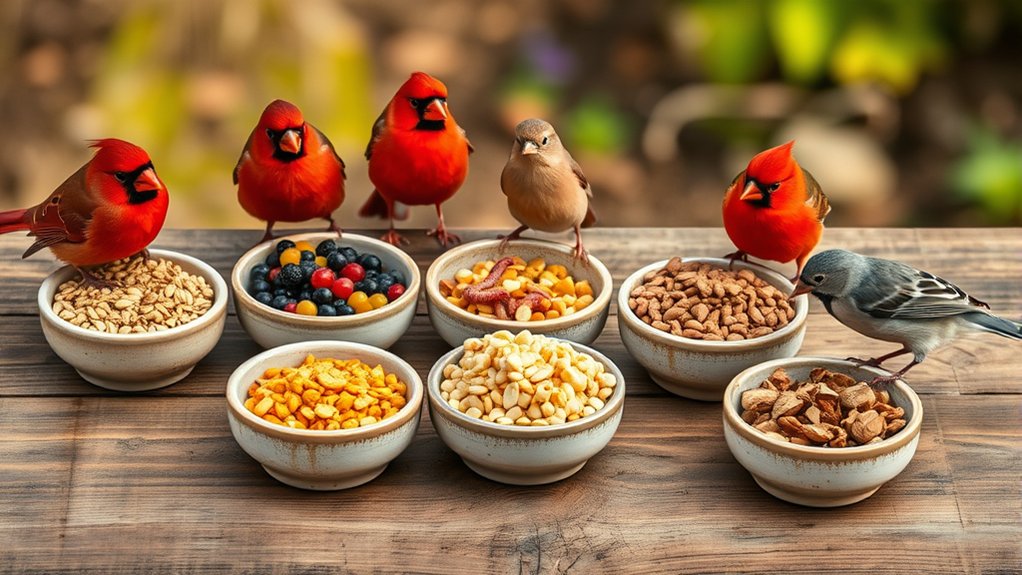
You can attract more birds by offering five favorite foods: black oil sunflower seeds, which many species love, Nyjer seeds for finches, and safflower seeds that cardinals enjoy. Add fresh fruits like berries and apples for seasonal sweetness.
Don’t forget protein-rich insects or nectar, especially for hummingbirds and orioles. Rotate these foods with the seasons, keep everything fresh, and you’ll see more diverse visitors.
Keep investigating to uncover how to make your yard a bird paradise year-round.
Key Takeaways
- Black oil sunflower seeds are highly favored for their high oil content and easy-to-crack shells. They’re a great energy source that many birds love.
- Nyjer seeds attract finches, making them a popular choice for backyard feeders. These tiny seeds are perfect for small beaks.
- Fresh berries like blueberries and strawberries are seasonal favorites for many bird species. They add a sweet treat to the birds’ diet when in season.
- Protein-rich insects, especially slow-moving larvae, provide essential nutrients for growth and feather health. Birds rely on these for a balanced diet.
- Nectar with proper sugar concentration draws hummingbirds and orioles needing quick energy. It’s a go-to for birds that burn a lot of calories fast.
Why Bird Food Choices Matter
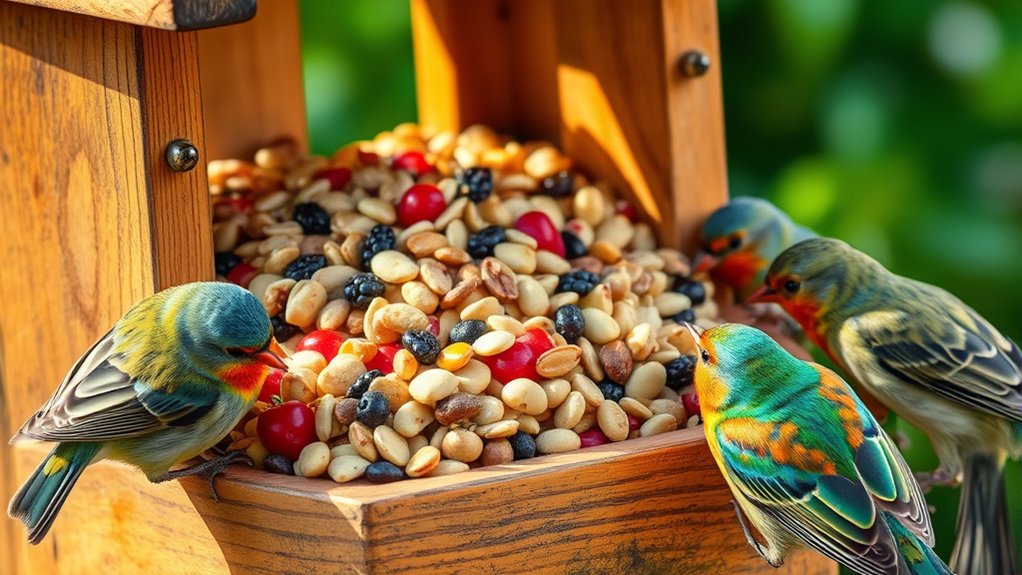
Because the food you offer directly affects the health and behavior of birds, choosing the right seeds and snacks matters a lot. When you understand bird nutrition, you realize that different species need varied nutrients to thrive.
Offering inappropriate food can lead to malnutrition or discourage certain birds from visiting your yard. You’ll notice birds change their dietary preferences depending on the season. This is called seasonal dietary shifts.
For example, in spring and summer, birds often seek insects and protein-rich foods for breeding. In fall and winter, they rely more on energy-dense seeds and nuts to survive colder months.
Best Seeds to Attract Backyard Birds
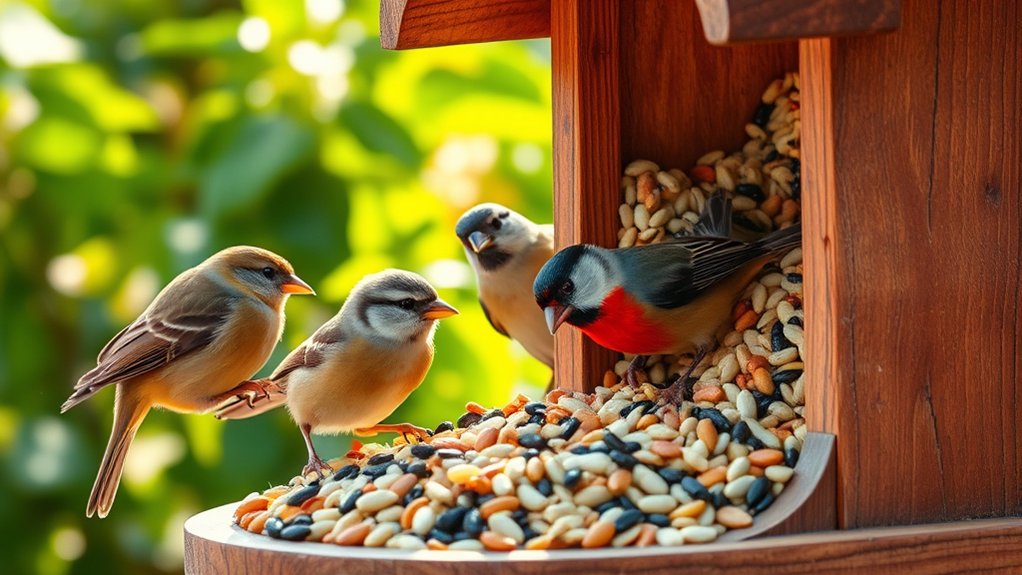
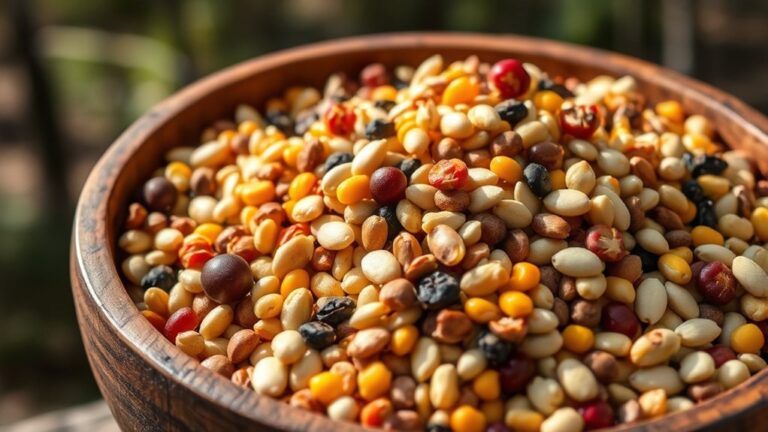
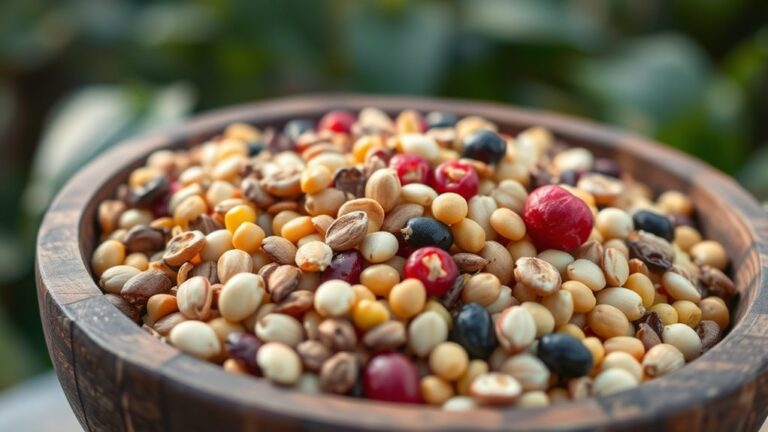
Understanding birds’ nutritional needs throughout the year helps you choose the best seeds to attract them to your backyard. Black oil sunflower seeds are a favorite for many species due to their high oil content and thin shells, which are perfect for easy eating. Nyjer seeds specifically draw finches, while safflower seeds appeal to cardinals and grosbeaks.
When you select seeds, consider seasonal feeding strategies. Offer high-fat seeds like sunflower and millet in winter to help birds maintain energy, and switch to more varied options in spring and summer.
Proper bird food storage is essential to keep seeds fresh and prevent mold or pests. Use airtight containers and store them in a cool, dry place to maintain seed quality.
Fruits Birds Love to Snack On
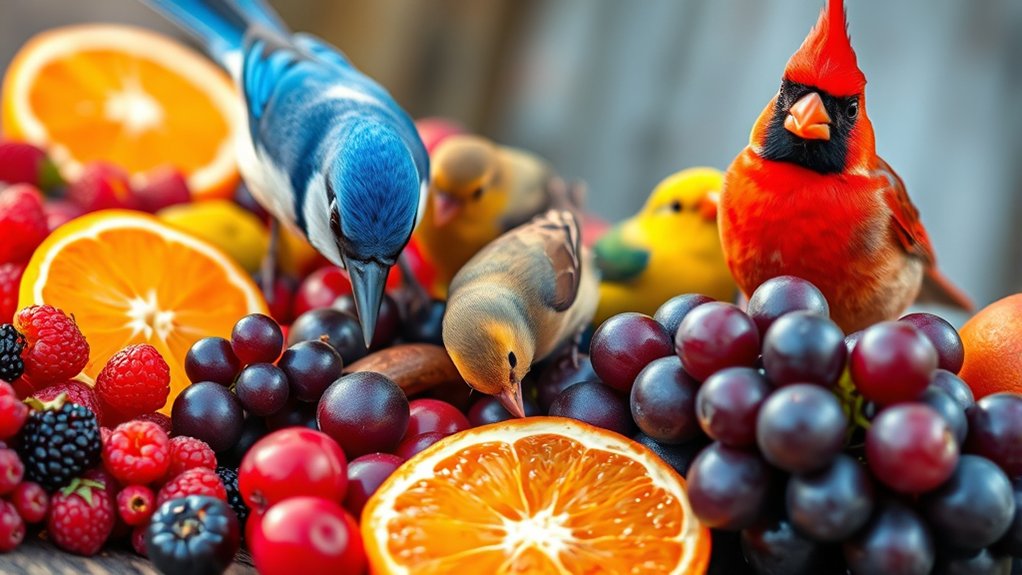
What fruits do birds find irresistible? Many birds are drawn to berries like blueberries, strawberries, and blackberries, especially during their peak seasons. Apples, grapes, and oranges also top their favorites list. When feeding fruit, keep bird feeding etiquette in mind: always offer fresh, pesticide-free produce and remove any uneaten portions daily to prevent mold and pests.
Seasonal fruit preferences vary. In spring and summer, birds prefer ripe berries and soft fruits, while in fall and winter, they turn to firmer fruits like crabapples and persimmons. Providing a variety that matches the season supports their natural diet and attracts a wider range of species.
Cut fruits into manageable pieces or skewer them on feeders to make snacking easy and safe. By respecting these guidelines, you create a healthy feeding environment that encourages birds to visit your yard regularly, making your birdwatching more rewarding.
Protein-Rich Insects and Nectar Favorites
While fruits provide essential nutrients, many birds rely on protein-rich insects and sweet nectar to fuel their energy and growth. You’ll notice birds eagerly hunting insects, which are packed with proteins essential for muscle development and feather production.
Understanding insect behavior helps you recognize why birds prefer certain insects. For example, slow-moving larvae are easier targets than fast-flying adults.
On the other hand, nectar composition plays a key role in attracting nectar-feeding birds like hummingbirds and orioles. The sugar concentration, combined with trace minerals and amino acids, offers a quick energy boost that supports their rapid metabolism.
You’ll find these birds hovering around brightly colored flowers or feeders filled with sweet nectar solutions. By appreciating the importance of both insect behavior and nectar composition, you can better understand how these natural food sources support birds’ health and strength throughout different seasons.
Tips for Offering Bird Foods That Keep Them Coming Back
If you want birds to keep returning to your yard, offering a variety of fresh, high-quality foods is key. Pay attention to seasonal food preferences. Birds eat differently in spring, summer, fall, and winter.
For example, offer suet or peanuts in colder months for extra energy, while providing fresh fruits and nectar during warmer seasons. Practicing good bird feeding etiquette helps too. Keep feeders clean and avoid overfeeding to prevent mold and pests.
Rotate food types regularly to attract diverse species and prevent boredom. Position feeders in safe, sheltered spots to protect birds from predators and harsh weather. Also, consider natural food sources like native plants, which complement your offerings and support local ecosystems.
Frequently Asked Questions
Can Feeding Birds Certain Foods Harm Their Health?
Can you imagine feeding birds something tasty that actually hurts them? Yes, you can harm their health if you don’t maintain a proper bird diet with nutritional balance.
Feeding birds junk food, salty snacks, or bread can cause malnutrition and health problems. You need to offer them suitable seeds, fruits, and insects to keep their diet balanced and support their well-being.
Always think about what’s best for their health first!
How Do Seasonal Changes Affect Birds’ Food Preferences?
Seasonal changes impact birds’ food preferences because you’ll notice they adjust based on regional food availability. During seasonal migration, birds often shift diets to match what’s abundant in each area.
In spring and summer, they prefer insects and fresh fruits, while in fall and winter, they switch to seeds and nuts. Understanding this helps you provide the right food at the right time, supporting their natural feeding habits throughout the year.
Are Homemade Bird Food Mixes Safe and Effective?
Think of homemade bird food mixes as a carefully crafted symphony, where each ingredient plays a crucial note. Yes, homemade recipes can be safe and effective, but you’ve got to prioritize ingredient safety to avoid harm.
Use fresh, natural components and avoid anything toxic or overly processed. When you blend the right seeds, nuts, and grains, you create a nourishing feast that supports birds’ health and keeps your feathered friends coming back.
Do Different Bird Species Prefer Different Food Types?
Yes, different bird species prefer different food types. As you observe bird migration, you’ll notice some birds favor seeds while others go for insects or fruit.
Urban feeding habits also shape these preferences since city birds often adapt to available foods. You can attract a variety of species by offering a mix tailored to their tastes, considering their natural diets and seasonal feeding behaviors during migration and in urban environments.
How Can I Deter Squirrels From Eating Bird Food?
To deter squirrels from eating bird food, use squirrel deterrents like baffles on poles or weight-sensitive feeders that close when squirrels climb on them. You can also add spicy birdseed blends, as squirrels dislike cayenne pepper, but birds don’t mind.
Position your bird feeding stations away from trees or structures that squirrels can jump from. Regularly clean up spilled seeds to reduce attraction.
These steps help keep squirrels out while letting birds enjoy their meals.
Conclusion
By offering these delightful treats, you’re painting a feast that dances in the morning light, inviting feathered friends to your garden’s secret banquet. Each seed, fruit, and nectar drop becomes a whisper of welcome, turning your backyard into a cozy haven where birds can savor nature’s gentle gifts.
Keep their table full and watch as your outdoor space fills with joyful songs and fluttering guests. This simple act will make every moment a charming celebration of life, especially when you provide the 5 foods birds like eating most.