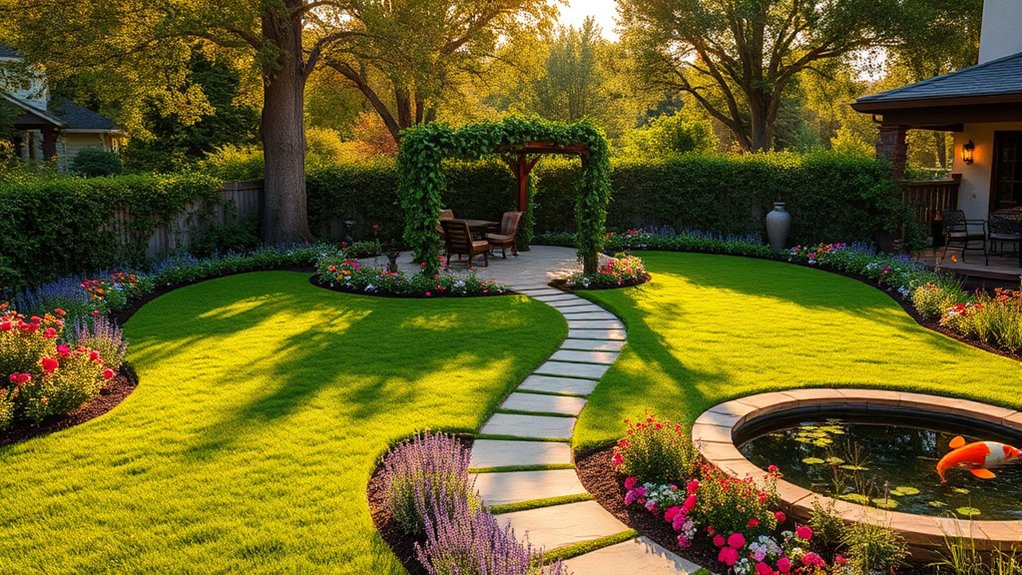
Garden Ideas for Large Backyards
If you have a large backyard, you might feel overwhelmed trying to make the most of all that space. You’re not alone—many people struggle with turning a big, empty yard into a welcoming and functional outdoor area. Garden Ideas for Large Backyards.
Finding the right balance between open space and cozy zones can be tricky, but with some thoughtful planning, your backyard can become a beautiful extension of your home.
To make a large backyard feel inviting, start by mapping sun, shade, and traffic flow, then divide the space into clear zones for dining, relaxing, gardening, and play.
Link them with wide paths, add a spacious seating area, and anchor the yard with a focal point like a fire pit or water feature.
Layer beds for year-round color, use trees or hedges for privacy, and add lighting so the garden shines after dark, too.
Key Takeaways
- Divide the backyard into distinct zones for dining, relaxing, gardening, and play to create structure and purpose.
- Use paths to connect areas, with durable materials and gentle curves for easy movement and visual flow.
- Add a focal point like a fire pit, pergola, fountain, or seating area to anchor the landscape.
- Plant layered beds with seasonal blooms, evergreens, and trees for year-round color, privacy, and height.
- Include lighting and water features to extend usability, improve ambiance, and make the garden feel complete.
Start With a Clear Backyard Layout
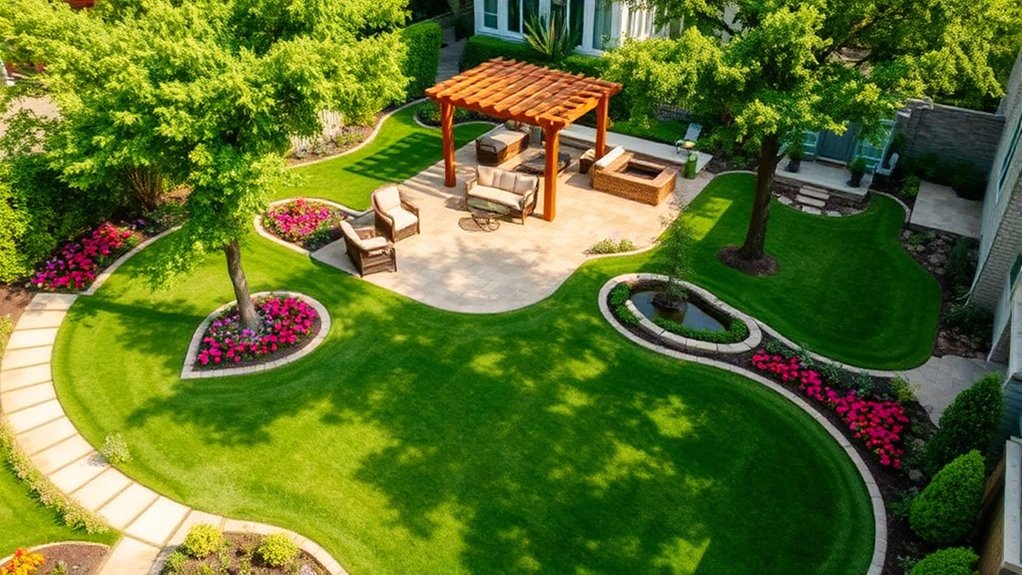
Before you plant a single flower bed or add a patio, map out how you want to use the space. Walk the yard and note where sun, shade, wind, and views fall during the day. Measure the full area, then sketch its shape on paper or in a design app. This simple step gives your landscape design structure and helps you avoid costly mistakes.
Next, decide where major features will live. You might want a dining spot near the house, a play area farther out, or a quiet corner for reading. Mark existing trees, slopes, drains, and utilities so you can work with them, not against them.
Think about how you’ll move through the yard and where outdoor furniture will fit without crowding the flow. A clear layout lets you prioritize what matters most, set realistic proportions, and turn a large backyard into a space that feels intentional instead of overwhelming.
Create Garden Zones That Work Together
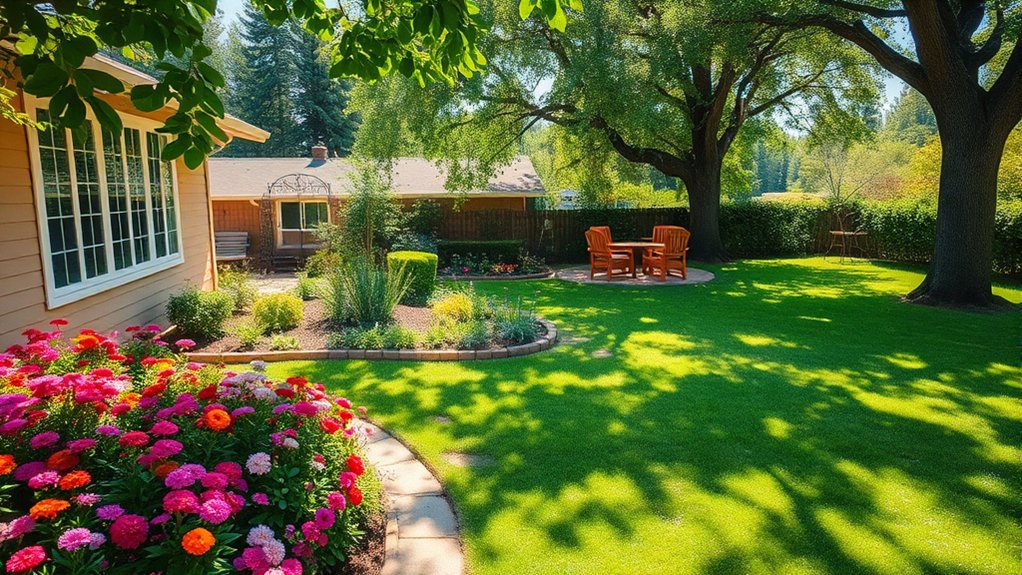
You can make your large backyard feel organized by defining clear zones for dining, relaxing, gardening, and play. Then, use paths, matching materials, and repeating plants to connect each space visually. When the zones flow together, your yard feels both spacious and easy to use. It’s all about creating areas that work well individually but also come together as a whole.
Define Functional Areas
To make a large backyard feel intentional, divide it into clear zones that each serve a purpose. Start with a dining area, a quiet seating nook, and a planting bed, then match each space to your lifestyle.
Choose garden furniture that fits the scale, and use outdoor lighting so you can enjoy each zone after sunset. Good landscape design helps you place paths, while smart plant selection supports privacy, wildlife attraction, and seasonal themes.
Prepare the soil before planting, and keep garden tools nearby for quick care. Use color schemes to unify the beds and hardscape, then follow simple maintenance tips so each area stays tidy.
When every zone has a clear job, your yard feels organized and easy to use.
Connect Spaces Visually
Even when your backyard has distinct zones, a few repeated design elements can tie everything together. You can strengthen visual flow by repeating color palettes across beds, containers, and seating areas.
Use matching mulch, gravel, or edging to echo garden themes and make each space feel related. Blend plant combinations with shared foliage shapes, then add texture contrasts so shifts stay lively, not jarring.
Architectural elements like pergolas, trellises, and pathways can guide the eye from one area to the next. You should also soften hard breaks with layered natural borders, such as shrubs or ornamental grasses.
Keep seasonal interest in mind so each zone changes together through spring, summer, and fall. When you connect spaces visually, your large backyard feels unified, balanced, and easy to investigate.
Use Paths to Connect the Backyard

You can create clear path routes to guide movement through your backyard. When you place paths thoughtfully, they connect each garden zone and make the whole space feel more cohesive. Plus, they help you move smoothly from one area to the next without breaking the flow of your design.
Define Path Routes
Well-planned paths help you define how people move through a large backyard, linking key areas like patios, gardens, play spaces, and seating zones. Start by mapping route placement so each walk feels natural, direct, and safe.
Then choose path materials that fit your style and climate, whether you prefer gravel, pavers, wood, or mulch. Keep routes wide enough for two people to walk together, and use gentle curves to soften long stretches.
- Mark main routes first.
- Add shorter side paths where you need quick access.
- Test the flow before installing anything permanent.
When you plan path routes carefully, you make your backyard easier to use and more inviting without crowding the landscape.
Link Garden Zones
Once your paths are mapped out, use them to connect the main garden zones so the backyard feels unified and easy to move through. You can guide guests from seating areas to vegetable beds, then toward wildlife habitats or a quiet retreat.
Match each route to your garden themes so the flow feels intentional. Choose plant selections beside paths that soften edges without crowding, and add outdoor art where a turn needs emphasis.
For eco-friendly design, keep surfaces permeable and support soil health with mulch borders. Garden lighting helps you move safely at night and highlights seasonal changes.
Follow maintenance tips by keeping edges trimmed and drains clear. Watching landscape trends can inspire simple links that make every zone work together.
Add a Spacious Seating Area
A large backyard gives you room to create a generous seating area that feels both welcoming and functional. Choose outdoor furniture that fits your layout styles, then arrange seating so guests can talk easily without crowding paths.
A fire pit can anchor the space, while shade solutions like a pergola or umbrella keep it usable on hot afternoons. Add garden decor sparingly so the area stays open and relaxed.
Think about color palettes that connect with your home and nearby plantings, and pick comfort options like cushioned chairs or benches with storage. Always factor in weather considerations when you select fabrics and finishes, so your setup lasts longer and looks good through the seasons.
An inviting entertaining space doesn’t need much clutter; it just needs balance.
- Mix chairs and sofas for flexible seating arrangements.
- Place the fire pit where everyone can gather safely.
- Add shade solutions and soft lighting for all-day use.
Design Beds for Year-Round Color
You can keep your large backyard beds looking lively by layering seasonal blooms. This way, you get color that shifts beautifully from spring through fall. Plus, if you add evergreen structure plants, they’ll give the space shape and interest even in winter. Together, these choices help your garden stay vibrant all year long.
Seasonal Bloom Layers
For color that lasts beyond a single season, layer your beds with plants that bloom at different times, from early bulbs and spring perennials to summer showstoppers and late-season asters or ornamental grasses. Start with smart perennial selection so you get reliable seasonal color without replanting every year.
Place shorter bloomers at the front, then tuck taller varieties behind them for a clean, full look.
- Plant bulbs for early spring lift.
- Add midseason perennials for steady color.
- Finish with asters for fall impact.
You’ll keep your garden lively if you stagger bloom times and repeat colors across the bed. Mix textures, but keep the palette focused so each wave of flowers feels intentional, not crowded.
Evergreen Structure Plants
Even when flowers fade, evergreen structure plants keep large backyard beds looking intentional by anchoring the design with year-round shape, texture, and color. You can use evergreen varieties to frame paths, soften fences, and balance open lawn space while preserving seasonal interest.
Choose planting schemes that mix tall spires, mounded shrubs, and low edging plants for strong structural design and landscape harmony.
| Plant type | Best use | Benefit |
|---|---|---|
| Boxwood | Edging | Crisp form |
| Holly | Backdrop | Winter color |
| Yew | Screens | Dense structure |
Place them where you’ll see them most, then follow simple maintenance tips: mulch, water deeply, and prune lightly to keep beds neat and consistent.
Build a Vegetable Garden That Fits
A vegetable garden can claim as much or as little of your yard as you want, so start by matching the beds to your space, sun, and schedule. You can keep it simple with raised beds, or stretch farther with rows that support seasonal planting and easy access. Focus on soil health first, then use organic practices to feed the ground and improve harvests.
- Place taller crops where they won’t shade smaller ones, and use companion planting to boost growth.
- Rotate families each season to support crop rotation and steady pest management.
- Add trellises for vertical gardening so you save room while growing beans, cucumbers, and peas.
When you design around your routines, you’ll spend less time fixing problems and more time picking food. A garden that fits your life will stay productive, tidy, and rewarding through the season.
Add a Focal Point to Anchor the Yard
A focal point gives your large backyard a place for the eye to land, making the whole space feel intentional instead of scattered. Choose one feature that suits your style and scale, then let it guide the rest of the layout.
You might use a bold sculpture, a pergola, a tree with a wide canopy, or a striking bench framed by planting beds. Pick focal point materials that match your home’s exterior, such as stone, wood, or metal, so the feature feels connected to the yard.
Position it where you can see it from your patio, kitchen, or main path, and give it breathing room so it stands out. Surround it with layered plants, paths, or edging to boost visual interest without overwhelming the space.
When you anchor the yard this way, you create direction, balance, and a stronger sense of purpose throughout the garden.
Include a Water Feature for Calm
Water can soften the scale of a large backyard and bring a sense of calm to the entire space. You can choose a tranquil pond, a soothing fountain, or a reflective pool to create a serene garden that feels inviting. Water also adds soundscapes improvement, and the steady movement helps you relax after a busy day.
For a more natural look, weave in aquatic plants and a gentle stream that guides the eye through the yard. A waterfall feature works well when you want motion and sparkle without overwhelming the layout.
- Place the feature where you’ll see it from seating.
- Use ambient lighting to highlight ripples after dark.
- Blend stones and plants for seamless nature integration.
With the right design, your water feature becomes the heart of the backyard, offering beauty, rhythm, and calm.
Add Privacy With Trees and Hedges
Tall trees and layered hedges can shield your backyard from neighbors, traffic, and wind while still keeping the space lush and welcoming. You can use privacy screens made from mixed tree varieties and evergreen shrubs to create depth, soften edges, and support visual balance in your landscape design.
Plant layering helps you build a living sound barrier without making the yard feel closed in. Choose species that offer seasonal colors and attract birds, so your screen also becomes a wildlife habitat.
| Choice | Benefit |
|---|---|
| Arborvitae | Dense cover |
| Holly hedge | Year-round privacy |
Plan hedge maintenance with regular trimming and watering, and your plantings will stay neat, healthy, and effective. Add taller specimens behind lower shrubs to improve garden aesthetics, guide sightlines, and keep your large backyard feeling structured yet natural.
Light the Backyard for Evenings
As daylight fades, you can make a large backyard feel warm and usable with layered lighting that guides movement and highlights key features. Start with pathway lighting along walks and borders so guests move safely. Then add string lights across patios, pergolas, or trees for a soft ambient glow.
Layered lighting transforms a large backyard, guiding movement safely while adding a warm, inviting glow.
Mix in solar lanterns near seating areas and fire pits to create depth without heavy wiring. For focal points, hang fixtures or outdoor chandeliers above dining zones, and use decorative bulbs to add style. You can also place candle arrangements on tables for intimate moments, while garden torches mark edges and open spaces.
- Line paths with low pathway lighting.
- Drape string lights and hang fixtures overhead.
- Cluster solar lanterns, candle arrangements, and fire pits together for layered warmth.
With these choices, your yard stays inviting after dark, and every zone feels intentional, comfortable, and easy to enjoy.
Frequently Asked Questions
How Do I Choose Drought-Tolerant Plants for a Large Backyard?
Choose plants that match your climate, sun exposure, and soil moisture first. You’ll do best with native plant options since they’re already adapted to local rainfall and heat.
Group plants with similar water needs together, and pick species with silver, fuzzy, or small leaves that lose less water. Check mature size too so you won’t overcrowd your backyard.
Then mulch well and water deeply while they establish.
What Are the Best Ways to Budget a Large Backyard Garden?
You can budget a large backyard garden by setting a clear spending limit, then ranking must-have features first. Use cost effective landscaping, like mulch, native plants, and gravel paths, to cut expenses.
Break your project into phases so you don’t overspend at once. Compare material prices, reuse what you can, and choose simple garden design strategies that save labor.
Track every cost, and you’ll keep your plan realistic and manageable.
How Can I Prevent Deer From Damaging My Garden?
You can stop deer damage by combining fencing options with deer repellents. Install a tall fence, at least 8 feet, or use angled wire fencing to make jumping harder.
Spray odor-based or taste-based deer repellents on vulnerable plants, and reapply after rain. You should also plant deer-resistant species near edges, keep your garden tidy, and remove fallen fruit. Rotate deterrents so deer don’t get used to them.
Which Irrigation System Works Best for Expansive Garden Spaces?
For expansive garden spaces, you’ll usually get the best results with drip irrigation because it delivers water directly to roots and cuts waste. You can pair it with sprinkler systems for lawns or broad planting areas that need wider coverage.
This combo helps you save water, reduce runoff, and keep plants healthy. You’ll also want timers and zone controls so you can adjust watering efficiently across different sections.
How Do I Maintain Garden Soil Health Over Time?
You maintain soil health by feeding it regularly, and, coincidentally, healthy soil feeds your garden back. You should add soil amendments each season, use smart compost techniques to boost nutrients, spread mulch to protect moisture and structure, and practice crop rotation to prevent depletion and disease.
Test your soil yearly, water deeply, and avoid compacting beds. With consistent care, you’ll build richer, stronger soil that keeps improving over time.
Conclusion
You can turn a huge backyard into both a retreat and a destination. Start with structure, then let soft beds, winding paths, and a bold focal point bring it to life.
Add a seating area that invites lingering, a water feature that quiets the space, and trees that shield it. By day, your yard feels open and lively; by night, it feels intimate and calm.
That contrast makes your garden unforgettable. With these ideas, your large backyard can become a beautiful, functional space you’ll love.