What Do You Feed Ducklings Step by Step
What Do You Feed Ducklings can feel overwhelming, especially if you’re new to raising them. You’re not alone—many people struggle with knowing exactly what to feed their little ones to help them grow healthy and strong. If you want to get it right from the start, understanding what to feed ducklings step by step can make all the difference.
You’ll start by feeding your ducklings a high-protein (18-20%) waterfowl starter feed that’s easy to digest.
In their first two weeks, offer finely chopped boiled eggs and small insect larvae for extra protein.
Around two weeks, gradually introduce gentle greens like chopped lettuce or spinach to encourage pecking.
Avoid processed foods like bread.
Always provide fresh water daily for digestion and health.
As they grow, adjust their diet with grains and balanced feed to support development.
Keep watching their behavior to fine-tune their nutrition.
Key Takeaways
- Start ducklings on high-protein (18-20%) waterfowl starter feed that is easily digestible and suitable for small beaks.
- Introduce finely chopped boiled eggs and insect larvae like mealworms as protein-rich supplements during the first two weeks.
- Gradually add gentle greens such as chopped lettuce, dandelion leaves, or spinach around two weeks old to encourage pecking.
- Avoid bread, processed foods, salty snacks, and toxic greens like rhubarb. Make sure to provide fresh, clean water daily for digestion.
- Adjust diet progressively by age: high protein (0-2 weeks), add grains and greens (3-4 weeks), balanced diet (5-6 weeks), then adult feed (7+ weeks).
Why Proper Feeding Is Crucial for Ducklings
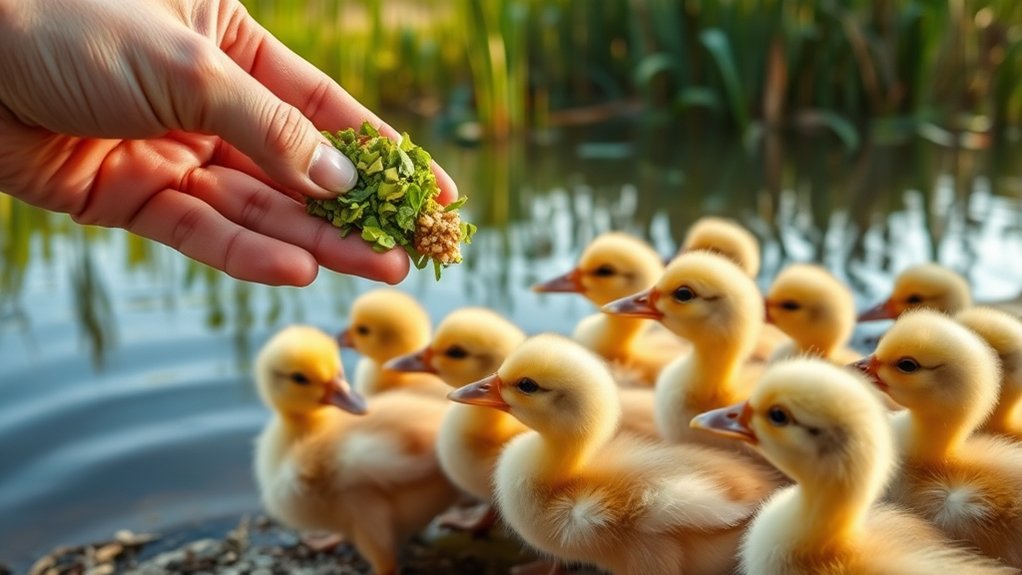
Because ducklings grow quickly and have delicate digestive systems, proper feeding is essential to their health and development. If you neglect their nutritional needs, they won’t thrive or develop the strength needed for survival.
In the wild, ducklings rely on the rich resources found in waterfowl habitats, which support their rapid growth and prepare them for challenges like bird migration. These environments provide diverse foods that fuel their energy and build immunity.
When you feed ducklings correctly, you mimic the natural diet they’d get from these habitats, helping them build strong muscles and healthy feathers. Proper nutrition also supports their immune system, so they can resist diseases common during migration and environmental changes.
If you want your ducklings to grow into healthy adult ducks capable of thriving in the wild or safe captivity, you have to carefully manage what they consume from the start. Feeding them well sets the foundation for a healthy, active life.
What Do Newly Hatched Ducklings Eat First?
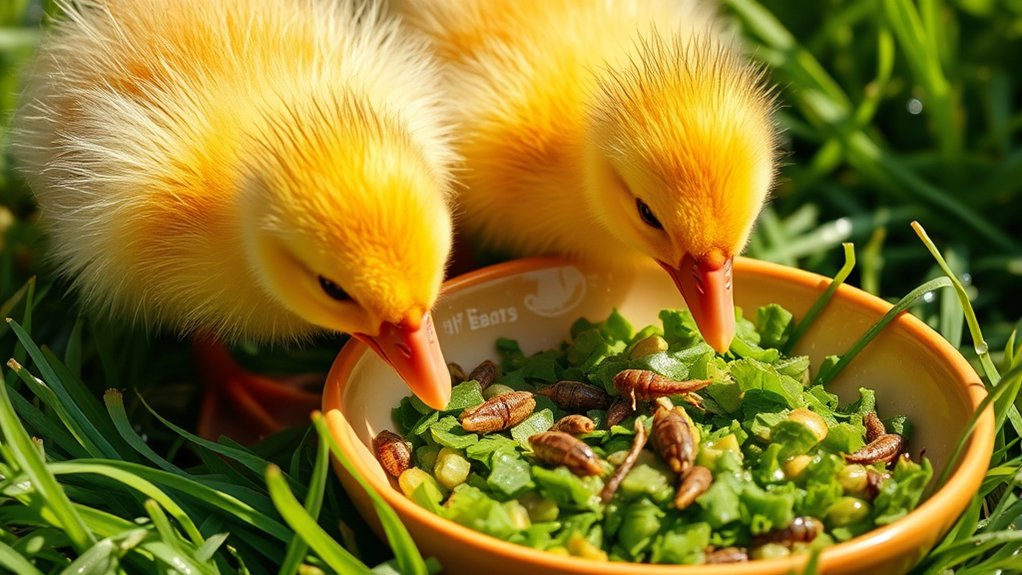
When your ducklings hatch, their first meals should be gentle and packed with the right nutrients to support their rapid growth. You’ll want to offer foods that are easy to digest and rich in protein because that’s what they need most right away. So, let’s take a look at the best options to help them get off to a healthy start.
First Foods For Ducklings
Although newly hatched ducklings can survive for a short time without food, you’ll want to provide them with the right first foods to guarantee healthy growth. Proper nutrition supports their natural behaviors, like mating habits and feather grooming later in life. Start with easily digestible, nutrient-rich options to kickstart their development.
Here are four ideal first foods for ducklings:
- Starter feed specifically formulated for waterfowl
- Finely chopped boiled eggs for protein
- Small amounts of greens like lettuce or spinach
- Insect larvae or mealworms for natural protein
These choices help ducklings build strength and maintain their feather grooming routines as they grow. Feeding them correctly from the start sets the foundation for healthy, active ducks with strong mating habits in the future.
Nutritional Needs At Hatch
Understanding what newly hatched ducklings eat first helps you provide the right nutrition from the very start. At this stage, ducklings rely on a high-protein diet to support rapid growth and energy needs.
In the wild, their diet closely mirrors what’s found in natural waterfowl habitats, like insect larvae, small aquatic plants, and algae. These foods are rich in essential nutrients that fuel their development and prepare them for bird migration later in life.
You can mimic this by offering starter feed formulated for waterfowl or finely chopped hard-boiled eggs. Avoid bread and processed foods, as they lack crucial nutrients. Providing proper nutrition at hatch ensures your ducklings grow strong, healthy, and ready to thrive both in captivity and when exploring their natural environments.
Choosing the Best Starter Feed for Your Ducklings
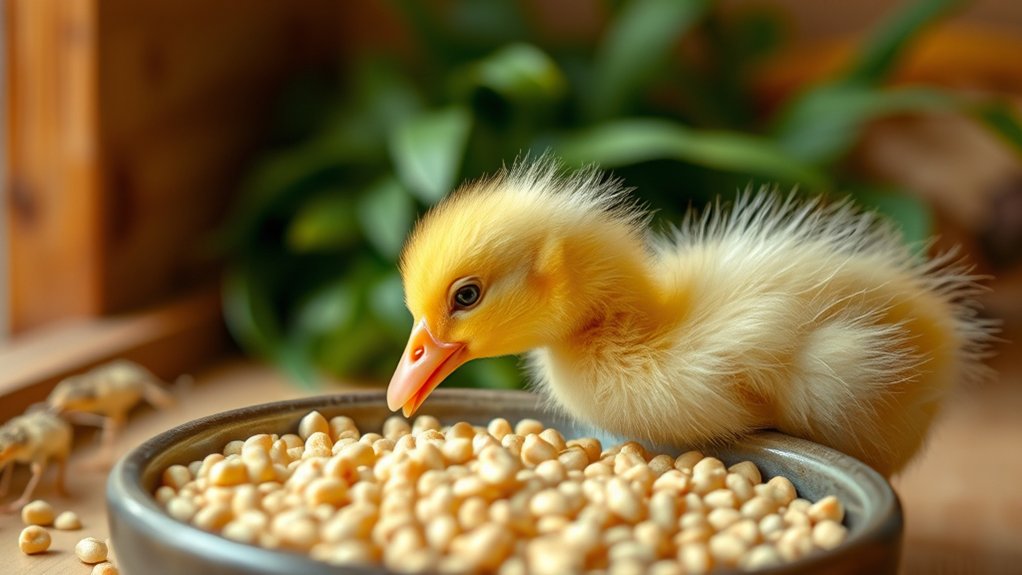
To give your ducklings the best start, it’s important to understand what they need nutritionally and choose the right starter feed. Different types of starter feed offer varying levels of protein and other nutrients that are essential for their growth. So, let’s take a closer look at the options that will help keep your ducklings healthy and thriving.
Nutritional Needs Overview
When you choose the starter feed for your ducklings, you provide the foundation for their healthy growth and development. Understanding their nutritional needs helps you select the right balance of proteins, vitamins, and minerals. Proper feeding techniques guarantee they absorb these nutrients efficiently, while dietary supplements can fill any nutritional gaps.
Focus on these essentials:
- High protein content (around 18-20%) for muscle and feather growth
- Balanced vitamins and minerals, especially niacin for bone development
- Easily digestible ingredients to support their young digestive systems
- Clean, fresh water available at all times to aid nutrient absorption
Types Of Starter Feed
Although selecting the right starter feed might seem overwhelming, knowing the main types available can help you make a confident choice for your ducklings. When choosing feed, consider your ducklings’ behavior and the feeding equipment you have.
Ducklings prefer small, easily digestible pellets or crumbles that suit their tiny beaks and encourage natural foraging.
| Feed Type | Description |
|---|---|
| Crumbles | Small, easy to eat, great for beginners |
| Pellets | Denser, less waste, good for older ducklings |
| Mash | Powdery, can be mixed with water, messy |
| Grain Mix | Natural but less balanced nutritionally |
| Starter Medicated | Prevents disease, consult vet first |
Why Ducklings Need Fresh Water Every Day
Because ducklings rely heavily on water for digestion and hydration, you need to provide fresh water daily to keep them healthy. Water plays an essential role in their metabolism, helping break down their food efficiently.
Also, ducklings use water for grooming, which is indispensable to maintain their feathers and skin. Without clean water, they can’t perform natural nesting behaviors like preening, which helps keep them warm and buoyant.
Here’s why fresh water is indispensable every day:
- Supports proper digestion and nutrient absorption
- Enables ducklings to groom and maintain waterproof feathers
- Prevents dehydration and related health problems
- Encourages natural nesting and preening behaviors
Foods to Avoid Feeding Your Ducklings
While feeding your ducklings is essential for their growth, you should avoid giving them certain foods that can harm their health. Avoid bread, as it offers no real nutrition and can lead to malnutrition and digestive issues.
Also, stay clear of processed foods, salty snacks, or anything with artificial additives. These can disrupt their delicate digestive systems and negatively impact waterfowl habitats by polluting water sources.
Avoid feeding your ducklings raw beans, chocolate, or anything moldy, as these are toxic and can cause serious health problems.
When and How to Introduce Fresh Greens
You should start offering fresh greens when your ducklings are about two weeks old. This helps support their growth. Try choosing safe options like chopped kale, spinach, or lettuce. These won’t cause any digestive issues. Introducing the greens gradually is a good idea. It helps your ducklings get used to the new textures and flavors.
Timing for Fresh Greens
As your ducklings grow, introducing fresh greens at the right time is essential for their health. You’ll notice changes in duckling behavior and feather development signaling when to start. Usually, you can offer greens around two to three weeks old, once they begin exploring and nibbling on solid food.
To time it well, watch for these signs:
- Increased curiosity about surroundings
- Pecks at grass or plants during outdoor time
- Developing feathers that need extra nutrients
- Steady growth and strong activity levels
Introduce greens gradually to avoid digestive upset. Chop the greens finely to match their small beaks and encourage interest. By observing their behavior and growth, you’ll know when the moment is right to add fresh greens to their diet.
Safe Greens to Offer
Even though fresh greens add valuable nutrients to your ducklings’ diet, selecting safe options and introducing them properly is essential to prevent digestive issues. Start with mild, easy-to-digest greens like finely chopped lettuce, dandelion leaves, or spinach. These are gentle on their developing systems and encourage positive duckling behavior, such as curiosity and pecking.
Watch how your ducklings respond during green foraging. If they enthusiastically nibble without distress, you’re on the right track. Introduce fresh greens gradually, mixing small amounts into their regular feed to avoid overwhelming their digestion.
Avoid toxic or tough greens like rhubarb or kale until they’re older. By carefully choosing and timing fresh greens, you support healthy growth and natural foraging instincts in your ducklings.
Feeding Protein-Rich Treats Safely to Ducklings
While ducklings thrive on a balanced diet, introducing protein-rich treats can boost their growth and energy levels. You’ll want to select treats carefully to avoid upsetting their digestive system. High-protein foods mimic the natural diet ducklings would seek during bird migration, supporting their development just as wild ducklings grow strong for long flights. It’s a fascinating insight often captured in waterfowl photography.
To feed protein-rich treats safely, keep these tips in mind:
- Offer small portions of hard-boiled eggs or mealworms to prevent overfeeding.
- Avoid processed meats or anything with added salt and spices.
- Introduce treats gradually to monitor for any adverse reactions.
- Provide clean, fresh water alongside protein to aid digestion.
How to Adjust Your Ducklings’ Diet as They Grow
Once your ducklings start growing, you’ll need to adjust their diet to match their changing nutritional needs. Watch their duckling behavior and avian vocalizations closely. They often signal hunger or satisfaction.
Younger ducklings need higher protein for development, but as they mature, their diet should include more grains and greens to support energy and feather growth.
| Age Range | Diet Focus | Observed Behavior & Vocalizations |
|---|---|---|
| 0-2 weeks | Starter feed (high protein) | Frequent chirping, active foraging |
| 3-4 weeks | Introduce grains & veggies | More exploratory peeping, less frantic eating |
| 5-6 weeks | Balanced feed & greens | Calm quacking, slower feeding pace |
| 7-8 weeks | Adult duck feed | Social vocalizations, grazing behavior |
| 9+ weeks | Regular adult diet | Relaxed quacks, organized group feeding |
Adjust their meals gradually, making sure their diet matches their growth stage and behavior cues.
Tips for Feeding Ducklings Outdoors Safely
As you adjust your ducklings’ diet to suit their growth, it’s important to also consider how you feed them outdoors. Outdoor feeding exposes ducklings to unique challenges, especially regarding their natural behavior and predation risks. You’ll want to create a safe and controlled environment that respects their instincts while keeping them protected.
Keep these tips in mind:
- Feed ducklings in a secure, enclosed area to minimize predation risks from predators like hawks or foxes.
- Offer food in shallow dishes to accommodate duckling behavior, avoiding deep containers where they might struggle or drown.
- Schedule feeding times consistently so your ducklings learn when to expect food, reducing wandering and exposure to dangers.
- Clean feeding areas regularly to prevent attracting unwanted pests or predators.
Monitoring Your Ducklings’ Health Through Their Diet
Because your ducklings rely heavily on their diet for growth and immunity, monitoring their health through what they eat is essential. You need to observe their eating habits closely. Are they eating enough? Is their food fresh and balanced?
Proper nutrition supports strong immune systems, helping them thrive in their duck habitat and prepare for natural behaviors like bird migration. If you notice lethargy, weight loss, or changes in feather quality, it might indicate dietary deficiencies or illness.
Adjust their diet with nutrient-rich foods such as leafy greens and protein sources to boost health. Keep their feeding area clean to prevent contamination and disease.
Tracking these signs not only ensures your ducklings develop properly but also facilitates a smooth transition into the wild, where they’ll rely on their instincts and energy for migration. Staying attentive to diet is your best tool for safeguarding their wellbeing.
Frequently Asked Questions
How Often Should I Clean My Ducklings’ Feeding Area?
You should clean your ducklings’ feeding area daily to keep it sanitary and prevent illness. Since your feeding schedule likely involves multiple feedings a day, cleaning feeding equipment after each use is essential.
Rinse bowls and containers thoroughly, removing leftover food and debris. Regular cleaning helps maintain a healthy environment for your ducklings, ensuring they stay happy and well-nourished.
Don’t skip this step, as dirty feeding equipment can quickly harbor harmful bacteria.
Can I Feed Ducklings With Adult Duck Food Temporarily?
You can feed ducklings adult duck food temporarily, but it’s not ideal. While adult food provides some nutrition, duckling nutrition demands higher protein and nutrients for healthy growth.
If you use adult food, adjust the feeding schedule to smaller, more frequent meals and watch their health closely. Moving to proper starter feed as soon as possible guarantees they get the right balance for development and avoids nutritional gaps that could stunt their growth.
What Is the Best Temperature for Storing Duckling Feed?
You should store duckling feed in a cool, dry place around 50-70°F to maintain duckling nutrition and prevent spoilage. Avoid places with high humidity or direct sunlight, as they can degrade feed quality.
Following proper feed storage guidelines guarantees the feed stays fresh and retains its nutrients, supporting healthy growth. Keeping the feed sealed tightly also helps prevent contamination and pest infestation, so you’ll provide the best for your ducklings.
How Do I Handle Feeding Multiple Ducklings at Once?
Feeding multiple ducklings at once is like managing a medieval feast; you need order and plenty of resources. Use feeding techniques that space them out to reduce crowding, like shallow trays or multiple feeding stations.
Always make certain water is available nearby since ducklings love to drink while eating. Keep an eye on their behavior to make sure no one’s getting pushed aside.
With patience and a good setup, you’ll keep every duckling happy and healthy.
Are There Any Supplements Needed for Duckling Growth?
Yes, supplements can be important for duckling nutrition, especially if their diet lacks certain nutrients. You don’t always need supplements if you provide a balanced starter feed formulated for waterfowl, but adding vitamins like niacin can boost growth and prevent leg issues.
Always check the supplement necessity based on your ducklings’ diet and growth progress. Consult a vet to tailor supplements that guarantee healthy development and strong immune systems.
Conclusion
Feeding ducklings might seem simple, but it’s anything but ordinary. While they start tiny and fragile, their diet fuels rapid growth and vibrant energy. You’ll move from gentle starter feed to richer meals, balancing care with freedom as they investigate outdoors.
Just like their soft down transforming into sleek feathers, your attentive feeding shapes their health and happiness. Remember, what you offer today creates the strong, lively ducks you’ll cherish tomorrow when you follow what do you feed ducklings step by step.