When to Put Bird Feeders Out – 3 Essential Tips
If you’ve ever struggled to attract birds to your yard, you’re not alone. Many people want to enjoy the beauty of visiting birds but don’t know the best time to put out bird feeders. Timing matters a lot if you want to see more feathered friends fluttering around.
You should put out bird feeders timed with local migration patterns, usually early spring and fall, to attract the most birds. Place feeders in open spots where birds can easily spot predators, avoiding dense bushes where cats or other threats hide.
Also, adjust feeding based on the season—feed more in colder months and during breeding seasons. Following these tips boosts visits and keeps birds safe. Keep exploring to find out how different species benefit throughout the year.
Key Takeaways
- Place bird feeders early in spring to support migration and nesting birds. This helps them find food when they need it most.
- Avoid dense bushes near feeders to minimize predator threats like cats. Open areas keep birds safer while they eat.
- Increase feeding in fall and winter when natural food is scarce. Birds rely more on feeders during these tougher months.
- Adjust feeding timing to match local bird migration and seasonal behavior. Every region is a bit different, so pay attention.
- Be patient, observing bird activity to optimize feeder placement and timing. Over time, you’ll learn what works best.
When Is the Best Time to Put Out Bird Feeders?
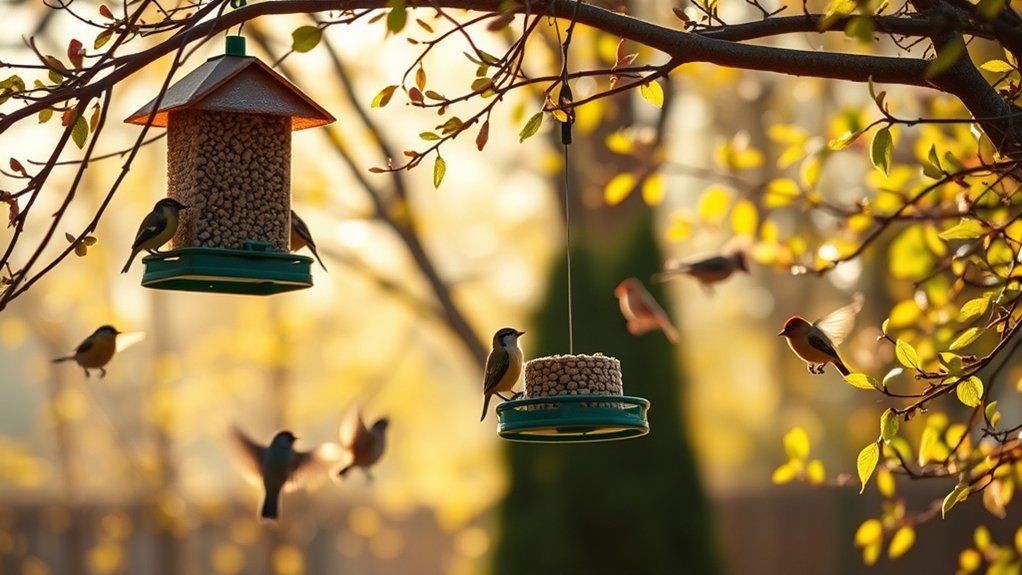
Although you might be enthusiastic to attract birds right away, the most suitable time to put out bird feeders depends on seasonal changes and local bird activity. You need to consider migration patterns because many birds pass through your area only during specific times of the year. Putting feeders out too early or too late might mean fewer visitors.
Also, think about predator awareness. Birds are more vulnerable when food sources are scarce, so placing feeders where birds can spot potential threats helps them feel safe. Avoid locations near dense bushes where predators like cats can hide.
By timing your feeder placement with migration and ensuring a safe feeding environment, you increase your chances of attracting a variety of birds. Remember, patience pays off. Watching your local bird population’s behavior helps you pick the most appropriate moment to offer food.
This way, your feeders become a reliable resource rather than a risky spot for birds.
Best Seasons to Feed Birds for Maximum Attraction
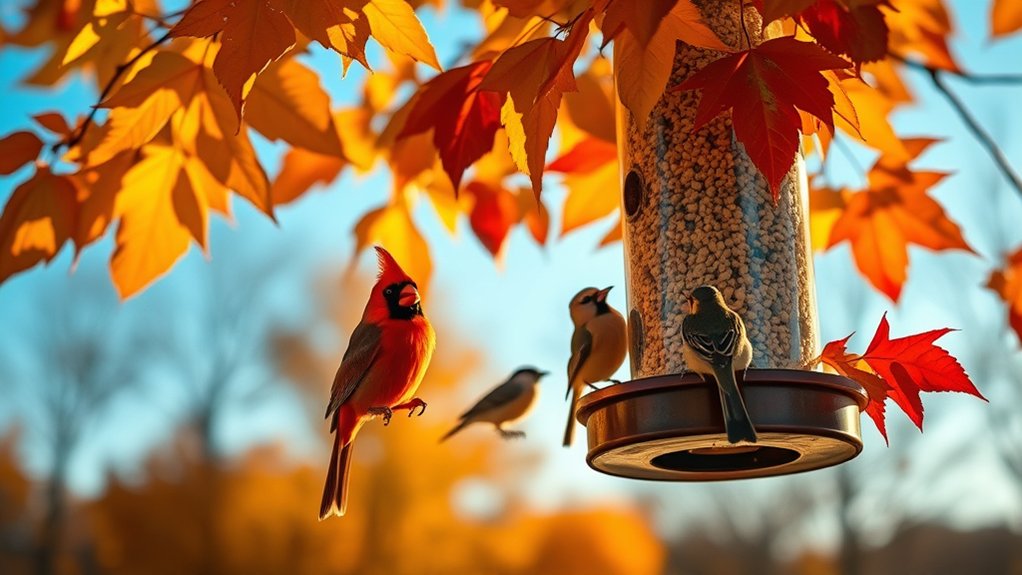
When you feed birds during specific seasons, you’ll notice a bigger variety and higher activity at your feeders. Spring and fall are prime times because migrating birds pass through, increasing the number of visitors.
In colder months, birds rely more on feeders for sustenance since natural food is scarce. Offering seeds that match local seed preferences, like sunflower or nyjer, boosts your chances of attracting diverse species. During warmer seasons, birds have more natural food options and may visit less frequently.
Keep predator awareness in mind year-round. Increased activity attracts hawks and cats, so placing feeders near cover helps birds spot threats and escape quickly. Avoid feeding during extreme heat or heavy snowstorms, as birds adjust their behavior naturally then.
Adjusting Bird Feeder Timing for Different Species and Seasons
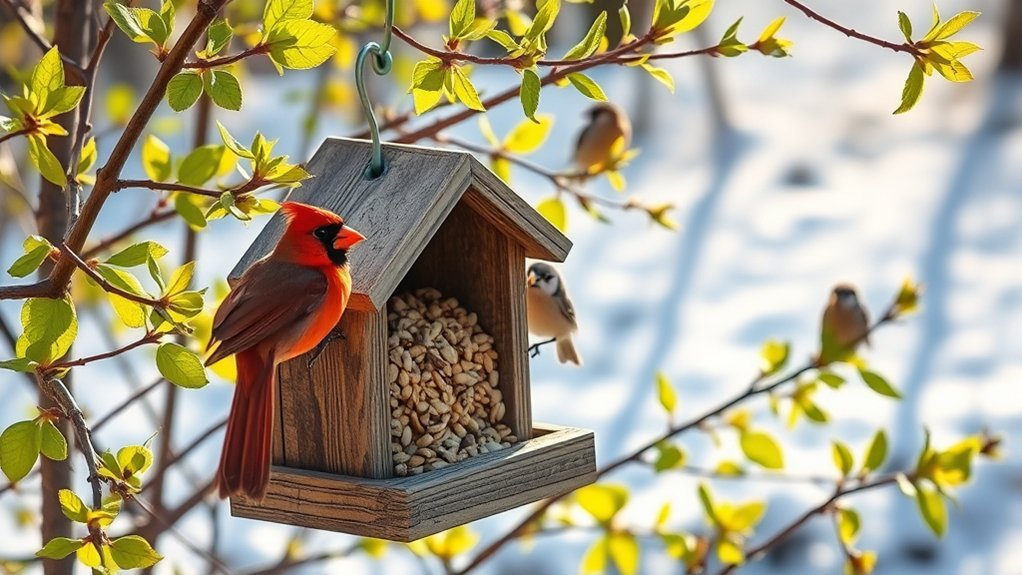
Understanding the best seasons to feed birds sets the stage for fine-tuning your feeding schedule based on specific species and their habits. Since bird migration varies, you’ll want to adjust when you put feeders out to match their arrival and departure times. Nesting habits also influence feeding needs. Many birds require extra energy during breeding seasons.
Here’s how you can adjust your feeder timing effectively:
- Start feeders early in spring to support migrating species returning for nesting.
- Increase feeding frequency during breeding seasons to help parents feed chicks.
- Scale back in late summer when natural food sources are abundant.
- Continue feeding through fall and winter for resident birds needing extra sustenance.
Frequently Asked Questions
What Types of Bird Feeders Are Safest for Backyard Birds?
You’ll want to choose bird feeders made from non-toxic, durable materials like metal or BPA-free plastic to keep birds safe. Avoid feeders with sharp edges or loose parts.
When considering bird feeder placement, position them away from predators and windows to prevent collisions and attacks. Hanging tube feeders or platform feeders with protective roofs work well.
How Often Should I Clean My Bird Feeders?
You should clean your bird feeders at least once every two weeks to keep seed storage fresh and prevent mold or bacteria buildup. Imagine sparkling feeders catching sunlight near your feeder placement spot, inviting healthy birds to visit.
If it rains or you see mold, clean more often. Regular cleaning protects birds and keeps their meals tempting, ensuring your backyard stays a safe, vibrant feeding ground for your feathered friends.
What Bird Seed Mixes Attract the Most Variety?
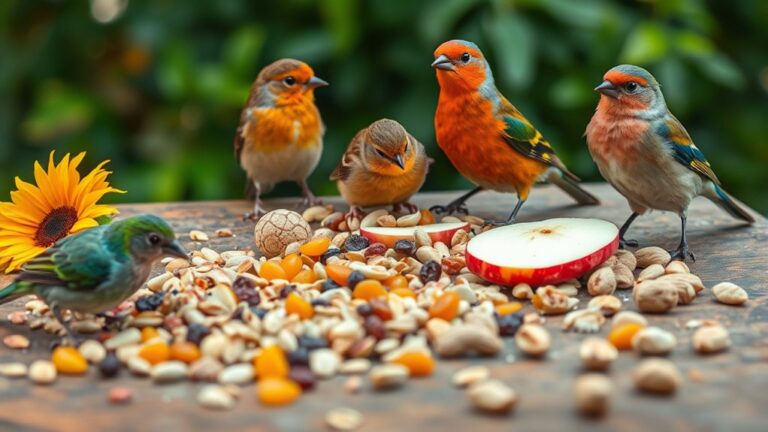
To attract the most variety, you’ll want to focus on seed quality and mix preferences. High-quality mixes with black oil sunflower seeds, millet, and cracked corn appeal to many bird species.
Birds love sunflower seeds for energy, while millet attracts smaller birds like sparrows and finches. Including a mix guarantees you cater to different tastes, so you’ll see more species visiting your feeder regularly. Quality seeds keep birds coming back!
Can Bird Feeders Spread Diseases Among Birds?
Imagine a busy feeder in your backyard where birds gather during migration season. Yes, bird feeders can spread diseases like salmonella if not cleaned regularly.
Urban vs rural feeding habits influence this risk since urban feeders often see higher bird densities, which increases disease spread.
To protect birds and support healthy bird migration patterns, you should clean your feeders weekly, remove moldy seeds, and avoid overcrowding by spacing feeders properly.
How Do I Deter Squirrels From Stealing Bird Food?
To deter squirrels from stealing bird food, use squirrel-proof feeders that have weight-activated mechanisms or cages around the feeding ports. You should also store bird food in airtight containers to prevent squirrels from being attracted to the scent.
Placing feeders on metal poles with baffles can help, too. By combining these strategies, you’ll protect your bird food and keep squirrels from raiding your feeders constantly.
Conclusion
Now that you know when to put out your bird feeders, you might think you’re ready—but wait. Timing isn’t just about the calendar; it’s about reading nature’s subtle signals.
Feeders can attract more than just birds if you’re not careful. So, before you hang that first feeder, ask yourself: Are you truly ready to welcome the wild visitors, or is there one last secret you need to uncover?
The answer might surprise you when it comes to knowing when to put out your bird feeders.