How to Design a Garden in 7 Steps
Designing a garden can feel overwhelming, especially if you’re not sure where to start. You’re not alone—many people struggle with turning their outdoor space into a beautiful, functional garden.
Whether you want a peaceful retreat or a vibrant area for gatherings, having a clear plan makes all the difference.
To design a garden in 7 steps, start by setting your goals and style, then measure your space and track sunlight. Choose a layout that fits how you want to use the garden, whether for relaxing, gathering, or growing food.
Next, pick plants suited to your climate and seasons. Prepare the soil, then plant with proper spacing.
Finish by adding paths, mulch, lighting, and other details, and you’ll soon see how each choice shapes the whole space.
Key Takeaways
- Define your garden’s purpose, style, and priorities before planning anything else. It helps to know what you want to achieve right from the start.
- Measure the space, note sun exposure, and sketch a simple layout. This gives you a clear idea of what you’re working with.
- Choose plants suited to your climate, light conditions, and seasonal interest. Picking the right plants makes a big difference.
- Prepare the soil, beds, drainage, and mulch for healthy growth. Good groundwork sets your garden up for success.
- Add paths, seating, and accessibility features for a functional, attractive garden. These elements make your garden inviting and easy to enjoy.
Set Your Garden Goals

Before you plant a single seed, decide what you want your garden to do for you. Do you want a calm retreat, a lively space for gatherings, or a productive patch that feeds your table? Your goals shape every choice you make, from plant themes to garden aesthetics.
If you love color, you can build around bold blooms. If you want low upkeep, choose resilient plants that won’t demand constant care. If you’re drawn to wildlife, include flowers and shrubs that attract pollinators and birds.
Write down your priorities and rank them, so you can stay focused when tempting options appear. You don’t need to solve everything at once; you just need a clear direction. A garden with purpose feels more cohesive, more satisfying, and easier to design because every feature supports the result you want.
Measure Space and Sunlight

First, measure your garden’s length and width so you know exactly how much space you have to work with. Next, pay attention to where the sun shines throughout the day—different areas get different amounts of light. Keeping track of these two things will make it easier to pick the right plants and decide where to put them.
Measure Garden Dimensions
Grab a tape measure and map out your garden’s size, noting the length, width, and any fixed features like fences, trees, patios, or pathways that will shape your layout. Then sketch a simple plan on graph paper or in a digital app, and label each section with exact dimensions.
Use garden tools like stakes, string, and a ruler to mark beds, borders, and walkways before you dig. Try practical measurement techniques, such as measuring twice and recording units consistently, so you avoid costly mistakes later.
As you work, note irregular corners, slopes, and narrow strips that may limit plant placement. Accurate dimensions help you choose the right number of plants, paths, and containers, and they give you a realistic foundation for every design decision.
Track Sun Exposure
Track how sunlight moves across your garden so you can place each plant where it will thrive. Watch the space in the morning, at midday, and late afternoon to map sun patterns. Note where shade from fences, trees, or buildings shifts through the day.
Then match each bed with the right light requirements so you don’t force sun lovers into dim corners.
- Mark sunny spots with stakes or flags.
- Record hours of direct light each area gets.
- Group plants by their preferred exposure.
You’ll save time, reduce stress, and improve growth when you design with light in mind. If you track exposure before planting, you can build a garden that fits your site instead of fighting it.
Choose a Garden Layout
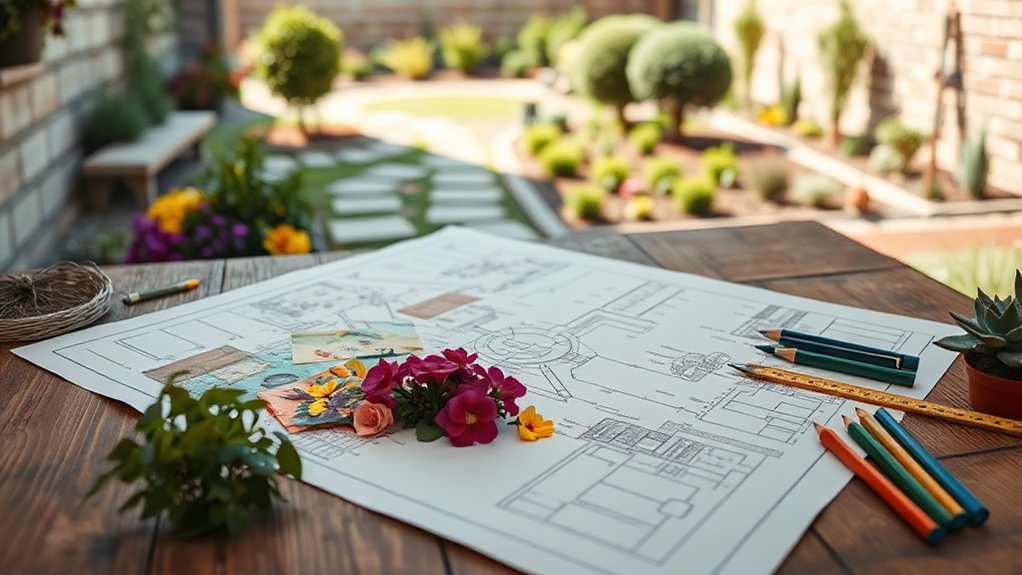
A well-planned layout sets the tone for your whole garden, so decide early how you want the space to flow. You can shape it around garden styles, from crisp formal rows to relaxed cottage curves. Use layout inspirations to spark ideas that fit your home.
Start by sketching paths, focal points, and open areas. Then test how each choice feels when you walk through it. A simple layout can calm you; a layered one can feel alive.
| Layout | Mood | Best For |
|---|---|---|
| Straight paths | Orderly | Small, tidy spaces |
| Curved beds | Soft | Natural movement |
| Central circle | Welcoming | Social gathering |
| Grid design | Structured | Easy planning |
| Mixed layout | Dynamic | Flexible gardens |
Choose the plan that makes you enthusiastic to step outside. When the shape feels right, your garden gains purpose, rhythm, and lasting beauty.
Select Plants for Your Garden
Now choose plants that match your garden’s light, soil, and climate, so each one has the best chance to thrive. Start with native plants because they often handle local weather, support pollinators, and need less care. Then mix in seasonal blooms for color through the year, and use color theory to balance bold flowers with calm foliage.
- Pick plants with similar maintenance needs so you can water, prune, and deadhead efficiently.
- Include drought tolerance where summers run hot or dry, especially in sunny spots.
- Try companion planting to pair herbs, flowers, and vegetables that support each other.
Add texture variety with fine, broad, and spiky leaves to keep the design interesting even when blooms fade. Finish by considering fragrance selection, placing scented plants near paths, seating, or entries where you’ll enjoy them most.
Prepare Soil and Beds
Before you plant, it’s a good idea to test your soil to find out its pH and nutrient levels. That way, you’ll know exactly what your garden needs. Next, clear the area by removing any weeds or debris.
Then, loosen the ground to make it easier for roots to grow. After that, shape your beds so they have good drainage and are easy to reach. With the right prep, you’ll be giving your garden a strong start!
Soil Testing Basics
Healthy soil is the foundation of a thriving garden, so test it before you start planting. Use a simple sample kit to check pH levels and nutrient analysis, then match your results to the crops you want.
Pay attention to soil types, because sandy, clay, and loam each behave differently. Do a texture assessment by feeling the soil, and note how well it holds water.
Healthy microbial activity often signals living soil, while low organic matter means you should add compost or other soil amendments. If the test shows poor drainage, consider drainage solutions before you plant.
1. Sample several spots. 2. Record the results. 3. Adjust your plan accordingly.
Bed Preparation Tips
Once you know your soil’s condition, clear the bed of weeds, rocks, and debris. Then loosen the top 8 to 12 inches so roots can spread easily. Mix in compost to improve texture, drainage, and fertility. You’ll notice the compost benefits as it feeds soil life over time.
If your native ground stays wet or compacted, consider raised beds. They warm faster, drain better, and give you more control over the growing mix. Shape the bed with gentle slopes or clean edges so water moves where you want it.
Avoid walking on prepared soil since pressure ruins its structure. Finish by raking the surface smooth, watering lightly, and waiting a day before planting. This way, the bed settles and stays ready for seeds or transplants.
Plant at the Right Spacing
Getting plant spacing right helps your garden thrive because crowded plants compete for light, water, and nutrients. Start by reading each plant’s mature size, then match spacing to plant compatibility and growth patterns, not just the tag photo. You’ll give roots room to expand, reduce disease pressure, and help each plant reach its full form.
Use these simple checks before you dig:
- Measure the spread of each plant at maturity and leave enough room between centers.
- Group plants with similar water and light needs so neither overpowers the other.
- Stagger rows or clusters when you want fuller coverage without squeezing stems.
If you’re unsure, space a little wider than recommended; you can always fill gaps with temporary annuals. Proper spacing also makes future care easier since you’ll access plants without disturbing neighbors. Aim for balance, and your garden will look intentional, healthy, and easier to maintain.
Add Paths and Final Details
After you’ve placed your plants, sketch in the paths and finishing touches that make the garden easy to use and pleasant to look at. Choose path materials that suit your climate and style, such as gravel, brick, or stepping stones, and keep them wide enough for comfortable movement.
Build functional layouts that guide you naturally between plant arrangements, seating, and focal points. Add decorative features like edging, lanterns, or a small fountain, but don’t overcrowd the space.
Aim for aesthetic balance by repeating colors, textures, and shapes so the design feels unified. Consider accessibility options, including smoother surfaces and gentle slopes, if you want everyone to enjoy the space.
Plan for seasonal changes by leaving room for bulbs, annuals, or winter interest. Finish with simple maintenance tips: mulch beds, trim edges, and check drainage regularly.
These final details help your garden stay practical, beautiful, and easy to care for year-round.
Frequently Asked Questions
How Do I Choose a Garden Theme?
Choose a garden theme by matching your taste, space, and climate. You can start with favorite garden styles, like cottage, modern, or native, then pick color schemes that feel calm or lively.
Think about how much time you’ll spend maintaining it and what plants thrive where you live. Tie everything in conjunction with one clear idea, so your garden feels intentional, beautiful, and easy to enjoy every season.
What Tools Are Best for Garden Design?
The best tools for garden design are a tape measure, graph paper, and design software. You’ll use the tape measure to map beds and paths, then sketch your garden layout on graph paper before refining it digitally.
Design software helps you test spacing, sunlight, and plant placement fast. For bigger projects, a soil probe and stakes can feel like magic, making planning cleaner, easier, and far less guesswork-filled.
How Do I Budget for a Garden Project?
Start by setting your total budget, then split it into priorities like plants, soil, labor, and hardscape. Gather cost estimates from local suppliers and compare them with your goals.
Add 10–20% for surprises so you don’t get stuck halfway through. Choose garden materials that fit your budget and climate, and phase the project if needed. Tracking every expense helps you stay in control and avoid overspending.
How Can I Attract Beneficial Insects?
You can attract beneficial insects by planting pollinator plants, adding insect habitats, and using companion planting to give them food and shelter. Choose diverse blooms so natural predators like ladybugs and lacewings remain nearby, then avoid harsh sprays and rely on organic methods.
Keep a mix of herbs, flowers, and native plants, and you’ll build garden diversity that supports healthy insect populations and better pest control naturally.
When Should I Install Garden Irrigation?
You should install garden irrigation before plants need steady water, ideally during site prep or right before planting. Like a lifeline beneath the soil, it keeps growth steady.
Match irrigation timing to your system types, then check soil moisture and plan seasonal adjustments for better water conservation. Use installation tips like testing pressure, laying lines cleanly, and mulching afterward.
If you wait too long, you’ll stress roots and waste effort.
Conclusion
Now you’ve got the seven steps to design a garden that works for you. When you set clear goals, measure your space, choose a layout, and pick the right plants, you build something beautiful and useful.
Prepare your soil, space each plant well, and finish with paths and details that make it shine. With a little care, your garden will grow into a place you love. Designing a garden is easier than you think.