How to Feed Birds Step by Step
If you’ve ever wanted to attract beautiful birds to your yard but didn’t know where to start, you’re not alone. Many people struggle with finding the right way to feed birds effectively and safely. Whether you’re a beginner or just looking to improve your bird-feeding game, understanding the basics can make all the difference.
To feed birds step by step, start by choosing the right seeds like sunflower or nyjer based on the birds you want to attract. Set up your feeder in a safe spot near cover but away from predators, about 5 feet off the ground with clear flight paths.
Offer food year-round, adjusting types seasonally to match bird needs. Keep feeders clean to prevent pests. With some care, you’ll create a welcoming space that supports birds all year and uncover smart ways to protect and attract them.
Key Takeaways
- Choose high-quality seeds like sunflower or nyjer that suit local bird species and seasonal preferences.
- Position feeders in safe, visible spots near natural cover and away from predators.
- Clean feeders regularly to prevent mold, pests, and contamination.
- Use deterrents and barriers to keep birds safe from predators and invasive animals.
- Adjust food types and feeder placement with the seasons to support bird health and attract different species.
Benefits of Feeding Birds in Your Backyard

Although you might think feeding birds is just a simple hobby, it offers several surprising benefits. When you provide food, you help birds during critical times, especially during bird migration when energy demands are high. Your backyard becomes a crucial stopover where they can rest and refuel, increasing their chances of completing long journeys safely.
You also get a chance to observe their nesting habits up close, learning how different species build nests and care for their young. This connection deepens your appreciation for wildlife and supports local bird populations by offering a reliable food source.
Furthermore, feeding birds encourages biodiversity in your area, attracting various species that contribute to a balanced ecosystem. By setting up feeders thoughtfully, you create a sanctuary that nurtures birds year-round, enhancing both their survival and your enjoyment of nature.
Common Birds Attracted to Backyard Feeders

Feeding birds not only supports their survival but also invites a variety of species right to your backyard. As you watch, you’ll notice how bird migration patterns influence which birds show up seasonally.
Many birds stop by feeders during their journeys, while others stay year-round to focus on nest building. Knowing common backyard visitors helps you appreciate their habits and needs.
| Bird Species | Season Most Seen | Notable Behavior |
|---|---|---|
| Northern Cardinal | Year-round | Builds nests near feeders |
| American Goldfinch | Spring & Summer | Migrates, loves seeds |
| Black-capped Chickadee | Winter | Active nest builders |
| Mourning Dove | Year-round | Ground feeder, gentle calls |
| Downy Woodpecker | Year-round | Drums on feeders, nests in holes |
You’ll enjoy the diversity and learn about bird migration and nest building as you feed these visitors.
How to Choose the Right Bird Food
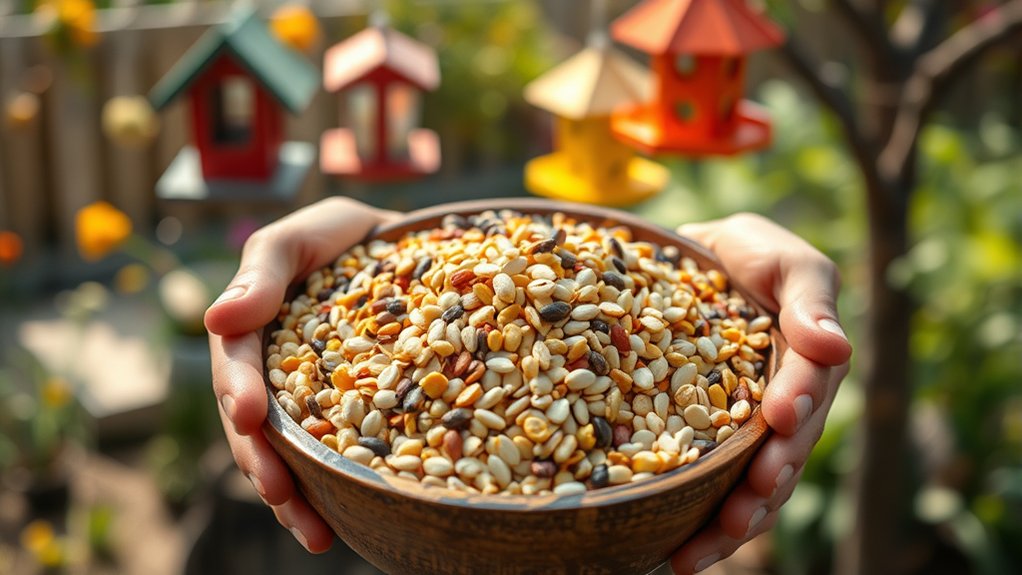
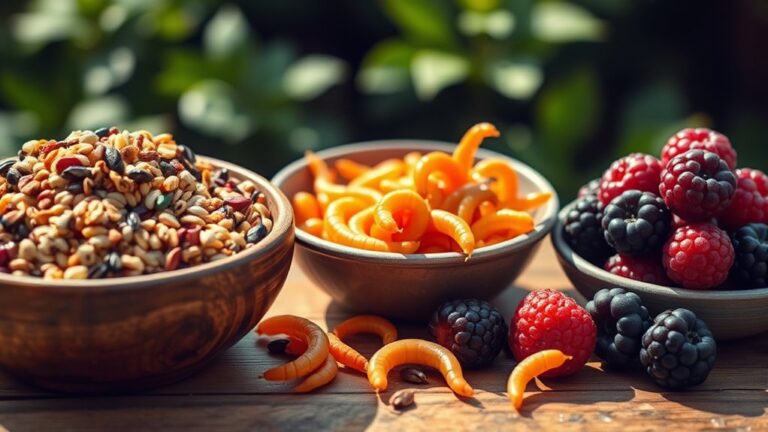
When you select the right bird food, you attract the species you want to see while providing essential nutrition. Start by exploring bird seed varieties like sunflower seeds, millet, nyjer, and safflower.
Each type appeals to different birds; for example, sunflower seeds draw cardinals and chickadees, while nyjer attracts finches. Avoid mixes with fillers that many birds ignore. Choose quality seeds to keep your visitors healthy.
When and Where to Set Up Your Feeder?
You’ll want to set up your feeder in a spot where birds feel safe and can easily find it. Try to avoid places that are close to predators. As for timing, morning and late afternoon are the best times to fill your feeder because that’s when birds are most active. Picking the right location and timing really helps attract more visitors while keeping them safe.
Best Time Of Day
Although birds can visit feeders throughout the day, early morning is the best time to set up your feeder because birds are most active and hungry after a night of fasting. During this time, you’ll attract the most visitors, especially migratory species preparing for long flights.
Bird migration patterns influence when and which birds show up, so setting your feeder early helps support them during these critical periods. Also, consider nesting habits: birds feeding young need extra energy, making mornings essential for their foraging.
Ideal Feeder Locations
Where you place your bird feeder can make all the difference in attracting a variety of feathered visitors. Choose a spot visible from your window so you can enjoy birdwatching without disturbing the birds.
Consider birdhouse placement nearby to provide shelter and encourage nesting, creating a welcoming environment. Position your feeder near a natural water source or a birdbath; birds need water for drinking and bathing, and this combo boosts feeder visits.
Avoid direct sunlight during peak heat to keep seeds fresh longer, and place feeders in areas sheltered from strong winds. Aim for locations with nearby trees or shrubs to offer birds quick cover without overcrowding the feeder.
Thoughtful placement guarantees a safe, inviting space that keeps your feathered friends coming back.
Avoiding Predators Nearby
Placing your feeder thoughtfully not only attracts birds but also helps keep them safe from predators. You want to set up feeders where birds can quickly spot danger, giving them time to escape. Avoid placing feeders too close to dense shrubs or places where cats and other predators can hide.
Maintaining good predator awareness means positioning feeders at least 10 feet from jumping-off points like fences or trees. Consider nearby bird nests, too. Nest defense is critical, so don’t place feeders directly next to known nesting spots to prevent attracting predators there.
Early morning and late afternoon are the best times to observe predator activity near feeders and adjust placement if needed. By staying alert and strategic, you create a safer feeding environment that supports local bird populations.
Effective Feeding Techniques to Attract More Birds
When you choose the right feeders and position them thoughtfully, you’ll attract a wider variety of birds to your yard. Start by considering birdhouse placement. Put feeders near natural cover like shrubs or trees to make birds feel safe.
Thoughtful feeder placement near natural cover helps attract more bird species by making them feel safe.
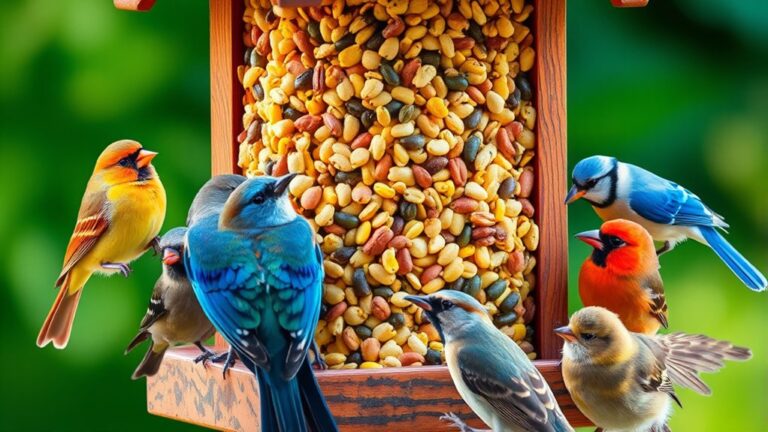
Next, focus on seed selection. Different species prefer different seeds, so offering a mix like sunflower seeds, millet, and nyjer will bring diverse birds.
To maximize your success:
- Place feeders at varying heights to attract ground-feeders and canopy birds.
- Use multiple feeder styles, such as tube, platform, and suet, to cater to different bird preferences.
- Refill feeders regularly to keep food fresh and inviting.
- Avoid overcrowding feeders. Space them out to reduce competition and stress.
Keeping Your Bird Feeders Clean and Safe
Attracting a variety of birds to your yard depends not only on the feeders you choose and their placement but also on maintaining a clean and safe feeding environment. Regular feeder maintenance is key to preventing mold, bacteria, and disease that can harm birds.
Clean your feeders every two weeks using a solution of one part bleach to nine parts water, then rinse thoroughly and let them dry completely before refilling. Pay attention to leftover seeds or debris that can spoil quickly, especially in humid weather.
Proper birdhouse placement complements feeder maintenance by ensuring feeders and birdhouses aren’t too close, reducing contamination risks. Position birdhouses away from feeders to prevent overcrowding and maintain hygiene.
Also, place feeders in areas with good air circulation to keep seeds dry and fresh. By staying consistent with these habits, you’ll provide a healthy feeding station that invites a thriving bird community to your yard.
How to Protect Birds From Predators While Feeding
To keep birds safe while they eat, you’ll want to place feeders where predators can’t easily reach them. It’s a good idea to use deterrents like baffles or spikes—they really help keep unwanted guests away. Also, make sure there are plenty of nearby escape routes so birds can quickly fly to safety if needed.
Safe Feeding Station Placement
Although feeding birds can be a rewarding experience, you need to place your feeding station thoughtfully to keep them safe from predators. Proper birdhouse placement is key. Avoid spots too close to bushes where cats lurk or windows where collisions happen. Also, consider seed storage tips to prevent attracting unwanted animals near your station.
Follow these guidelines for safe feeding station placement:
- Position feeders at least 10 feet from dense shrubbery or trees where predators can hide.
- Place your station 5 feet above the ground to deter ground predators.
- Keep feeders near open areas so birds can spot danger easily.
- Guarantee birdhouses are mounted securely with clear flight paths for easy escape.
This careful setup helps protect your feathered friends while they enjoy their meals.
Use Predator Deterrents
Placing your feeding station wisely helps reduce risks, but you can take extra steps to keep birds safe. Using predator deterrents is a practical way to protect your feathered visitors. Simple devices like reflective tape, predator decoys, or motion-activated sprinklers can discourage predators from approaching.
You’ll also want to avoid placing feeders near dense shrubbery where cats or other predators can hide. Choosing feeders with built-in guards or cages can prevent larger animals from reaching the birds or their food. These predator deterrents not only reduce threats but also encourage shy birds to visit more often.
Provide Escape Routes
When birds feel threatened at your feeding station, they need quick and clear escape routes to evade predators. You can help by ensuring their flight paths are unobstructed and lead directly to safe spots. Here’s how you can improve nest safety and provide effective escape routes:
- Position feeders near natural cover like bushes or trees for quick hiding.
- Keep branches trimmed to maintain open flight paths.
- Avoid placing feeders too close to windows or reflective surfaces that confuse birds.
- Create multiple exit options around feeding areas to prevent trapping birds if predators appear.
What Seasonal Changes Affect Feeding Habits?
As the seasons shift, you’ll notice birds changing their feeding habits to match the availability of food. During warmer months, many birds rely on insects and fresh fruits, but as autumn approaches, their diet shifts to seeds and nuts.
Seasonal migration plays a big role too. Some species leave your area entirely, while others arrive, bringing new feeding patterns.
Weather impacts these habits as well. Colder temperatures reduce insect populations, pushing birds to depend more on feeders and natural seed sources. Rain and snow can limit foraging opportunities, making your feeder a crucial food source.
Understanding these seasonal changes helps you provide the right types of food at the right times. By adjusting your offerings to match these natural shifts, you support local bird populations year-round and enjoy watching a variety of species adapt to the changing environment around your feeder.
How to Troubleshoot Common Bird Feeding Problems
If you notice birds avoiding your feeder or food disappearing way too quickly, it’s a good idea to figure out what’s going on. Maybe pests are hanging around, the seeds have gone bad, or the feeder isn’t in the best spot.
Once you pinpoint the problem, you can try some easy fixes to keep your feathered friends happy and healthy. It’s all about making your bird feeding experience enjoyable for both you and the birds!
Identifying Common Feeding Issues
Although feeding birds might seem straightforward, you’ll often encounter unexpected challenges that can discourage both you and the birds. Understanding these issues helps you better support your feathered visitors, especially during bird migration or nesting behavior changes.
Common feeding issues include:
- Birds avoiding feeders during migration due to natural food availability elsewhere.
- Aggressive birds dominating feeders, scaring away smaller species.
- Feeders attracting unwanted pests like squirrels or insects.
- Nesting birds reducing feeder visits as they focus on raising young.
Solutions for Feeding Challenges
When you notice birds avoiding your feeders or aggressive species taking over, you can take specific steps to resolve these issues and create a welcoming environment for all visitors. Start by offering diverse birdseed varieties to attract different species.
Regular feeder maintenance is vital. Clean feeders prevent mold and deter pests. If aggressive birds dominate, try using feeders with smaller ports or weight-sensitive perches to exclude larger birds.
| Problem | Solution | Benefit |
|---|---|---|
| Birds avoiding | Change birdseed varieties | Attracts diverse species |
| Aggressive birds | Use selective feeders | Limits dominant species |
| Dirty feeders | Regular feeder maintenance | Prevents disease, pests |
Supporting Backyard Birds Year-Round Without Feeding
Even without putting out food, you can create a welcoming environment that keeps birds returning to your backyard throughout the year. Different bird species have unique seed preferences, but they also rely on natural shelter and water.
Creating a welcoming backyard with shelter and water attracts birds year-round, beyond just offering food.
To support them year-round without feeding, focus on these four essential steps:
- Plant native trees and shrubs to provide natural cover and nesting sites for various bird species.
- Maintain a fresh water source, like a birdbath or small pond, to keep birds hydrated during all seasons.
- Leave some leaf litter and dead branches in corners to encourage insects, a crucial protein source for many birds.
- Avoid using pesticides and herbicides to protect the insects and plants birds depend on.
Frequently Asked Questions
Can Feeding Birds Help With Pest Control in My Garden?
Yes, feeding birds can help with pest control in your garden. Birds naturally eat insects and pests as part of their diet, reducing harmful populations.
By maintaining a consistent feeding frequency, you encourage birds to visit regularly, which keeps pests in check more effectively. Just make sure to offer bird-friendly food that attracts insect-eating species.
That way, you get the best natural pest control while enjoying your garden’s wildlife.
What Materials Are Best for Building Homemade Bird Feeders?
You’ll want sturdy, weather-resistant materials like untreated wood, bamboo, or recycled plastic for your birdhouse design to guarantee durability. Avoid toxic paints or chemicals.
For easy feeder maintenance, choose materials that clean up well, like smooth wood or metal mesh. Transparent containers can also help you monitor seed levels.
How Do I Identify if a Bird Is Injured or Sick?
They say, “A stitch in time saves nine,” so spotting bird injury signs early is key. You’ll notice if a bird has drooping wings, limping, or visible wounds.
Sick bird symptoms include fluffed-up feathers, lethargy, or unusual breathing. If you see a bird struggling to perch or eating less, it’s likely injured or unwell.
Act quickly to help or contact a wildlife rehabilitator for proper care.
Are There Any Legal Restrictions on Feeding Wild Birds?
Yes, you need to check local bird feeding regulations before you start. Many areas have wildlife protection laws that limit what, when, and where you can feed wild birds to prevent harm or disruption to natural behaviors.
Some parks or reserves forbid feeding altogether. So, always research your local rules to make sure you’re helping, not harming, the birds. Following these laws keeps the ecosystem balanced and the birds safe.
How Can I Attract Rare or Migratory Bird Species?
You know what they say: “Rome wasn’t built in a day.” To attract rare or migratory birds, focus on habitat improvement by planting native trees and shrubs they prefer.
Provide seasonal feeding tailored to their migratory patterns, offering foods like nectar or high-energy seeds during their stopovers. Creating a safe, water-rich environment also helps.
Patience and consistency will turn your yard into a welcoming haven for these special visitors.
Conclusion
Feeding birds in your backyard isn’t just rewarding; it’s like having a front-row seat to nature’s greatest show! By choosing the right food, placing your feeder wisely, and keeping predators at bay, you’ll attract a dazzling variety of birds all year long.
Remember, even small efforts can make a huge difference for these feathered friends. So get ready to enjoy endless birdwatching magic right outside your door! Feeding birds is a simple way to connect with nature and bring joy to your everyday life.